
I readily admit that I am no plantsman. I’m simply an untutored gardener who frequently struggles to remember Latin names, or even many of the common ones. In general my approach to the garden is to create an emotional effect that stirs the spirit. I’m interested in the full symphony rather more than its constituent parts. More focussed on the overall look and atmosphere, than any specific plant within it.
But on a June weekend in 2021 it was a real pleasure to have a close encounter with two particular specimens, where I not only know the names, but which also have a distinctly exotic air that adds to the overall feel of the place. Examining them close up enhanced my appreciation of their beauty, but also piqued my interest in their particular botanical features. As it turned out, each of them has its own curious story of origins, associations and idiosyncrasies.
Both are forms of lily.
The first, photographed here looking settled in the Dumfriesshire garden rain two years ago, is Arisaema Candidissimum.
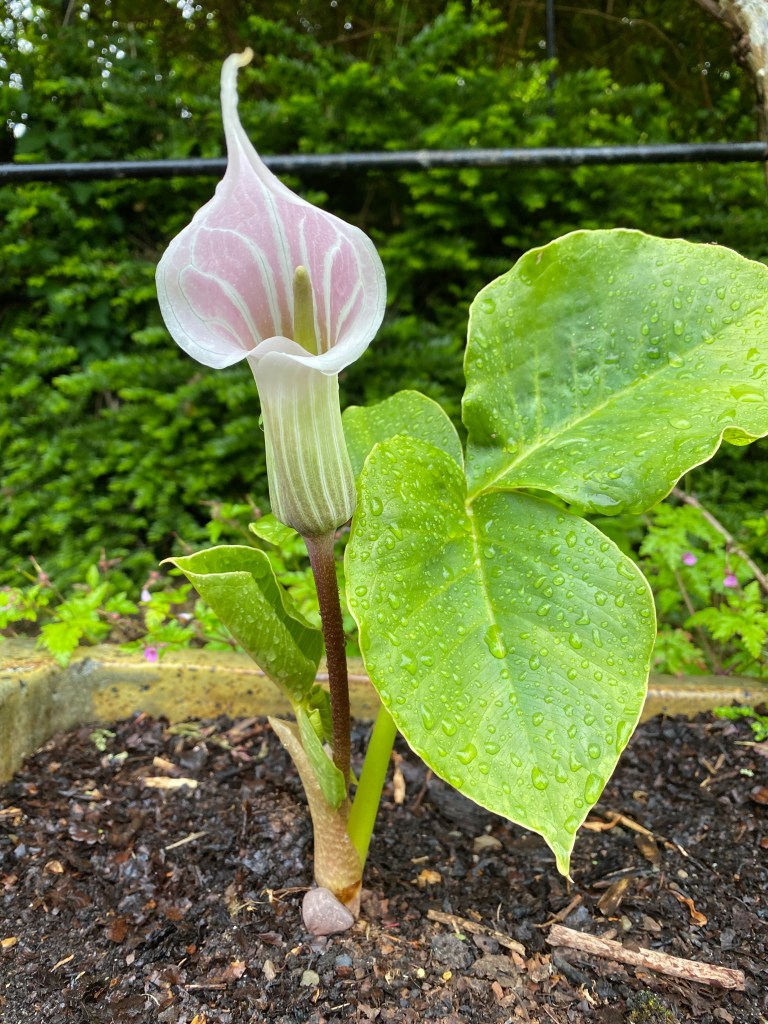
Its everyday names include Chinese Cobra Lily and Striped Cobra Lily. Given their delicate and esoteric look, I decided to plant mine in an old salt glazed agricultural trough, fairly close to the house. On seeing them there, I was inclined at the end of the season to move my three specimens into a damp and dappled-shade border, where they might sit happily, perhaps with other favourites, like Meconposis and Foxgloves. Unfortunately this was a job I never got round to doing. But more of that in due course.
I came across a much more knowledgeable blog post about Arisaema Candidissimum here – in which it’s explained that the plant was first introduced into Britain from Yunnan (the most south-western province in China) by George Forrest, in 1914. Well done him, I thought. It is now safely ensconced with me and other gardeners, in the most south-western region of Scotland, Dumfries and Galloway – though not so close to the Tropic of Cancer.
My second example of garden exotica is the Voodoo Lily, Devil’s Tongue, or Corpse Flower. Whichever name you choose, it sounds quite scary. The Latin designation is Amorphophallus Titanum and it has several variants. With this plant, which might flower only every 7-10 years, we get into seriously strange territory. For one day only it gives off the smell of rotting meat, attracting associated flies that buzz around and inside the plant, caught in what appears to be a frenzy of destruction. The flies act as pollinators. You can watch it happening here in a short video I made at the time (not for the squeamish!).
Not surprisingly, a few days after this treatment, my three plants, also growing in an old trough, looked anything but happy. I discovered this to be a passing phase, and in a short while another long shoot emerged, and produced an umbrella of attractive foliage. Again, I thought I would re-plant Devil’s Tongue in one of the borders, further away from the house. That fly-blown rotting flesh scene is not one I wish to encounter on an early morning stroll. But when the time came to move them, the whole thing slipped my mind.
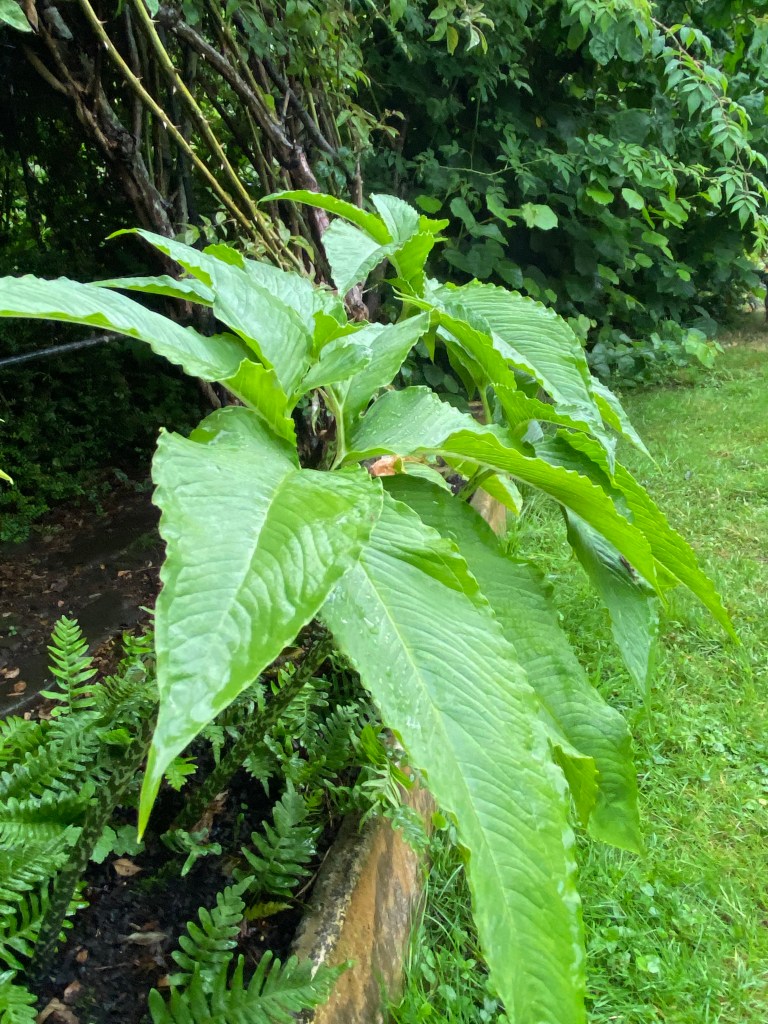
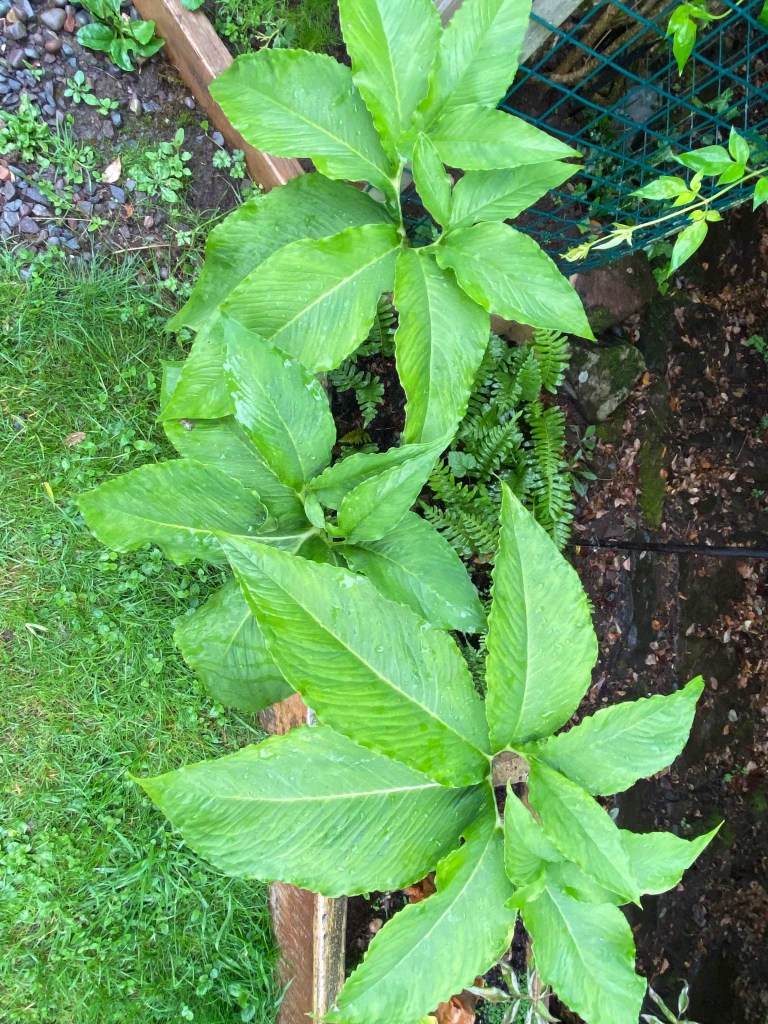
Such is the seductive detail of exotic plants. They draw you in to their botanic narratives and surprise you with their oddities. But I should have been more attentive. Having had some success with these plants in their first couple of years, I failed to follow my instincts and plant them out in a sheltered border covered in leaf mould, where they would be less vulnerable to frost.
Sad to say, both of these lilies have failed to reappear this year. Their troughs sit empty and devoid of interest.
The cause of course is that bitterly cold spell we had last December, when the temperature didn’t get above freezing for days on end. It was a lethal period that put paid to my exotic plants in their salt-glazed troughs. There were similar over-winter casualties in the greenhouse too: more Arisaema, as well as the long flowering Pineapple Lily (pictured here at the top) and the leafy Colocasia. All gone. Victims of the cold spell and in each case leaving nothing behind but a slimy, unpleasant smelling residue in their pots.
Despite these disappointments, I feel undeterred. I see more and more that I should be looking closer at the individual movements within the garden symphony, studying their constituent parts in greater detail, and caring for them more assiduously.
So I’m resolved to bring the pleasures of further exotica into the garden, but I’m also prepared for the disappointments that might still result from the vagaries of our weather!
 Quotidian