
It may be the shortest month of the year, but February seems replete with symbolism, ritual and ambiguity. Ancient observances jumble with Christian overlays. Calendrical quirks and lunar considerations bubble up and surface. The weather flatters, but can also deceive. The garden wakes up, though might easily turn over and go back to sleep. Much bemoaned as a time of dreich and drear, I have found this February, with its extra day, to be a most intriguing month.
It all begins on Candlemas Eve, celebrated here in Robert Herrick’s 17th century verses (1):
Down with the rosemary and bays,
Down with the misletoe;
Instead of holly, now up-raise
The greener box, for show.
He’s referring to the end of the 40 day festival of Christmas that prevailed in his time. Musing how Christmas now lasts for more than 40 days and begins in mid-November, I nevertheless observe Herrick’s instructions, and bring some green box into the house. Bright and with tiny white flowers, it looks fresh and inspiring.
Of course, as I have written elsewhere, the Christian festival of Candlemas, on the 2nd of the month, smoored over the much more ancient celebration of Imbolc, which marked the mid-point between the Winter Solstice and the Spring Equinox. Candlemas thus came to be a harbinger of spring and fertility. In that spirit I mark it by sowing a couple of trays with Meconposis seeds, collected in the garden last autumn. Extraordinary to think these shiny black specks might grow next year into plants that bear flowers of the deepest blue.
The early month weather jumps about and doesn’t know where to land. For a few days it’s mild and gentle and I take the opportunity to transplant a couple of small trees. These Cryptomeria Japonica were 18 inches tall when they came from a nursery in the Carse of Gowrie a few years ago. Now maybe five feet in height, I realise I planted them in the wrong place, distant from the house and obscured from view.
I take the risk, and move them to the main part of the garden. Their coppery green foliage looks stunning in the morning light. I stake them with stout hazel rods, recently pruned, and then mulch with a lush mixture of beech leaves and grass cuttings. The effect is slightly ‘botanical garden’, and I’m rather pleased with myself.
I’m even more delighted one early morning as I walk the dog, to hear in the darkness the sound of mallards on the garden pond. For a dozen years a pair of these handsome ducks has arrived about this time. Nesting somewhere along the burn side, I’ve never yet discovered where, or ever seen their offspring. Today as I come near, they lift off the water with a splatter, but soon return and I have the pleasure of watching their bobbing heads from the sitting room window.
Then as the second week of the month gets underway, the frost returns, the pond is skimmed with a thin sheet of ice and by 7.30, snow is falling. I fret about the cryptomeria and notice the mallards are absent. The cold night of the 10th is star-bright, the Milky Way back-washing the sky and Orion presiding over us as the lunar new year of the dragon makes it’s fiery entrance.
That night also brings visitors to the orchard. The following morning trees carefully tended over recent years are found stripped of bark, the horns and teeth of roaming deer having ripped in, and done perhaps fatal damage. I close the stable door after the horse has bolted and carefully wrap lengths of chicken wire round the trunks, hoping that will be enough to fend off further damage, and the trees will recover.
More pleasurably, a surprising amount of bloom and blossom appears in this transitional month.
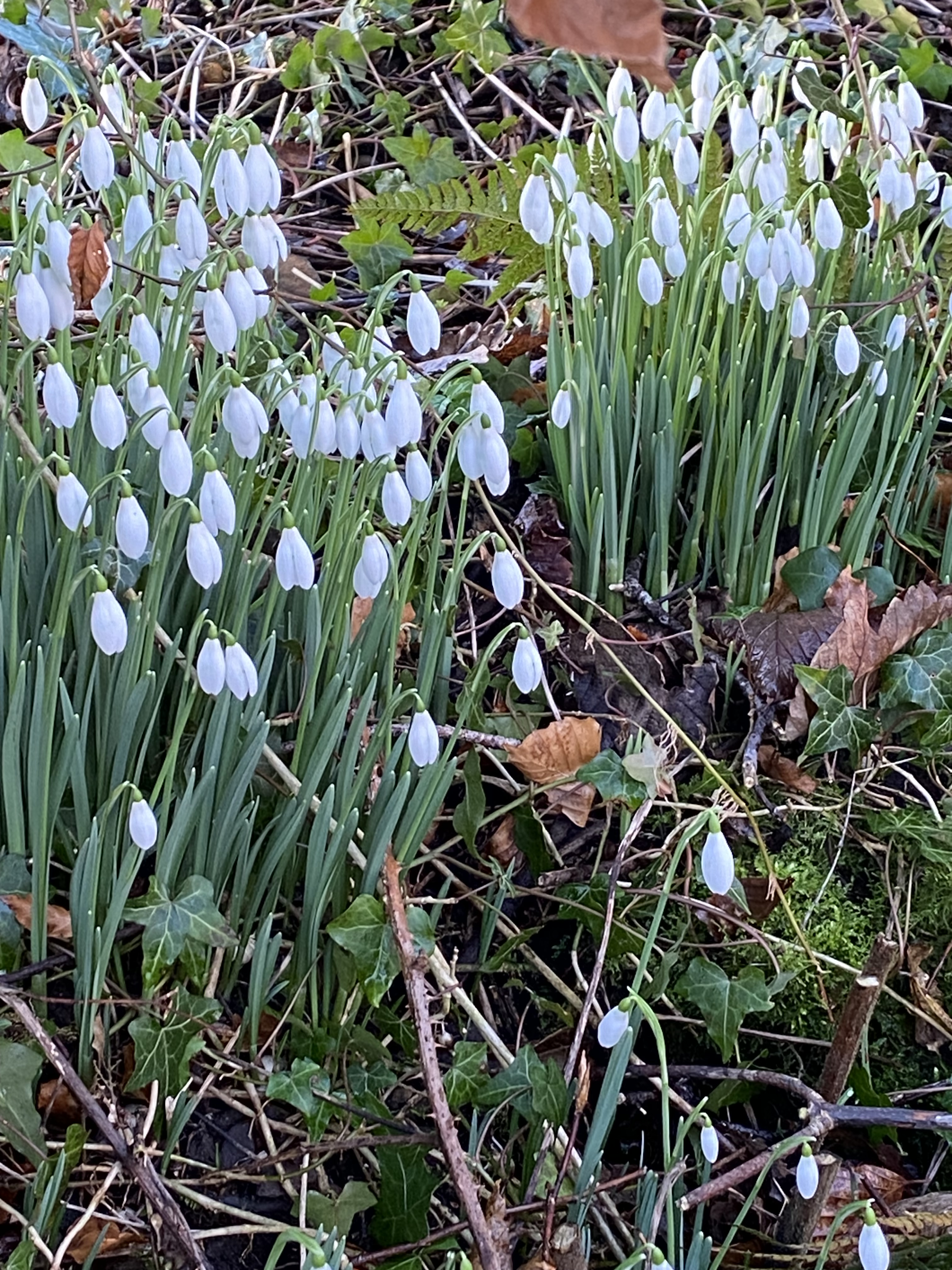
Of course, snowdrops are synonymous with February and get pride of place. They’re also tough, and resilient to a sharp drop in temperature. In these parts they are having a good year, with great swathes in the woodlands and bright splashes along the hedgerows and loanings. Is it my imagination, or are they spreading – moving into new spaces and brightening up still more dark corners on a dark day?
Other favourites are also on display in the Dumfriesshire garden.
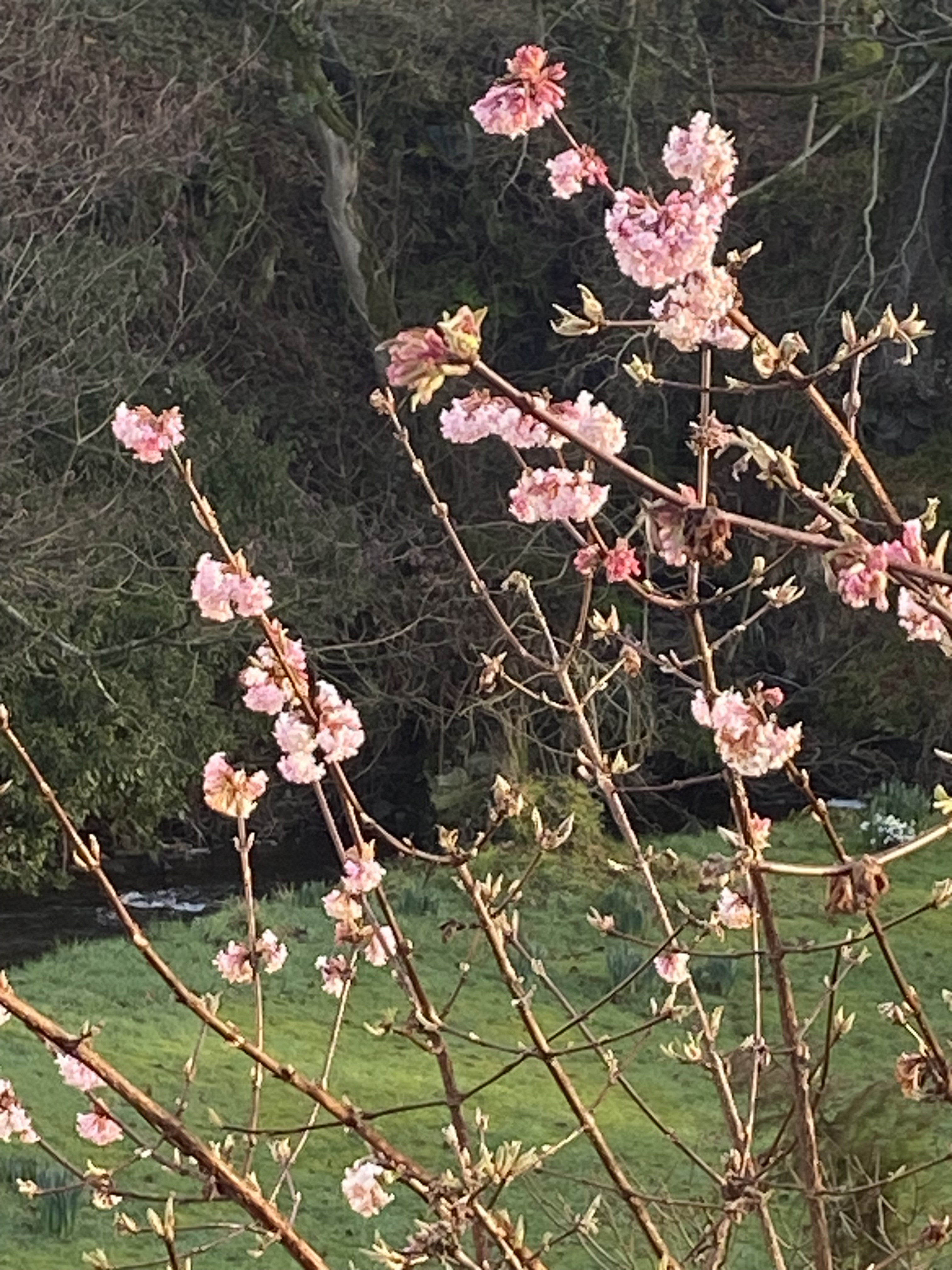
The Viburnum Fragrans shrub gives a double bonus of lush pink blooms on bare stems, along with a heady perfume. Some newly planted Witch Hazels send out their tentative first Hammamelis flowers, also on leafless branches and lightly scented.
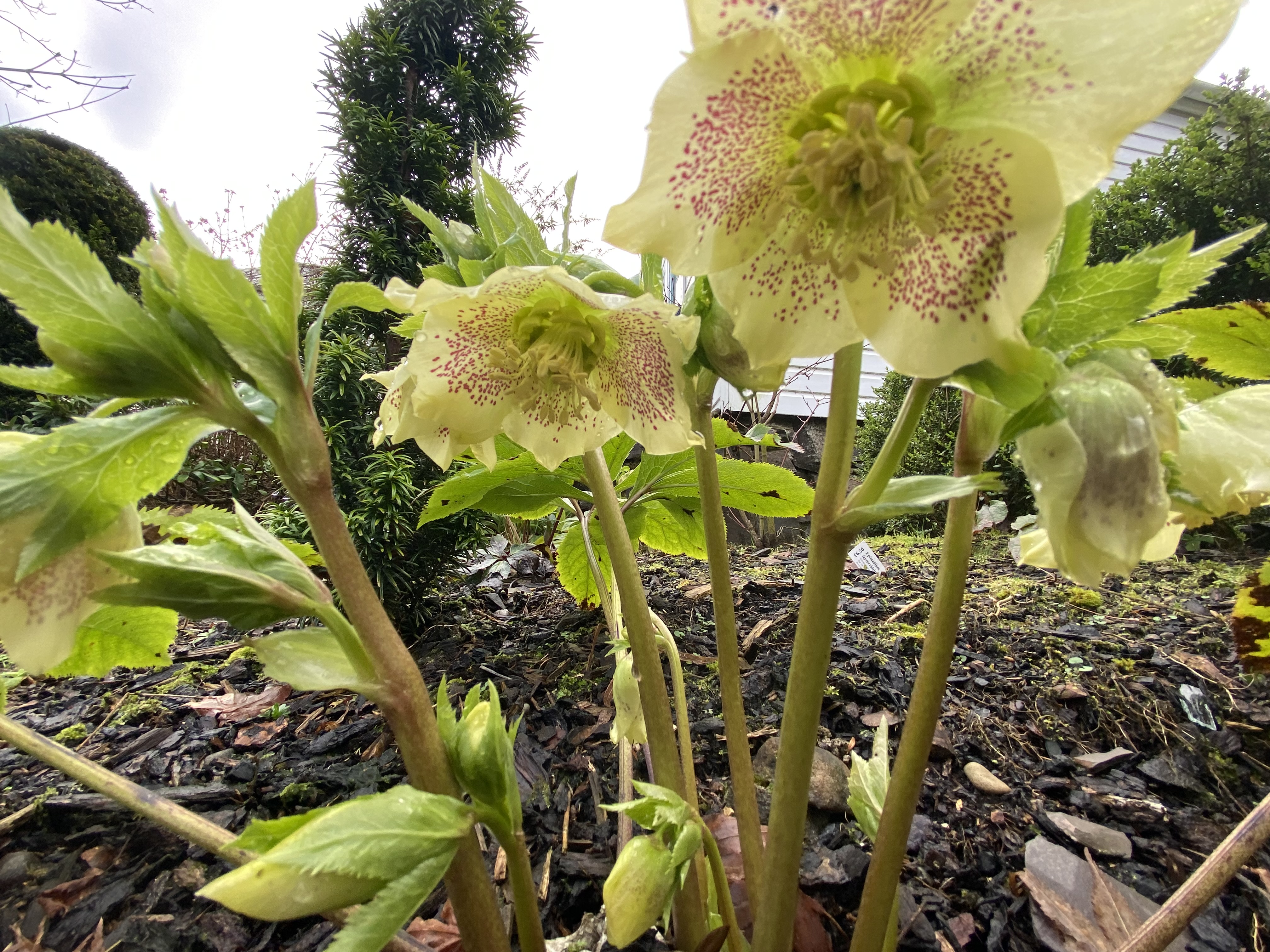
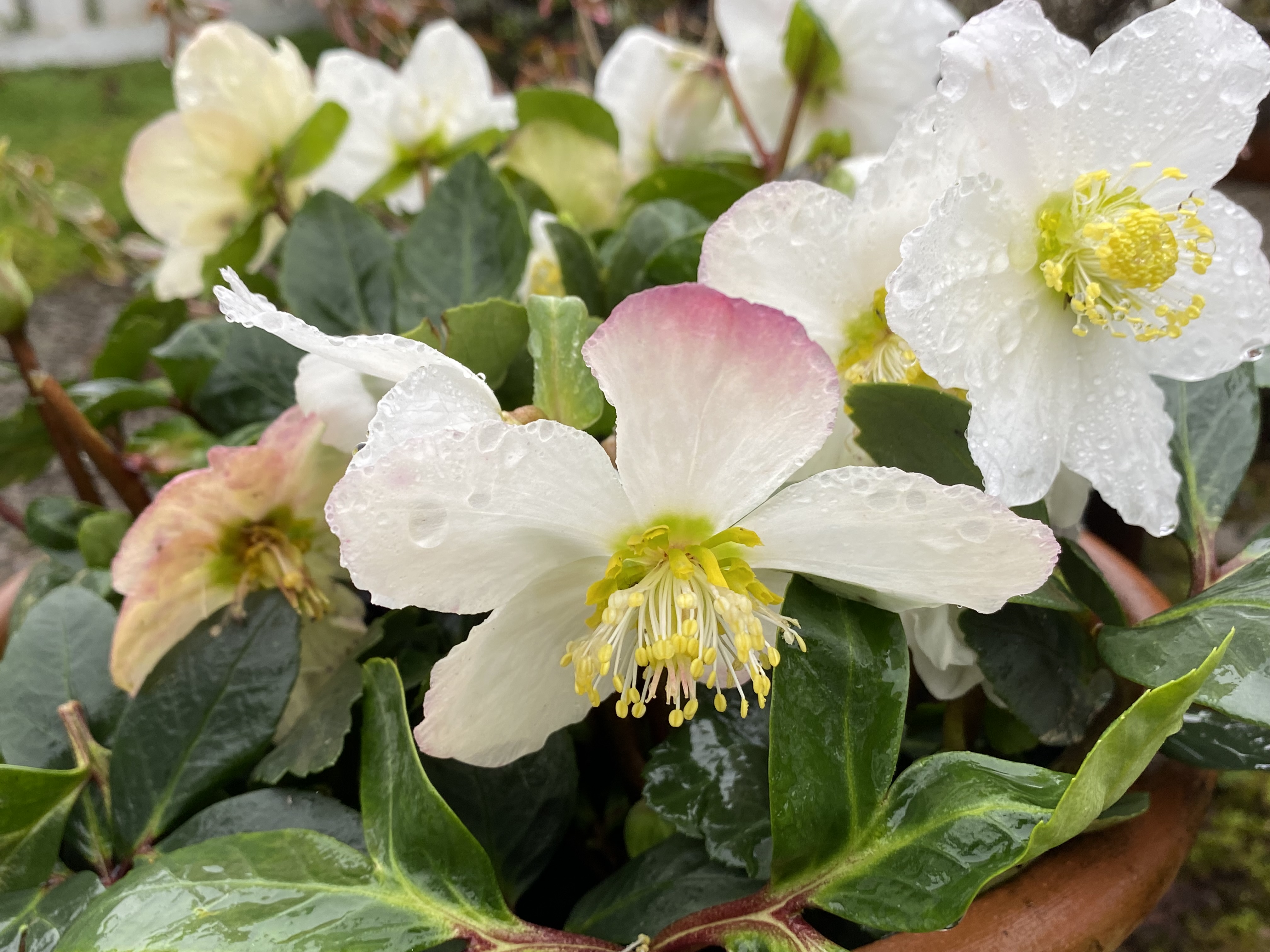
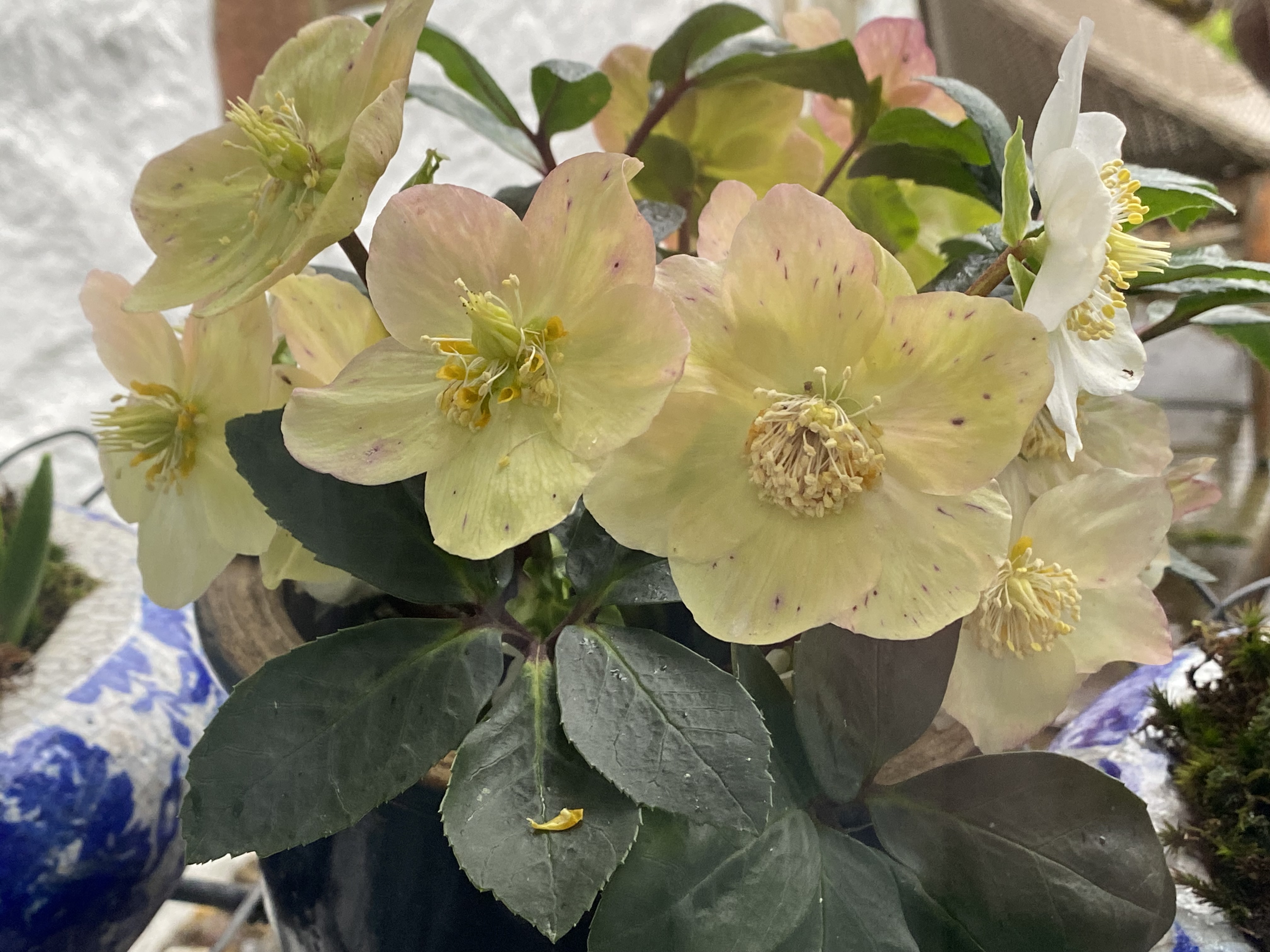
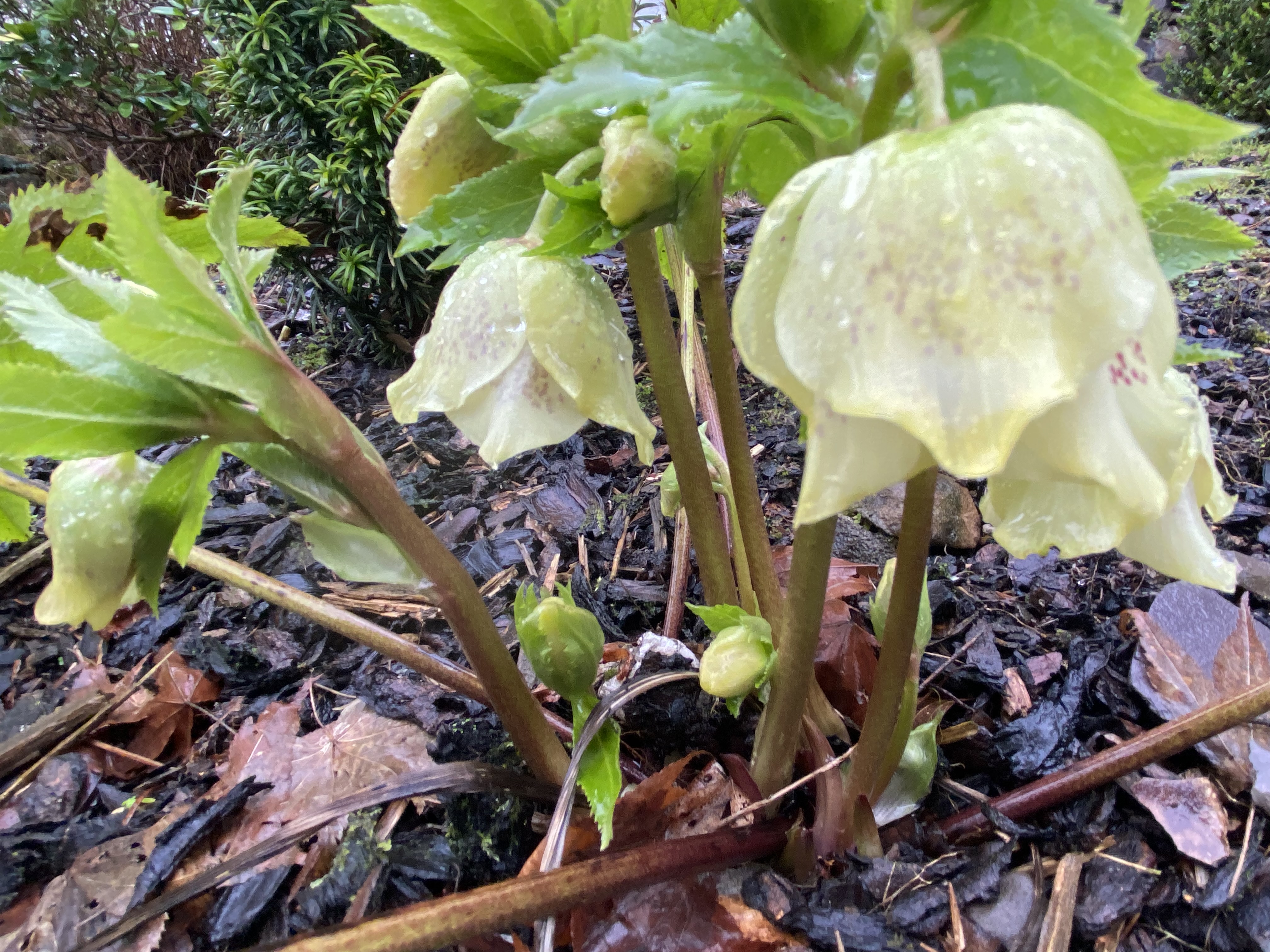
In the borders, the Hellebores advance every day with elegant flowers of white, purple and yellow. For some varieties it’s good to look at them from below, to see exquisite markings and colour patterns in the gently dipping flower heads. For others, large white flowers face up to the passer-by, as the plants nestle in the leaf mould, below the acers and birches.
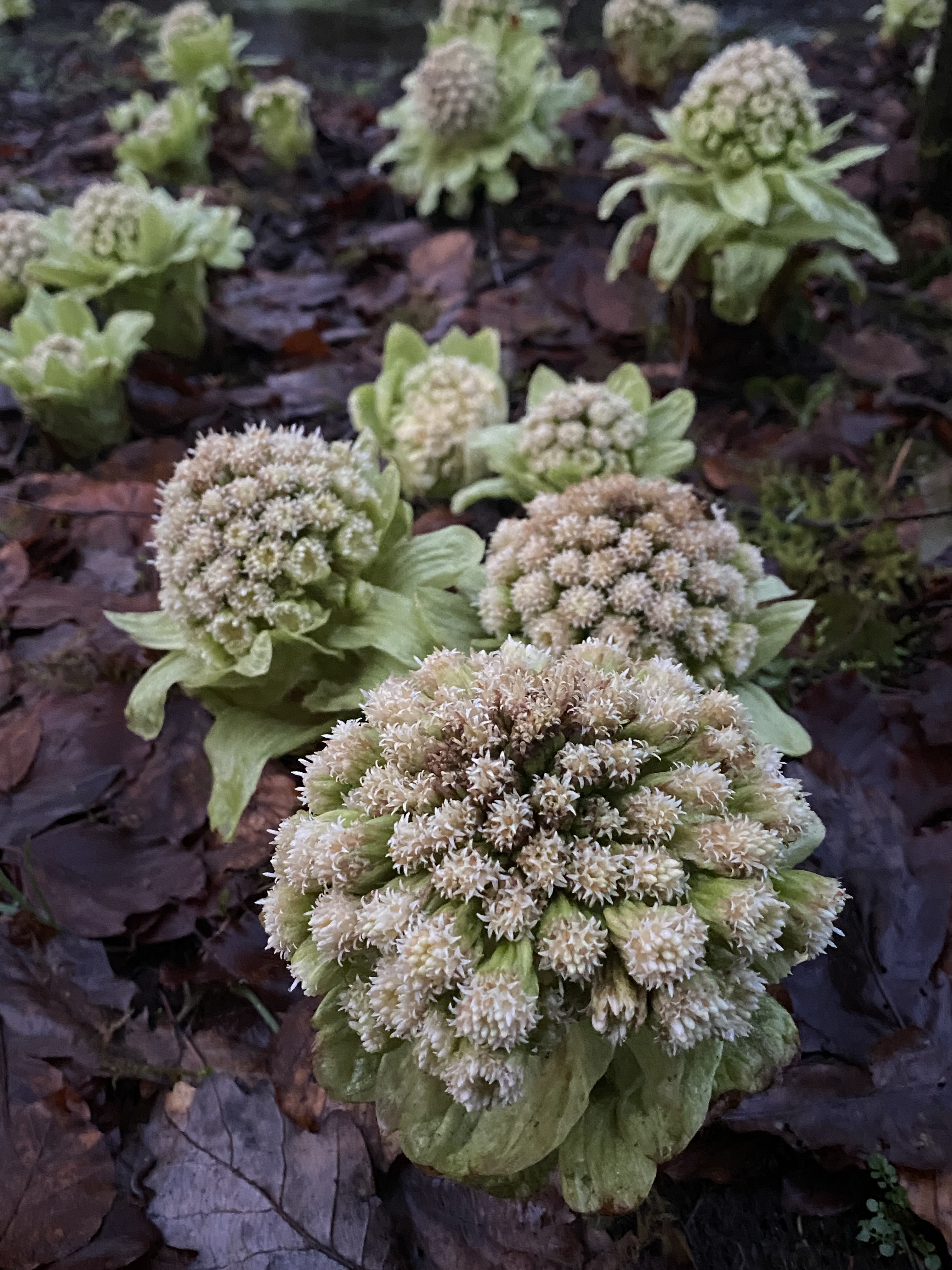
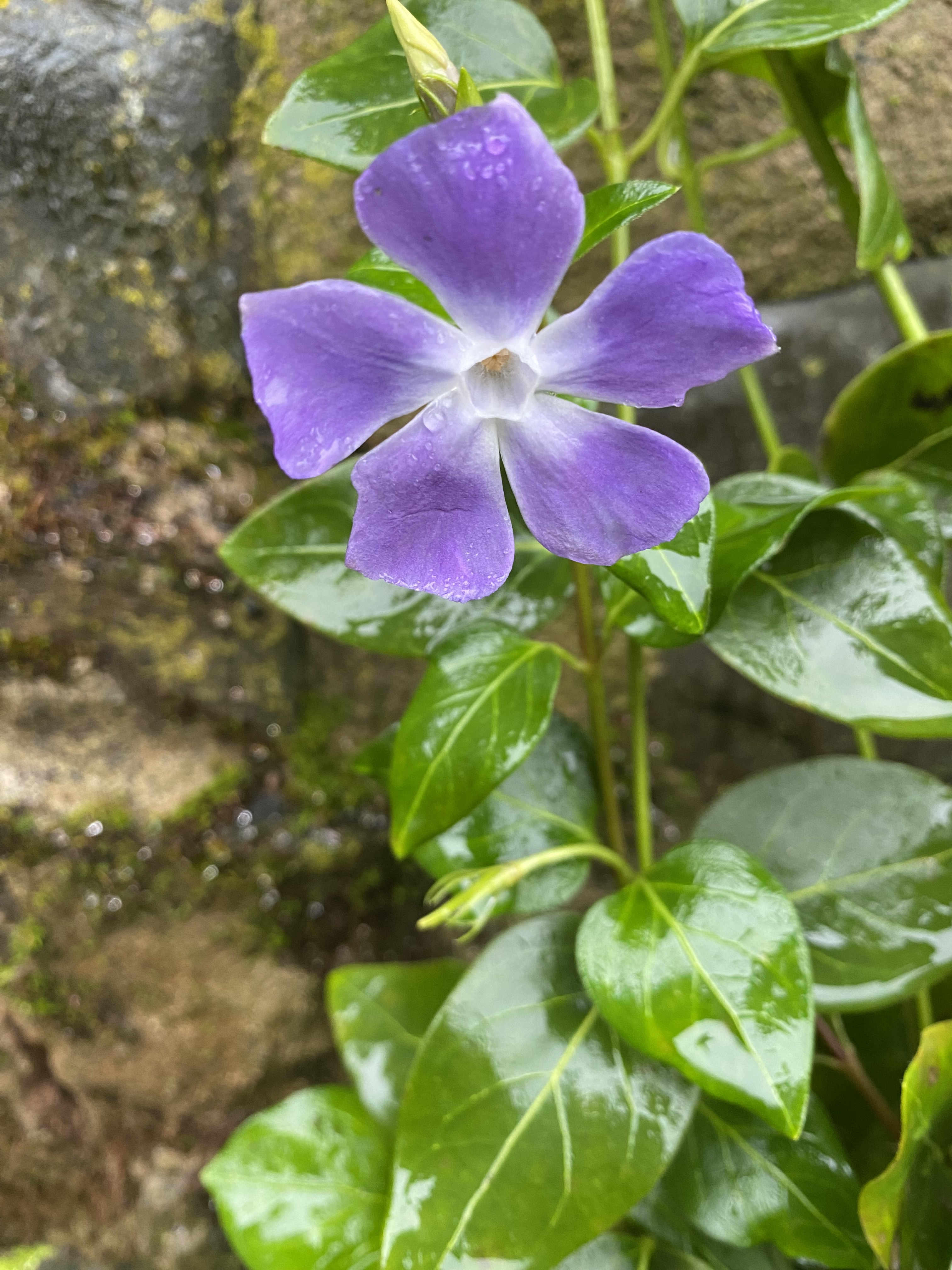
Even the solemn yew, a great favourite of mine, is confettied with its own profusion of delicate, male flower clusters that slowly fade and change into something like a miniature Brussel sprout. Meanwhile, in the bog garden, the flower heads of Butterbur or Colt’s Foot are sitting out like so many small cauliflowers. A solitary Vinca has also appeared.


At mid-month the first camellia arrives, regal and red among waxy green leaves, gesturing to the day of love and lovers, as Geoffrey Chaucer did in the 13th century (2).
Saint Valentine, who art full high aloft –
Thus sing the small fowls for your sake –
Now welcome summer, with your sun soft,
That this winter’s weather does off-shake.
**********
Saynt Valentyn, that art ful hy on-lofte-
Thus singen smale foules for thy sake –
Now welcom somer, with thy sonne sonne,
That hast this wintres weders over-shake.
St Valentine’s Day this year coincides with the start of Lent. That name comes from an old word (lencten) that simply means getting longer, a reference perhaps to the growing hours of daylight. Our forebears took some time to divide the year into four seasons. Winter and Summer were understood and named long before Spring and Autumn entered into the languages of these islands, and Christian festivals populated the calendar.
The waxing gibbus moon gets brighter and stronger. Named ‘Snow’ or ‘Hunger’, it will be the smallest full moon of the year, but this one seems to be punching above its weight, and the pre-bedtime dog walk requires no torch. Two days before the full, it gets an earthly visitor, landing in a crater close to its south pole. Spacecraft: leave that moon alone!
As February comes to its close, days of bright sunshine and cool winds alternate with days of continuous rain and cold winds. Other than in the most sheltered spots, daffodil buds swell, then hold back, awaiting sun and warmth combined before showing off their splendour. In the arboretum field beyond the garden, their shorter native cousins, Narcissus Pseudonarcissus, are biding their time. After all, it wasn’t until mid-April, in 1802, that Wordsworth had his famous encounter with a whole host of them, and remembered them so fondly (3).
For oft, when on my couch I lie
In vacant or in pensive mood,
They flash upon that inward eye
Which is the bliss of solitude;
And then my heart with pleasure fills,
And dances with the daffodils.
My month of February has seen the varied pleasures of wind, rain, sun and changing daylight. An elastic month, with a meteorological calendar that seems to speed up, slow down, to advance and to retreat with constant interest. Quite why the Venerable Bede referred to February as Sol-Monath – the month of cakes – I do not know. Not least as this otherwise secular writer, has given them up for Lent!
Postscript
There was one extra day left to the month when I finished writing this. The 29th turned out to be rather warm and sunny. Suddenly the blooms and blossoms burgeoned and shone out across the garden, the whole place on display. And there at the pond edges were masses of frogspawn. It seemed that Spring had arrived.
Poems
(1) Robert Herrick, Ceremonies for Candlemas Eve
(2) Geoffrey Chaucer, Parliament of Fowls
(3) William Wordsworth, I Wandered Lonely as a Cloud
 Quotidian
One thought on “The month of cakes”