
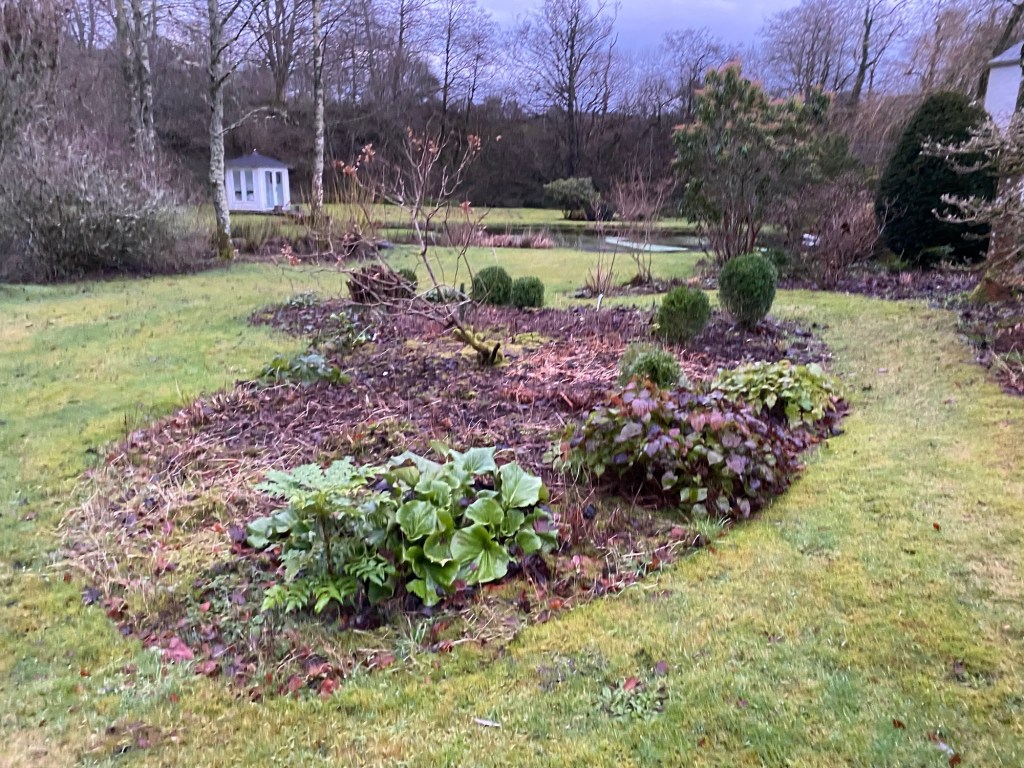
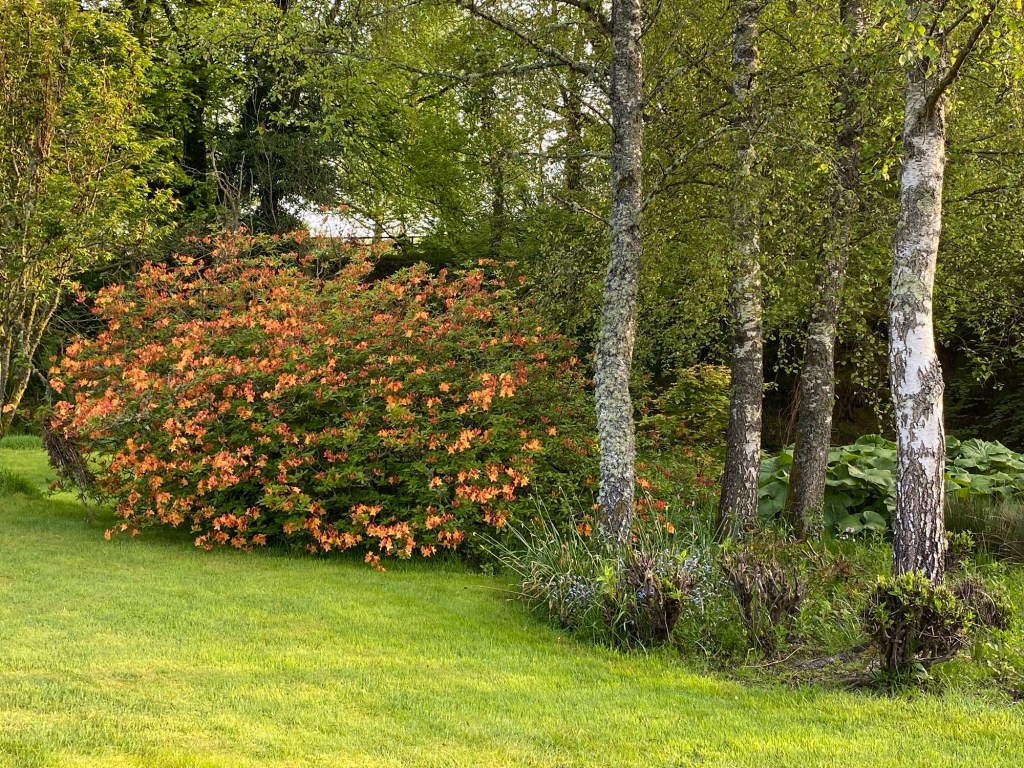
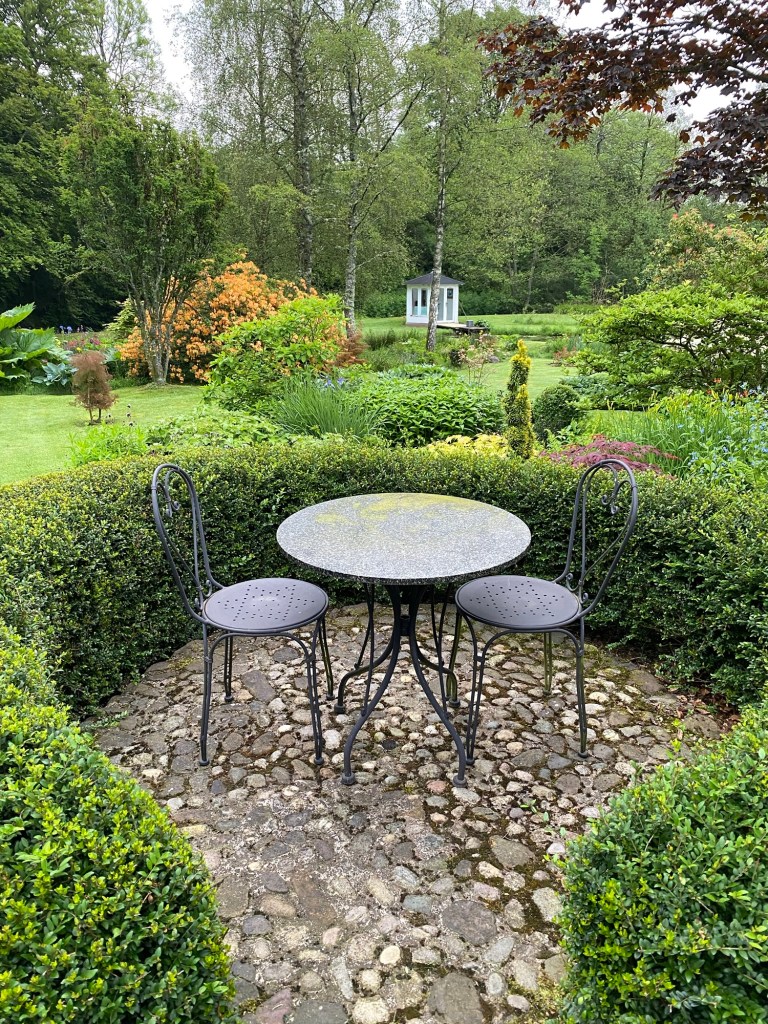
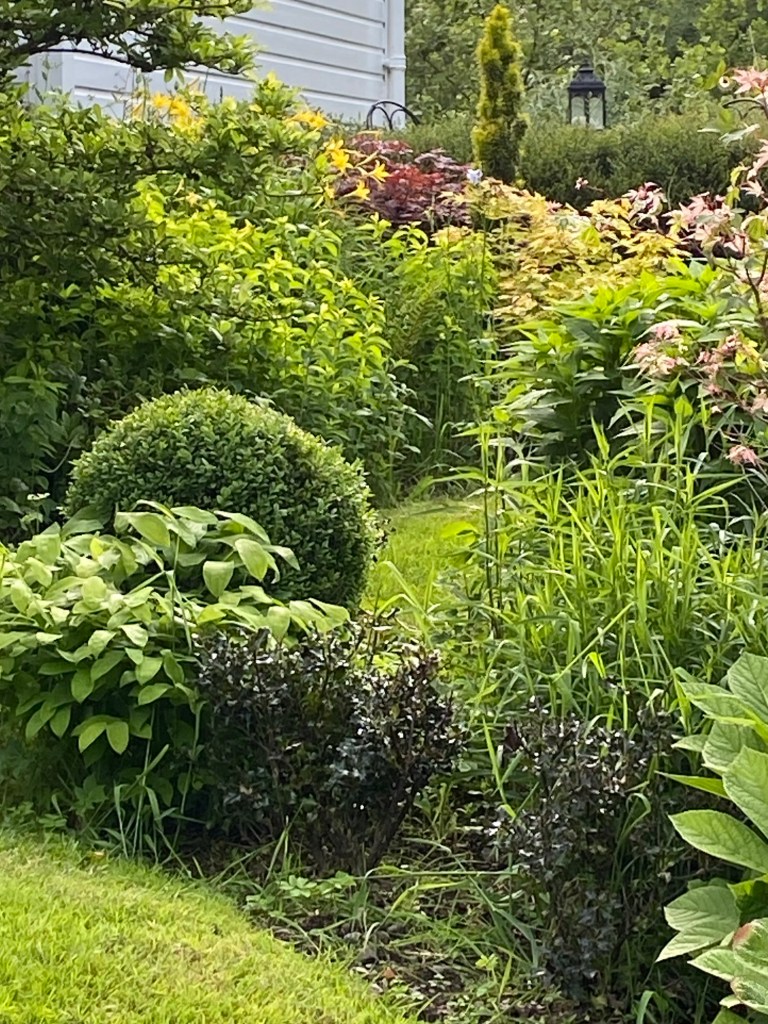
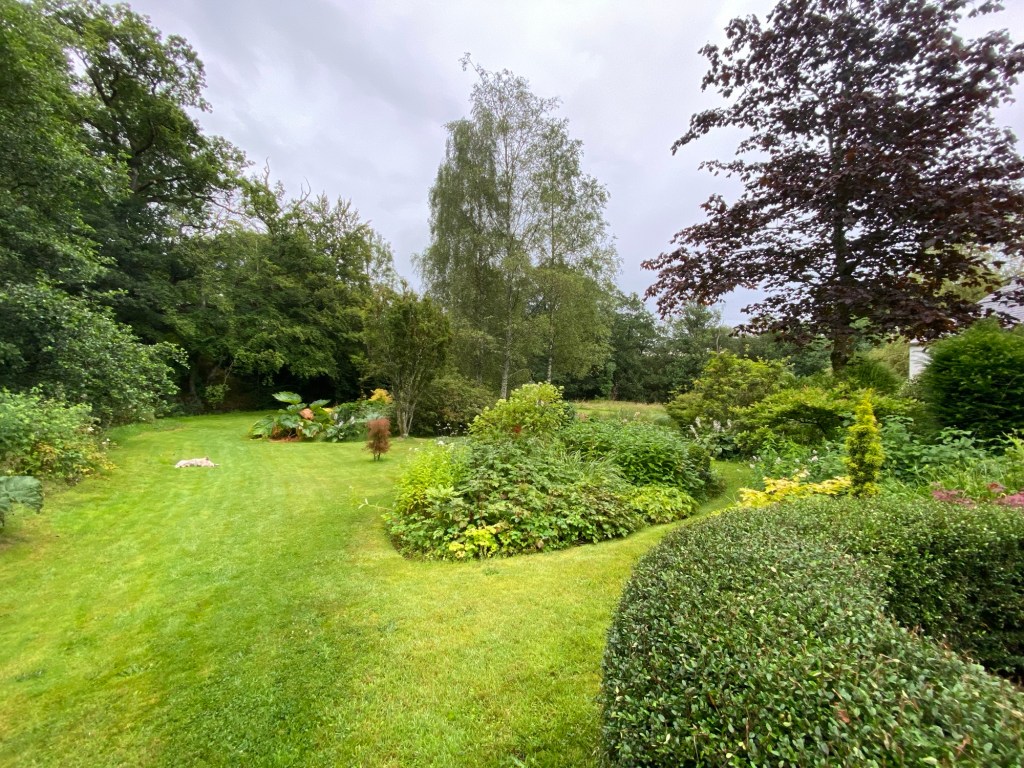
The Dumfriesshire Garden in south west Scotland started as a modest border at the back of a farm building that was under renovation as a home. Paradoxically, it began in the poorest piece of ground imaginable, where a thin layer of soil sat on top of bedrock. Gradually the scope of the garden extended, contained within a lovely bend of the Pennyland Burn. Boggy in one large area, a pond was introduced. Elsewhere, it is post glacially stony, but in some parts, particularly near the burn, a good depth of rich, loamy soil can be found. After nearly 20 years it was radically extended to include an adjacent field of tough pasture, now developing as an arboretum. The whole extent is around three acres, maybe a little more. In recent years on this blog I have written about the garden extensively, and also produced an open access book describing its annual cycle. The whole Dumfriesshire Garden project is an endeavour of amateurish enthusiasm, laced with a good measure of insights from horticulturalists, as well as the benefits of reading and of gardening programmes on TV and radio.
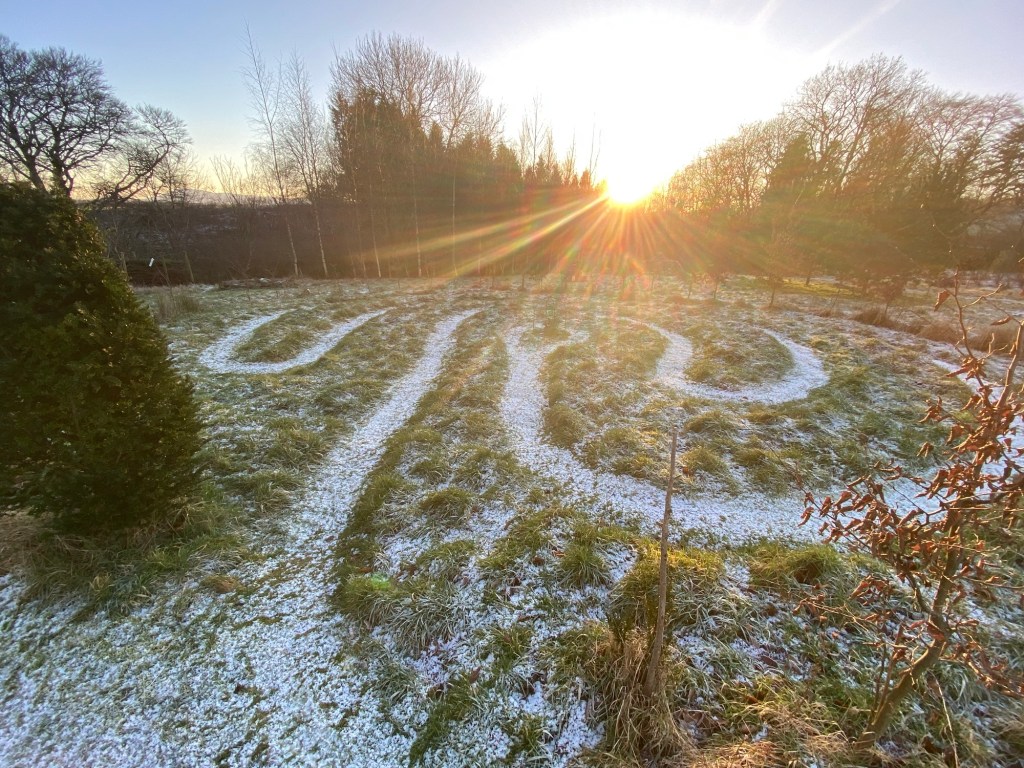
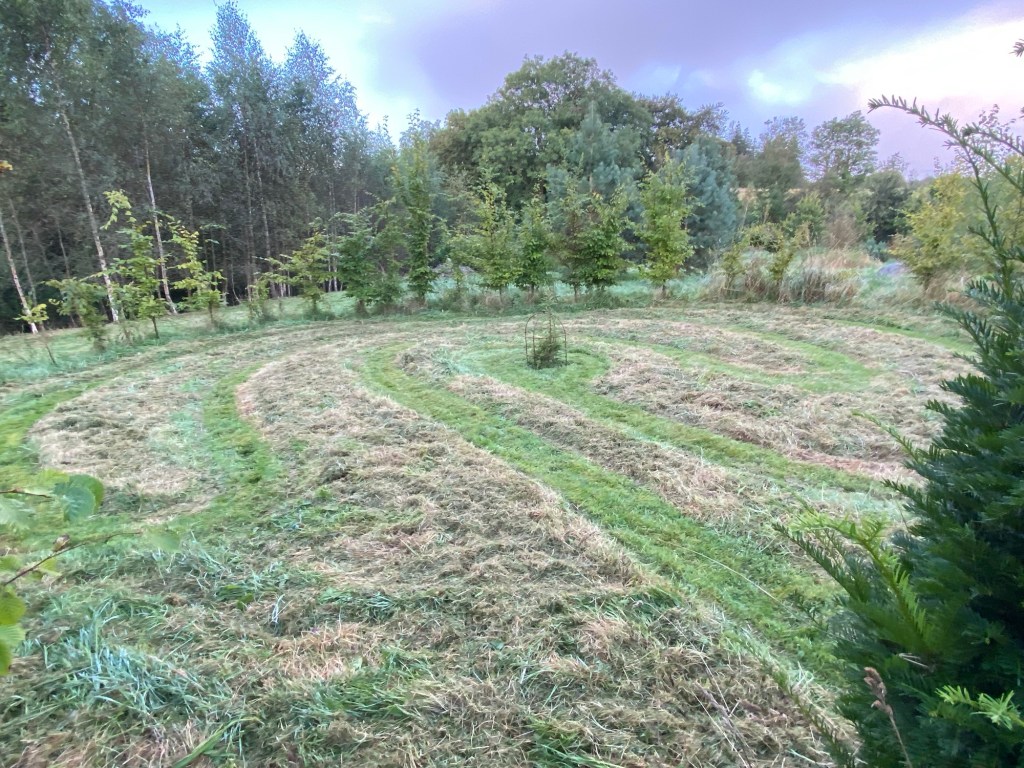
I have already confessed that the garden has seven distinct borders that somehow crept up on me. It also contains a fair amount of hedging and clipped evergreens, a greenhouse, an allotment of raised beds, a labyrinth and an orchard. Over time I have reduced the amount of grass that needs assiduous mowing in summer, and modified our path and grass management in the arboretum. I’ve added two dead hedges – excellent for woody prunings – and hope to create more: they are much loved by wrens as a nesting site. We also have three hefty compost bins, worked in rotation for the vegetable patch. Dogwoods, willows and hazel all get cut back or thinned on an annual basis.
The garden has evolved over almost three decades, incrementally and empirically. There is no blueprint or design. But as I get older I feel conflicted. The garden gives profound daily pleasure and opportunities for deep reflection, as well as for new ideas to emerge. If I try to curb my enthusiasm for further developments, I am usually unsuccessful. At the same time I worry that it has become a rather weighty responsibility, especially around late June and early July when everything seems to be growing apace, including the grass and the weeds. Then I fret that the garden is getting away from me. If it has evolved out of hubris, perhaps it now threatens to become a liability. Then as summer growth slows, I breathe a sigh of relief and tell myself that we can keep going for a while yet.
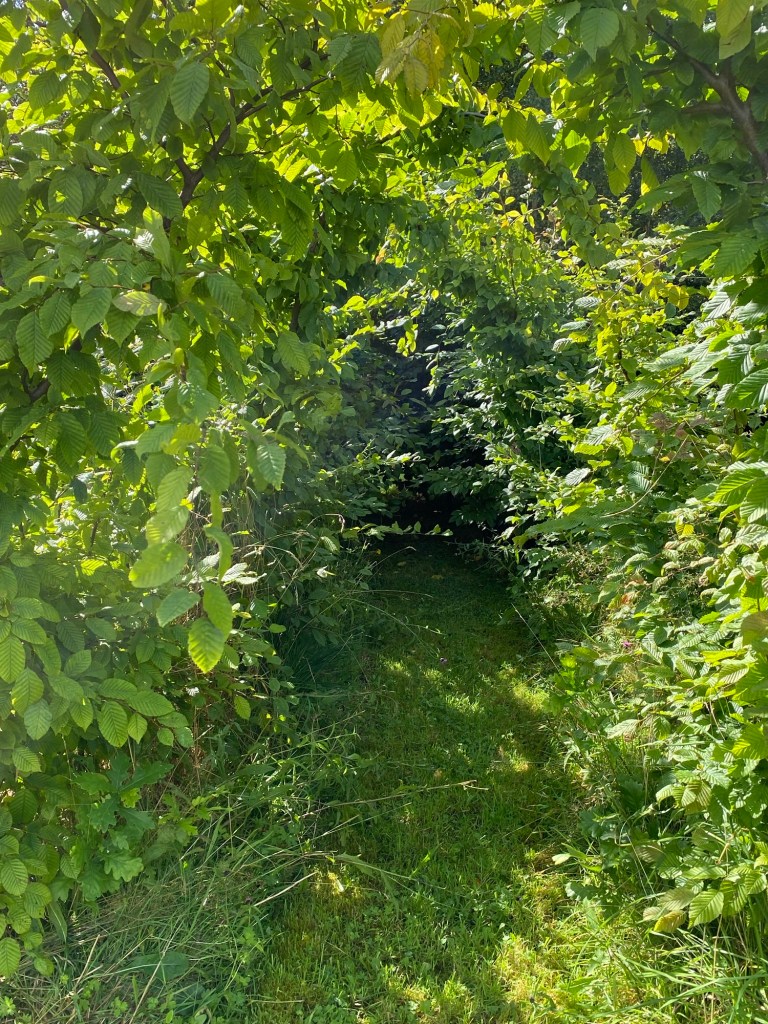
In between these extremes I think of mitigations. If the grass management in the arboretum becomes a chore, it can be left to nature. The trees are now well established, the paths between them can be maintained by walking rather than mowing. In the big border (my biggest worry) where this year bindweed and sticky willy have been getting a serious hold and where some herbaceous plants have been knocked back from their peak of a few years ago by winter frosts, another mitigation is under consideration. Here I might plant more trees and evergreen shrubs. If some of the latter could be clipped into shapes, so much the better.
The Dumfriesshire Garden as we now see it has only been made possible by three people who over the years have helped make it what it is .
The late DP laboured valiantly to landscape the pond, wrestle the field grass near the house into shining lawns and to build stone walls and terraces. From him, the baton went to AN: he built raised beds and compost bins, ploughed and fenced the big border into existence, took pride in his striped mowing and when the arboretum began, found and relocated huge rocks to go amidst some of the tree circles. Then came JG, she works in the garden every Tuesday morning, all year round, manages all the mowing, does all the arboreal pruning, fills dead hedges, weeds and tidies the winter borders, and strims once a year through the silver birches and pines, preparing the ground for the return of the spring bulbs. To these three amazing people I owe huge thanks and gratitude for their individual and collective contributions to the Dumfriesshire Garden. It has been, and continues to be, a shared endeavour.
So there we have it. Keeping on top of things is important in the garden, but equally the garden needs to find its own way, and as gardeners, we are guided by that as much as our hand guides the garden.








The full list of pieces that make up my A-Z in the Dumfriesshire Garden in 2024 can be found here: https://davidgrahamclark.net/a-z-of-the-dumfriesshire-garden-in-2024/
 Quotidian
Gorgeous.
LikeLiked by 1 person
The dead hedges seem an excellent idea which I’ll certainly consider making use of, though what I identified most strongly with in your post was the paragraph, “I worry that [the garden] has become a rather weighty responsibility, especially around late June and early July when everything seems to be growing apace, including the grass and the weeds. ….Then as summer growth slows, I breathe a sigh of relief and tell myself that we can keep going for a while yet.” And my project – I don’t really think of it as a garden – is a lot less ambitious than yours.
LikeLike
Thanks Stephen. I’m a big fan of dead hedges and they can work at any scale. As to the bigger question, well I have a slow trajectory towards lower maintenance , and I do have the much younger JG working in the garden every Tuesday morning!
LikeLike