
In the Dumfriesshire Garden I am surrounded by something special and important, but until recently I paid it little attention.
Moss.
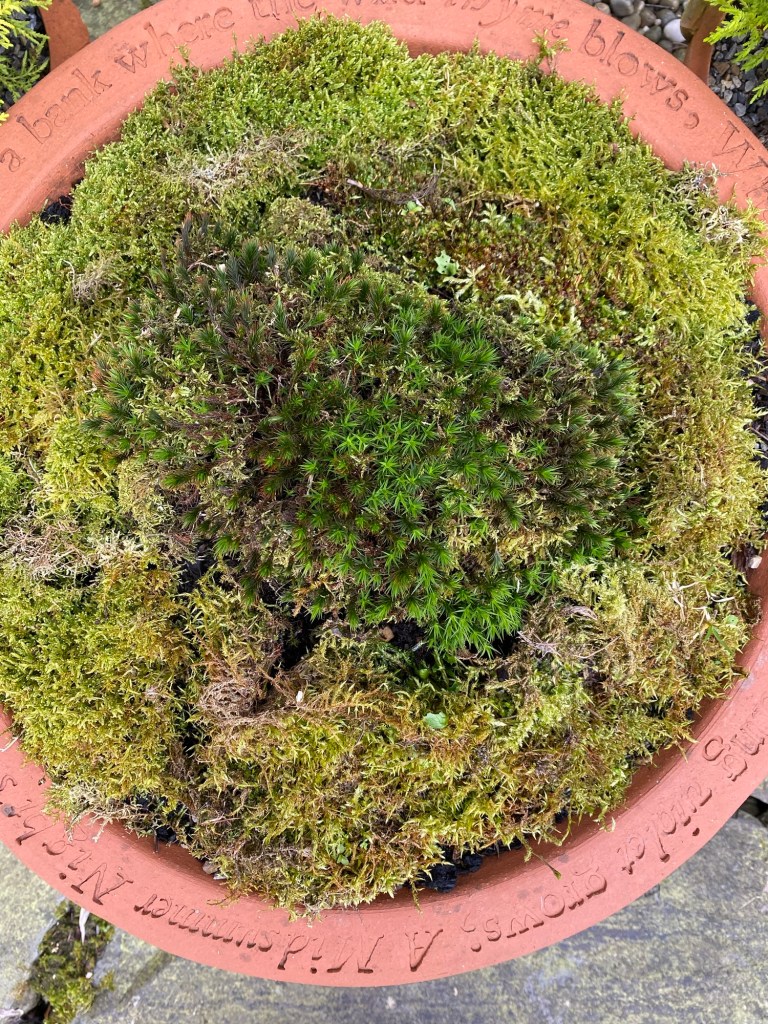
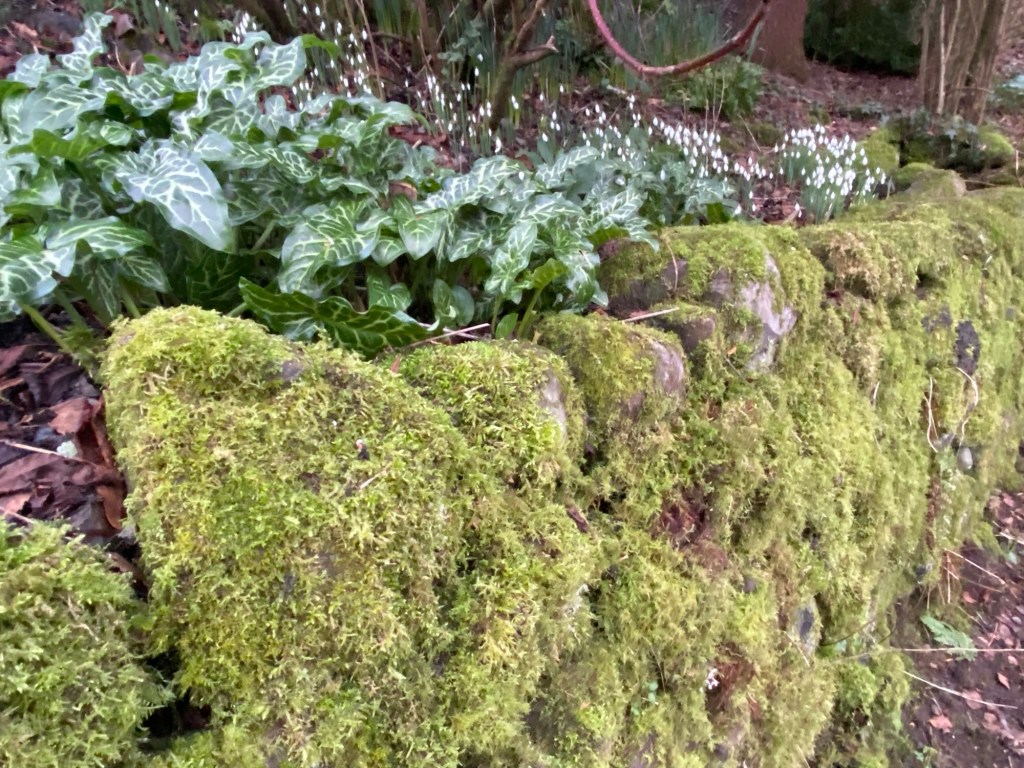
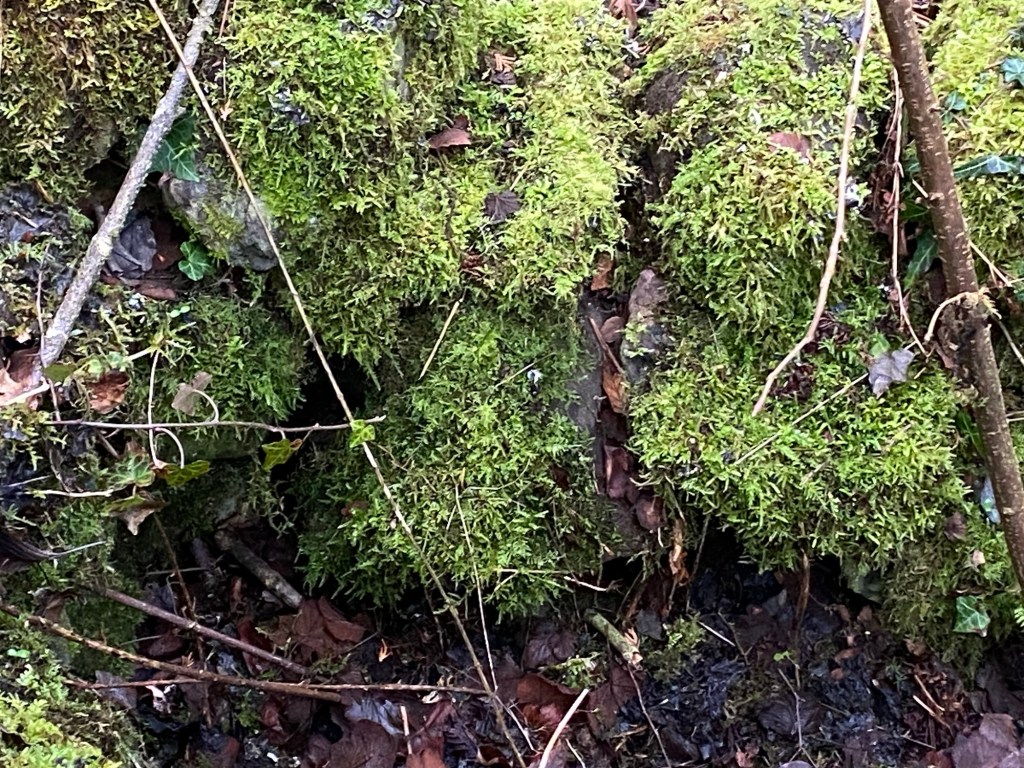
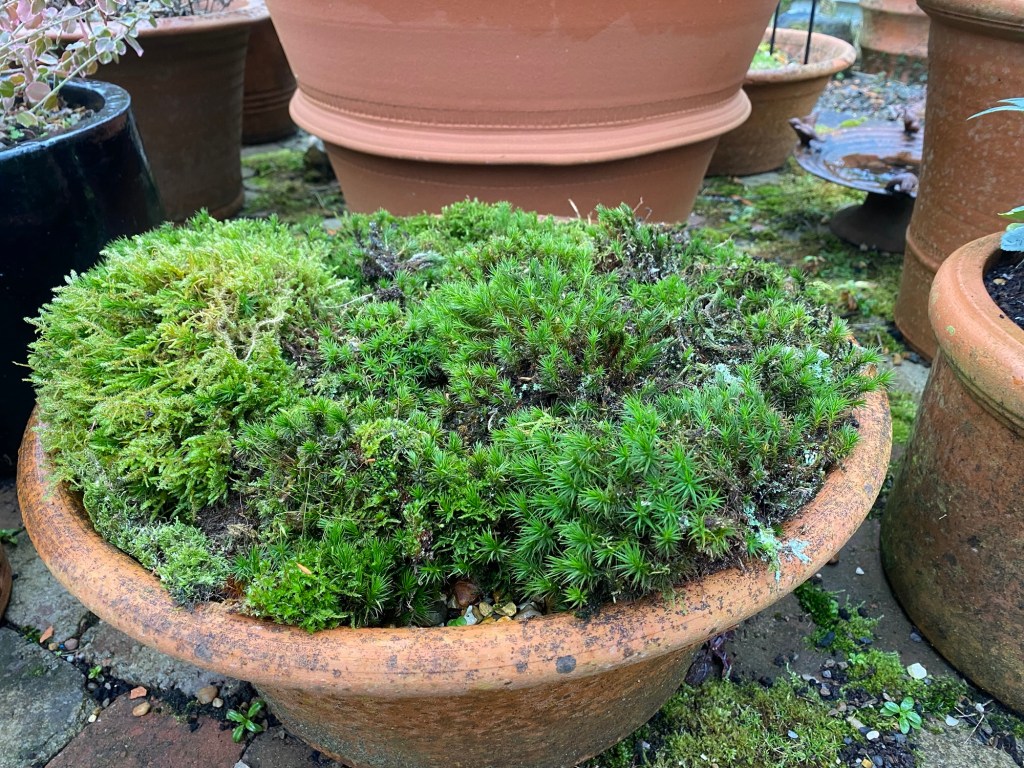
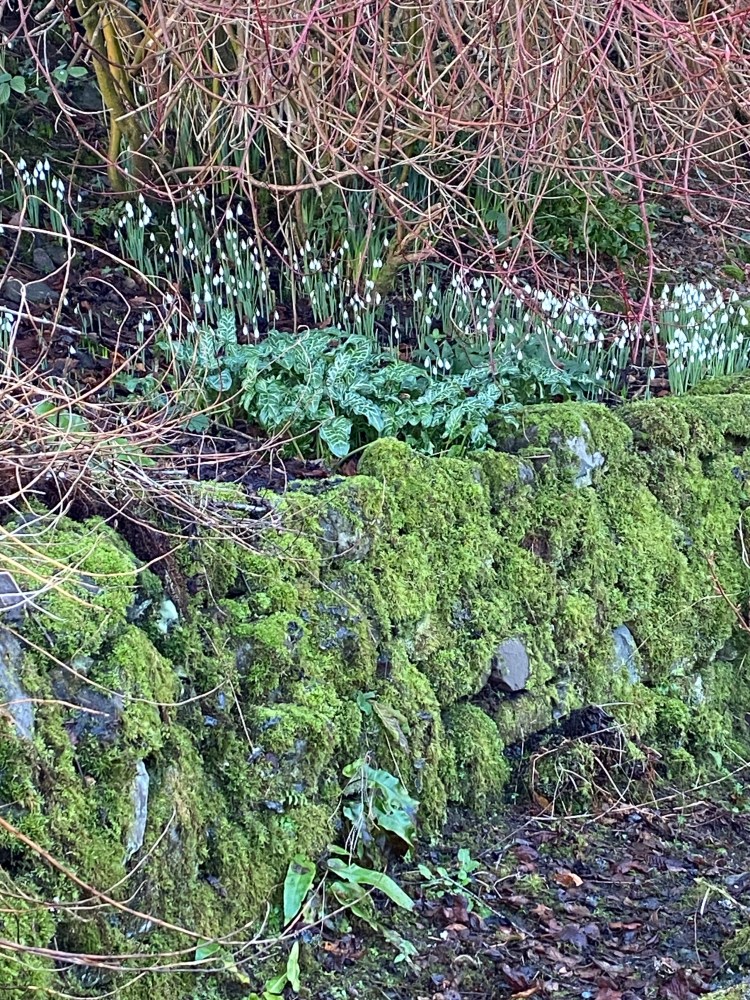
Ubiquitous in a damp climate like ours. Taking many forms from close clinging to pin cushion plump. From slatey grey to deep forest green. Ubiquitous. Largely ignored. Settled and colonising the tops of stone walls. Creeping between the cracks of flagstones. Greening the outside of plant pots.
This year I’ve taken more notice of moss than ever before. I’ve come to understand better its place in the garden, for example in Japan where it has a long tradition, and how in that country, plant centres may stock and sell as many as 20 varieties of named mosses.
Yet in Britain many gardeners see moss as the enemy. ‘For a good lawn, hit the moss hard in the spring’, an ex-military gardener once told me. In our plant centres you might find up to 20 varieties of moss killer.
So what are mosses and why do they produce such conflicting reactions? Mostly they’re defined as non-vascular plants, devoid of roots or vascular tissue, that absorb water and nutrients from the air. More and more it is being understood that these fascinating and varied plants are playing an enormously important role in carbon capture. In the Scottish context most of the action in that space relates to peatland restoration and the fostering of sphagnum moss as a key agent in carbon sequestration. This is an area where my good friends at the Crichton Carbon Centre are extremely active and knowledgeable.
But what about in our own gardens. Can moss serve the same purpose, even on a micro scale? Just as we plant trees in our gardens for environmental reasons, should we be protecting and encouraging our garden mosses? I don’t know the answer to this. But for the last three years there has been no use of moss killer in the Dumfriesshire Garden. One result I noticed immediately in the first year was just how the moss shone bright and green in the winter months, even as the grass it is pushing out looked dull and listless.
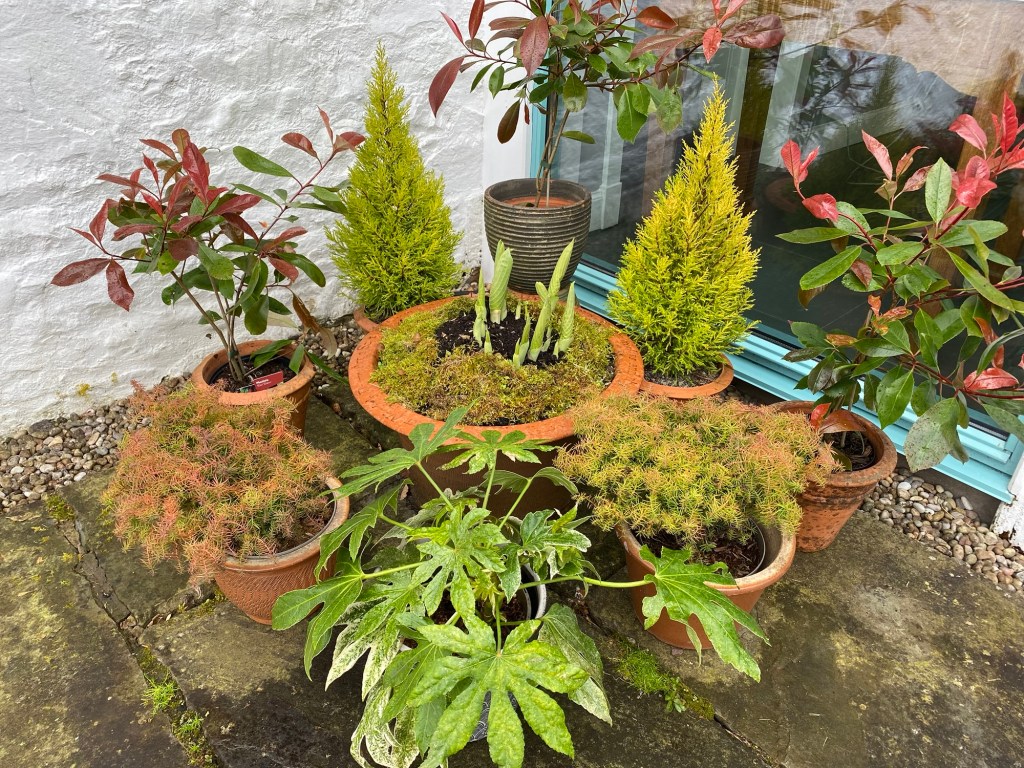
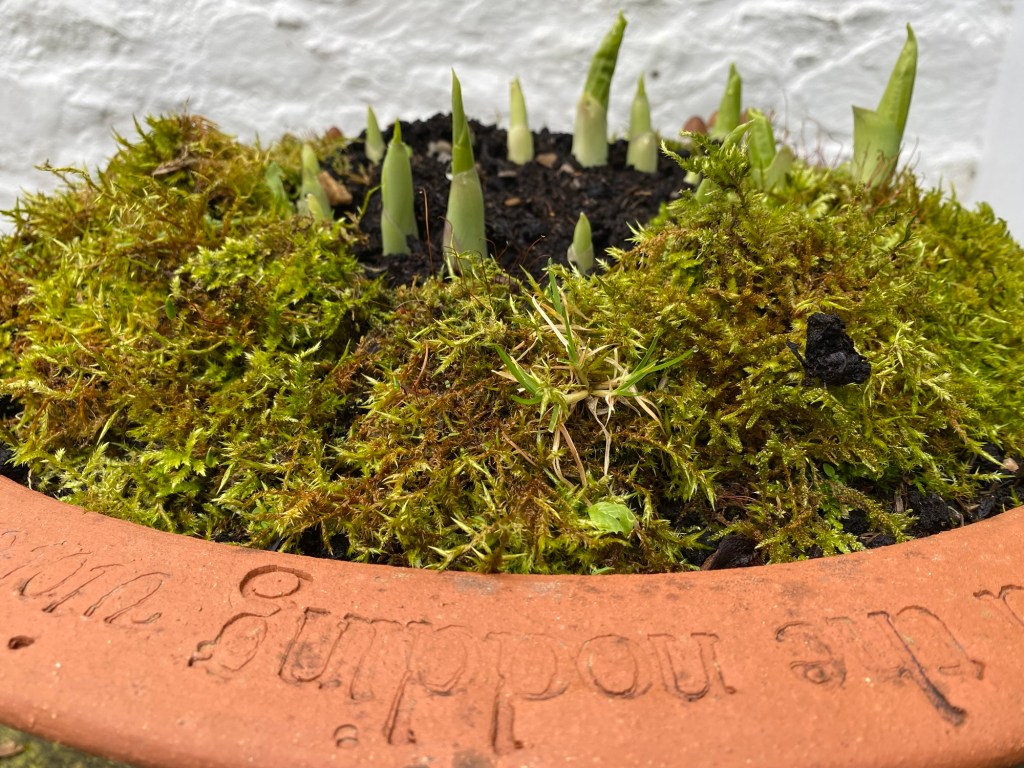
I’m now resolved to learn more about the mosses that live in the garden. I’ve also taken to using them on pots of spring bulbs, where they provide a bit of frost protection and a beautiful backdrop to the emerging plants.
I am very taken by Julian Cotton‘s poetic celebration of moss. We need more of this. Alongside the scientists, conservationists, activists and poets, gardeners too can play their part. It’s quite clear: a moss movement is underway!




The full list of pieces that make up my A-Z in the Dumfriesshire Garden in 2024 can be found here: https://davidgrahamclark.net/a-z-of-the-dumfriesshire-garden-in-2024/
 Quotidian
Oh my gosh! Beautiful!! Here in the PNW, with our seasons becoming dryer and rain more sporadic, I do everything I can to encourage moss. And lichen.
Your photos are beautiful, and remind me of our trip to Japan – some of the most beautiful moss gardens on this planet!
You are so lucky. I wish you could send some moss my way :)!
LikeLiked by 1 person