
April can seem full of deception. Promising much, then failing to deliver. Eulogized by the poets for its splendour, but also exposed by them as painful and cruel. The gateway to Spring, it still has frost on its back. Not for the first time in my life, I associate it this year with death and bereavement. April can wake up cold losses from the past, whilst all the while building warmer hopes for the future. Janus-faced, it needs careful watching. Anyone who spends time in a British April will have some story to tell you about its unpredictability. Thus it has been for me this year: April 2025.
As the overnight frost lifts and the sun warms the air, on the 5th of the month, I look from the window to see a pair of bullfinches feeding on the blackthorn, as bees work its blossom. It’s a nice start to the day and causes me to think back over the longer duree. There’s no doubt in my mind that the garden created here from scrub land and a large patch of boggy ground, has been hugely beneficial for wildlife. Sometimes this brings problems. Over the years I have been keen on growing raspberries. The blackbirds and thrushes have welcomed this too. But as the shrubs and trees have matured in the garden they provide innumerable perches for birds, whose droppings in summer may well contain raspberry seeds. Parts of the borders are thus invaded by unwanted raspberry plants, whose roots spread at will in the rich leaf mould. It’s a phenomenon in the category that Max Weber, the German sociologist, referred to as the unintended consequences of action. And it is very visible this year, as I go around pulling out the rogue plants, many of which snap off in the process, only to send up more shoots just days later.
During the first half of the month, the frosts continue as the dry conditions and gusting winds persist day after day. Wildfires break out in the west of the region. When the winds abate, the daytime temperatures rise and China blue skies last from just after dawn to just before dusk. ‘Enjoy it’, say friends and neighbours: ‘this might be our summer!’
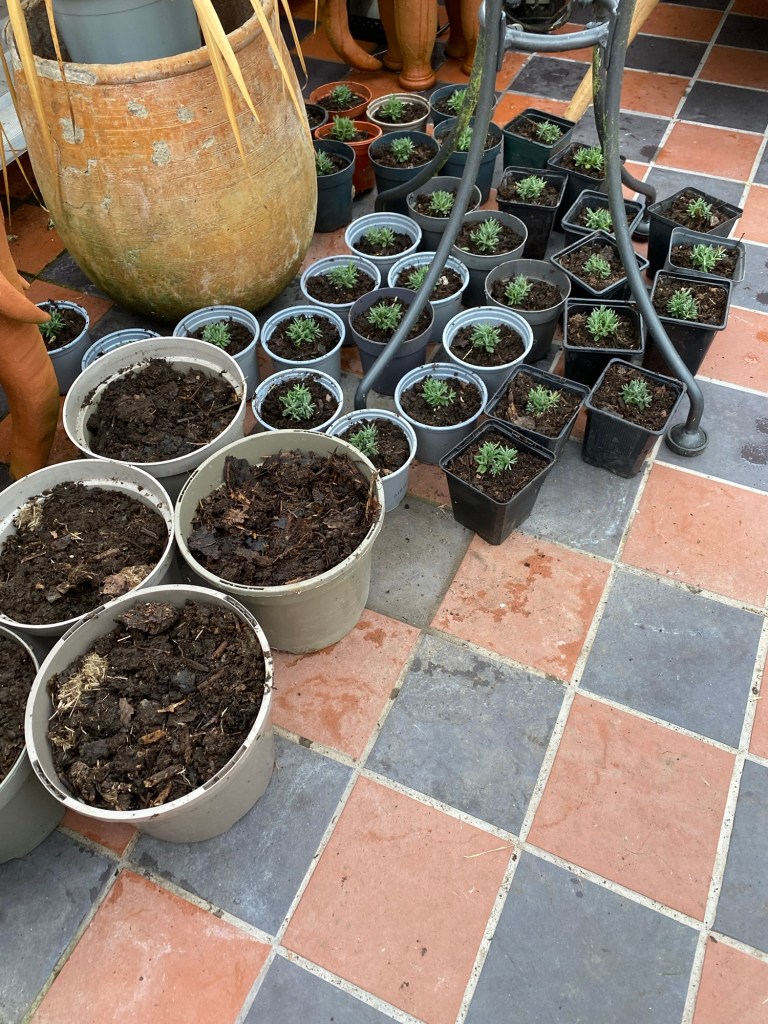
It’s certainly not the weather for planting things out, so I press on with seed sowing. The greenhouse is now full to the gunnels with newly sown trays and pots. Among them are four varieties of meconopsis, the quickest out of the blocks being the home gathered ‘Pennylandis’ variety. Alongside are foxgloves, lavender, lupin and the much-loved cosmos. I’m also pleased with the strong growth of some cardoons, gathered from a Perthshire garden. This year I have bought in three dozen plugs of Hidcote lavender. Potted up soon after arrival in home made compost, they quickly settle. I’m hoping to set them out along the wall in the south-facing big border, where they will replace plants gone straggly or lost to bad weather. The high summer lavender display there is always noted by visitors as they come down the track to our home.
Meanwhile, shrubs I planned to move from pots into the ground sit where they are, as we wait for more suitable conditions. That opportunity comes by the start of the third week of the month. Now I press on with planting, putting three photinias, bought last year, into the big border. They situate well close to some witch hazel and among spiky perennials. I also plant a couple of western red cedars here, to go along with one already established. I am gradually migrating the big border from predominantly herbaceous, to mainly trees and shrubs. This includes the odd blow-in, like oak, ash and willow, which are left to take their chance. What we lose in high-summer colour we will gain in biodiversity.
As the month advances we get the pleasure of eating greenhouse grown mixed salads, rocket, and herbs like coriander and dill. There’s also a good showing of courgettes, dwarf French beans and leeks that will soon be ready to plant out. I’ve maybe been a bit hasty sowing the more tender varieties, as frosts are still lingering on the penultimate day of the month.

In the evenings I read The Garden Against Time by Olivia Laing. Outwardly her book is an account of a walled garden restoration in Suffolk. But on closer attention we see how this is skilfully interleaved with a sweeping range of themes and illustrations that bring us to a central question about what a garden represents. Laing takes us back to the acts of enclosure in Britain, an insidious land grab, justified in the interests of ‘improvement’ whilst irrevocably changing the British landscape with walls, fences and prohibitions. The book also up skittles any unquestioning acceptance we may have for some of the huge landscaped estates designed by Capability Brown and his successors, and which Laing sees as acts of purification in the homeland, for acts of brutal exploitation of enslaved Africans, on plantations in the Caribbean and America. When I finish the book, I dip into some of the reviews. Most show little interest in its underlying critical, post-colonial themes, and instead save their praise for the Suffolk garden writing. I share the feeling of being lectured at times by Laing’s thesis, but there is no doubt that it highlights the socially situated aspects of creating and remaking gardens, wherever they are located in time and space.
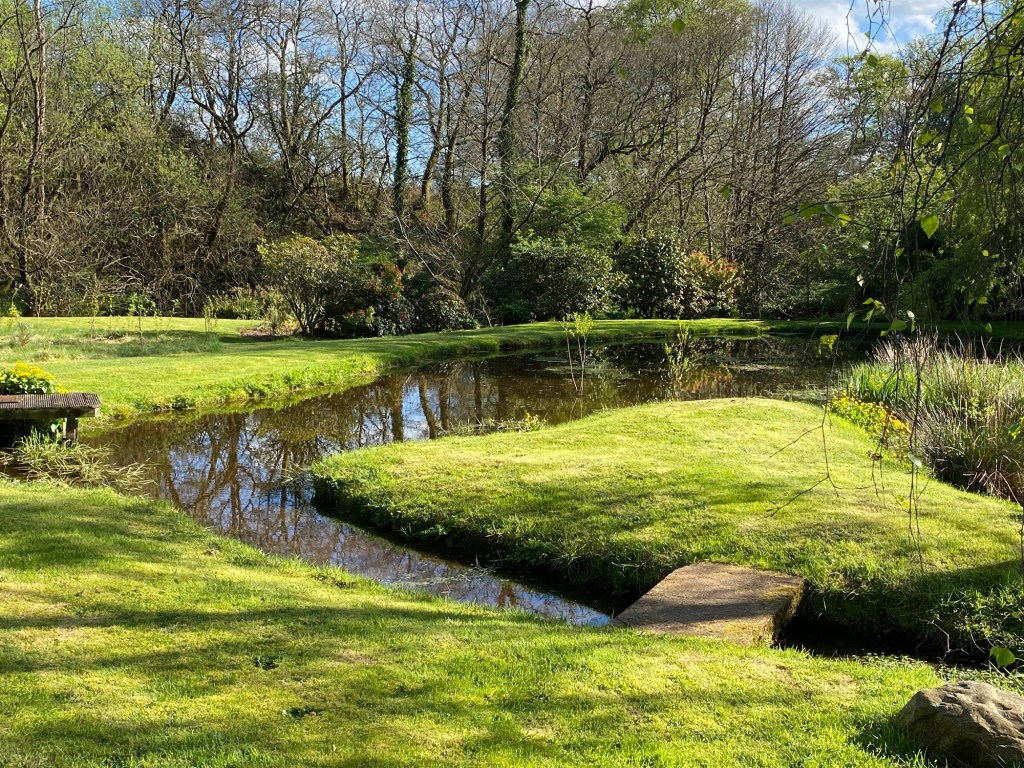
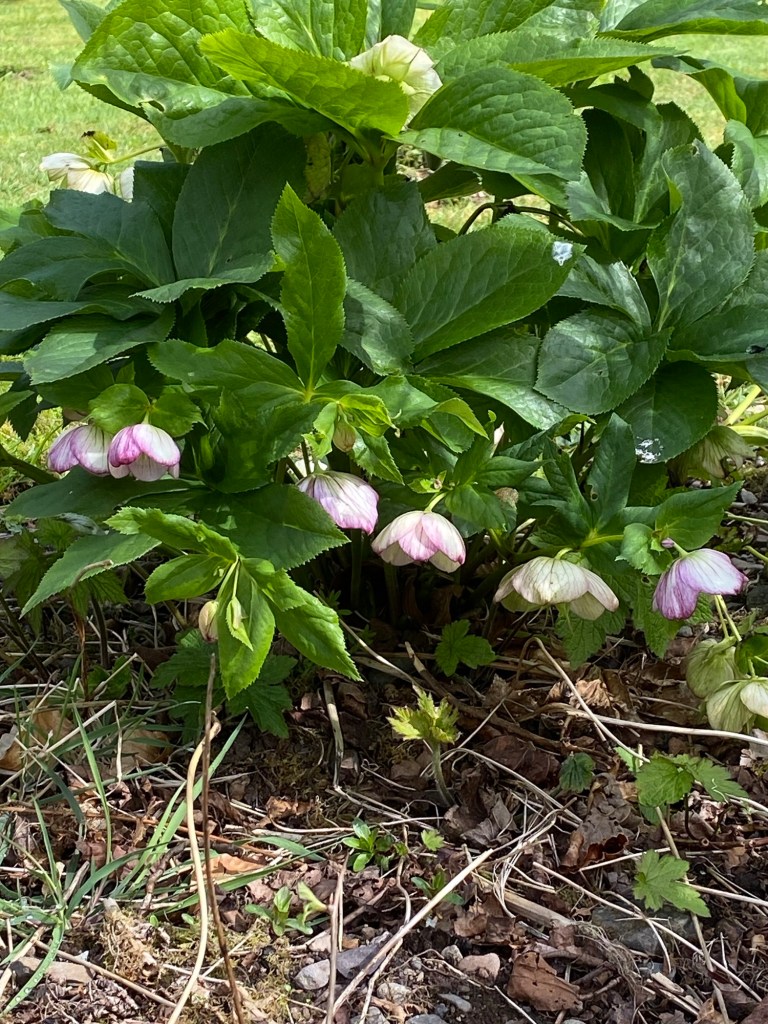
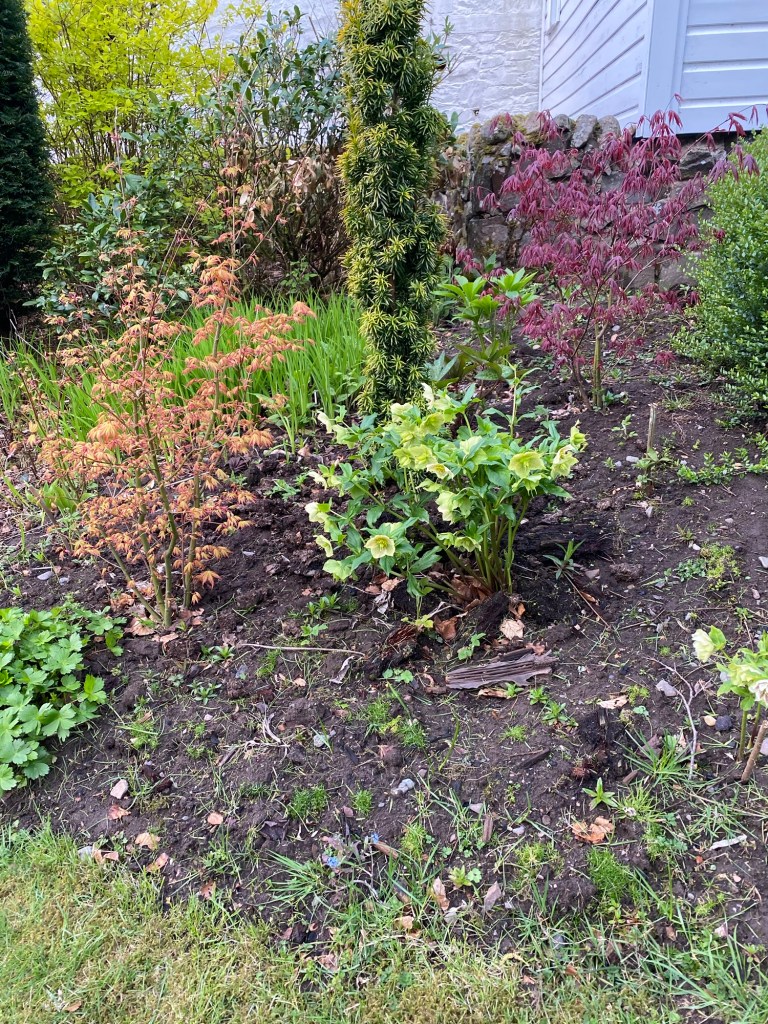
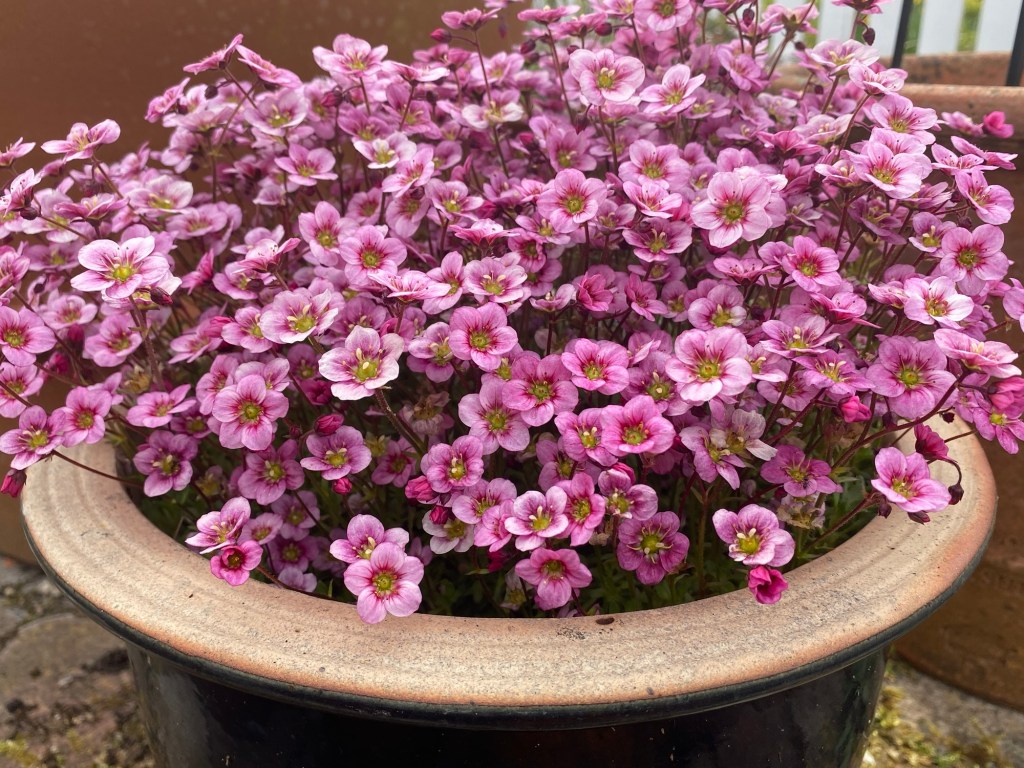
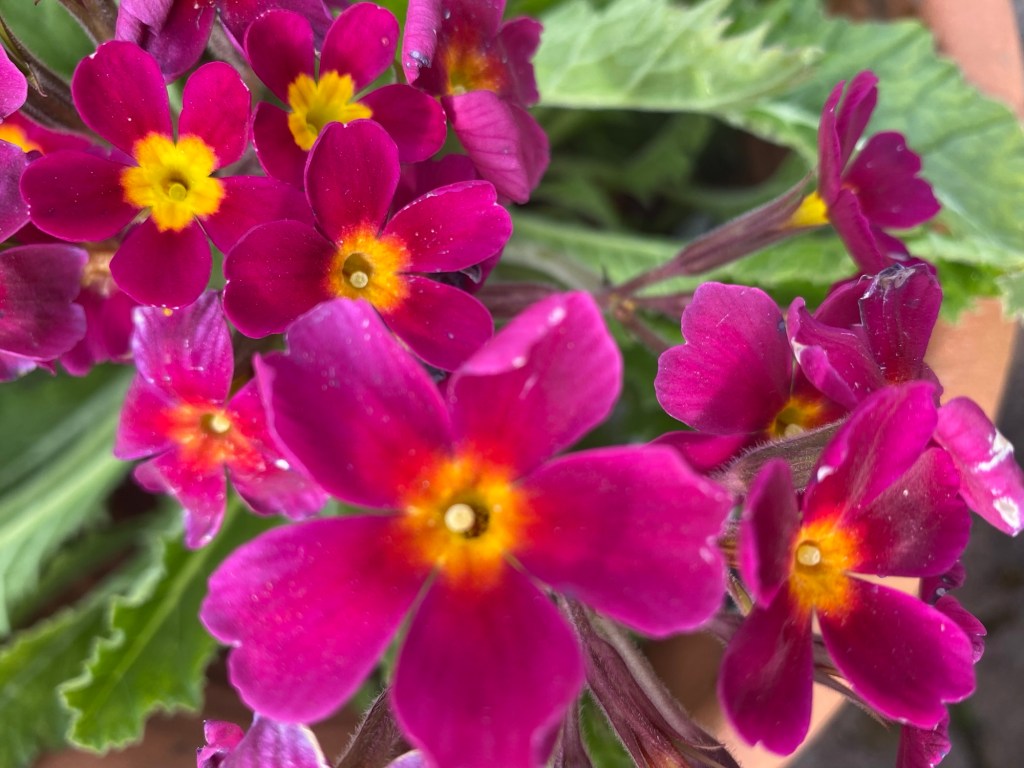
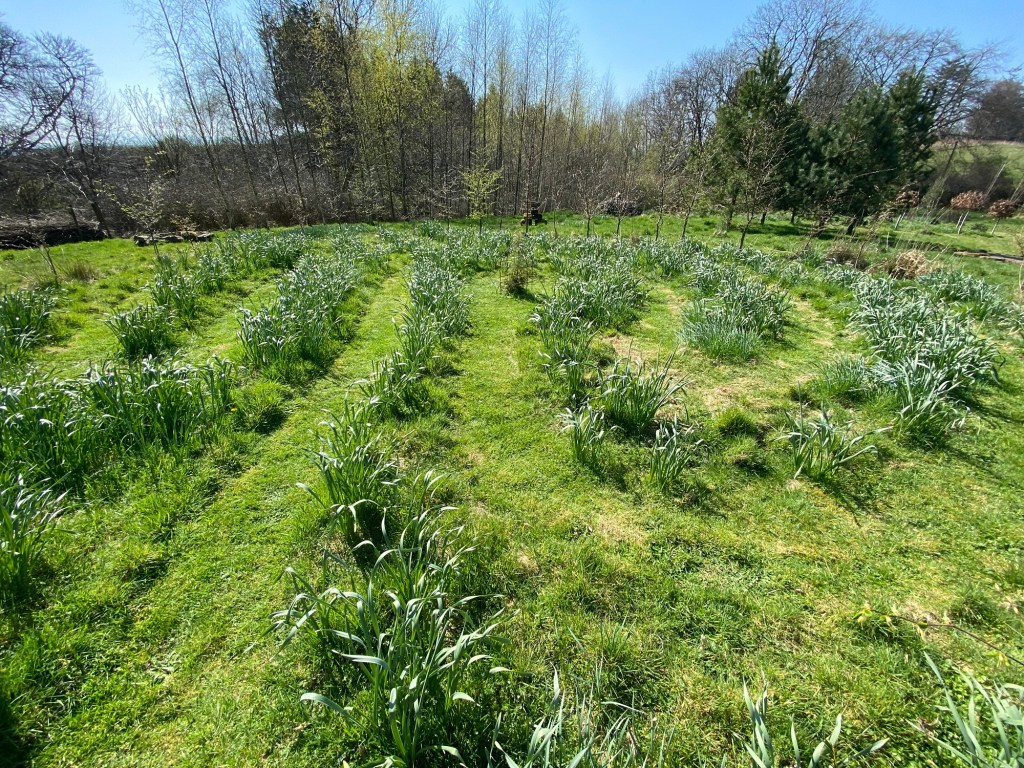
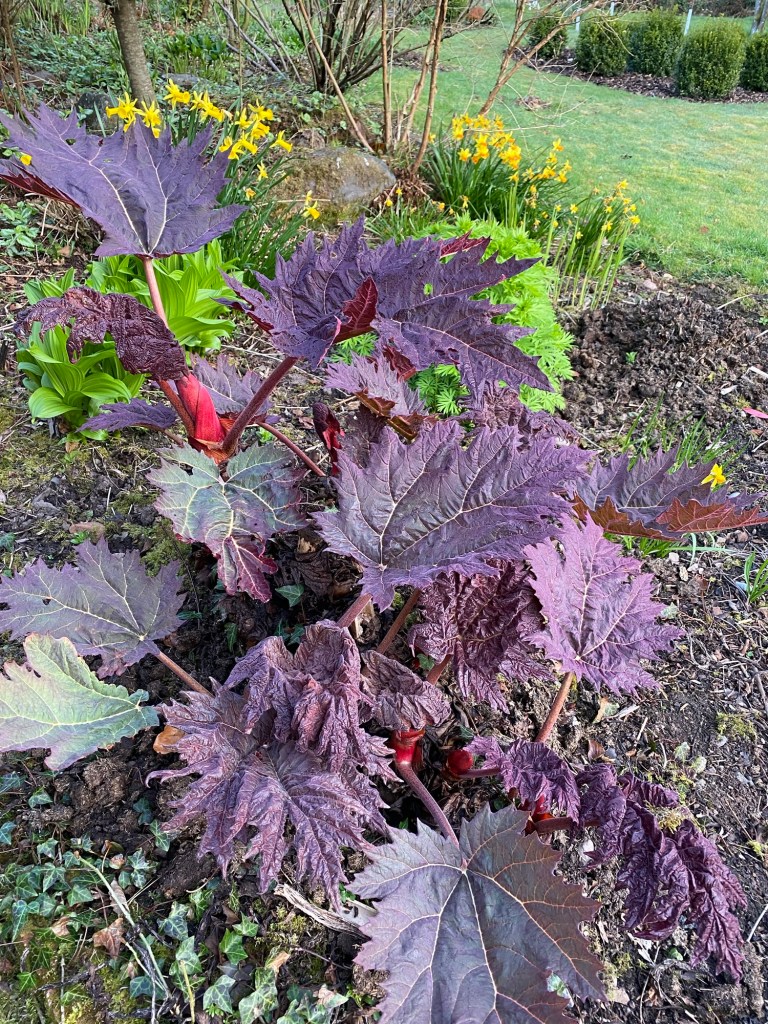
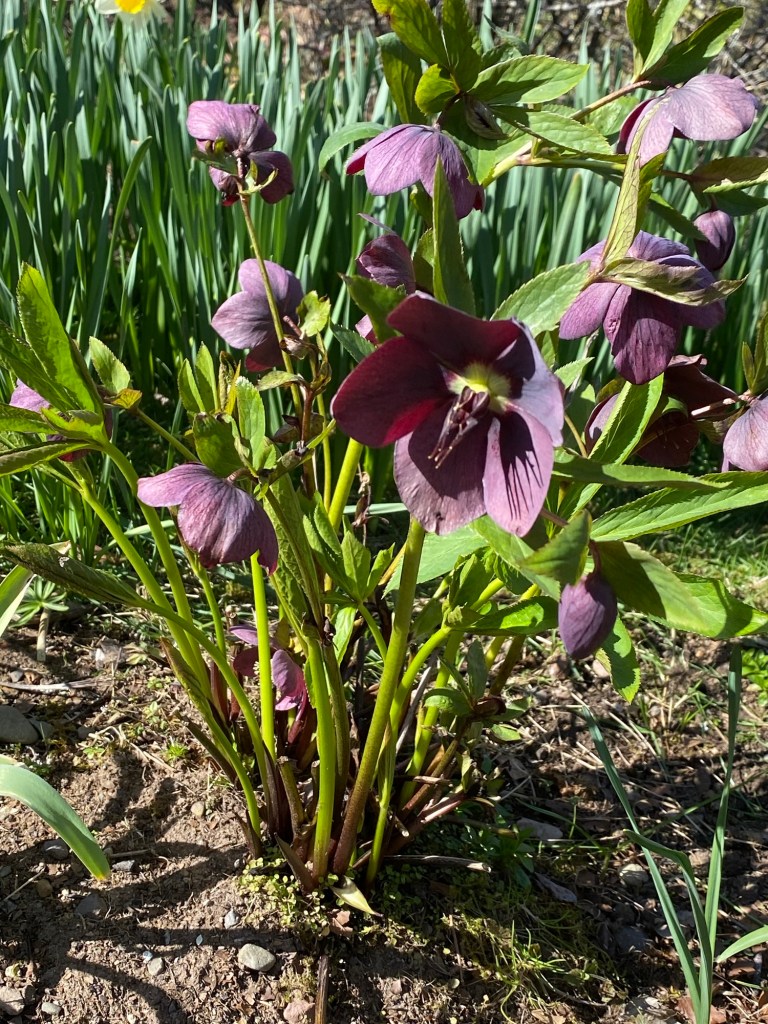
Back in my own terroir, with its open borders and borrowed landscape, there is much to enjoy as the month advances. This April has brought a halting and then gradual acceleration of growth in the garden. My favourite examples in this regard make up a long list, from acers to viburnums. Acid greens of euphorbia stand boldly against the green spikes of yucca and mahonia. Fattening pink buds of clematis are on the point of flowering. Magnolia has shone white and now gone past its peak. Around the boggy borders mass activity is underway among the rheums, ligularia, meconposis, primulas, marsh marigold and darmera. In drier spots, the hellebores and epimediums just keep on giving, as along come the later flowering narcissi. In the gravelly front garden, alpines kick into high gear and forget-me-not wanders wantonly, wherever it can. Under a canopy of maple and pieris japonica, uvularia and trillium emerge from the mulchy ground. Elsewhere, the blowsy Great Dixter euphorbia stands orange-red against a coppery foreground. The newly transferred box get their Spring trim, whilst the labyrinth and arboretum paths have their first of the year encounter with the mower. The images below, tell the story.
Simon and Garfunkel’s song April Come She Will seems to be based on an older, traditional, verse that describes the movements of the cuckoo. That imposter bird has arrived this month and a friend across the parish reports hearing it on the last weekend of April. Sightings of swallows came a little earlier. Today, as I made the morning tea, I watched a young hare from the kitchen window. In the pond, tadpoles are sprouting legs. Wrens and robins are nesting in the arboretum, sparrows and tits around the house. Encouraged by a close look at the garden and the natural world, the month seems to have turned out better somehow than I first thought, even in the face of loss and the vagaries of wind, rain, sunshine and frost. With all this to consider, I already feel less bruised by the fourth month of the year, and can begin looking forward to its successor.

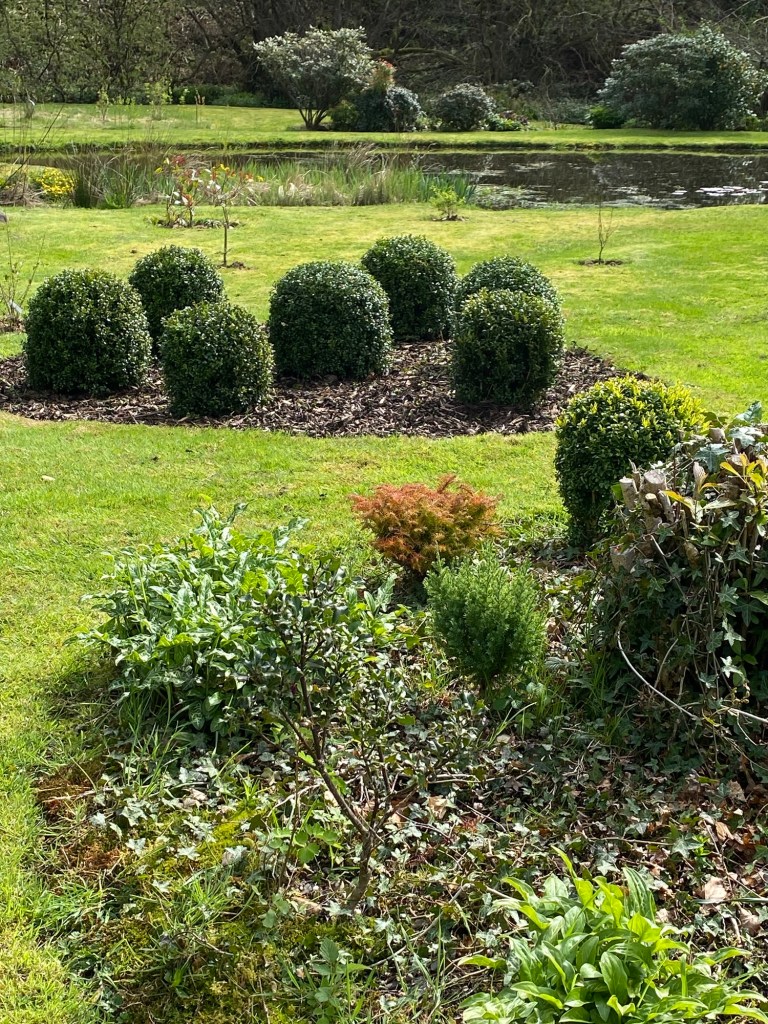
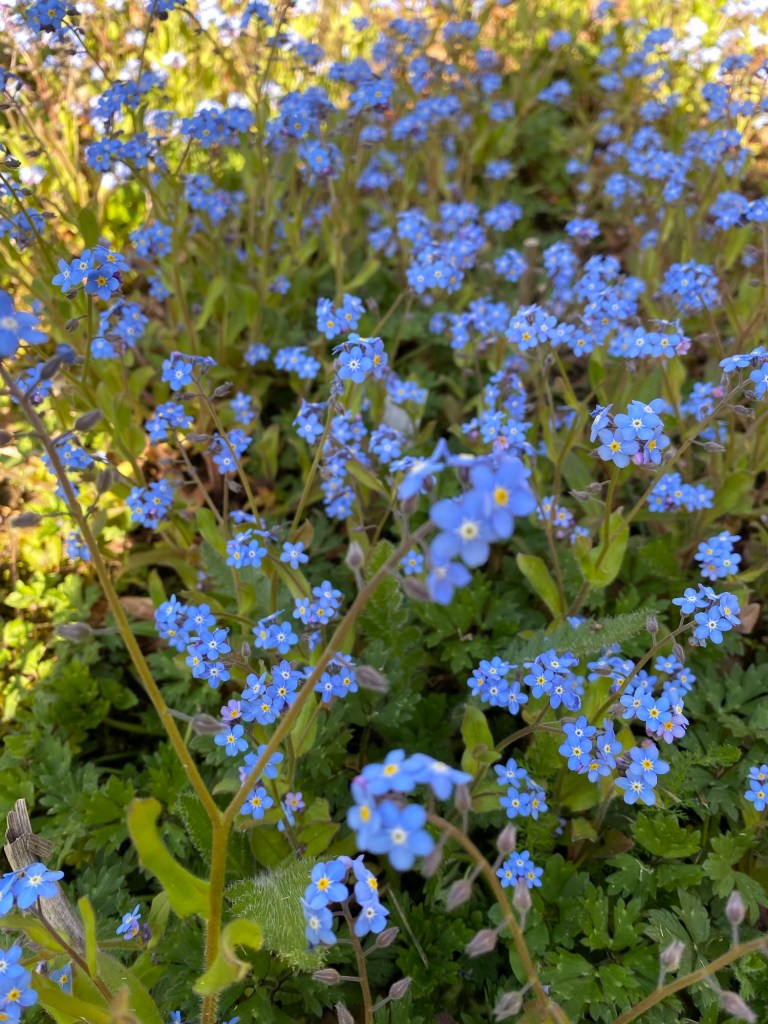
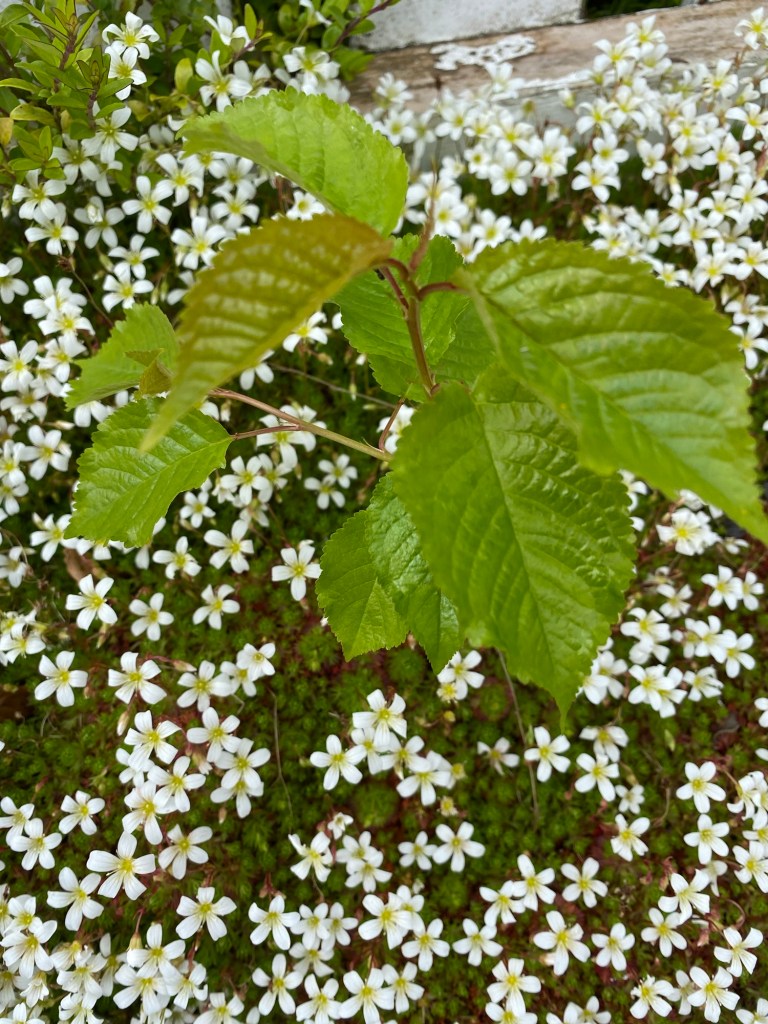
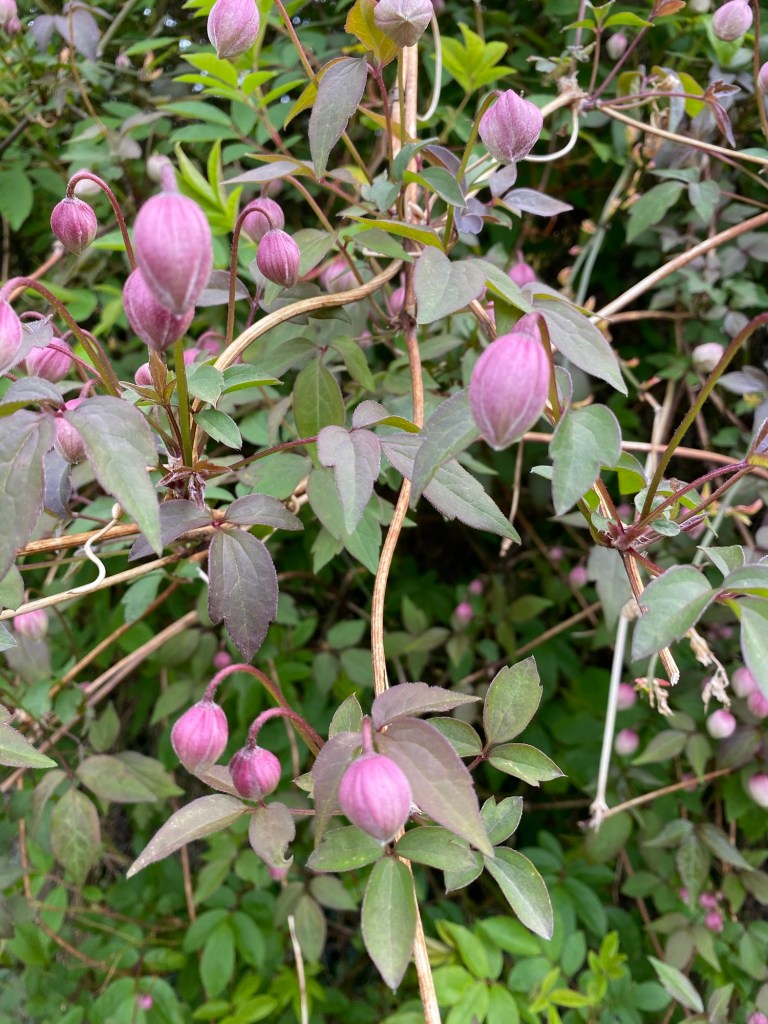




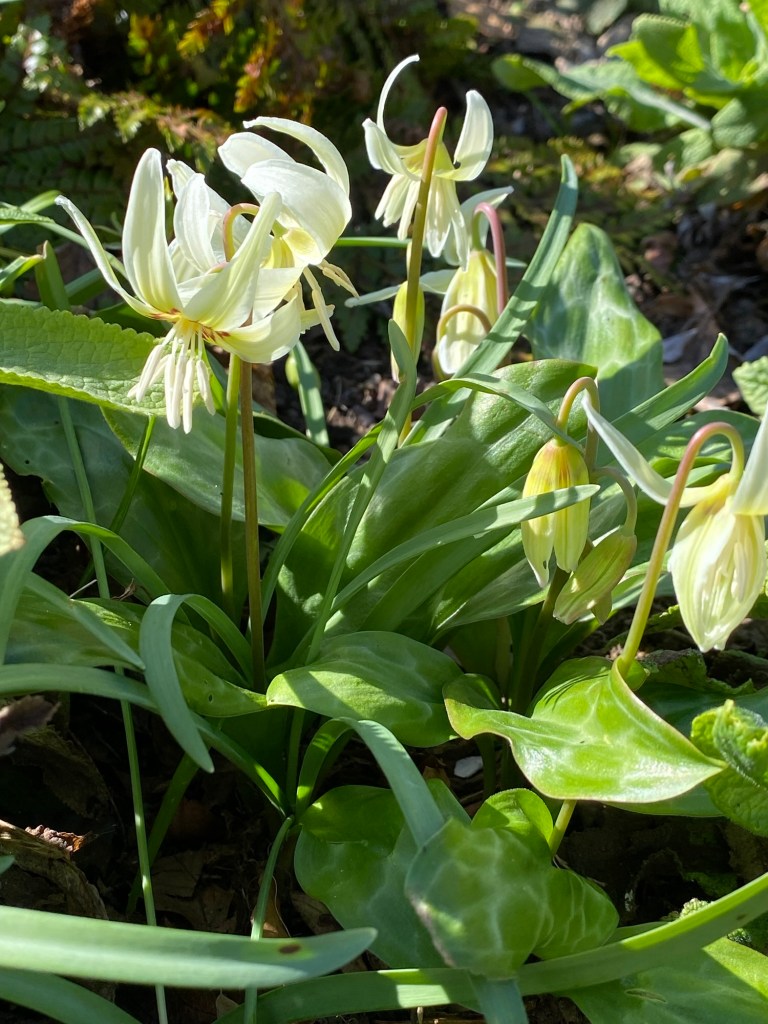
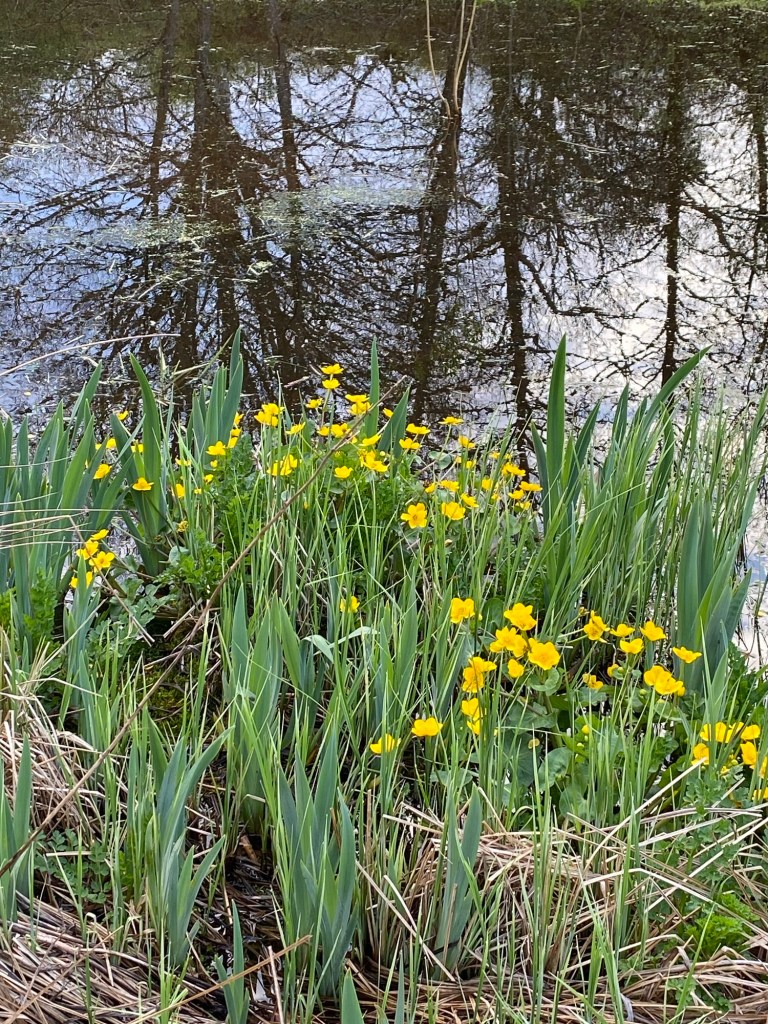
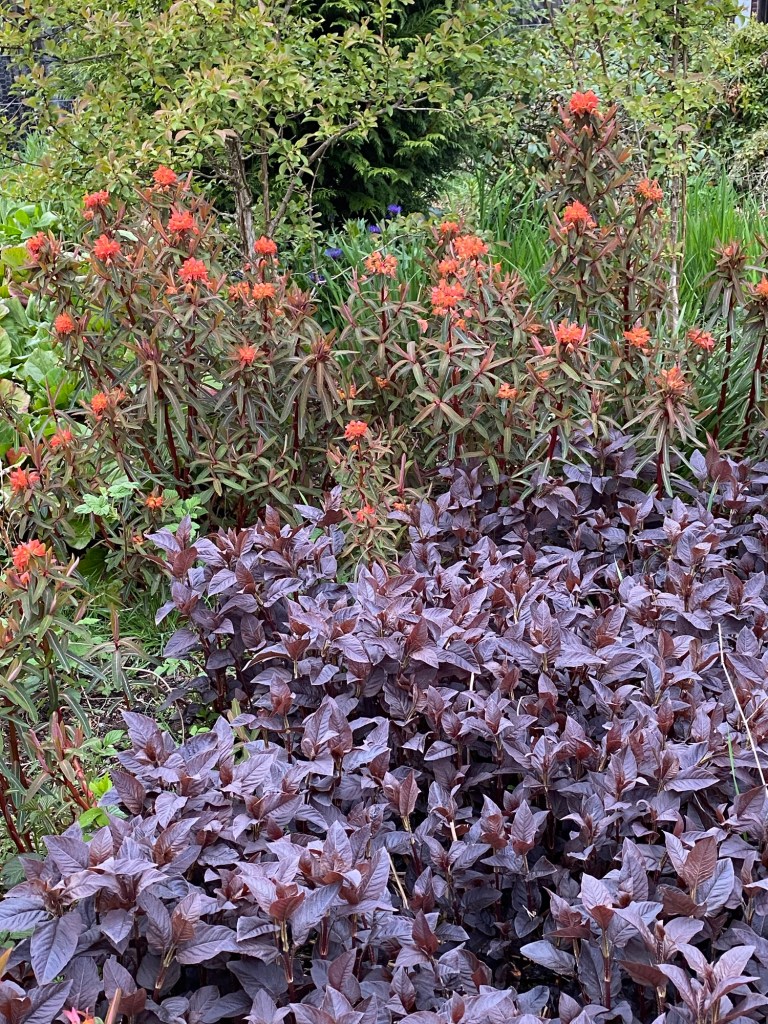
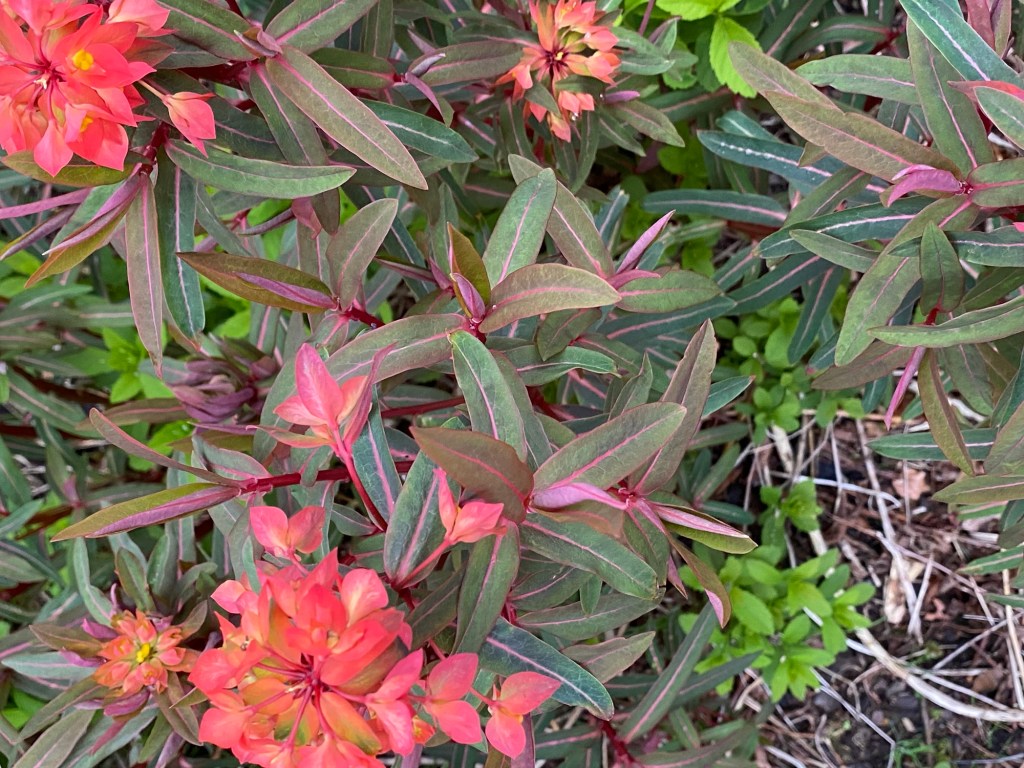
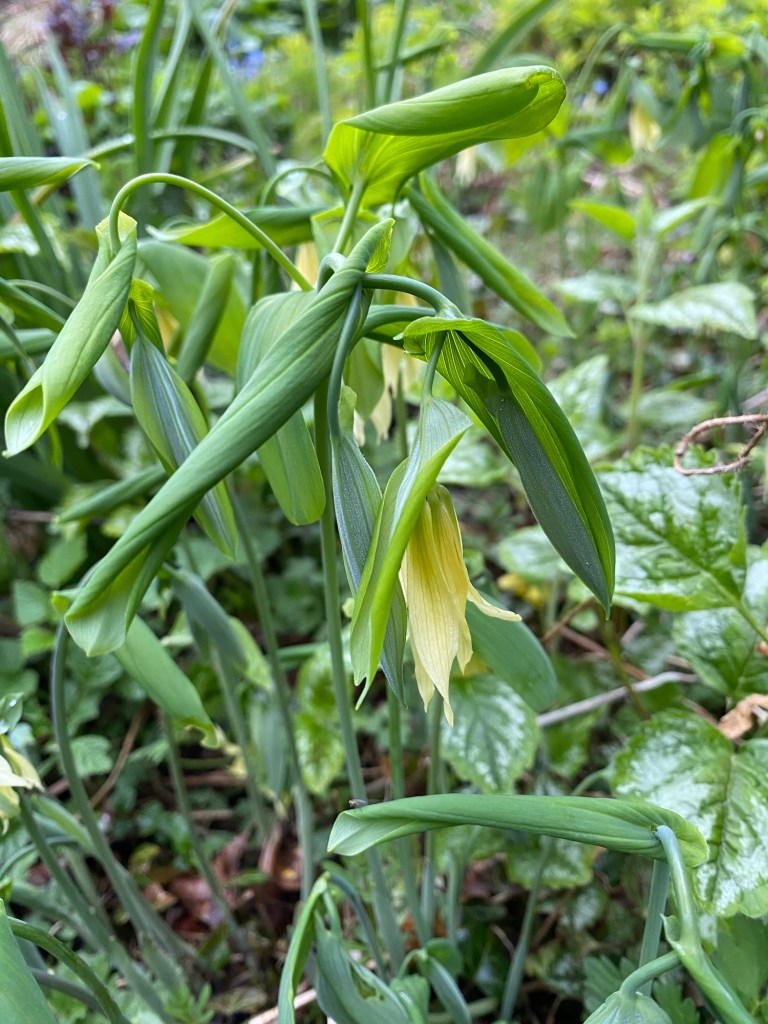
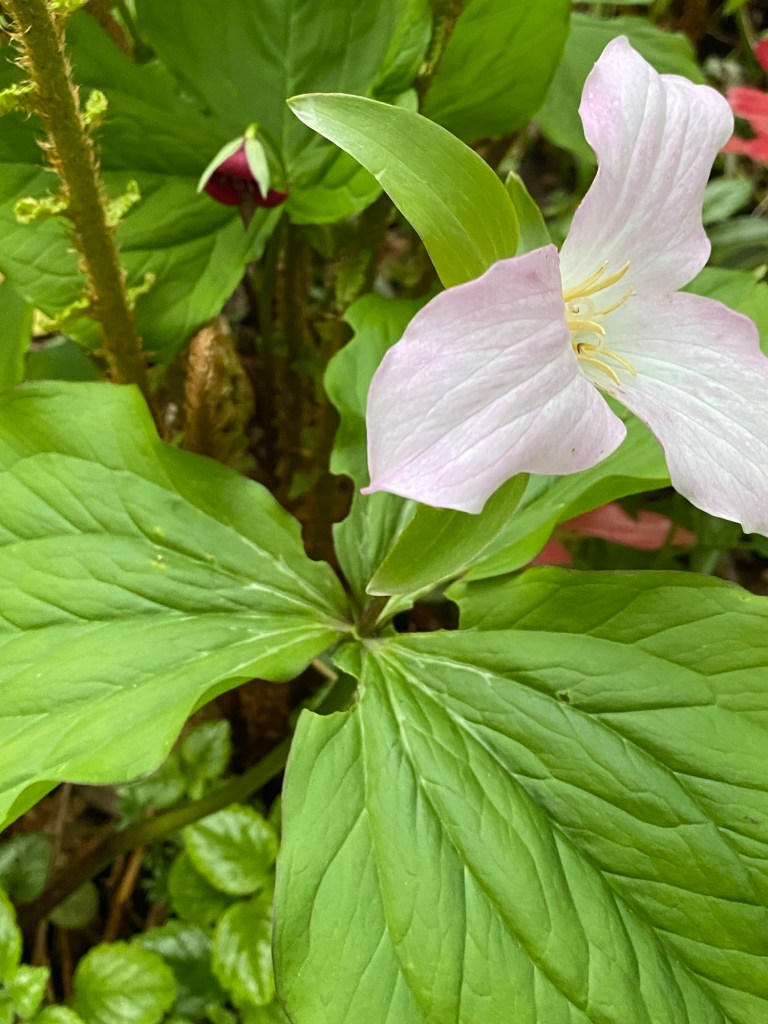
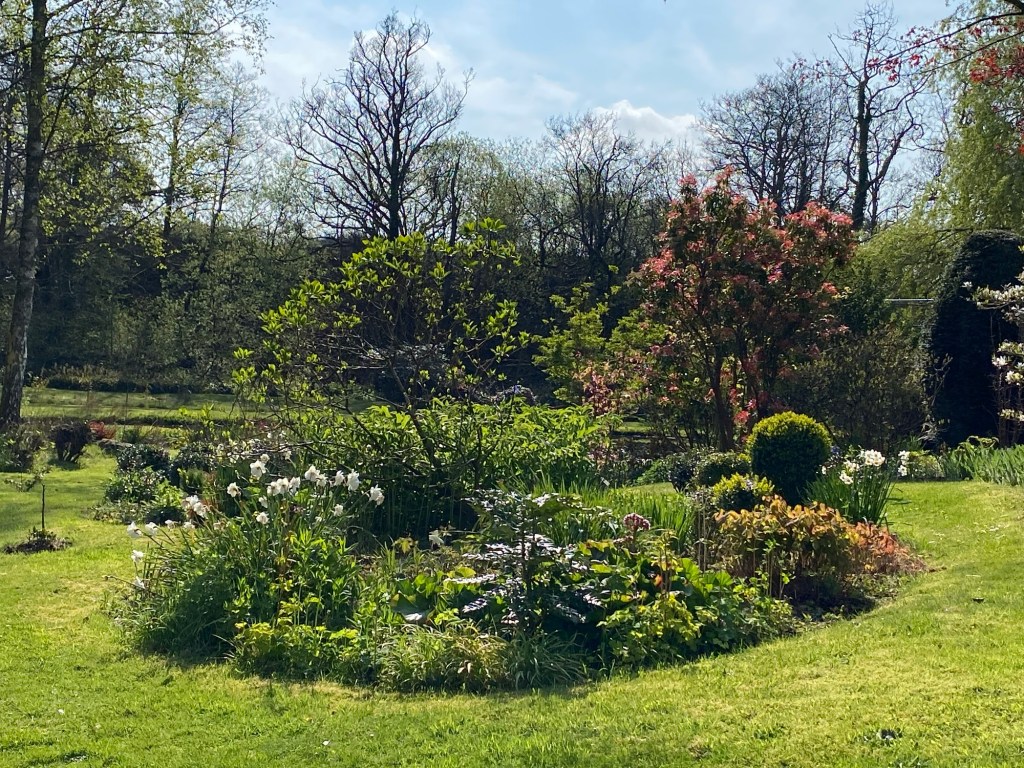
 Quotidian
Beautifully written. And wonderful photography – my favorite shot is of the stream (or water feature) and the small bridge. You mentioned planting a few Thujas in an area with Photinias – I think the color combination of the red new foliage of Photinia and the reddish bark of the cedars will be beautiful.
Such a gorgeous garden you have!
And I appreciate your insights about walls and fences – same issue here in parts of the US.
Beautiful post.
LikeLike
Many thanks for these kind comments. The large sandstone slab takes you across to a small island in the pond. The pond is fed from the stream (or ‘burn’ as it is known in Scotland) which runs into the pond and then out again. Thanks too for your suggestion about the photinias and the thuja. I’ll give that some more consideration. Certainly the garden is looking good at this point in the year, as I imagine is yours!
LikeLike
Well I think that reference to Max Weber in a gardening blog is probably a first, so well done on that! As regards raspberries being taken by birds, it’s a year or two now since we’ve had had raspberries and at the outset the birds took the lion’s share of the crop – very dispiriting. However, in the second year I started harvesting the raspberries as they were beginning to ripen and then finished them off on the window sill indoors, which took no more than a day or two and did not seem to impact noticeably on the flavour. Using this approach we did much better and I am hoping to plant some more hopefully for next season.
LikeLiked by 1 person