
It’s a time in the annual cycle that I have come to appreciate more and more over recent years. The beginning of August seems to bring a shift in the ‘feel’ of the summer. After the heady freshness of June and the hectic weeks of July, we somehow move into a period where the natural world around us and the gardens we may tend, settle into something more reflective, deepening somehow, almost asking us to pause, consider and renew.
Our forebears knew it as a time to celebrate the first harvests of grain and to bake bread in gratitude. Its name has emerged from a tangled web of Northern European languages, ritual practices and belief systems that both pre-date Christianity and also include it. It is also the time for practical and contingent things, such as settling debts and engaging in new contracts. It is known for fairs and markets that still bear its name, for fun and celebration. It’s the middling point between the Summer Solstice and the Autumn Equinox.
I refer of course to Lammas.
For me there is also something psychological about Lammas, maybe psycho-botanical even. It was particularly marked this year. By the last days of July the Dumfriesshire Garden seemed to have hit a point of wild abandon. Galium Aparine was in overdrive. ‘Robin run the hedge’ – an inappropriately charming name for something so rampant- worked its sticky way smothering and flattening handsome herbaceous plants. Likewise the varied forms of willowherb, much in evidence and turning to seed, foreshadowed another year of ‘plants in the wrong place‘. The horticultural list could continue. As a farmer wrote in a recent newspaper column: ‘There is something about July where you feel the to-do list is about to get the better of you’. (1)
I know from experience however, that come August, and not least after a sharp cut of the mown grass and a hedge trim here and there, everything starts to feel better.
This year Lammas arrived, as it should according to tradition, in dry, warm weather. Just back from holiday, I took a good look through the arboretum field. Scattered with thistles, long grasses flopped like corn as butterflies rose on either side of the paths. Splendid Lammas growth shone red and green from the tips of the oaks. The bright berries of the rowans looked even more splendid alongside the drifts of fireweed. The first hints of ripening were visible in the orchard. I tried one apple, picked a few more and took them back to the kitchen. The allotment garden was crammed with splendid clean potatoes, salads, courgettes, shallots and French beans. I looked into the greenhouse: and there they were. Mentioned here a few months back, my two Colocasia bulbs had come through in a big-leaved display of tropical luxuriance.
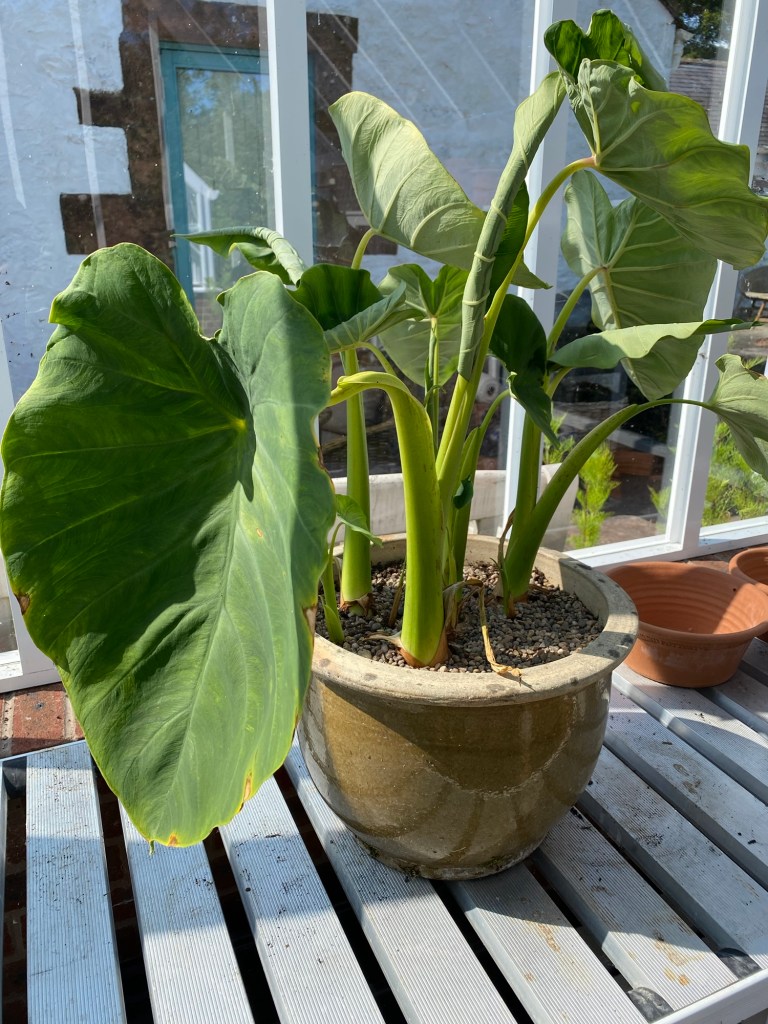
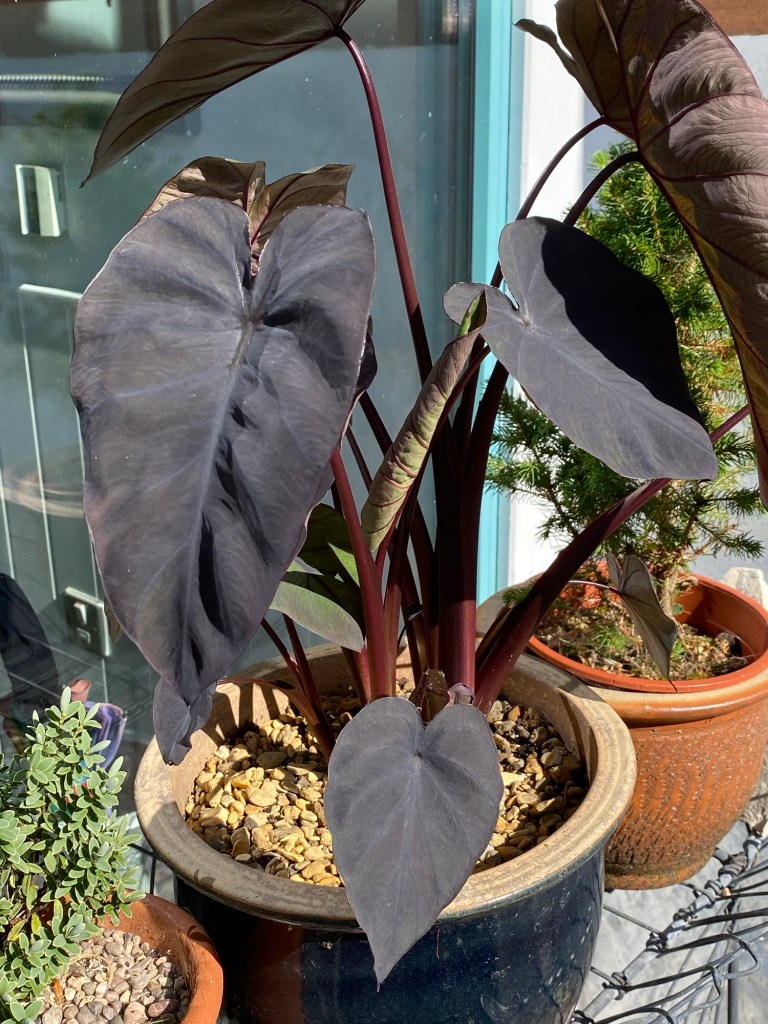
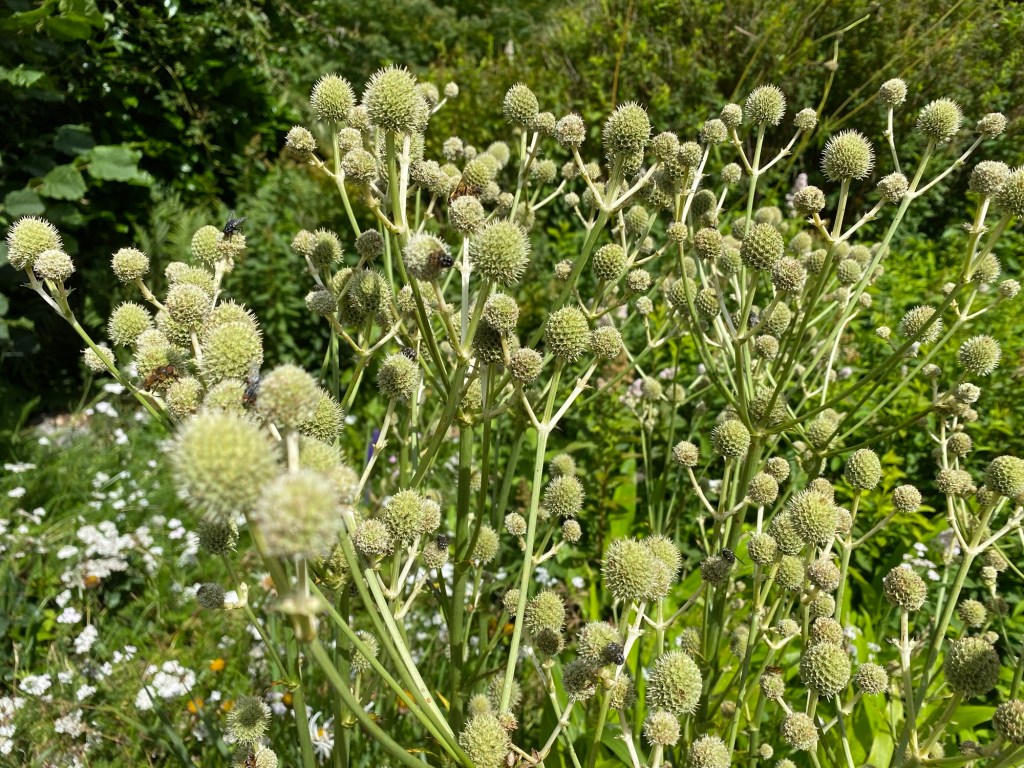
Despite the rampant excess of weeds in the borders, there was indeed much to enjoy at the start of Lammas. The summer’s high point, marking a change in the light and in the garden aspect, did not disappoint. It was a brief moment of calm. On the morning of 4th of August, rain lashed in from the north west, the trees bent and creaked, their heavy leaf cover an easy target for the strengthening wind. In the early afternoon as the rains eased the angry gusts increased and we watched anxiously as they made their way across Nithsdale.
Storm Floris had arrived: bringing a temporary ending to the goodwill and calm of Lammastide.
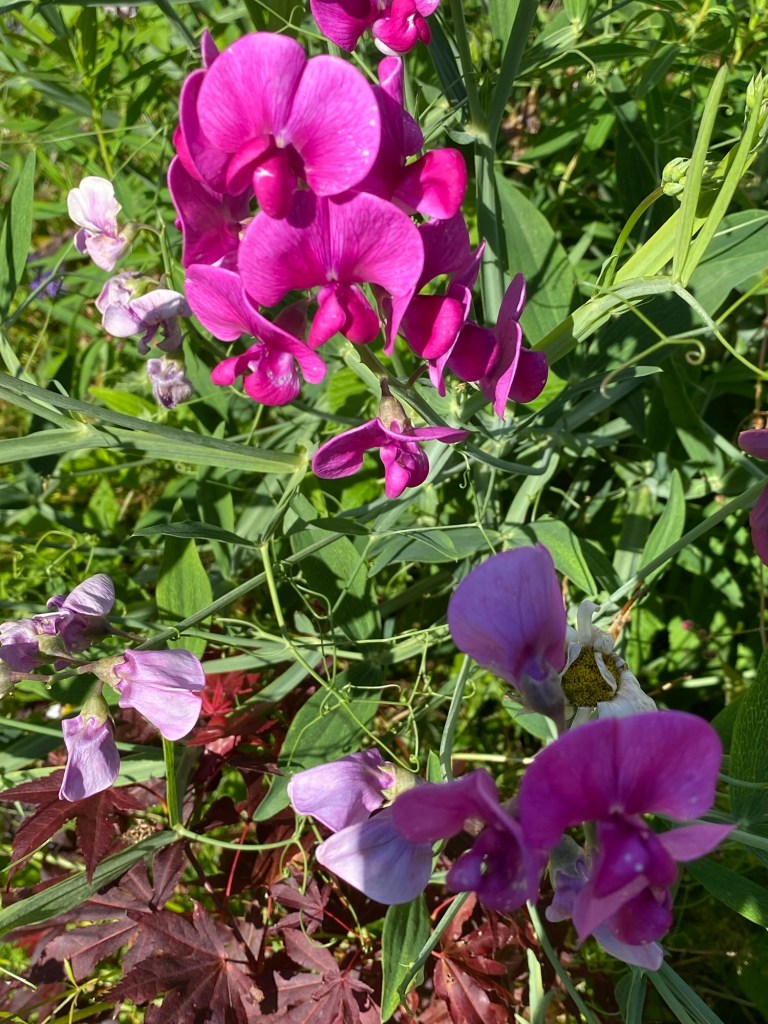
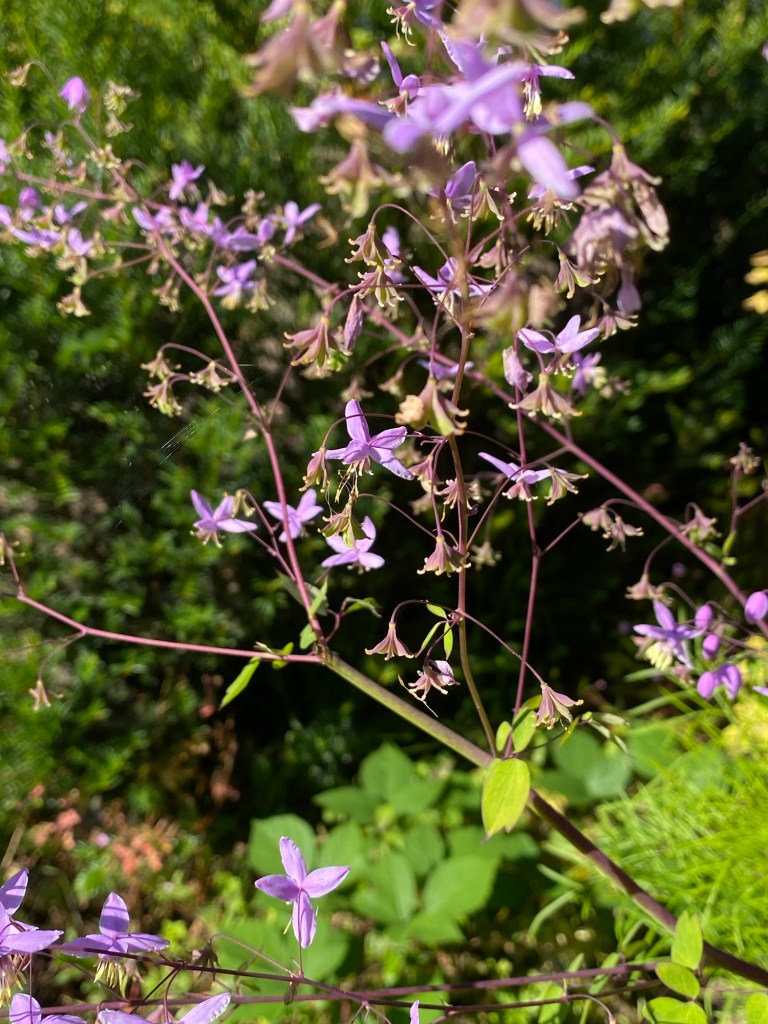
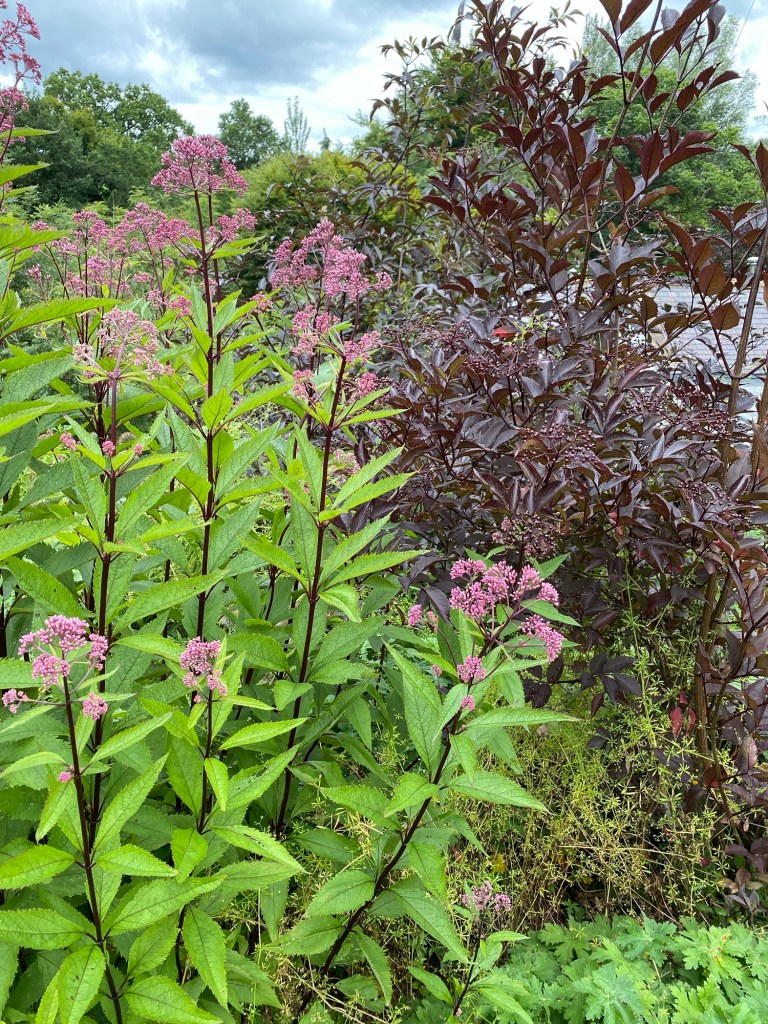
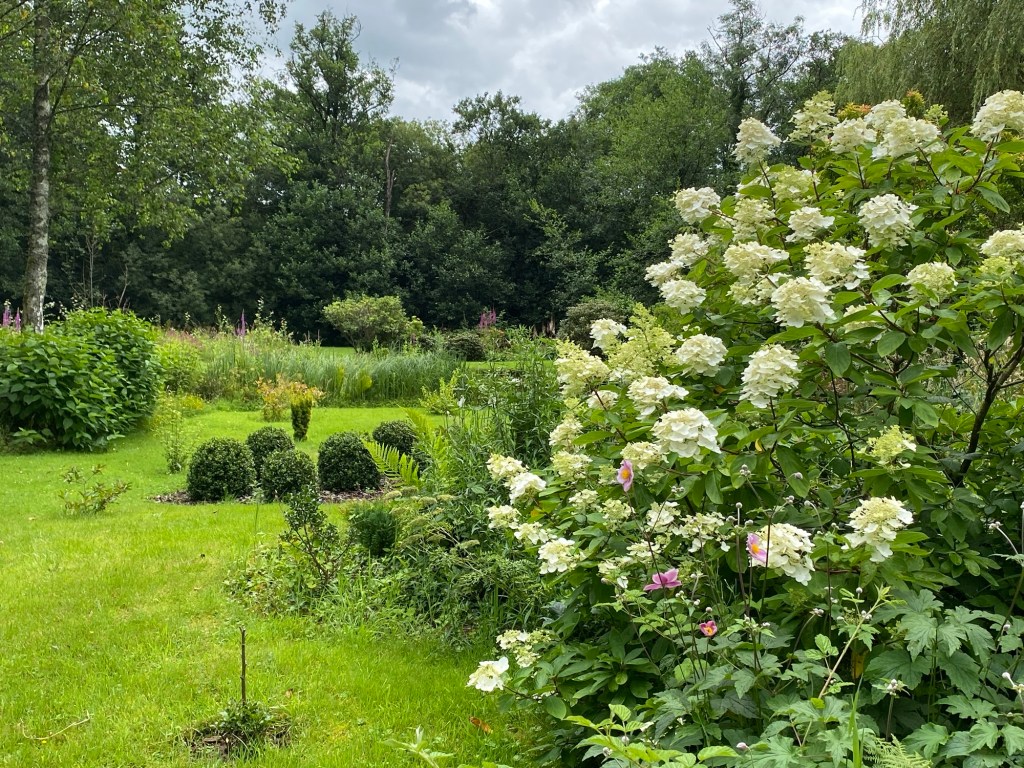
(1) Peter MacDougall The Courier and Advertiser, 9 August 2025, page 8.
 Quotidian
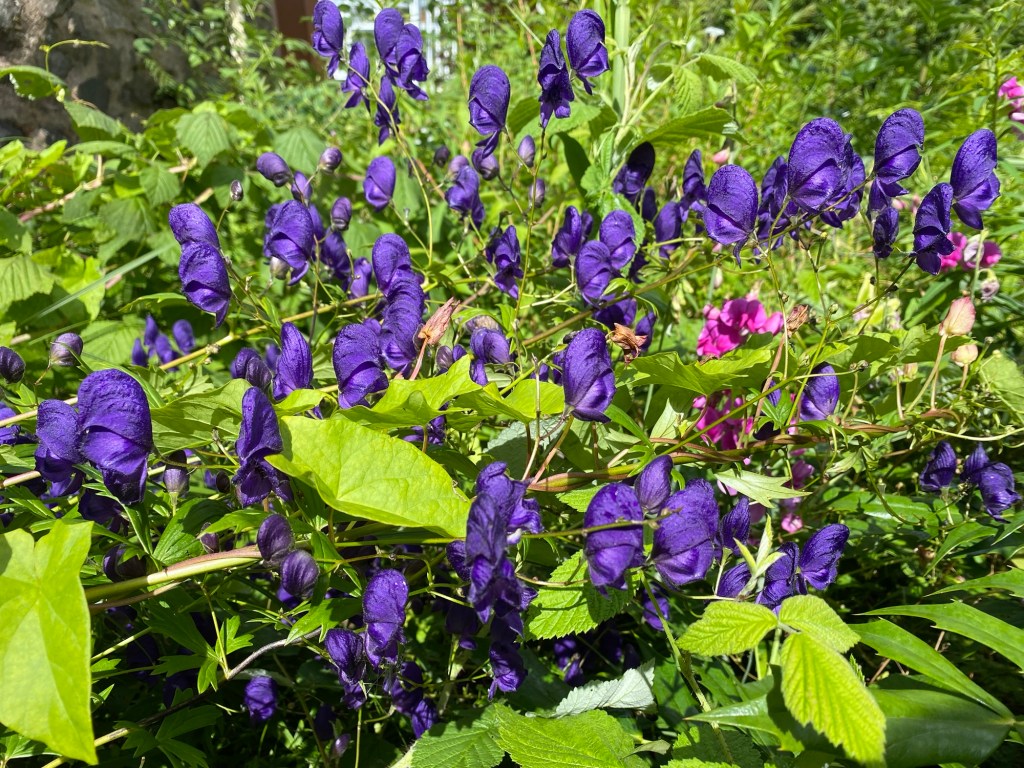
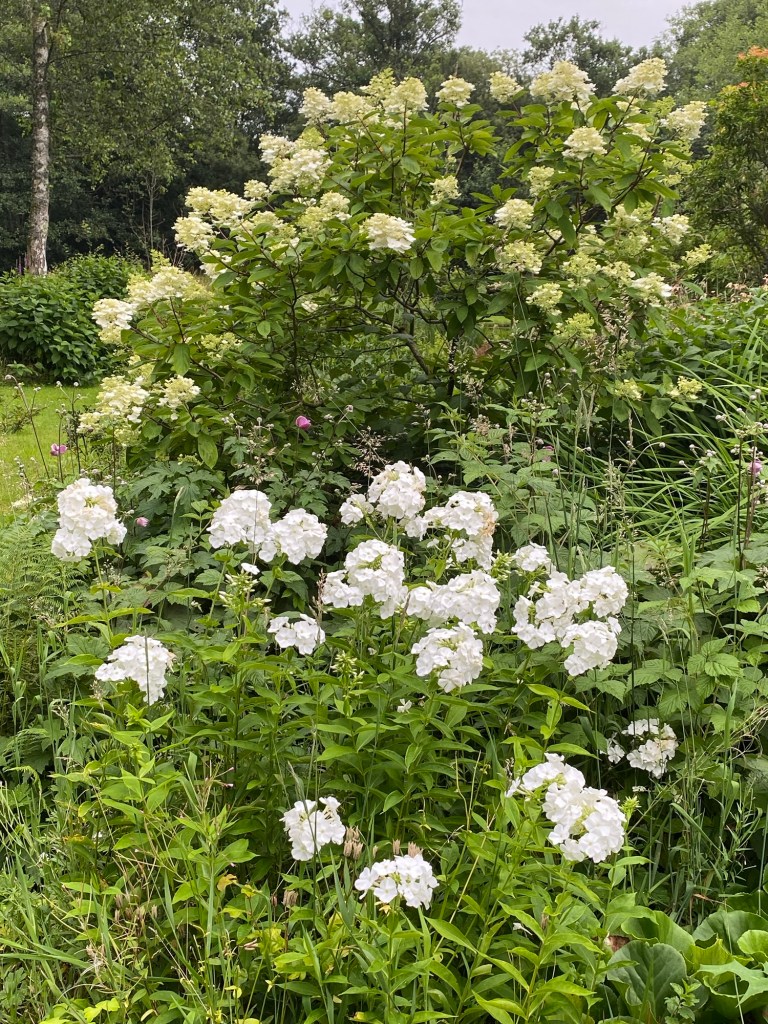
Gorgeous combination of Phlox in front of the hydrangea. And is that stunning purple flower (middle picture, top row) a sweet pea? If so, wow!
And thank you for introducing me to the term Lammas. I’m embarrassed to say I’ve never heard it until your post.
LikeLike
Thanks indeed for your comments! I am delighted you have been introduced to the fascinations of Lammas. It’s a very special time I find. The purple flower is Monkshood. Top row right is a sweet pea – the perennial variety, which I allow to ramble where it will. I am sorry I don’t know your names, as you know I am David.
LikeLiked by 1 person
My name’s Deborah, but I go by Deb. Easier, shorter, less formal.
LikeLike