
Twenty years ago, whilst working at Lancaster University I travelled regularly to Ireland. Supported by the Irish Hospice Foundation, I was a Visiting Professor at Trinity College Dublin and University College Dublin, charged with enabling and promoting academic and strategic development in the field of palliative care. Over a four year period I visited many hospices and palliative care services, talked to numerous clinicians and academic researchers, met politicians and policy makers and endeavoured to come up with an initiative that would move forward the multiple aspects of hospice and palliative care in the Irish republic. As my ideas developed, the discussions drew in colleagues from Northern Ireland also. After a tremendous surge of consultations, strategy-making, grant writing and fund-raising, the outcome was the creation of the All Ireland Institute of Hospice and Palliative Care, which became operational in 2010.
Today, the Institute is a remarkable partnership of 26 organisations, based across the whole island of Ireland and contributing to the advancement of education, research, policy, and practice to improve care for people with life limiting conditions, and for their families. Among its vast array of activities is an annual Palliative Care Week to enhance public awareness and promote relevant discussions in the wider society. The island-wide programme for Palliative Care Week this year included no less than 101 events and activities.
I was honoured to be involved on consecutive evenings in Belfast and Dublin in two of these events, in the form of public screenings of my play Cicely and David, followed by a wider discussion. I had readily accepted the invitation when it came, and I must say the whole experience exceeded my expectations.
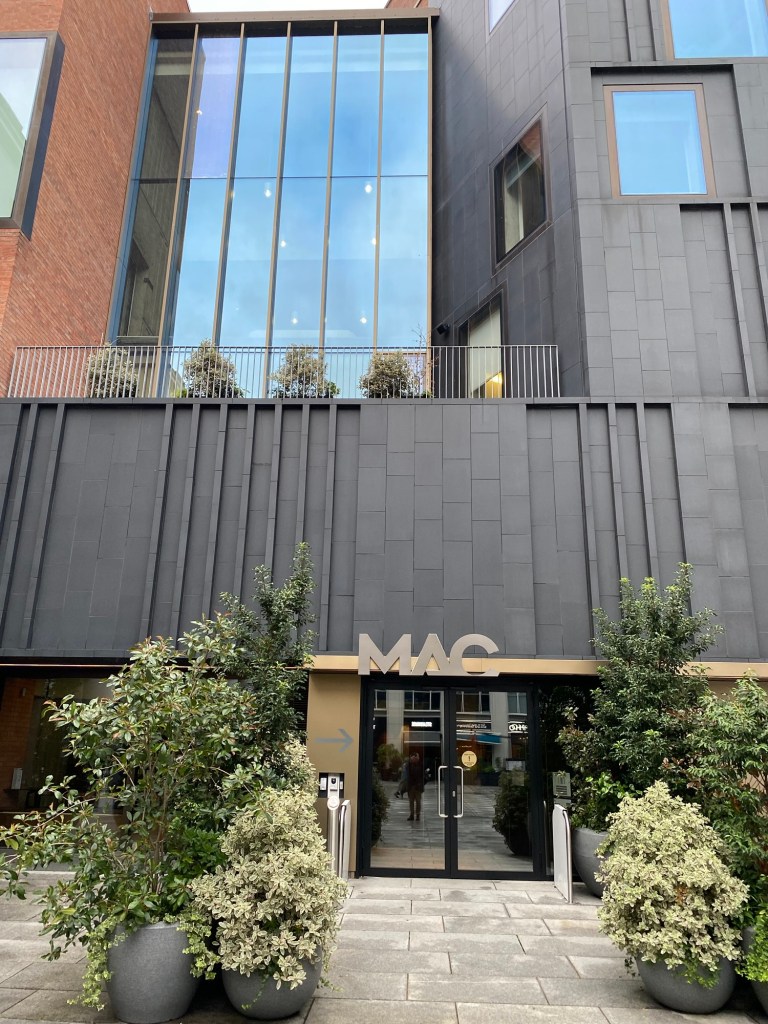
The screenings took place in two contemporary art-house settings: the Metropolitan Arts Centre (‘the MAC’) in Belfast and the Light House in Dublin. They benefitted from fabulous projection facilities, terrific sound quality, comfortable seating, city-centre locations – even popcorn! Each attracted a large, and it would seem, appreciative audience. The icing on top were the panel discussions that followed with local palliative care experts and service users, and smoothly chaired by well known TV presenters, Paul Clark and Muireann O’Connell.

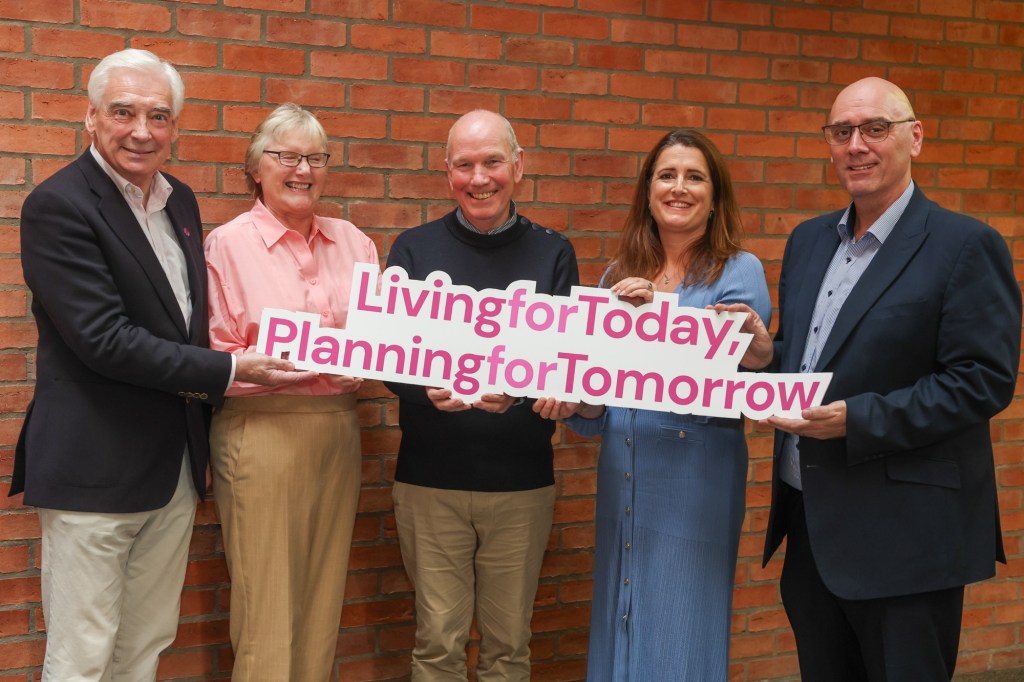


There was a lot of interest in how the play was created in the wake of my biography of Cicely Saunders. I was able to explain the theatre-making process that took it ‘from page to stage’ and which involved student actors and directors. There was much reference to the enduring relevance of the central story in the play, which goes back to 1947, when the newly qualified social worker, Cicely Saunders, first encountered a dying Jewish immigrant from Poland, in a London hospital. Palliative care week 2025 adopted as its theme: ‘Living for today, planning for tomorrow’. These sentiments crop up at various points in the playscript and also resonated with the audiences. There was much discussion too of the multi-facetted nature of pain, encompassing not only its physical aspects but also social, psychological and spiritual elements. It was noted that the concept of ‘total pain’, sketched out in the play, has become central to modern palliative care for people with all manner of life limiting illnesses, indeed now going beyond cancer and the context in which Cicely Saunders first formulated it.
At the two events, there seemed to be broad agreement that the arts, in this case theatre, have an important role to play in eliciting experiences of palliative care and also in enhancing understanding of what it can achieve. This provided me with a wonderful opportunity to share news of a sequel to the play, which we hope to take to the Edinburgh Fringe in 2026. More of that here in due course!
The two events in Belfast and Dublin took ‘Cicely and David’ across the Irish Sea for the first time. I suspect they may return at some point, as some hospice teams expressed interest in organizing local screenings, for staff training or fund-raising purposes, as we have seen in other settings. Of course, I hope too that the new play may also be seen in a future Palliative Care Week, perhaps in 2027. It’s quite a thought!
Consequently, as I made my way by train from Dublin to Belfast and then on to the ferry, and home to Scotland, I had much to ponder. My thoughts returned to those visits of 20 years ago, when I worked with a collaborative of people to overcome professional differences and artificial boundaries, as well as jurisdictional constraints and a degree of scepticism about so-called ‘transformative’ initiatives. I remembered how those challenges had been faced head-on, how they had been resolved and how a consortium of people and organisations proceeded to put into action a programme to support and improve palliative care across the whole island of Ireland. There was much pleasure in seeing these ideals still so palpably active today.
There are many ways to promote and enhance the care of people affected by life limiting illness and those in need of support at the end of life. The All Ireland Institute of Hospice and Palliative Care, with its creative and ambitious programme of such work, is undoubtedly an exemplar of good practice in this field and a beacon of inspiration to many others elsewhere.
Acknowledgements I am grateful to Karen Charnley (CEO) and Fintan Fagan (Chair) at the All Ireland Institute of Hospice and Palliative Care for seeing the potential of ‘Cicely and David’ for Palliative Care Week, and I also thank those colleagues at the Institute who facilitated my visit and organised the screenings with such efficiency and kindness.
 Quotidian
Important work, especially overcoming the professional boundaries and differences. Beautiful post!
LikeLike
Hear hear!
LikeLike