Since I took a lease on the field next to my house in 2015, I have developed a couple of acres of rough pasture into something that gives endless pleasure and satisfaction. A veritable arboretum, the field is now home to over two hundred trees and woody shrubs. A block of silver birch runs the entire length of one side, elsewhere there is planting of oak, beech, dogwood, hornbeam and hazel, in circles linked together by mown paths. Dotted throughout are single specimens of cedar, redwood, and holm oak, as well as small groups of special interest, such as Scots pine, rowan, prickly pear, and red oak. In addition to these, I have created hedges, arboreal archways, tree lined paths and a turf labyrinth.
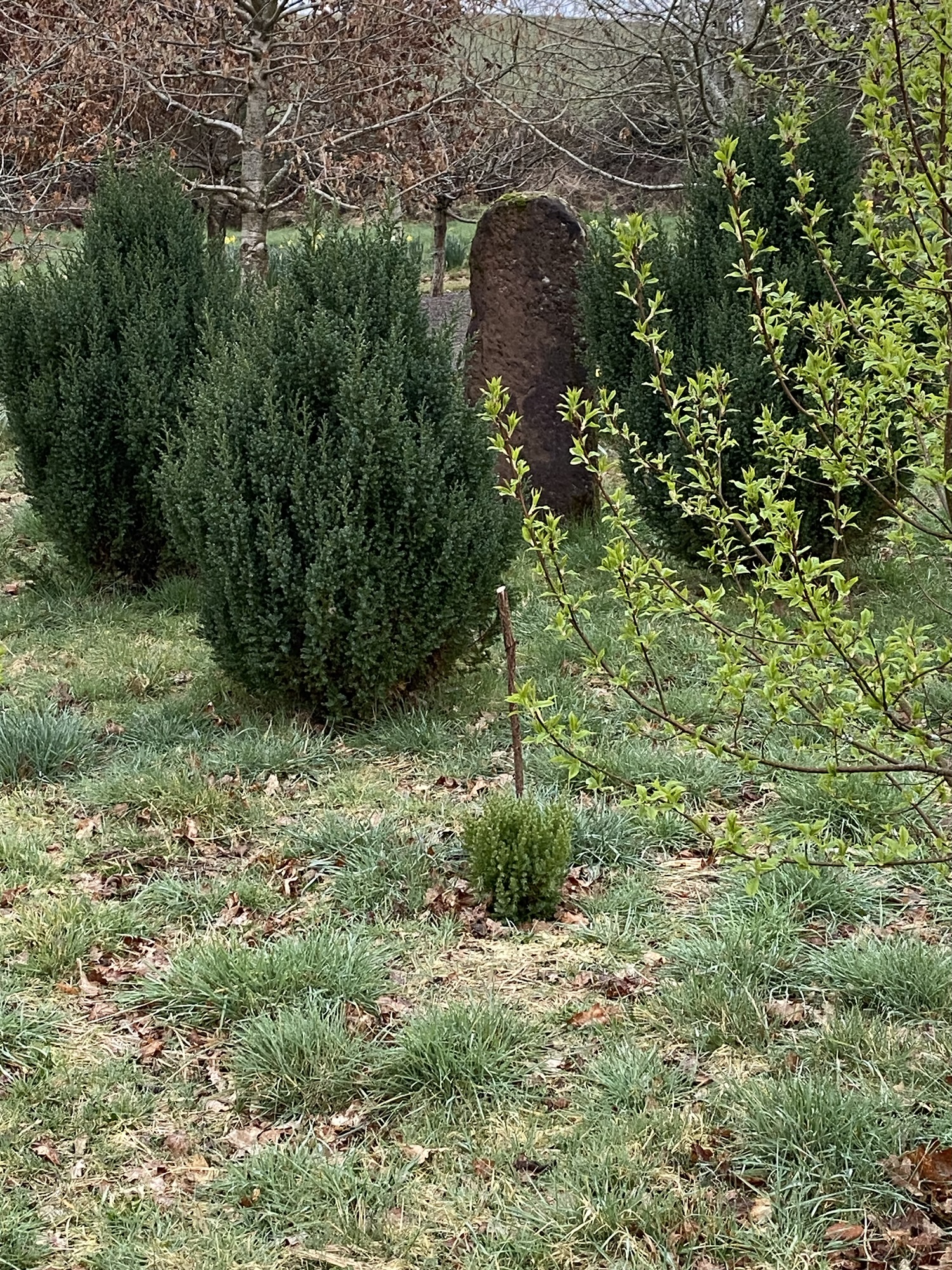
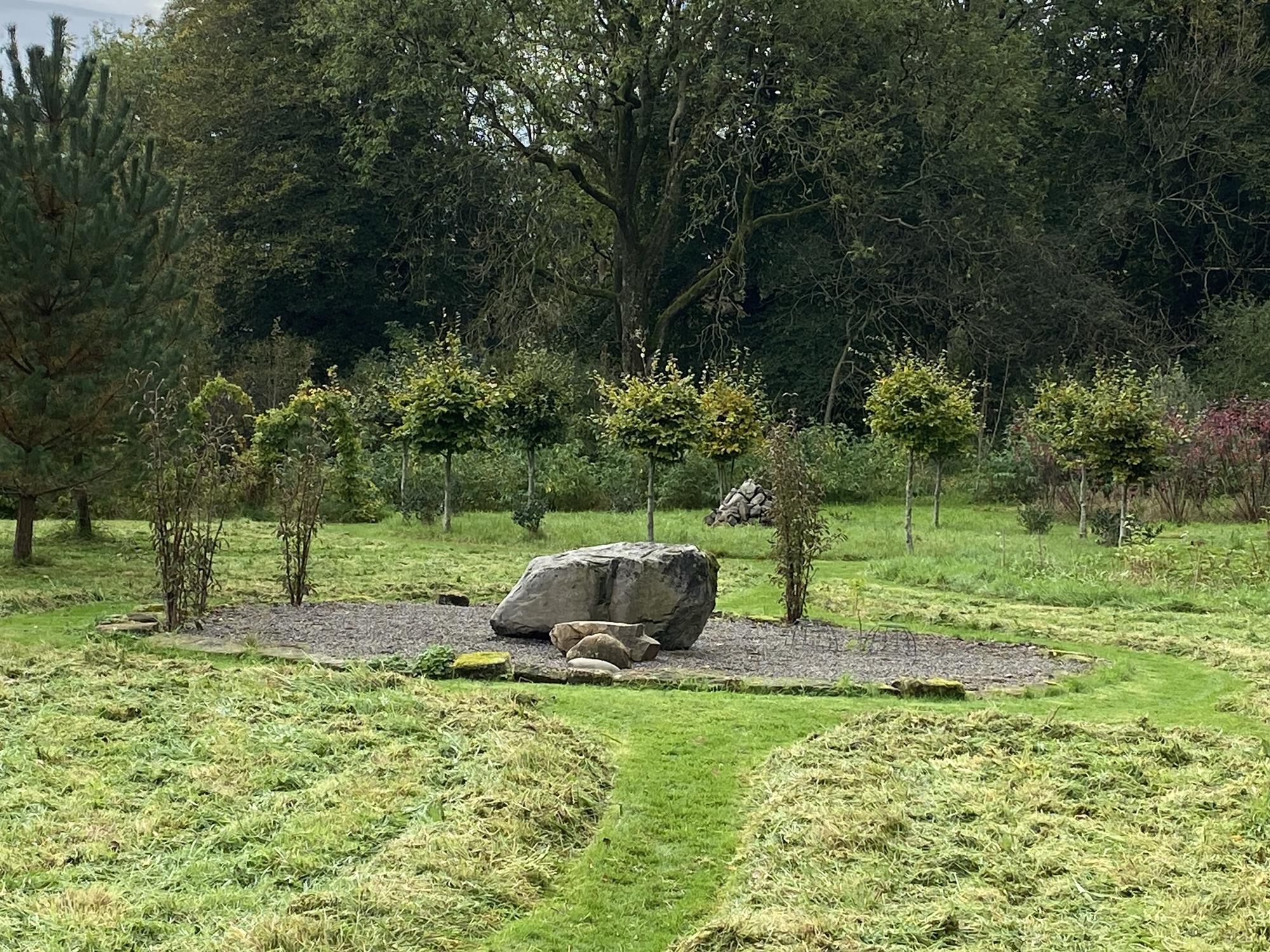
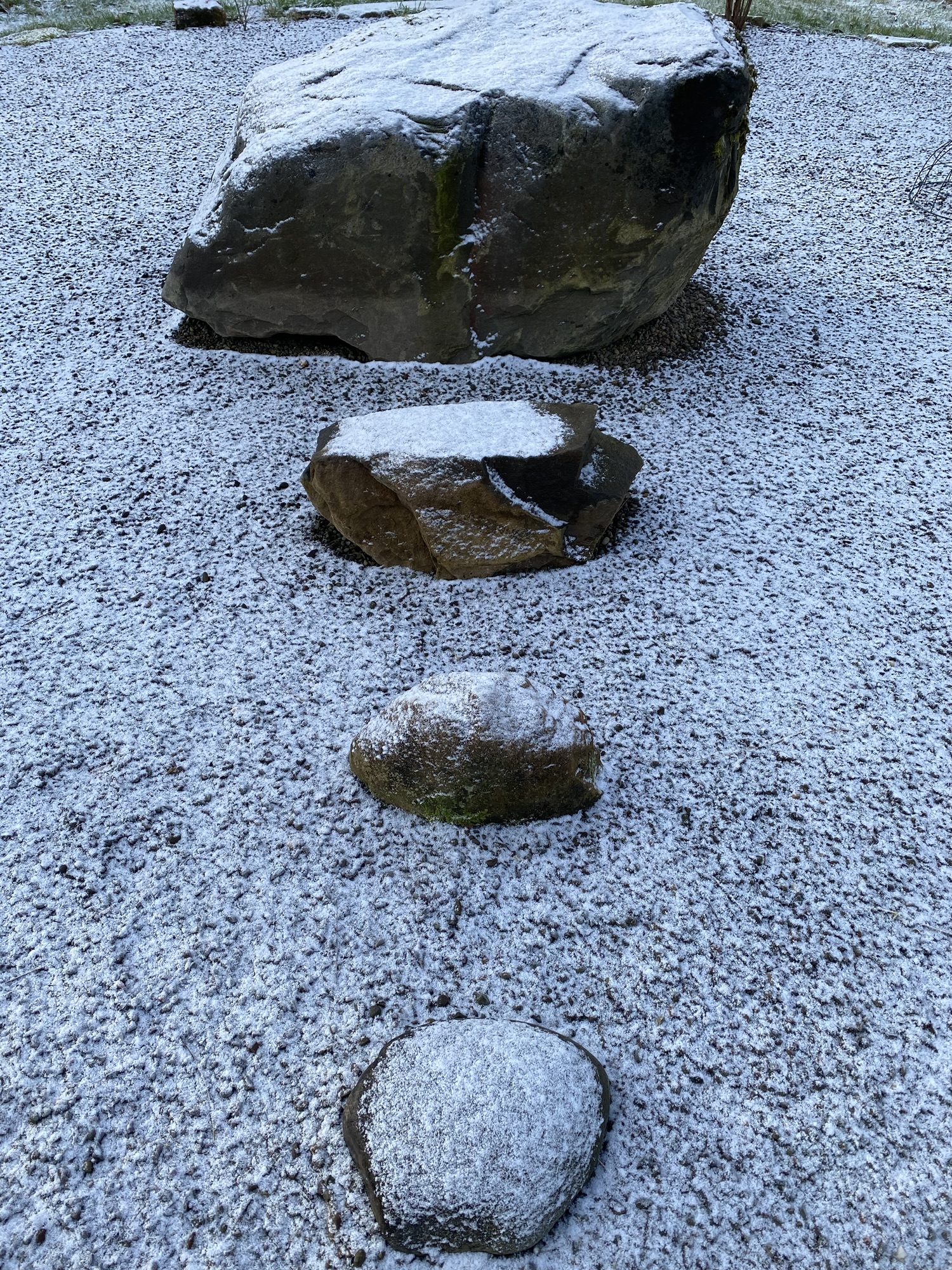
It’s a place to let the imagination run free, and this has extended to inanimate objects like groups of large rocks and a couple of cairns, the larger one of which has had a screen of hornbeam planted round it this winter. There are constructions of precariously balanced large rocks, and also a couple of stone campfire circles. A few years ago I also installed a large sandstone gatepost, inscribed with some words from the anchorite Julian of Norwich: all shall be well.
You can find reflections on the development of the arboretum here and here. It also gets referred to in many other posts on this site. Below are just a few relevant photographs taken over the years.
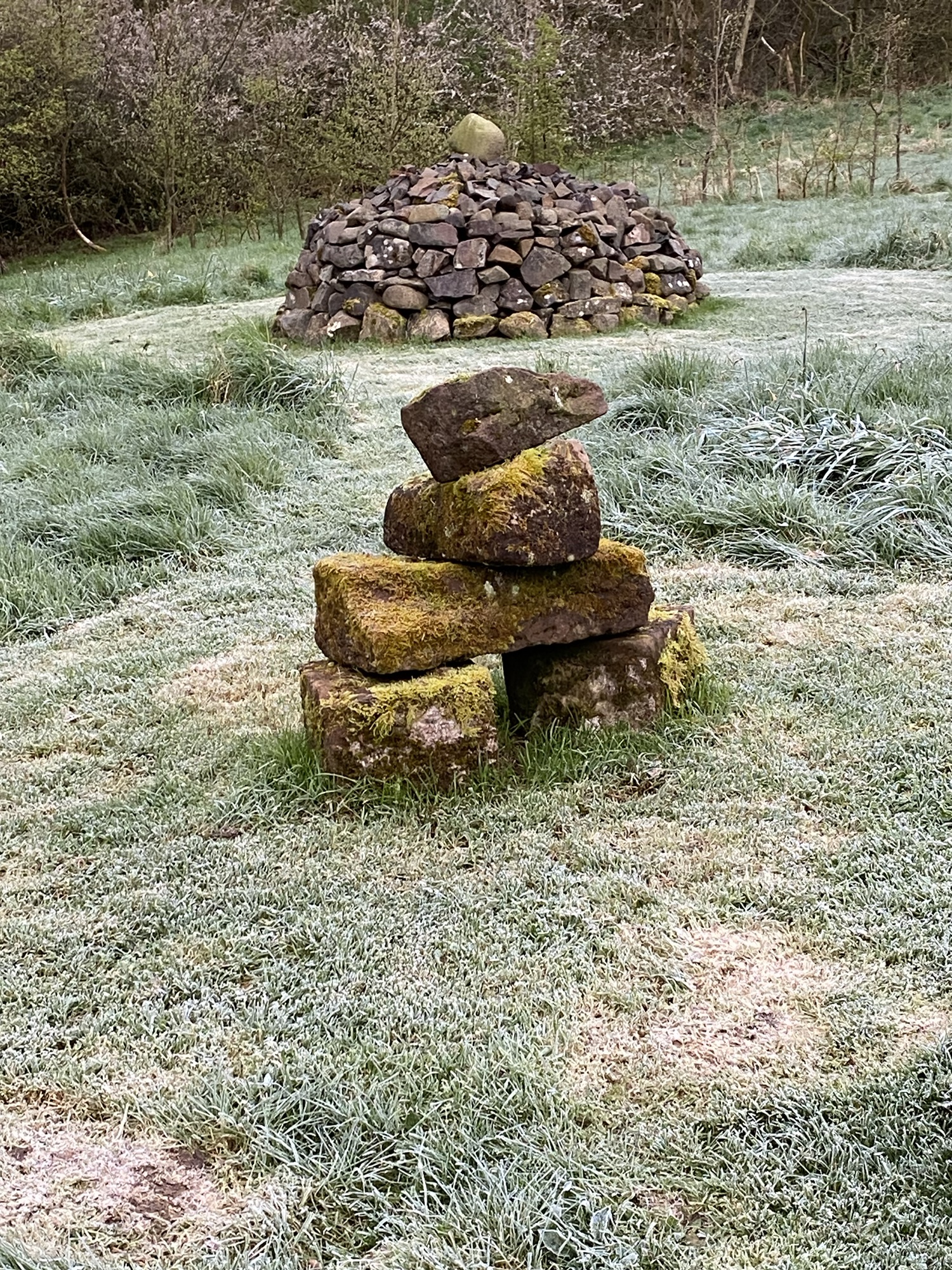
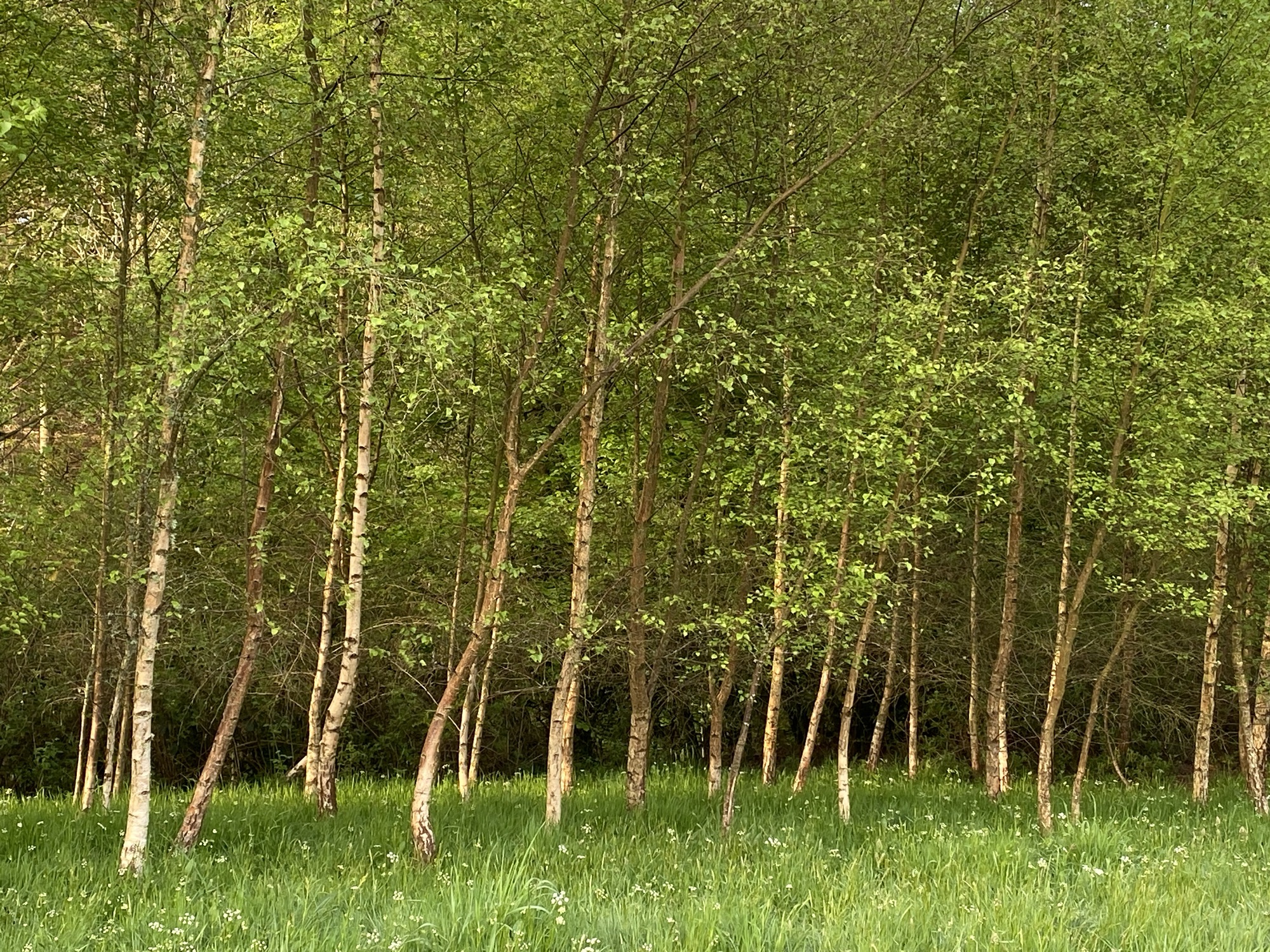
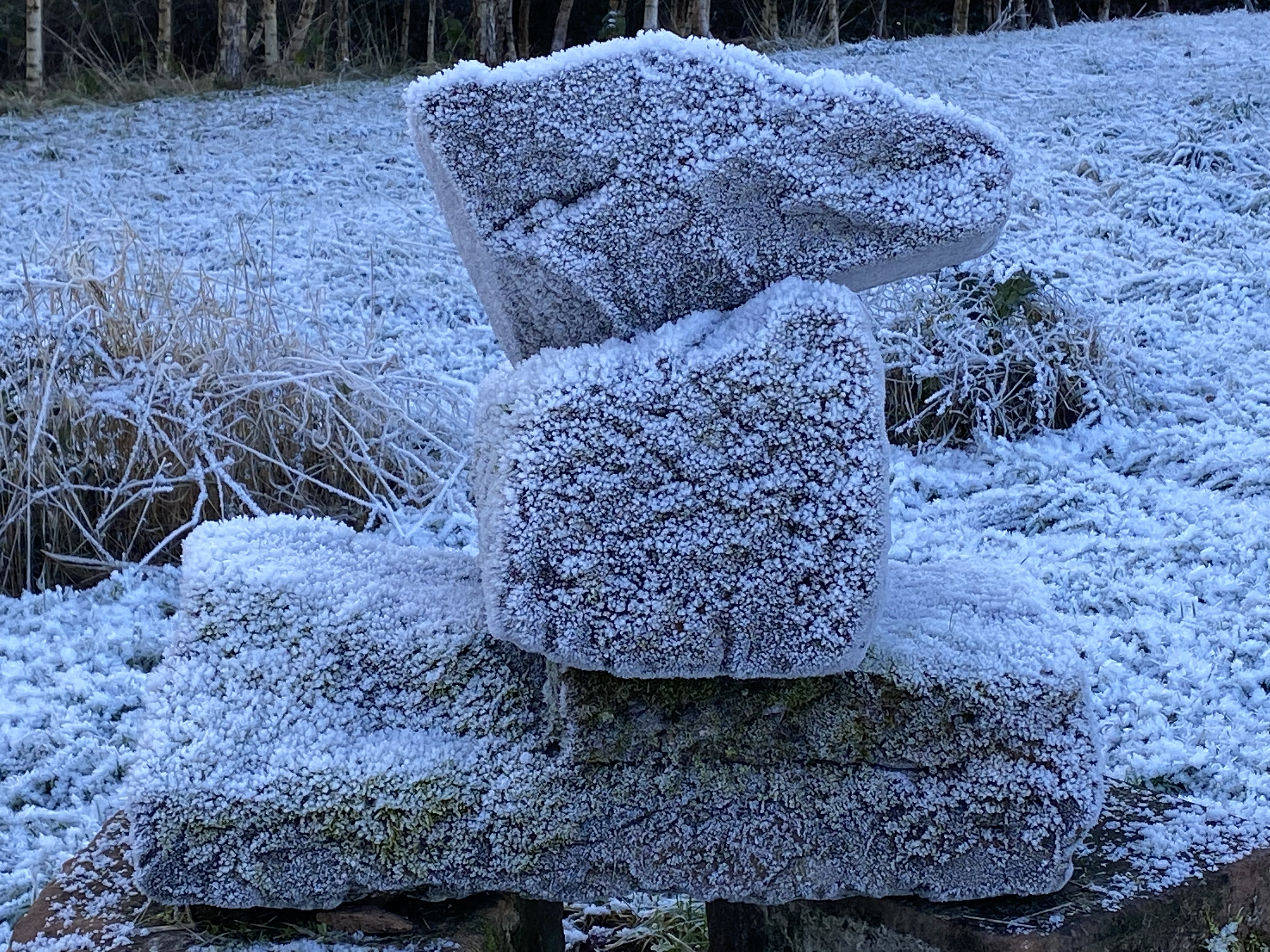
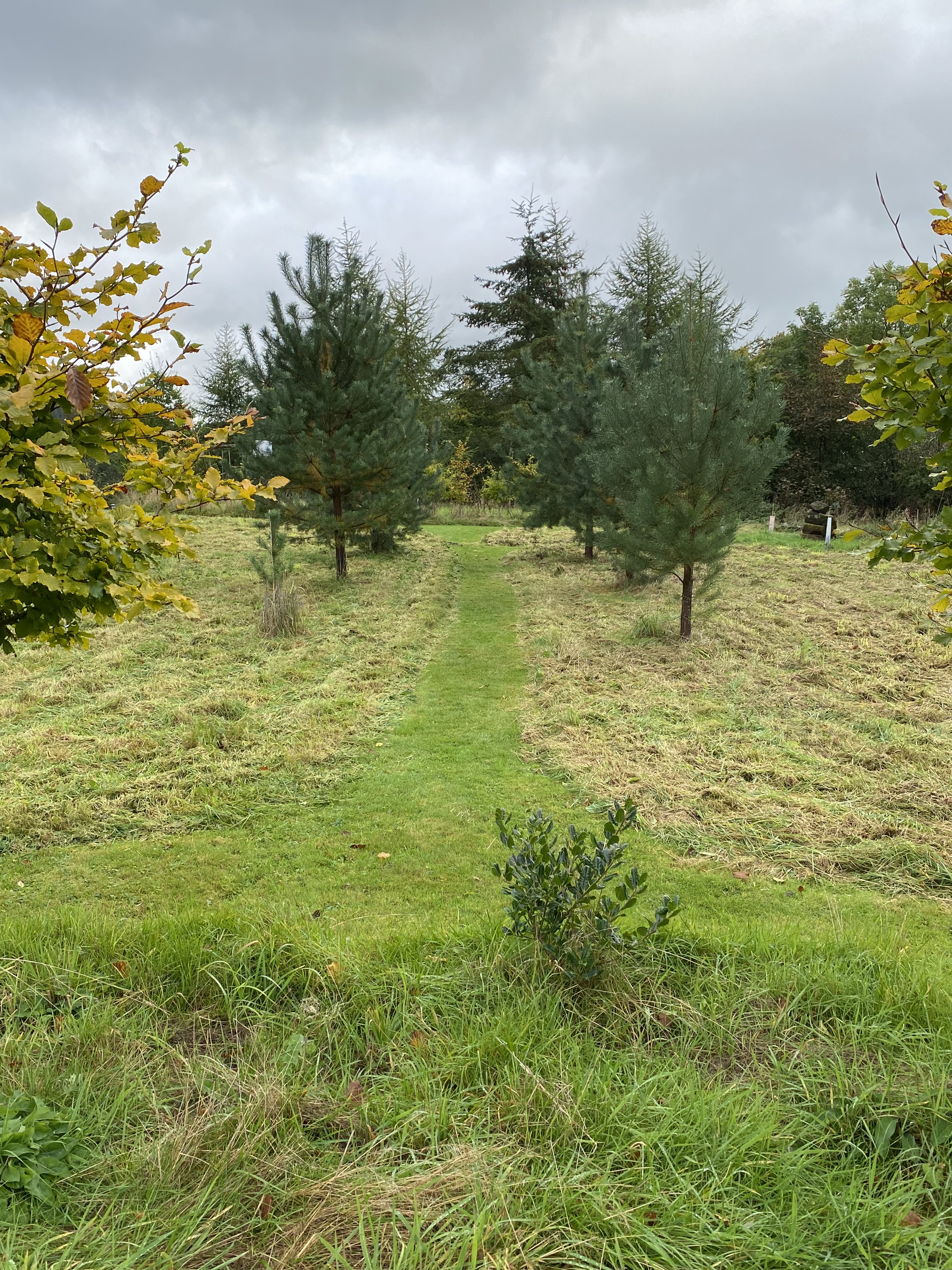


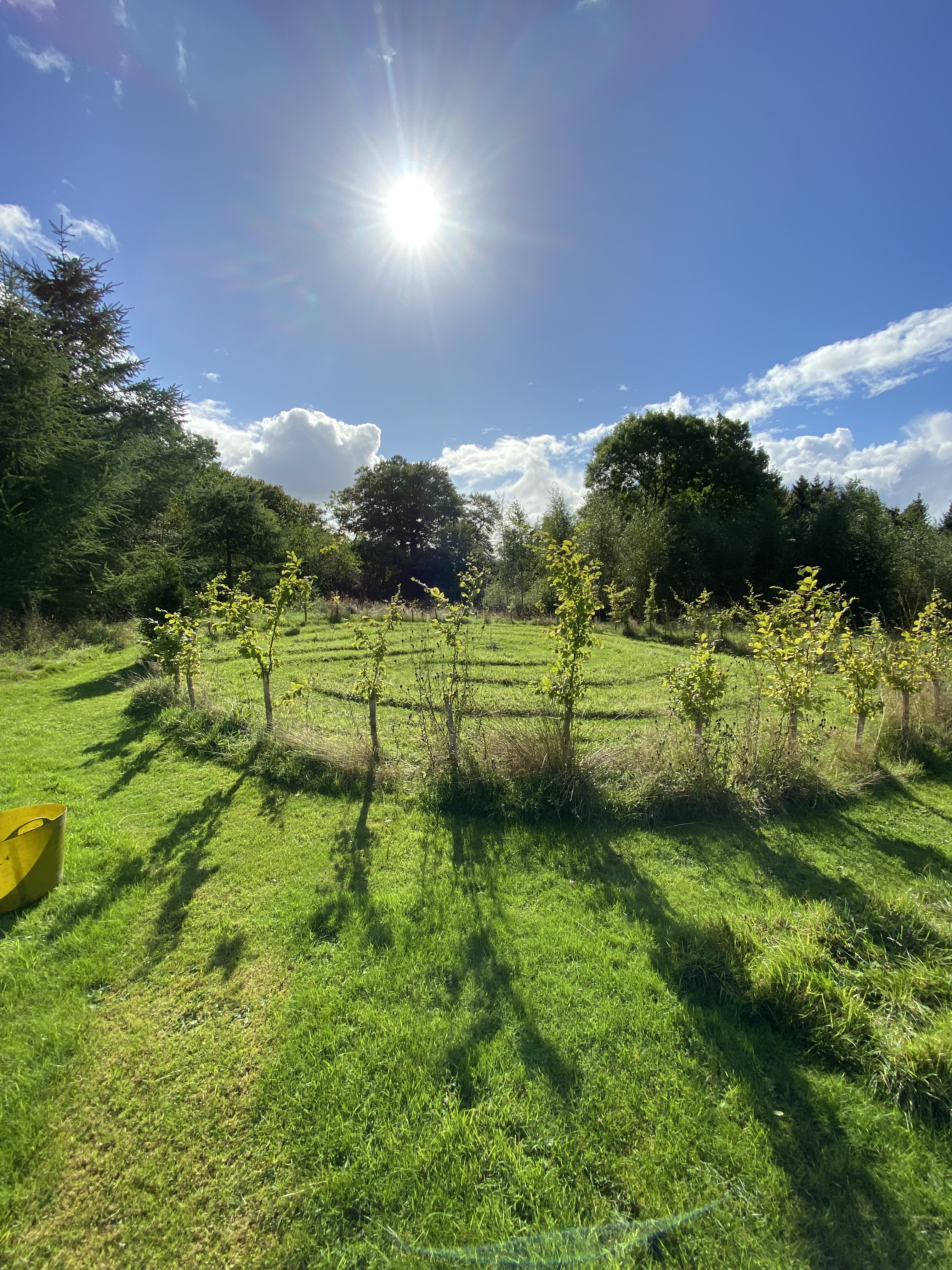

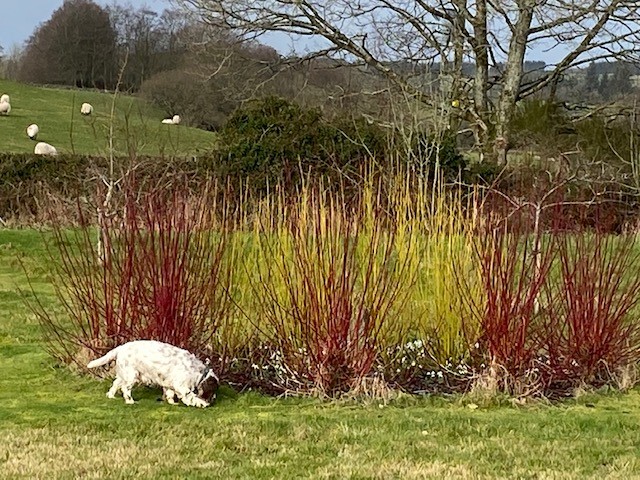
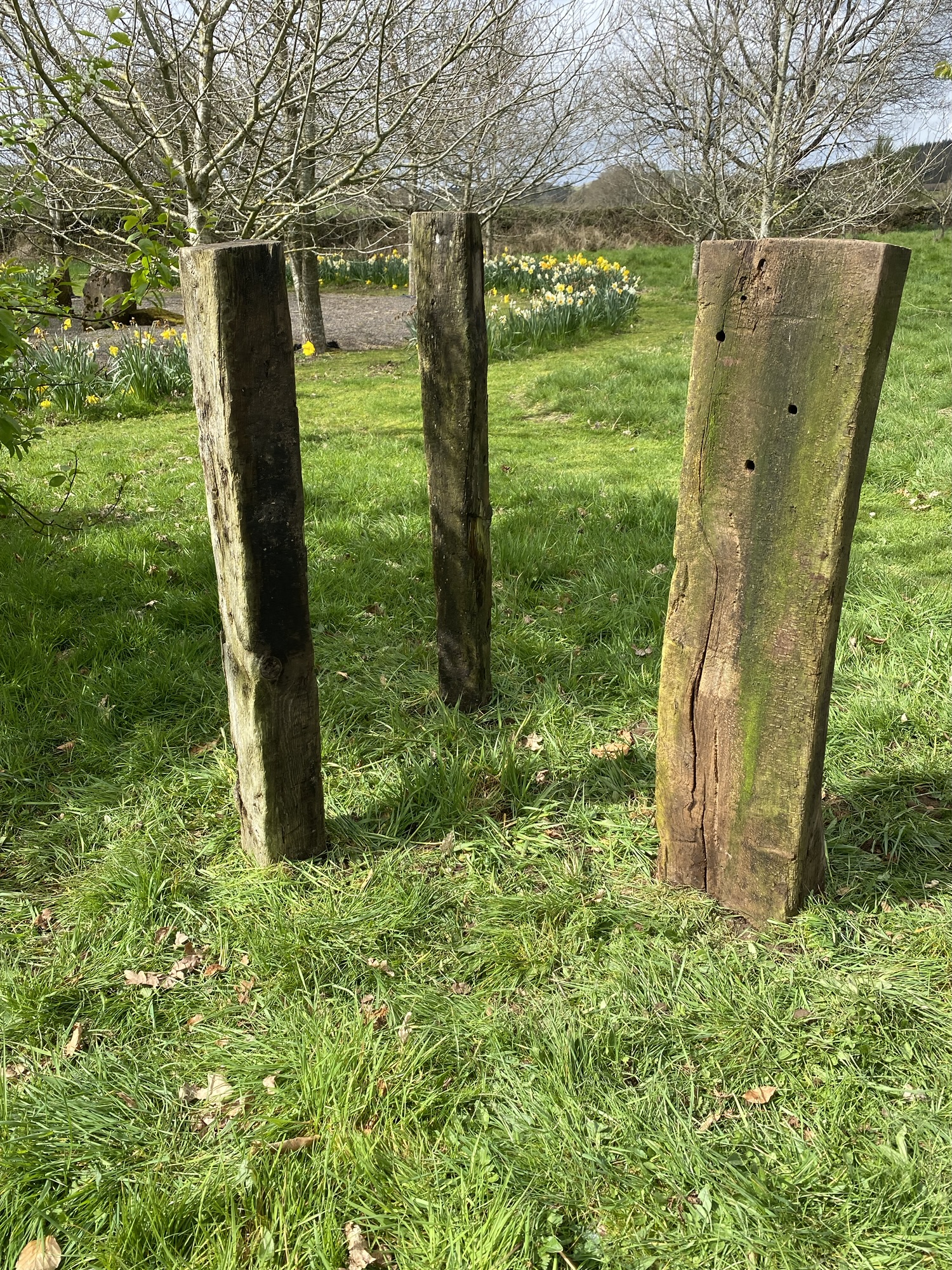
This month has seen a new addition to the arboretum. Three old railway sleepers have lain abandoned and close by for years. Several times I have thought about doing something with them, but inspiration has evaded me. Until now.
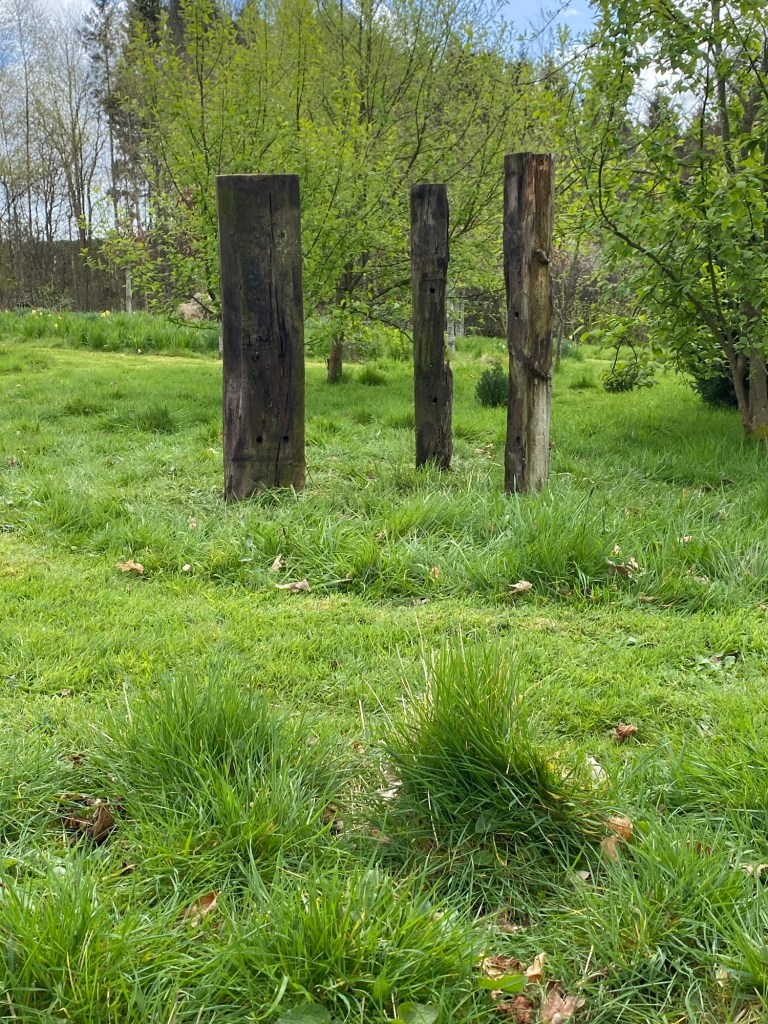
For reasons that will soon become clear, I suddenly realised that these three pieces of weathered, textured, drilled, and mossed timber might have potential for a garden installation. On a dry and intermittently sunny April morning, I therefore spent some time choosing a location for the idea, and eventually settled on a spot among wild cherry trees and close to the sandstone gatepost.
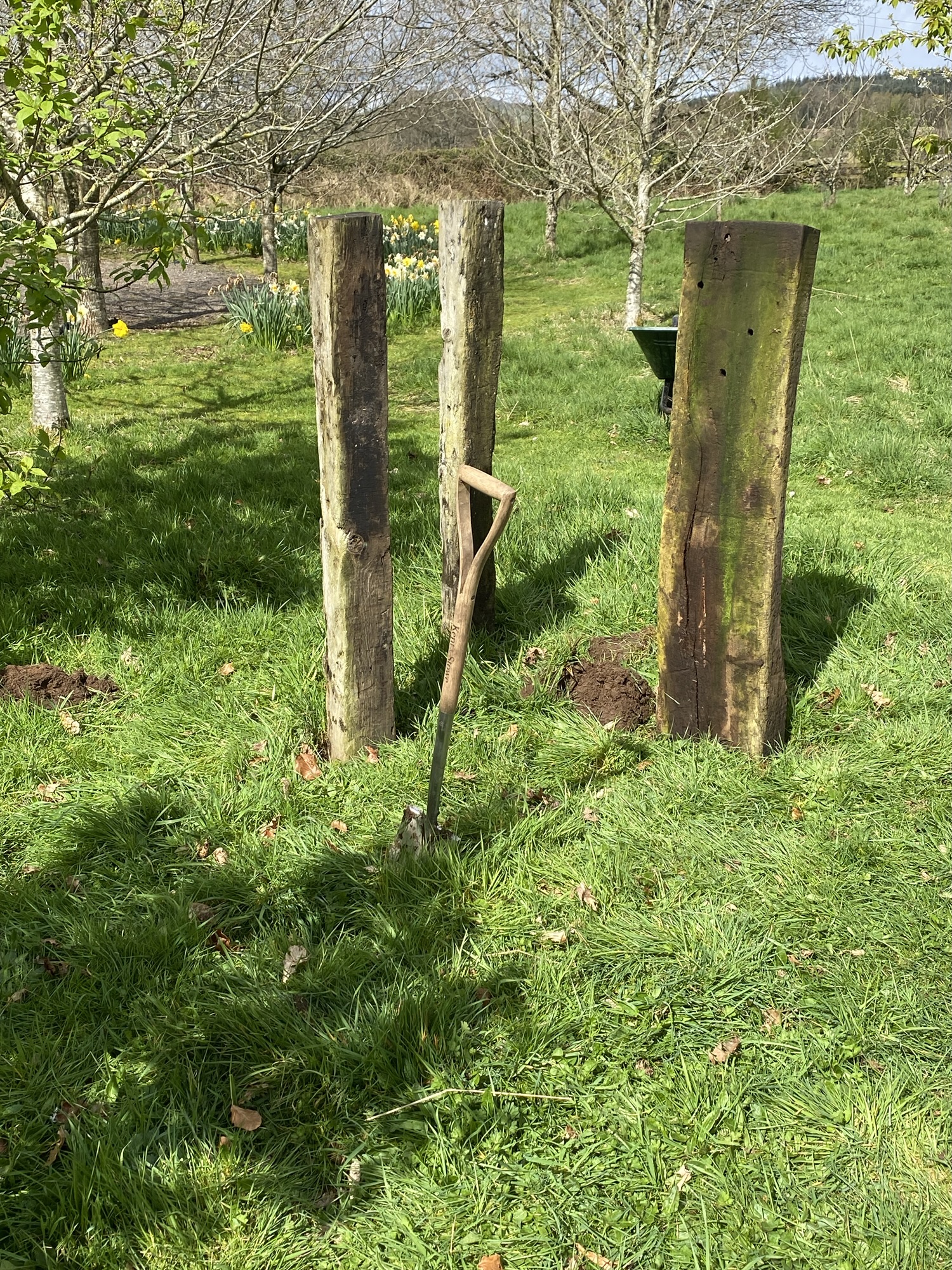
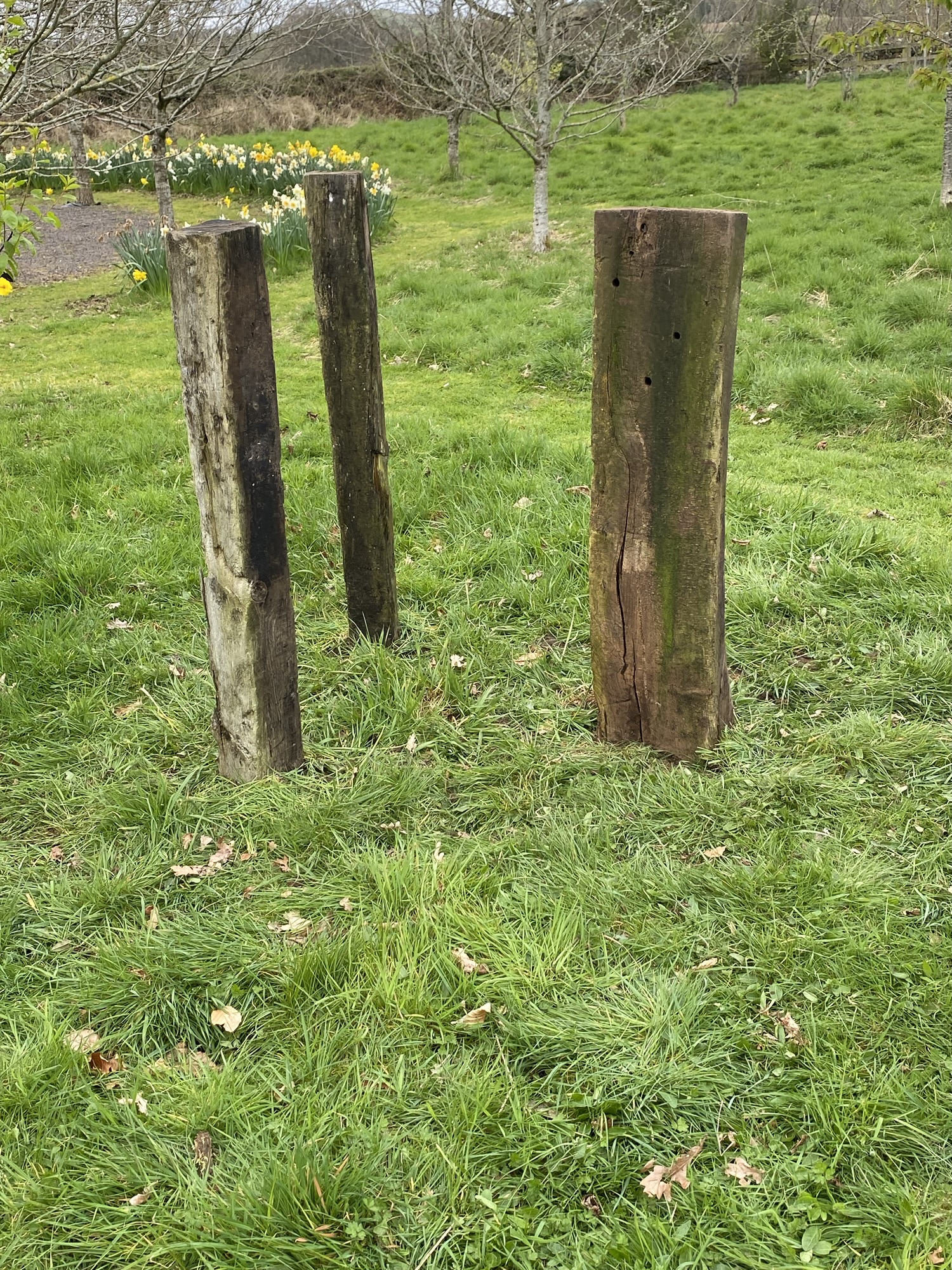
The next question was how to group them. I quickly understood that there would be no single viewpoint from which the three pieces would be seen. Situated close to the intersection of three mown paths, the installation might be approached from one of several angles, depending on someone’s starting point and chosen route. This made things simpler and my original trial positioning seemed to need no adjustment. I got things set up in a temporary way (see featured image) and then went off for lunch.
When I returned, I wandered back and forth on the adjacent paths, checking how things looked. Sometimes the first choice is the right one. I decided to go ahead. Next I laid the pieces on the ground, prepared their postholes to a satisfactory depth, replaced each sleeper back in its location and back-filled with soil, pebbles and pieces of the cut turf. Well tamped in. The result can be seen below. I hope you like it as much as I do.
The general inspiration for this installation comes from various jardins remarquable seen in France and elsewhere over the years, and in particular, the creations of Christian Lapie. Specifically, it also arrived in my head at a time when the wonderful work of Andersen Borba is showing at Cample Line near my home in Dumfriesshire. His exhibition is entitled The Unearthed. A particularly striking element in the show is a group of tall figure-like pieces in wood, variously treated with collage, paint, and carving, along with inserted stones, metalwork, and cast bronze.
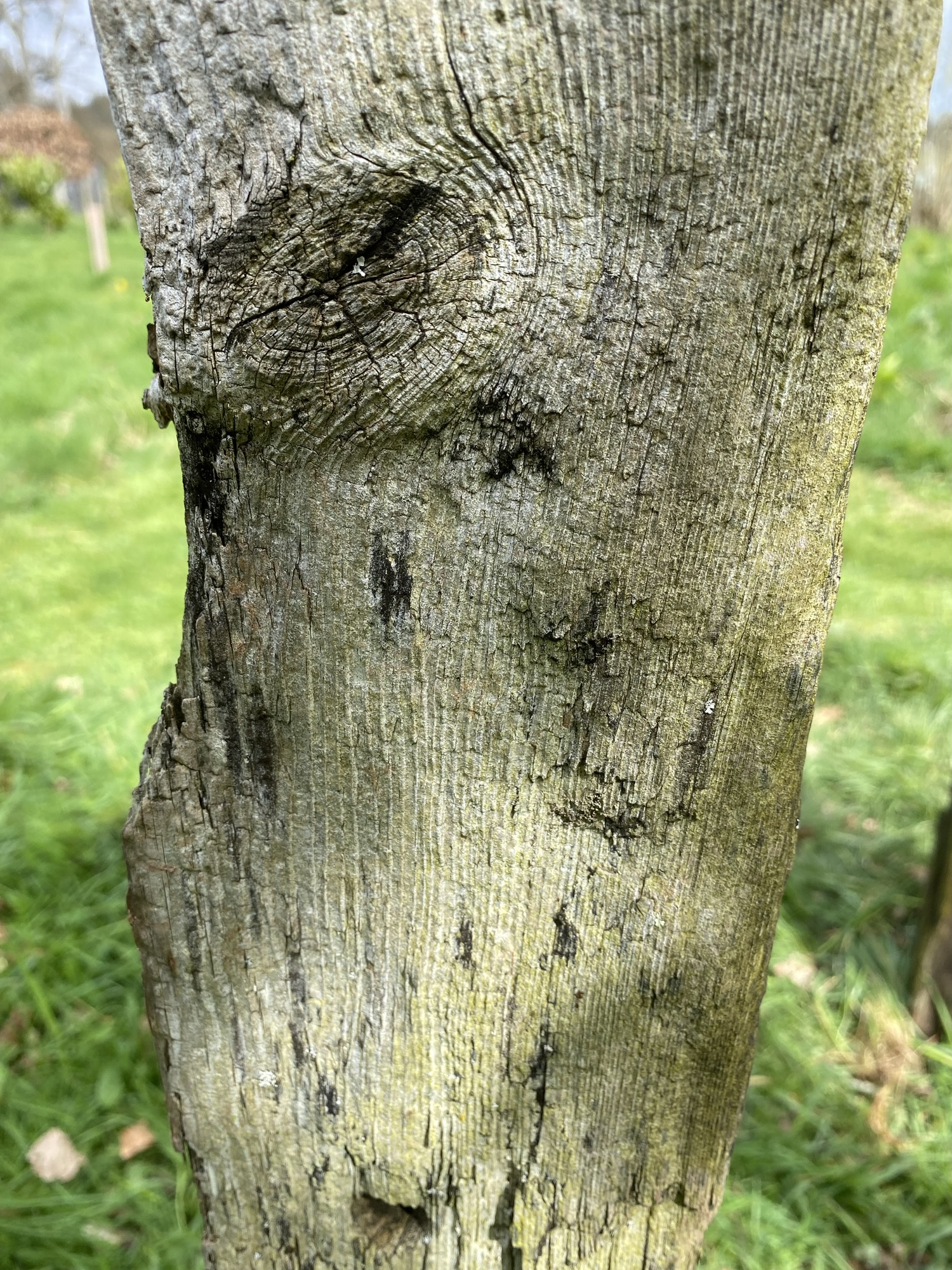
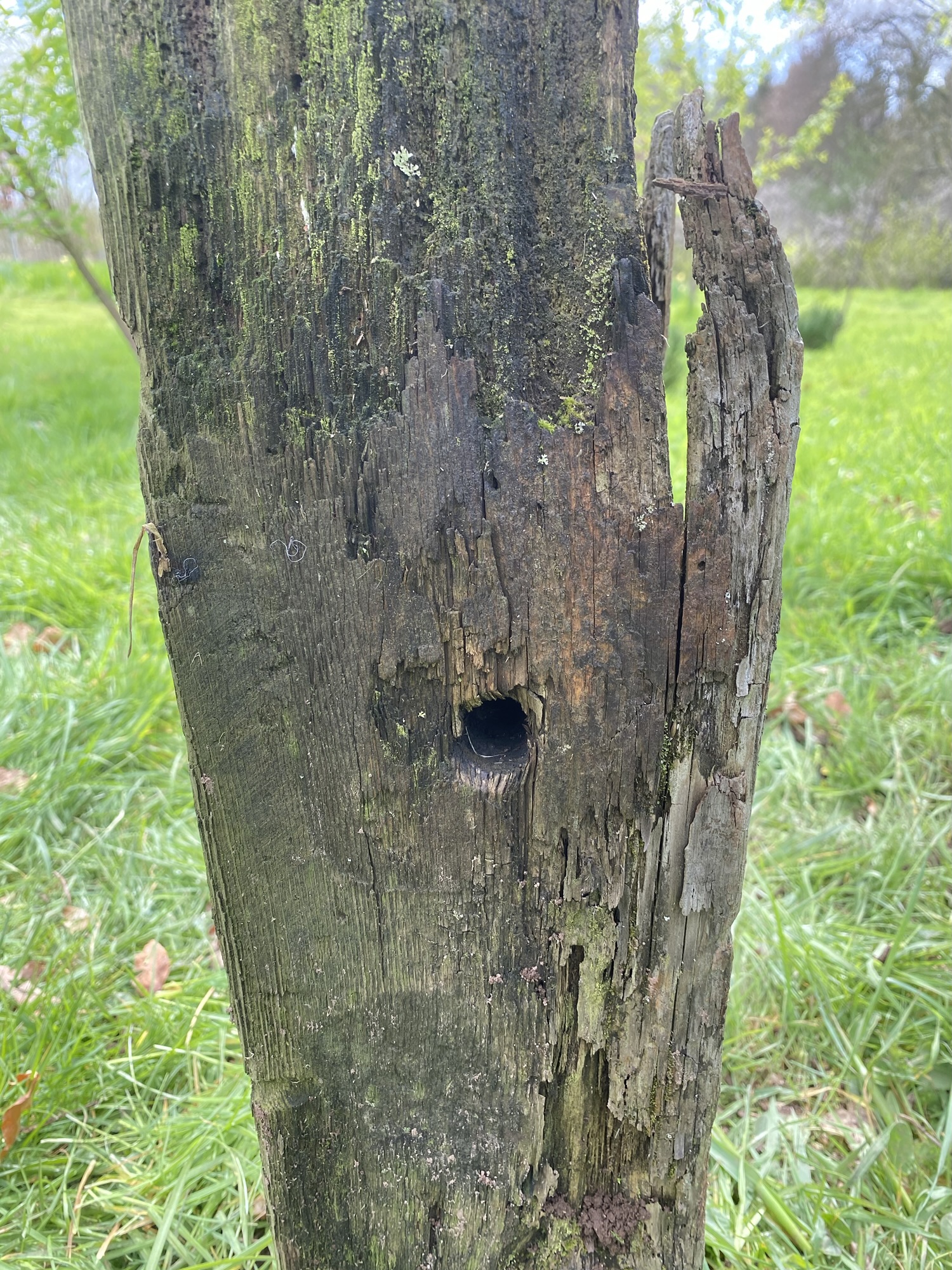
It was during a gallery tour of Borba’s exhibition that one of the group members talked about the tall wooden posts, remnants of old fencing, that dot the landscape around her home near Leadhills, showing us photographs of some striking examples. I thus found a link between the skilled and wonderfully detailed work of the sculptor, and the agentic effects of time and weather on objects in the landscape. Only a few days later I ‘unearthed’ my three sleepers from under a pile of leaves and thought about how they would look standing up in the field. Seizing the moment, plus a spade and wheelbarrow, I went ahead immediately. I was also delighted, on close examination to find on each of the sleepers a rich array of markings, drilled holes, weathering and de-composition. Characteristics of which I feel sure Borba would approve.
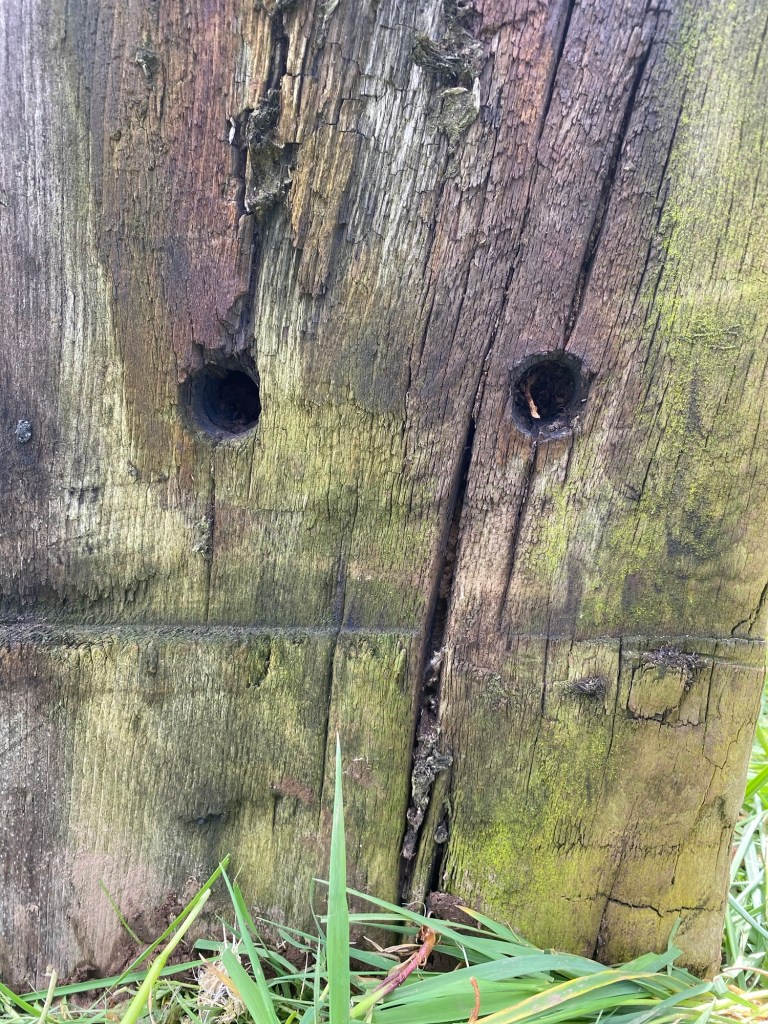
I have no idea what journey brought these three elements of the railway system to the edge of the field near my home. Untouched by the hands of an artist they nevertheless have stories of their own to convey. I am going to keep my eyes open henceforth for other pieces of timber or found agricultural detritus that might be displayed sympathetically here in my particular corner of Dumfriesshire. It’s worth emphasising that you don’t need an arboretum for this kind of approach to sculpturally inspired objects. Remarkable gardens can come in any size!


Hi David, lovely story of replanting our world! I am enamored by such
gardens, though I own only a good size balcony. I thought about your
writing, reading about Judy Dench’s garden. Maybe it resonates with you
too?
https://www.theguardian.com/culture/2026/apr/17/judi-dench-garden-eight-poignant-items
Kindly, Ruthmarijke
LikeLike
Thanks Ruthmarijke. I’m glad you enjoyed the piece. A ‘good sized balcony’ must offer quite a lot of scope for interesting plants and objects. I didn’t know about the Judi Dench garden: fascinating. Good wishes
LikeLike
A beautifully creative arboretum you’ve made! I especially appreciate the red and yellow Cornus shrubs. And the stone work is lovely.
LikeLike
Thanks so much, and I am glad you like it. The ‘arboretum’ maybe doesn’t fit the specific definitional criteria to be thus named, but it gives a huge amount of pleasure and is a haven for wildlife. I’m glad you like the humble Cornus, I am a big fan: https://davidgrahamclark.net/2023/02/21/dogwood-delights/ and have a lot of them.
LikeLike
Hi David, Reading your piece on agricultural/industrial heritage as sculpture in the landscape reminded me of our visit last week to Argyll and the Bonawe Iron Furnace at Taynuilt (1753). Kelly’s Pier nearby was built to deliver the iron ore for the furnace. I took this shot at the end of the pier and reflected on’t. cheersGB
LikeLiked by 1 person
Thanks for this Graham. I’m glad the piece prompted further thoughts. I can’t see the pic though. Could you maybe send it some other way?
All very best to you and remember to call and see us if you are down this way.
LikeLike
Thanks David,
I can e mail to you if you send me your address to
familybirse@aol.com
GB
LikeLike