I know there can be good years and bad years. As gardeners we are mindful of the vagaries of weather and their consequences. We are accustomed to shrugging off the failures and celebrating the successes. But 2026 in the vegetable patch has tested such fortitude to the limit. With few exceptions, as Lammas approaches, there has been little produce to tickle the taste buds and several disappointments to thwart menu-planning.
It started with the shallots. Encouraged by terrific success last year, I planted out the ‘banana’ variety from a couple of packs bought at the supermarket. I then waited for the first touches of green to appear. And waited. Eventually, one shallot in the middle row of three produced a result. Healthy green shoots appeared and boosted my spirits. Maybe the rest would follow? They didn’t. Over a couple of weeks I watched these wayward alliums, and gradually lost all hope of success. Eventually I poked around to find out what was happening. A slimy mush was the outcome. No roots formed, no shoots produced. Except for the one. I harvested it, with two shallots the result.
The Musselburgh leek, grown in the Dumfriesshire Garden veg patch for several years now, is a family favourite. Short stems and full of flavour. After late frosts and then quite a bit of rain, my crop looked set to put on growth. Then came a mini-heatwave that coincided with a few days spent away from home. On return I found almost every plant had shot up a tall spike, topped with a glorious pinkish white umbel. Elegant enough to impress a florist. Apart from the pungent bouquet. The few plants that hadn’t bolted I assigned to a fish recipe, only to find them woody, fibrous and inedible.
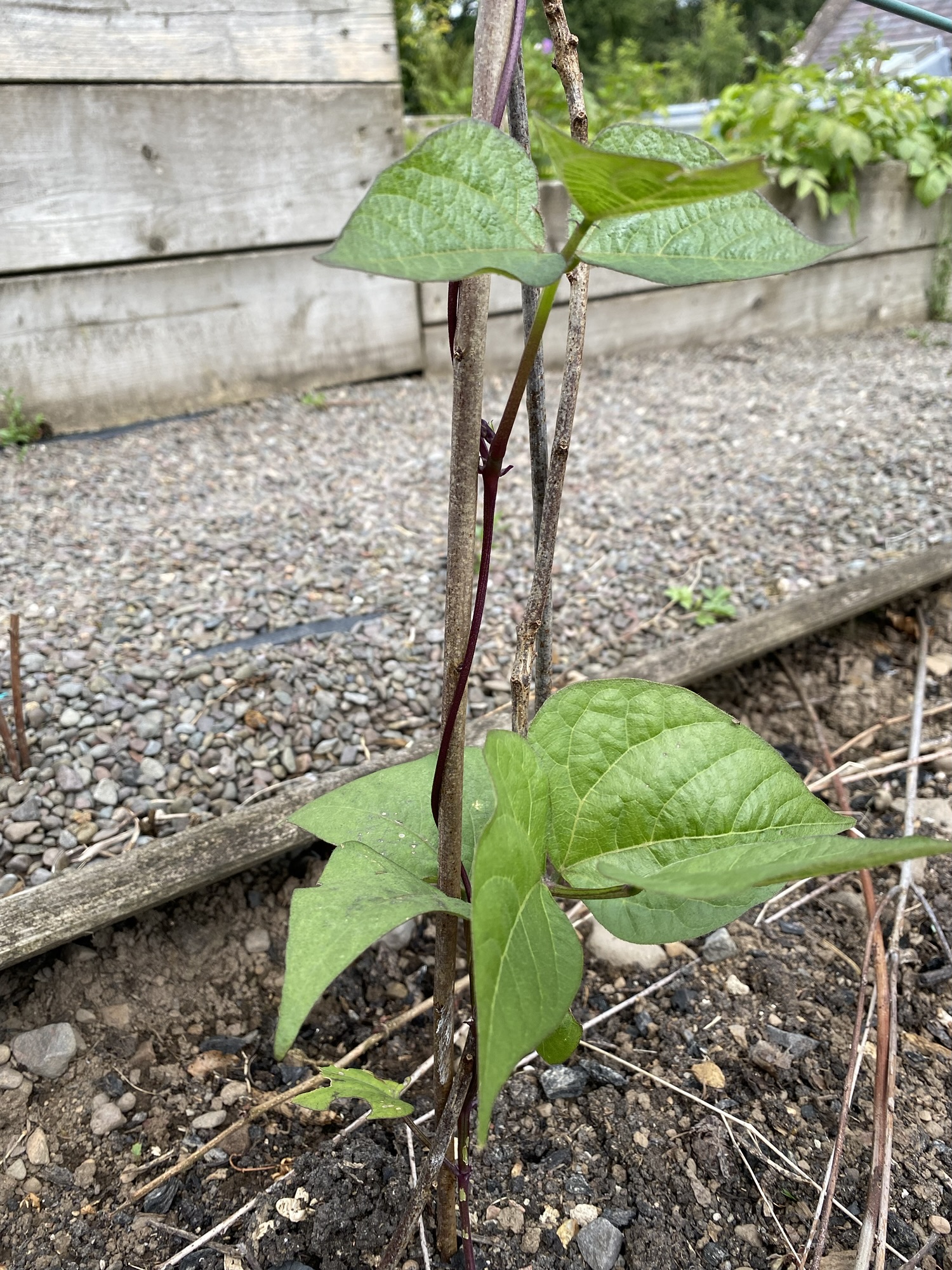
Trying something new this year, I sowed a row of purple climbing beans, carefully preparing the ground under some posts and wires where previously raspberries had grown. I looked forward to a magnificent display of leafy plants, then flowers, then pods. It was not to be. Reluctantly, two shoots eventually appeared. They are making pathetically slow progress up the twiggy sticks I provided to get them started (see featured image). The yield, if any occurs, will undoubtedly be meagre.
Undeterred, I turned to a trusty and reliable legume. In years past I have had gluts of dwarf French beans. So much so that I’ve taken to sowing just a few drills of one variety, thereby picking the crop at its best. This year, the packet promised a lovely yellow bean that I felt sure would look good in a salad Nicoise or similar. I was foolish to get excited. Just one plant appeared, and it was soon attacked by gourmandising slugs. I tried a second sowing and am hoping for the best.
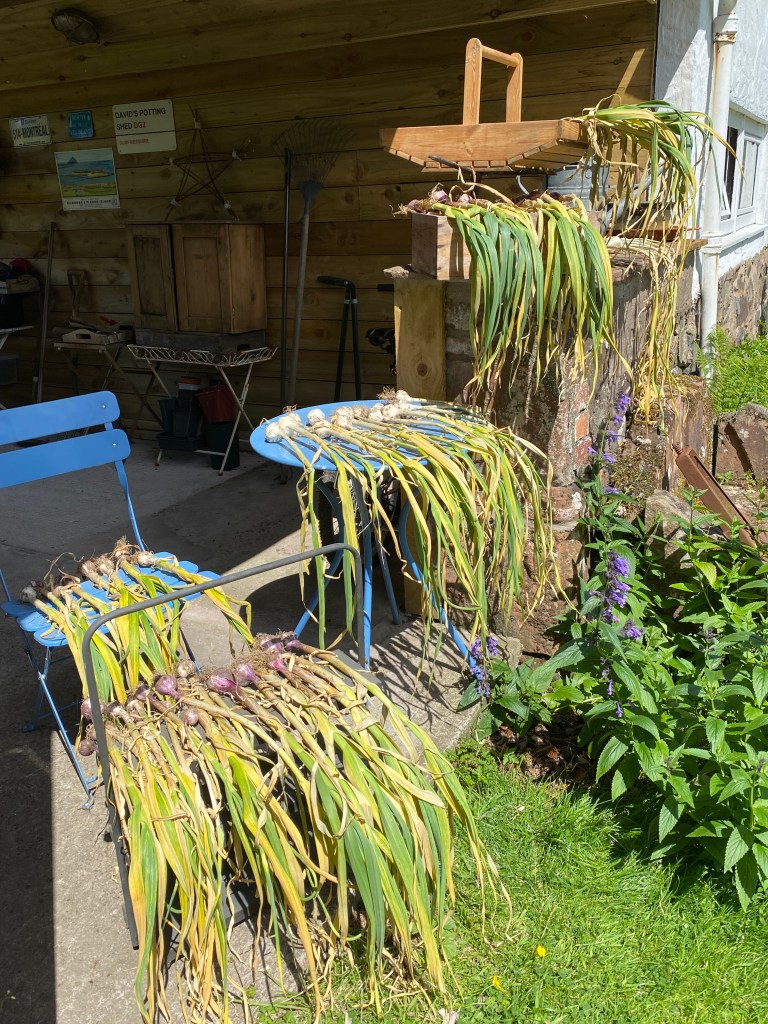
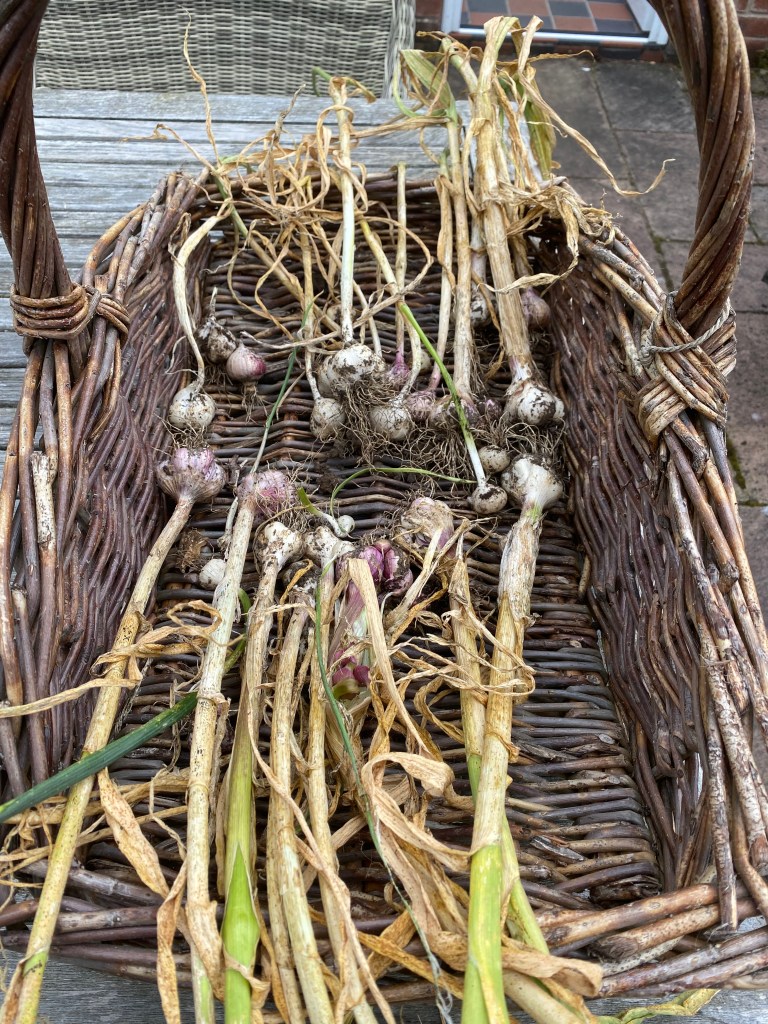
Last autumn I planted garlic cloves in abundance, in nicely composted, free-draining ground. As the days lengthened I was troubled by the number of gaps in the rows of new shoots. Normally 100% sprouters, things were looking somewhat doubftful. When this spring’s growth got underway, it too was rather feeble and some plants gave up the ghost completely, a withered stem their only reminder. I know that comparisons are odious, but take a look at this image below of the garlic crop in summer 2022. For twelve months thereafter the Dumfriesshire kitchen was self-sufficient in this essential cooking ingredient.
Contrast that with the woeful offering in the trug from 2026.
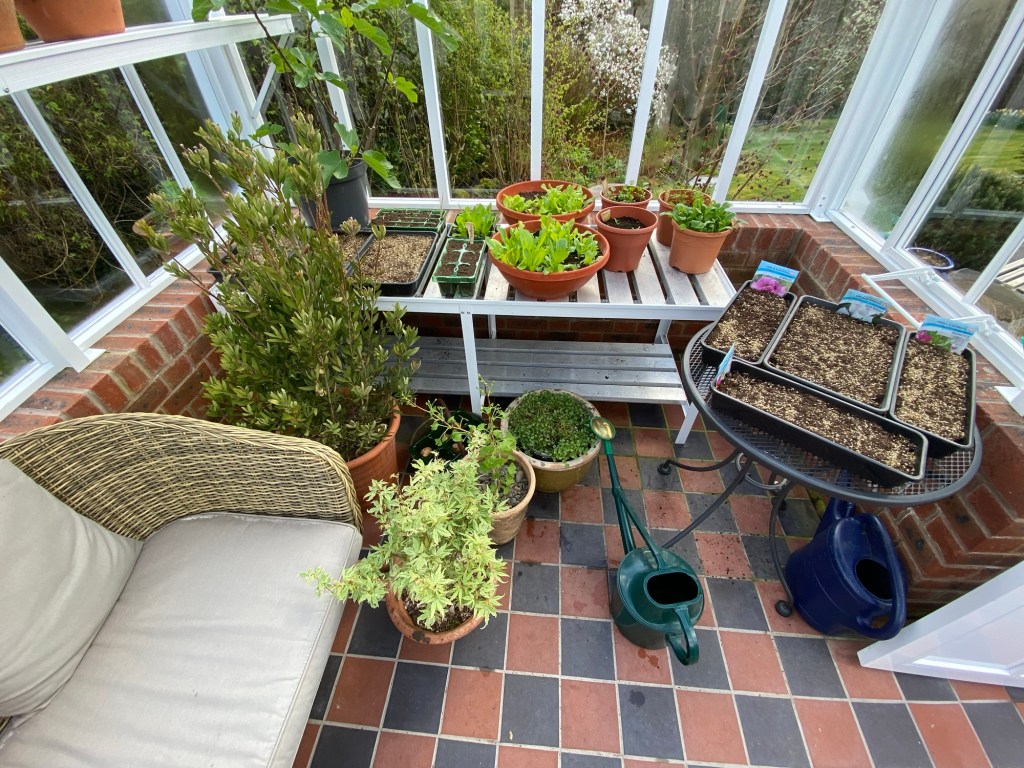
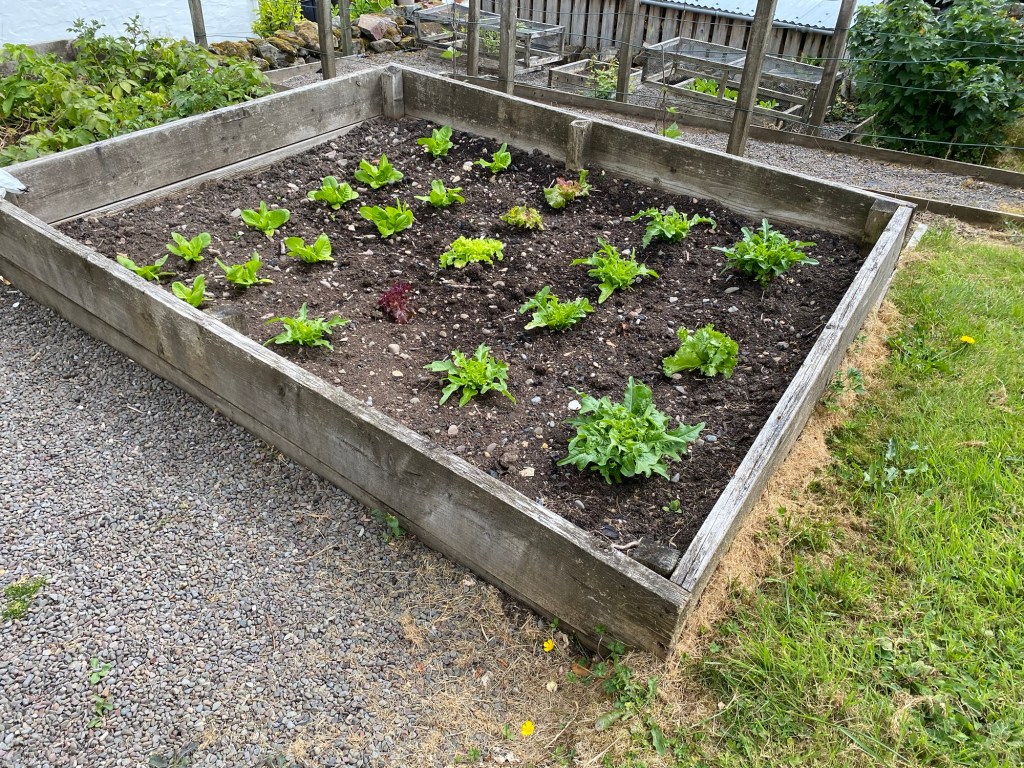
All in all it has been gloom in the veg patch this year, with just a few consolations. Lettuces and herbs grown in the greenhouse have thrived and also done well when planted out.
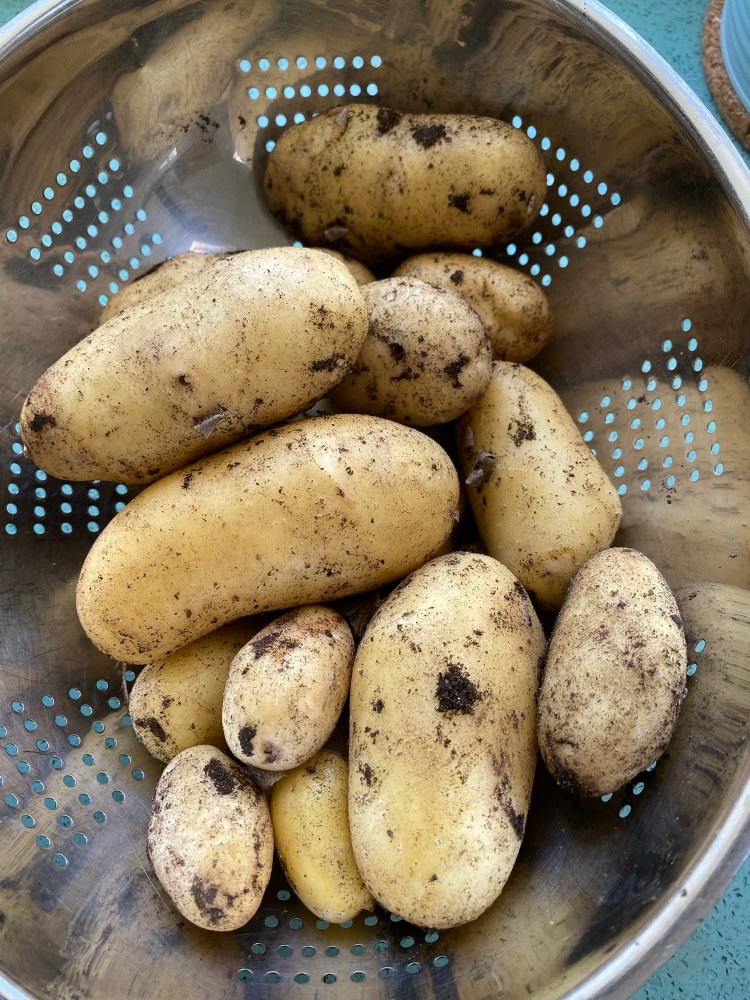
Likewise, the much prized early tatties haven’t failed to deliver. Planted sooner than usual in a warm spell in March, they were ready by mid-June. We ate the first ambrosius batch with melted raclette cheese, gherkins and a glass of dry white Bordeaux. Grateful for that, I tried to look ahead and be optimistic, It’s the only thing a gardener can be.
But hope springs eternal! I’ve noticed that the Victoria plum tree has an inordinate amount of fruit on it. After all the disappointments among the veg, we could be in for a bumper prunus year!


Given the very disappointing results in my vegetable patch this season, even when compared with somewhat indifferent results in previous years, it was a joy to read this.
LikeLike
Heat and drought, maybe? Both exhaust the soil. But those potatoes look wonderful, and I sprinkle my roasted potatoes with Asiago cheese. I like the combination of mild and sharp flavors.
LikeLike