Having come to playwriting later in life, I’m on a steep learning curve. Still marvelling at how the process is very much a shared endeavour. Soaking up feedback, tricks of the trade, and learning about something called dramaturgy. It’s an enthralling journey.
My first pièce de theatre was Cicely and David, and took the form of an origin story about the modern idea of hospice care. Premiered at the Edinburgh Fringe Festival in 2022, it has subsequently travelled far and resonated widely with those working in the field of palliative care.
My new play is a sequel to the first and tells the story of how Cicely Saunders threw her efforts into creating a special kind of hospice that would care for people with advanced illness, along with their families, but would also provide professional education, underpinned by new forms of research. This second play, entitled Being Cicely, captures Cicely Saunders’ fortunes from the early 1960s when she commits to forming St Christopher’s Hospice, and continues through to her death there, in 2005. Along the way it explores her somewhat complex personal relationships, as well as her varied professional encounters.
The play currently looks like this:
It’s the early 1960s and Cicely Saunders is on a personal mission: to improve the care of dying people. She has been a nurse, a social worker, and is now qualified in medicine. Her ambition is to build on the older traditions of hospice care and develop something new: a modern approach that can revolutionise pain relief and foster dignity in the face of death. But as she sets out these plans, her own life experiences complicate the path of ‘the woman who changed the face of dying’. Being Cicely takes us on a complex journey of successes, dilemmas, faith, friendship, and ultimately, enduring love.
A good deal of work on the script development for Being Cicely took place through 2025. Then in January of 2026, a group of young actors gathered together with our Director to give the play its first reading and provide structured feedback to the writer. This proved incredibly helpful and in the following months, I made various changes, keeping in close touch with the Director, Producer and others interested in how the new playscript was progressing. By the summer we were confident that we could take the play to the Edinburgh Fringe in 2027.
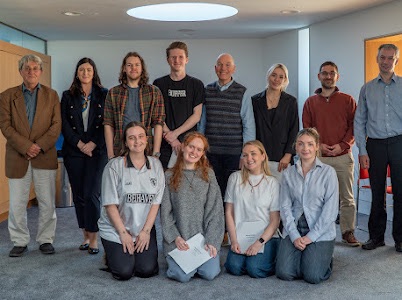
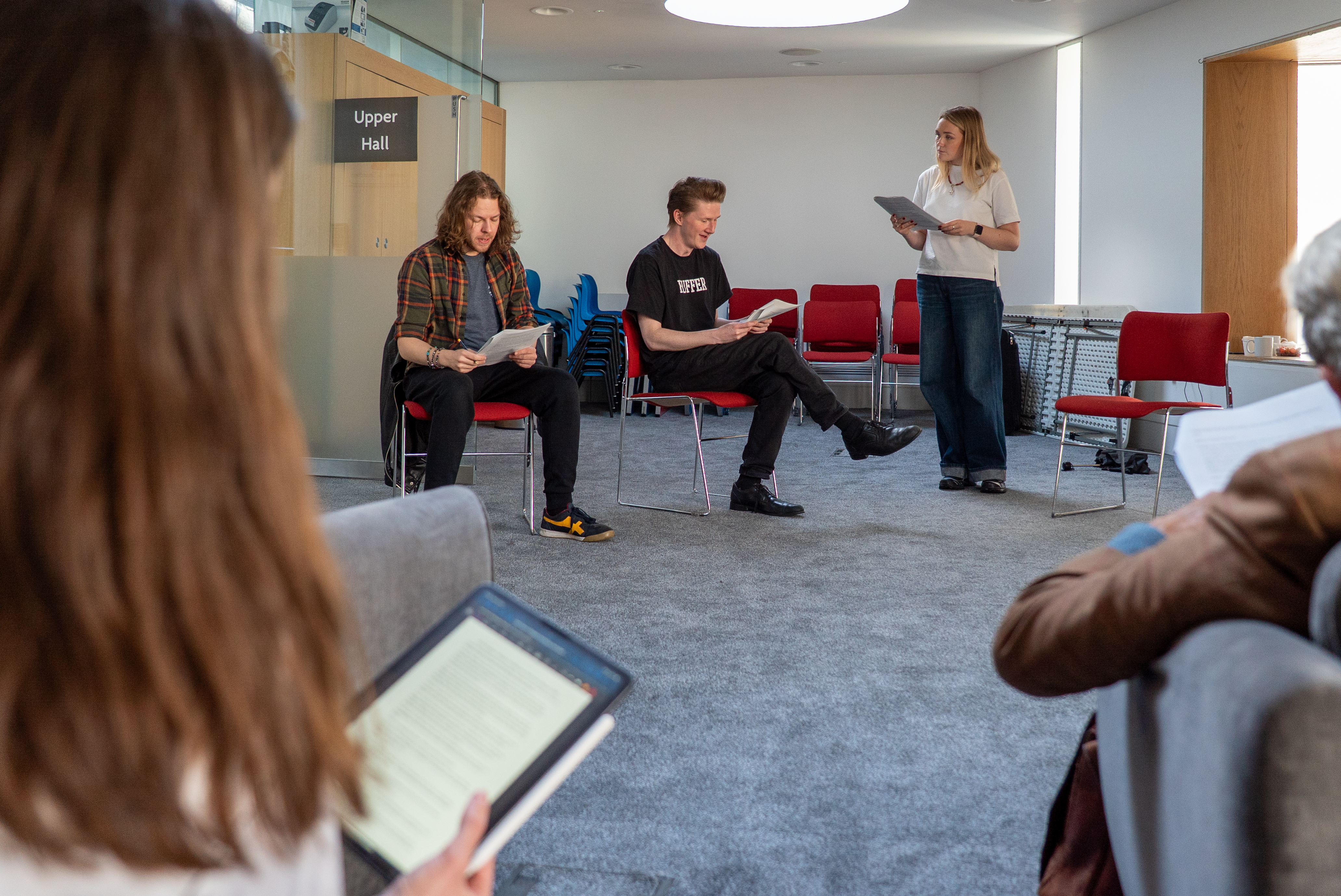
On that basis we decided to have a second workshop, this time to read the revised script, but also to experiment with a number of scenes to see how they looked when acted out: a process known in theatre making as ‘putting the play on its feet’. We also invited to the event some supporters of our work from the world of hospice and palliative care, bringing them into the development process and getting their feedback on the gradually finalising script.
Thus it was that on 30 September this year, a dozen of us gathered in the upper room of an Edinburgh church, full of anticipation, and in my case, not a little anxiety. There is something uniquely exciting about hearing the words of one’s playscript being read by actors for the first time. It is something even more thrilling to watch as they take those words and turn them into a piece of drama, through their bodily movements, facial expressions, and the changes of pitch, expression and resonance in their voices.
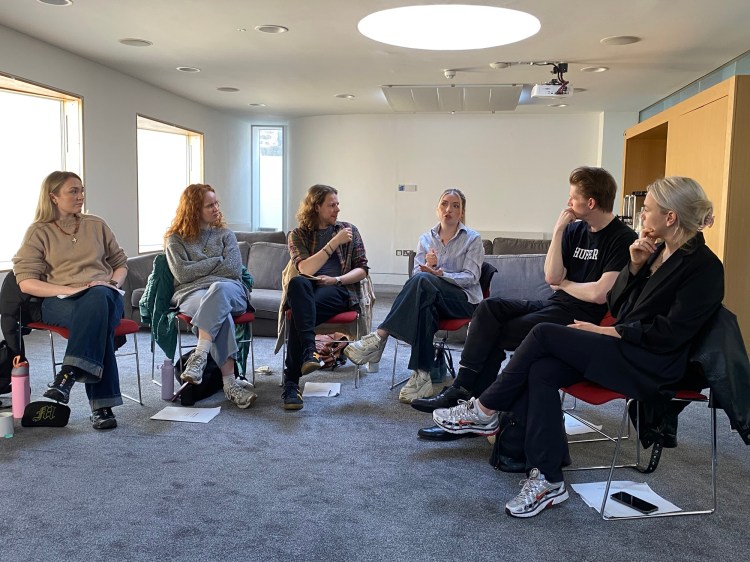
By such means I gained a better sense of the narrative arc of the play, of where the dialogue came alive, and where it risked being stodgy or even indigestible. I could also spot the contrast between passages of true drama and interludes where exposition prevailed, or that even risked lecturing to the audience. There were moments of emerging chemistry between characters and the pleasures of humour and flowing conversation between good friends. There was also an argument between colleagues, which the actors lifted to a full blown, ding dong row.
Complex and enduring themes could be seen to emerge and re-emerge, sometimes shifting over the extended time period covered in the play. Attitudes to pain control at the end of life, arguments for and against euthanasia and assisted dying, philosophical, spiritual and religious influences in the care of dying people – all of these surfaced and resurfaced as the script unfolded, capturing changing norms and evolving professional practices.
Following all this, the workshop concluded on an excellent note.
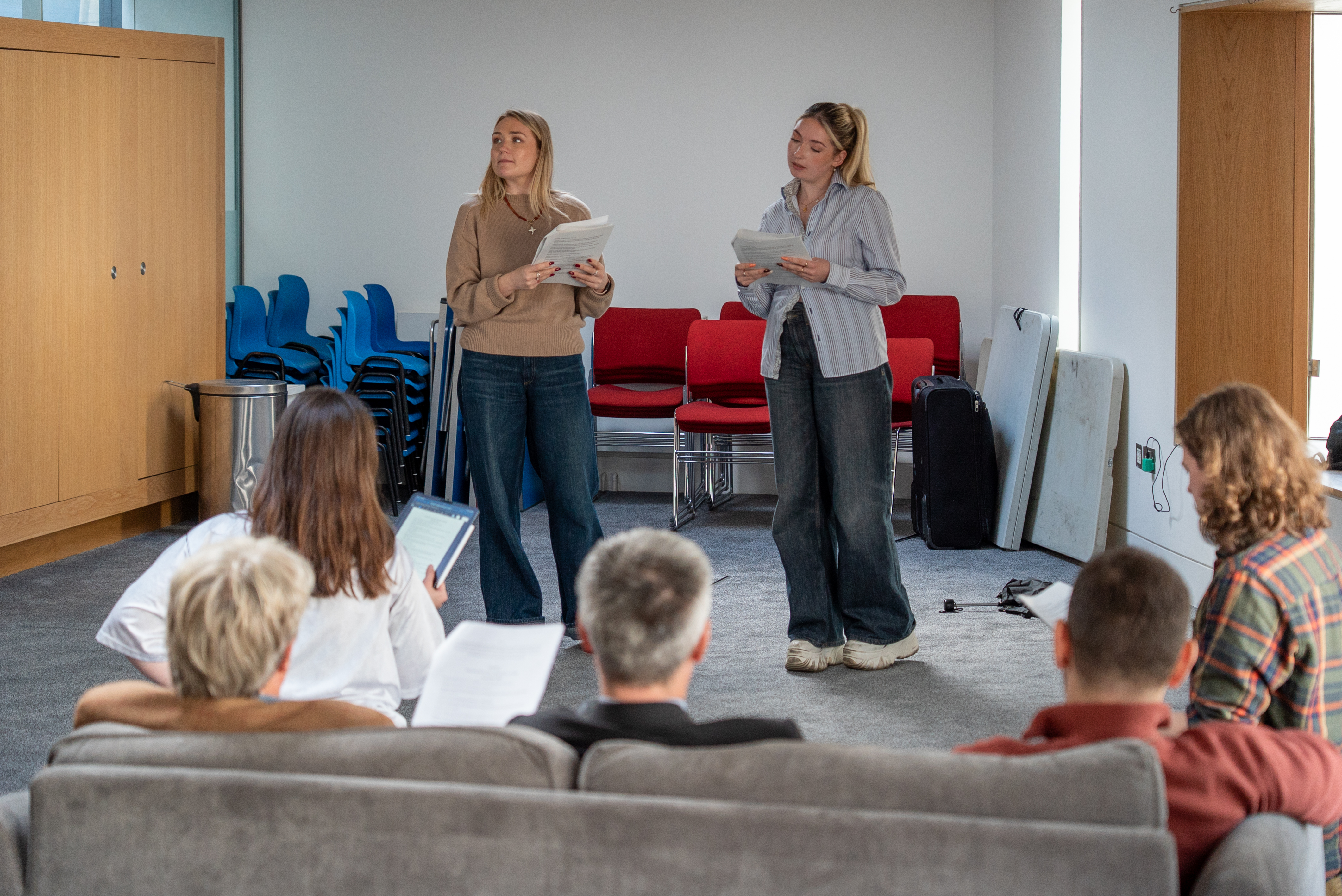
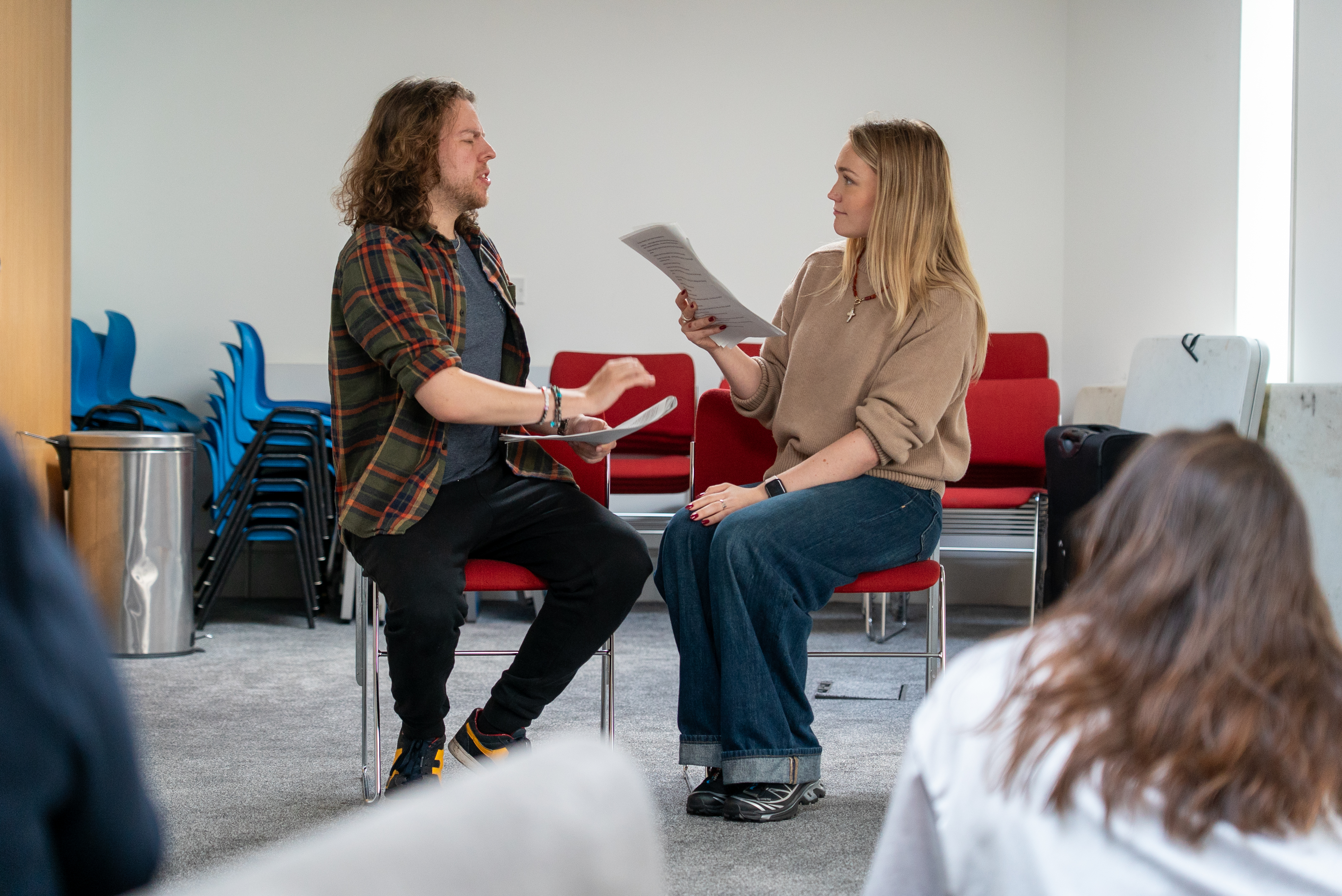
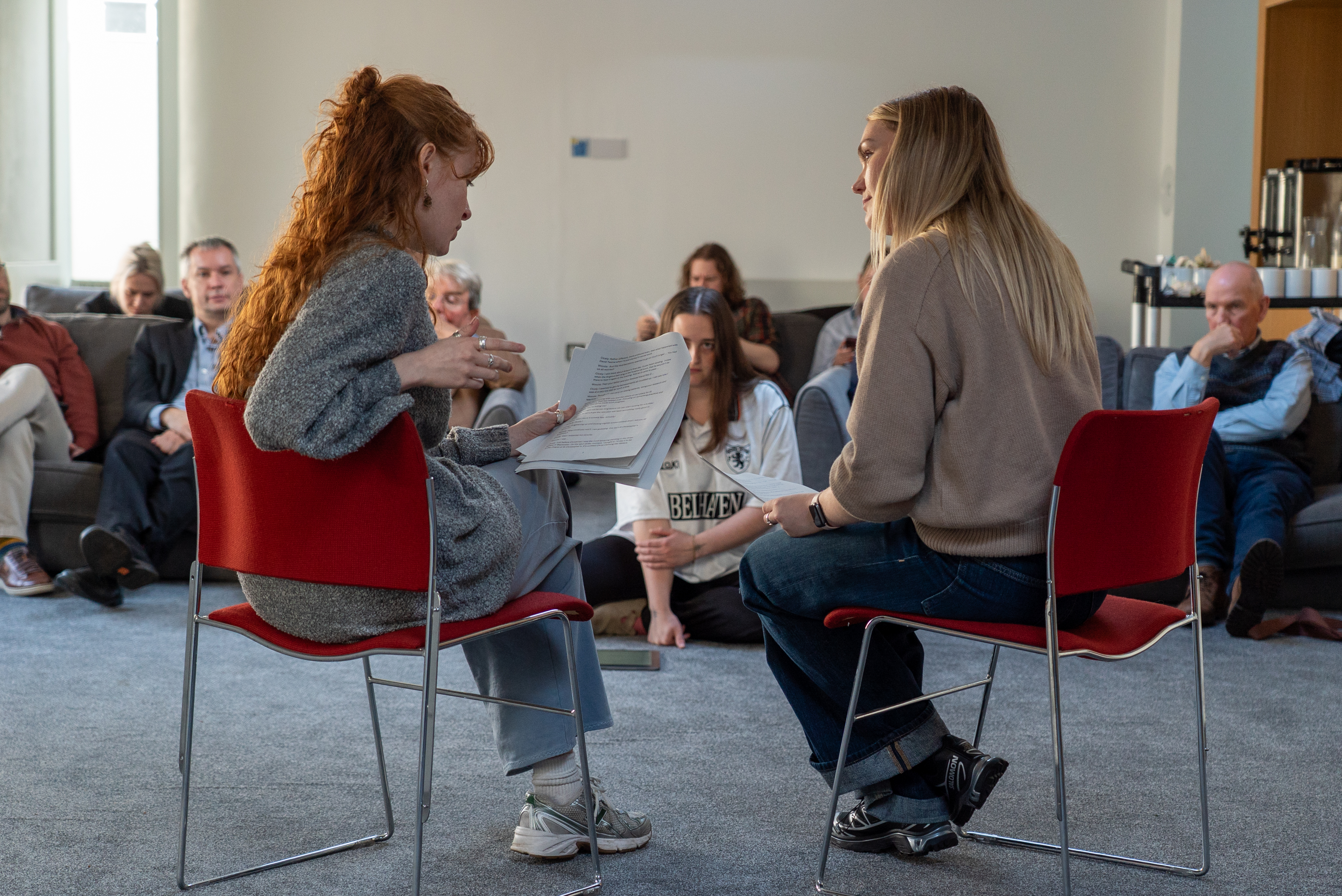
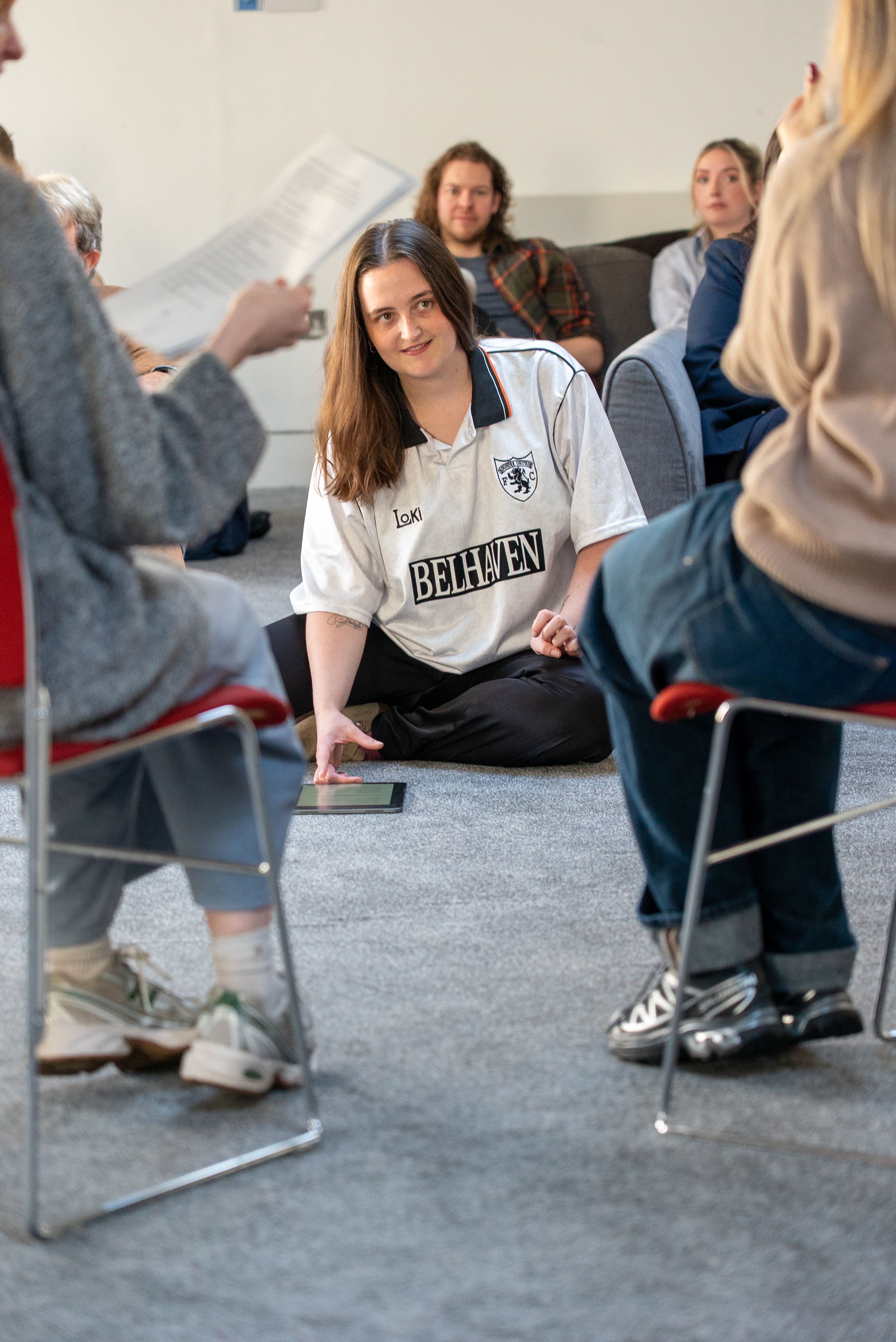
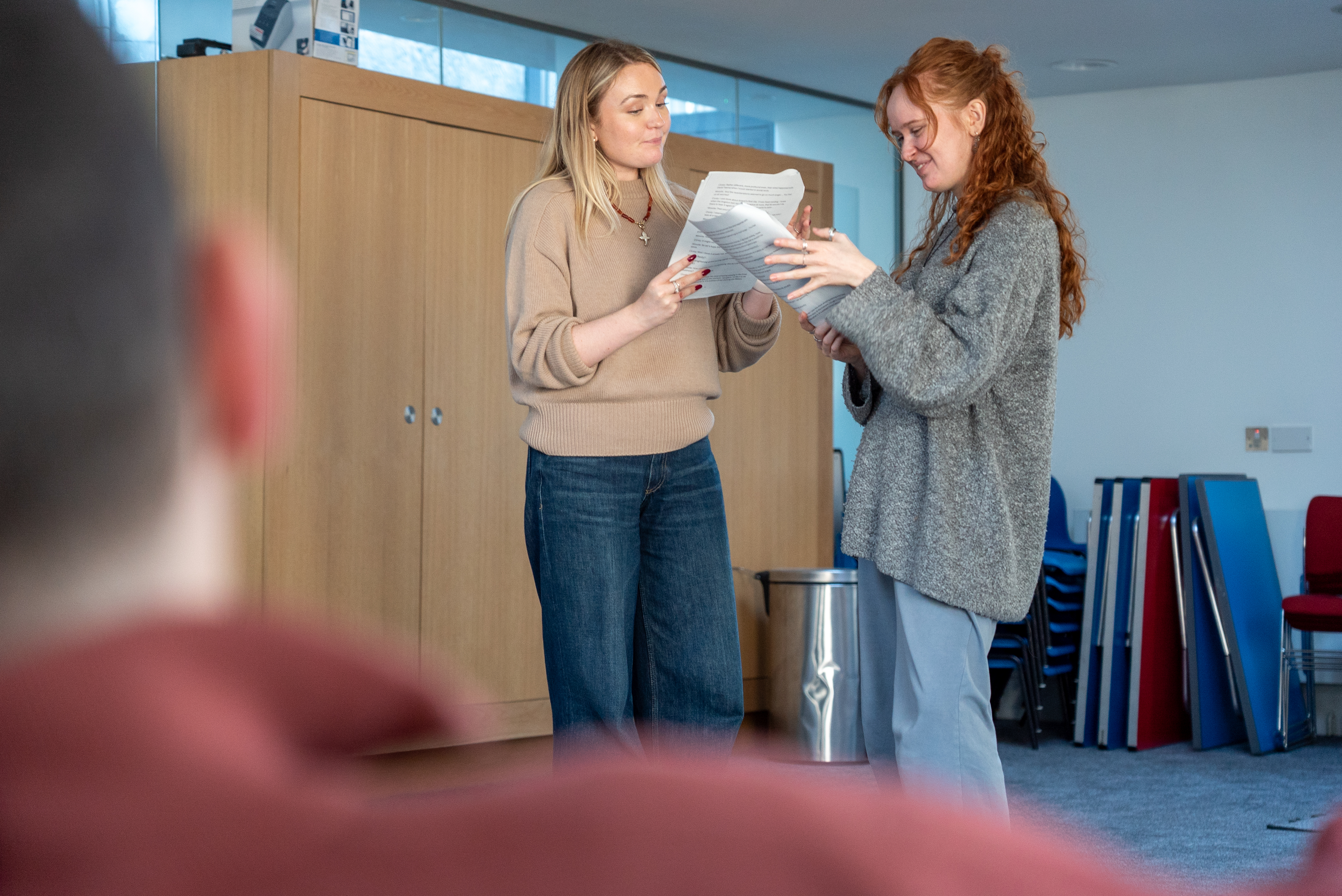
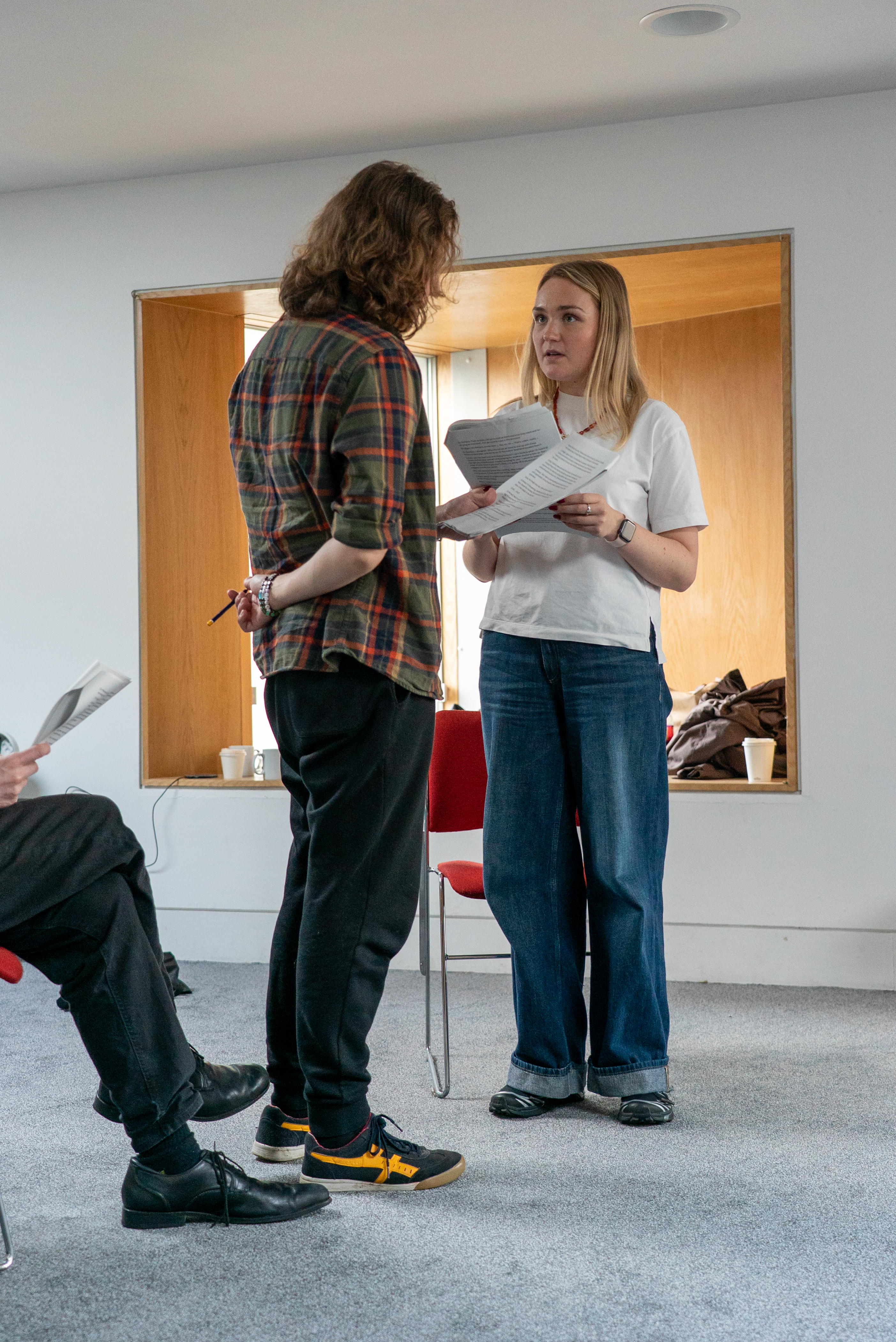
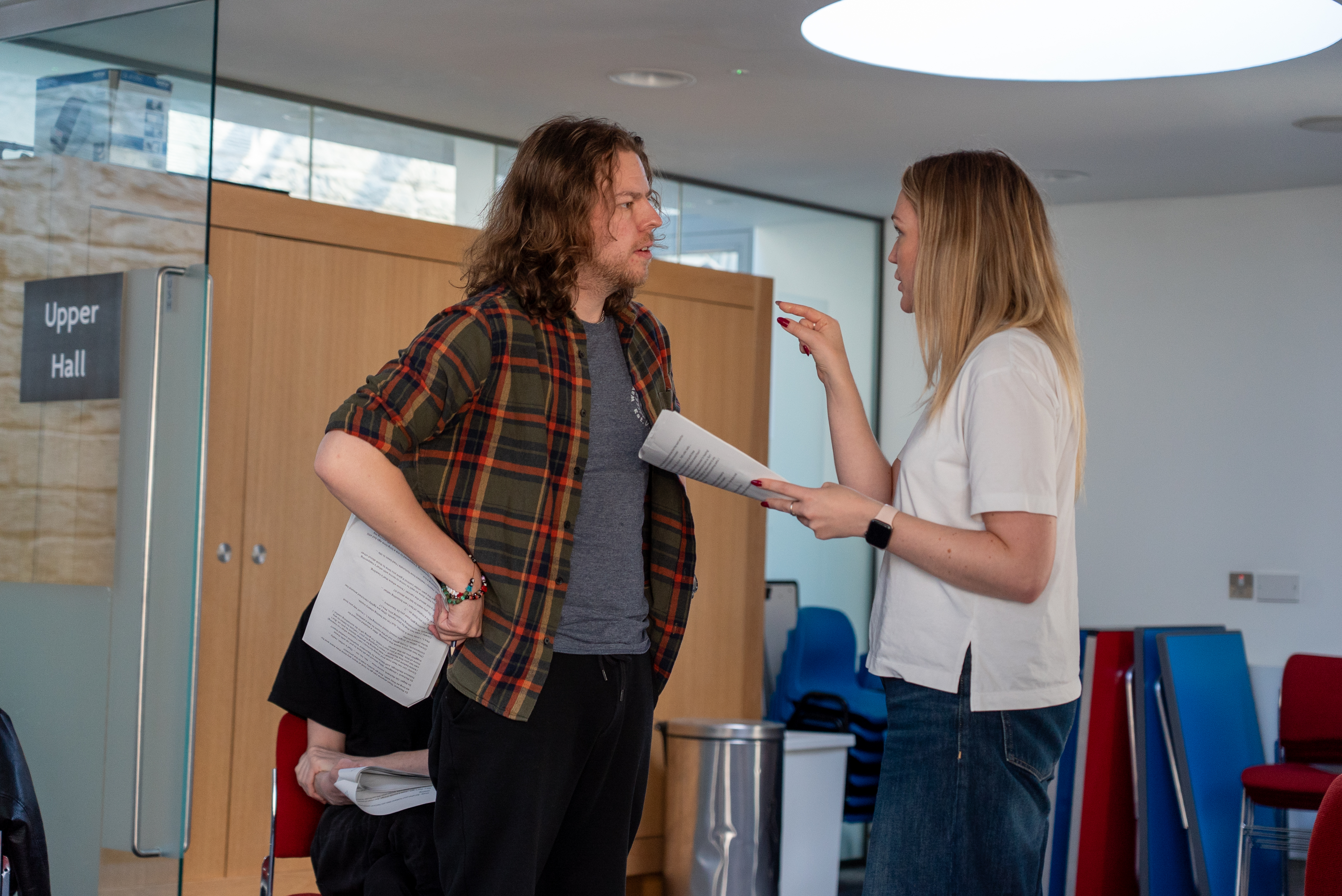
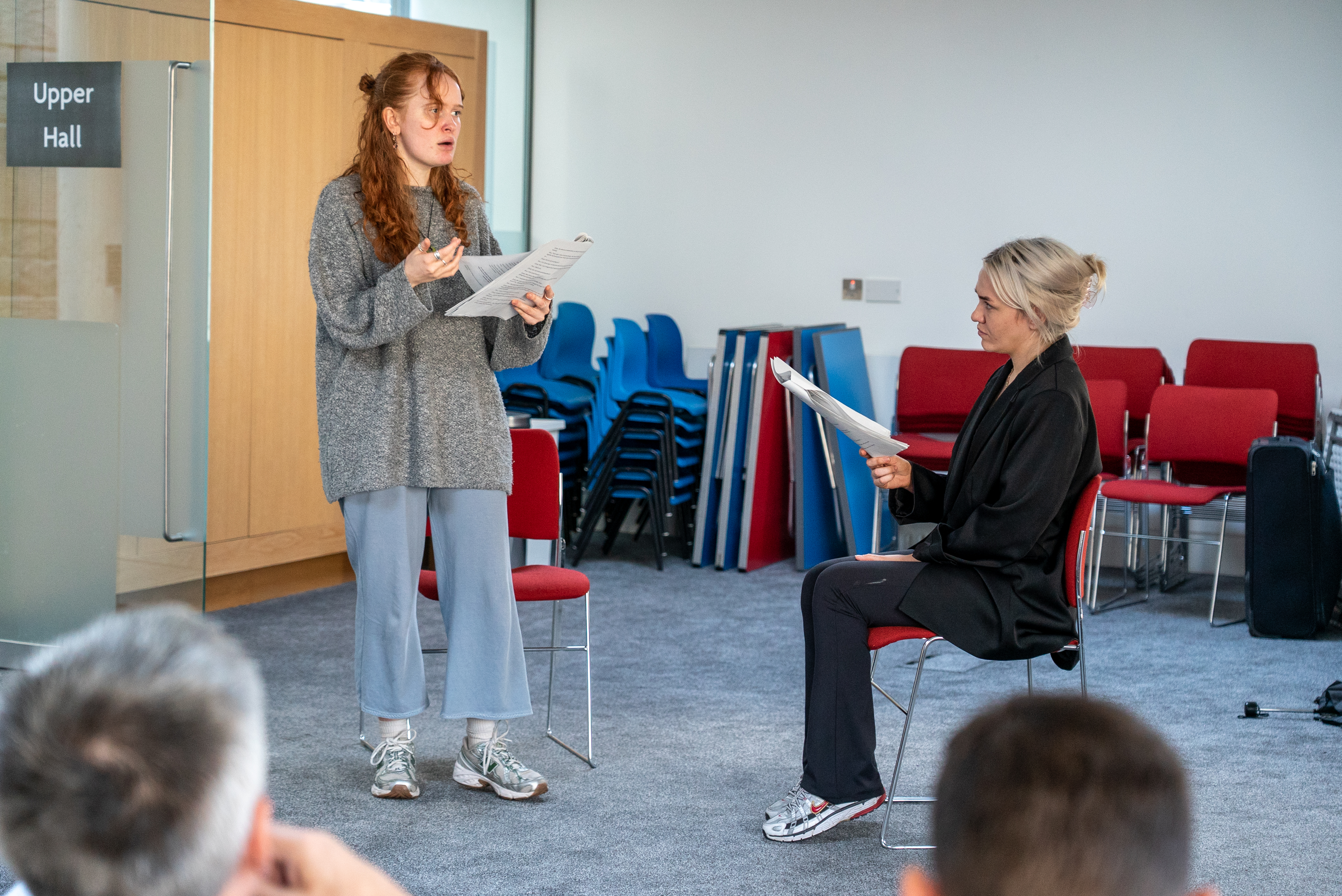
After the morning reading, there had been much discussion about the content and sequencing of the final three scenes. Were they in the correct order? Were they all essential to the drama? What changes might be made to strengthen the final moments of the play? As these three scenes got on their feet in the afternoon, all became clear. Some insightful changes were made to the delivery of the penultimate scene, celebrating the life, legacy and remarkable character of Cicely Saunders.
The effect was so satisfying, moving and impactful that the ‘final’ scene which was to follow now seemed redundant. It should be said at this point that the hitherto ‘final’ scene, with an element of magic realism within it, is indeed very dear to my heart. Taking it out would be a wrench but seemed also to sharpen up the closing sequences and bring a warm and inspiring conclusion to the whole play. So it felt pointless to argue otherwise.
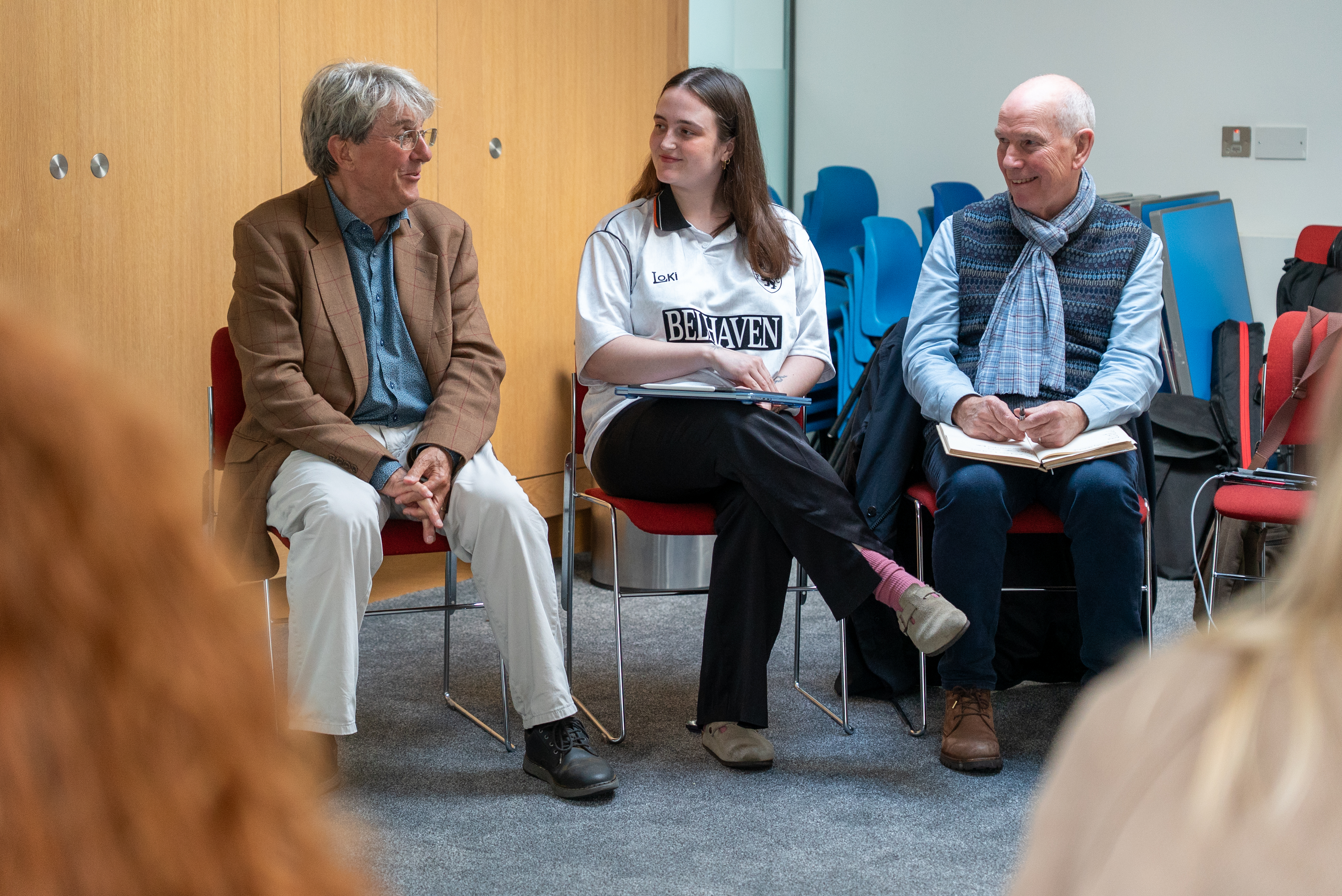
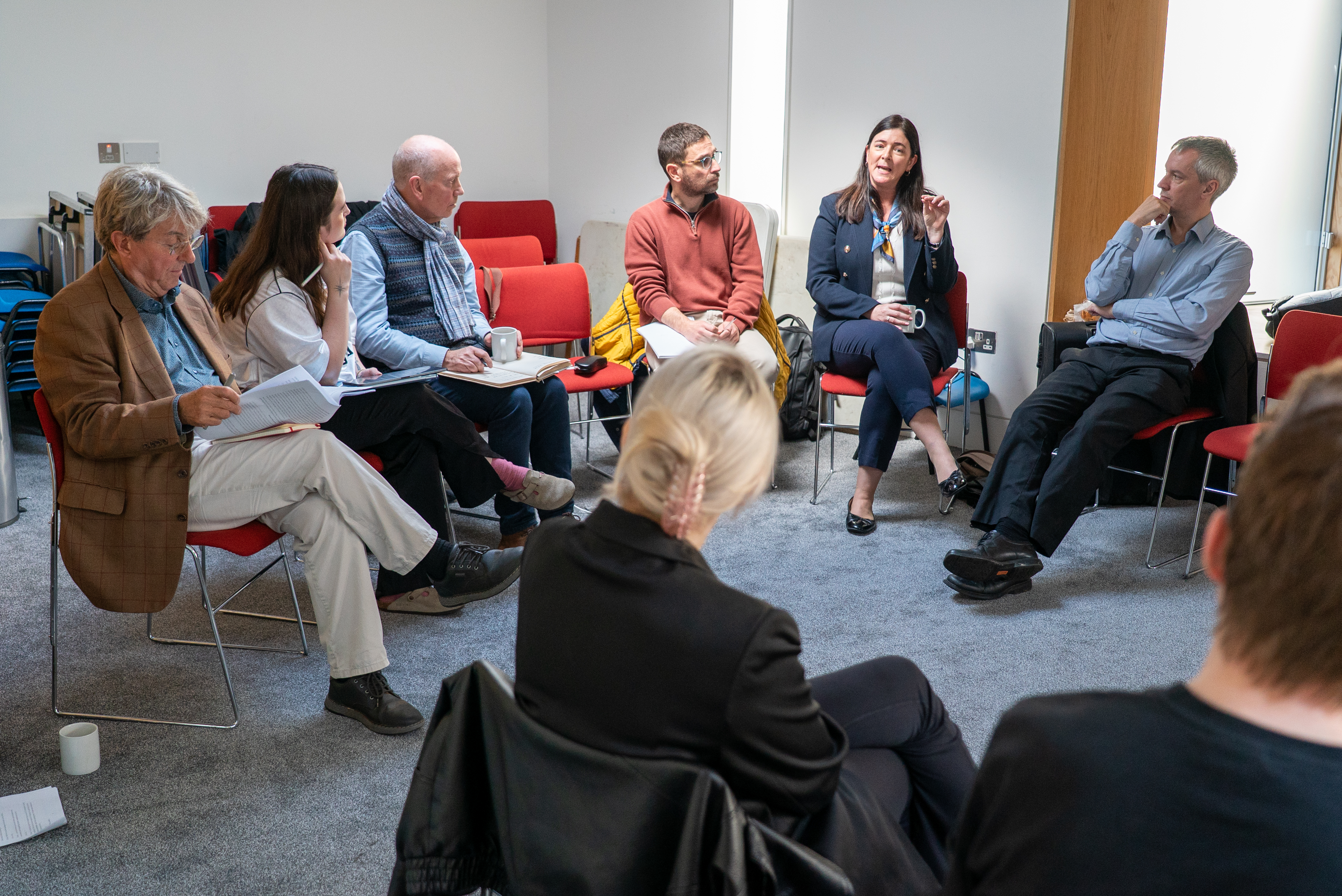
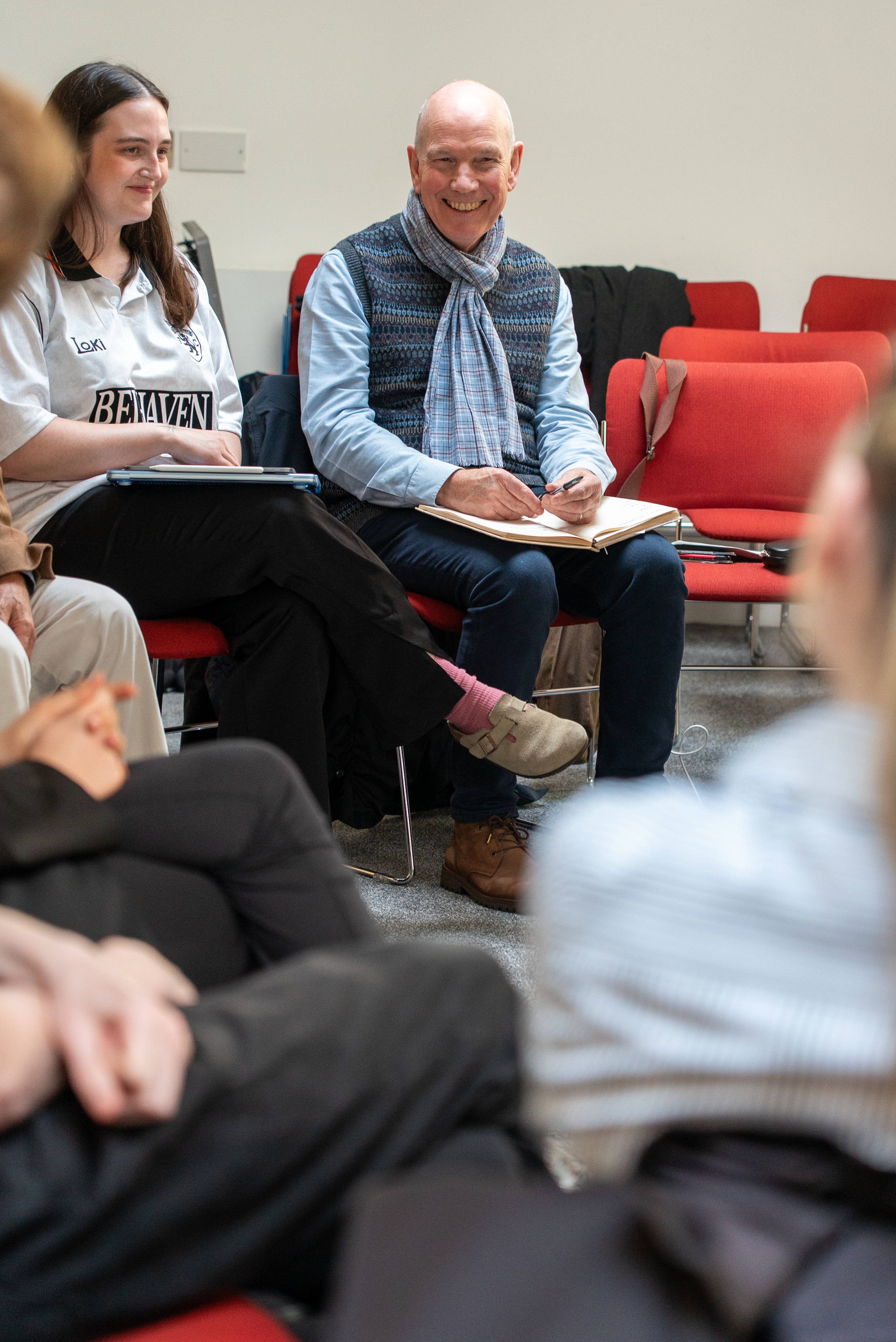
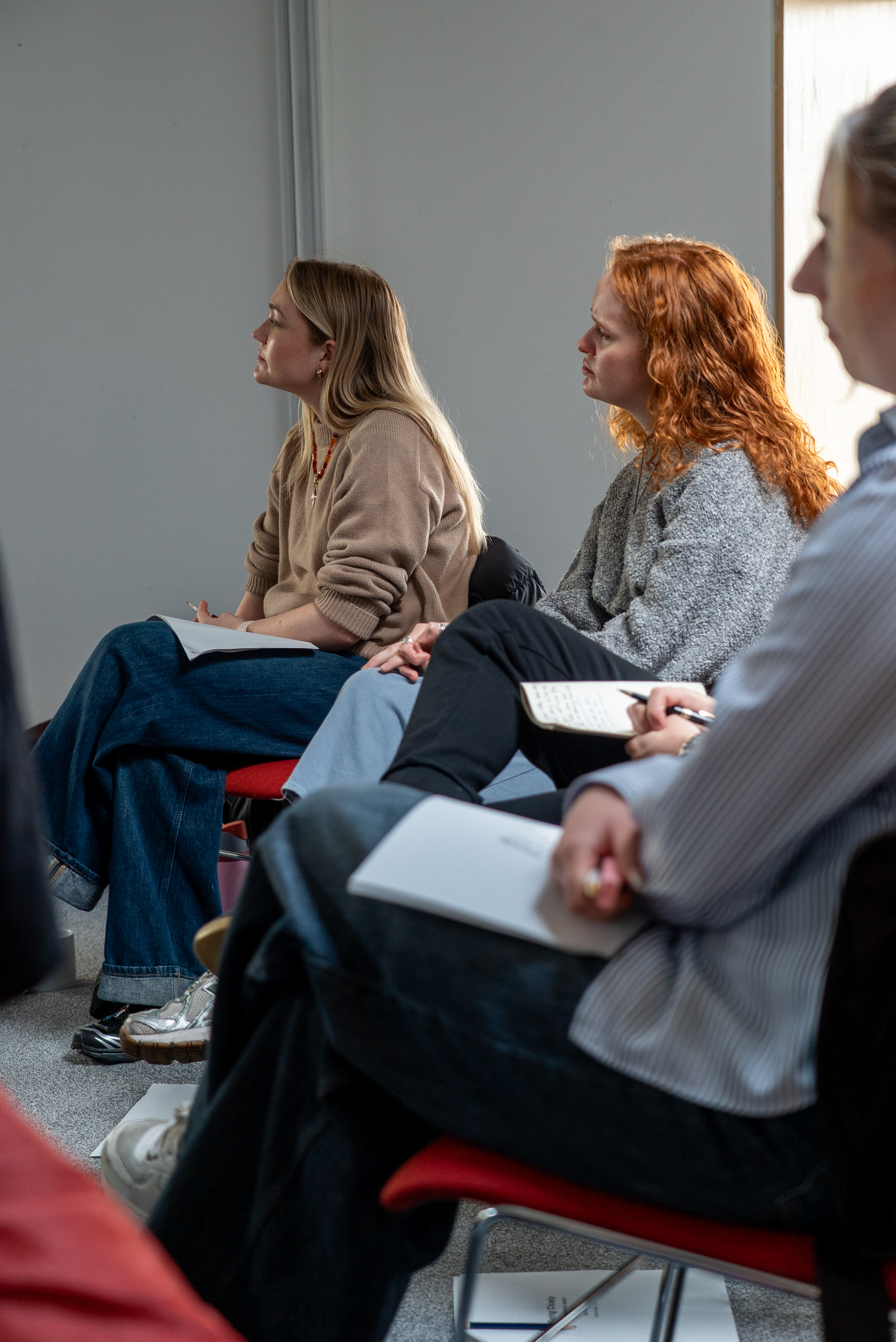
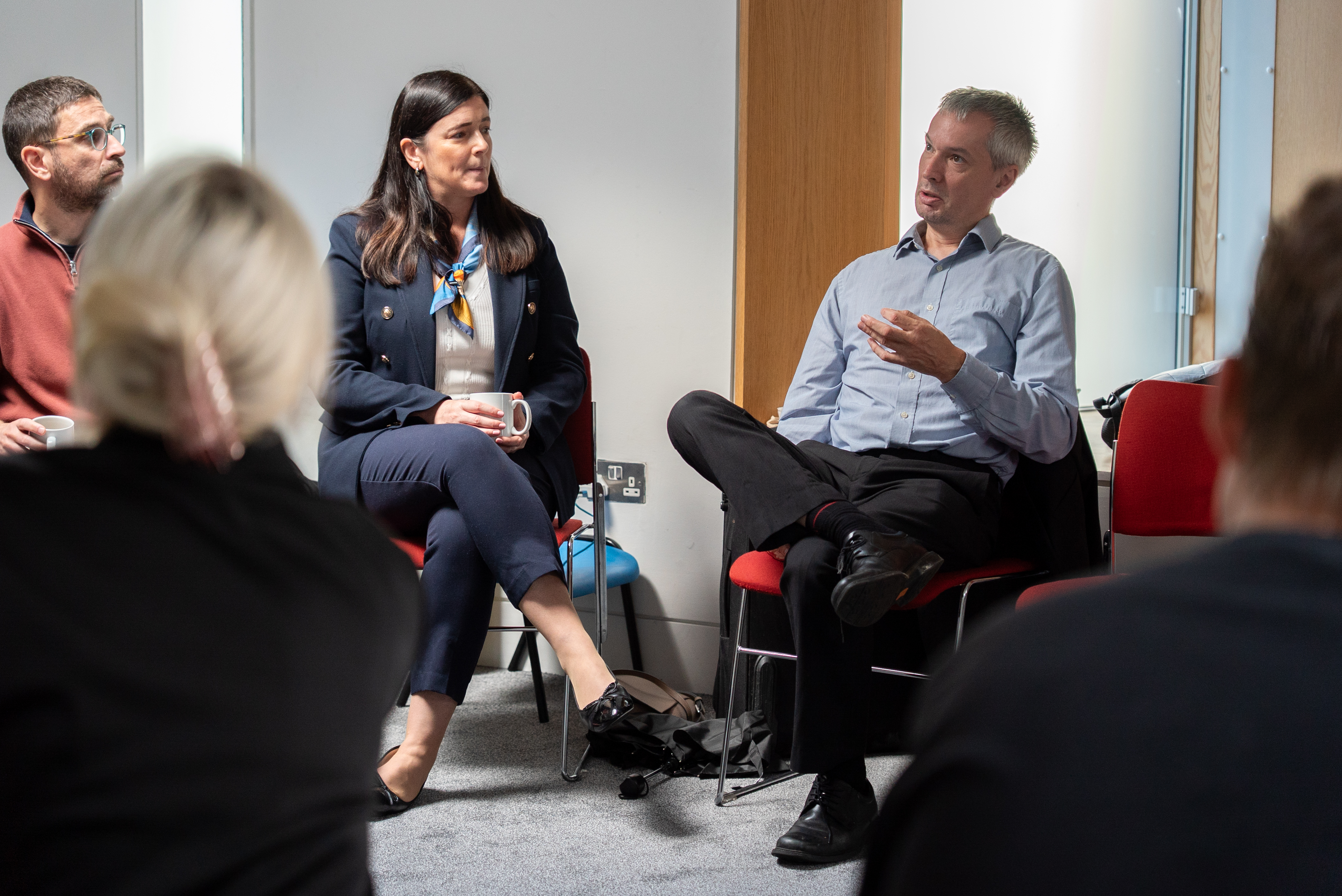
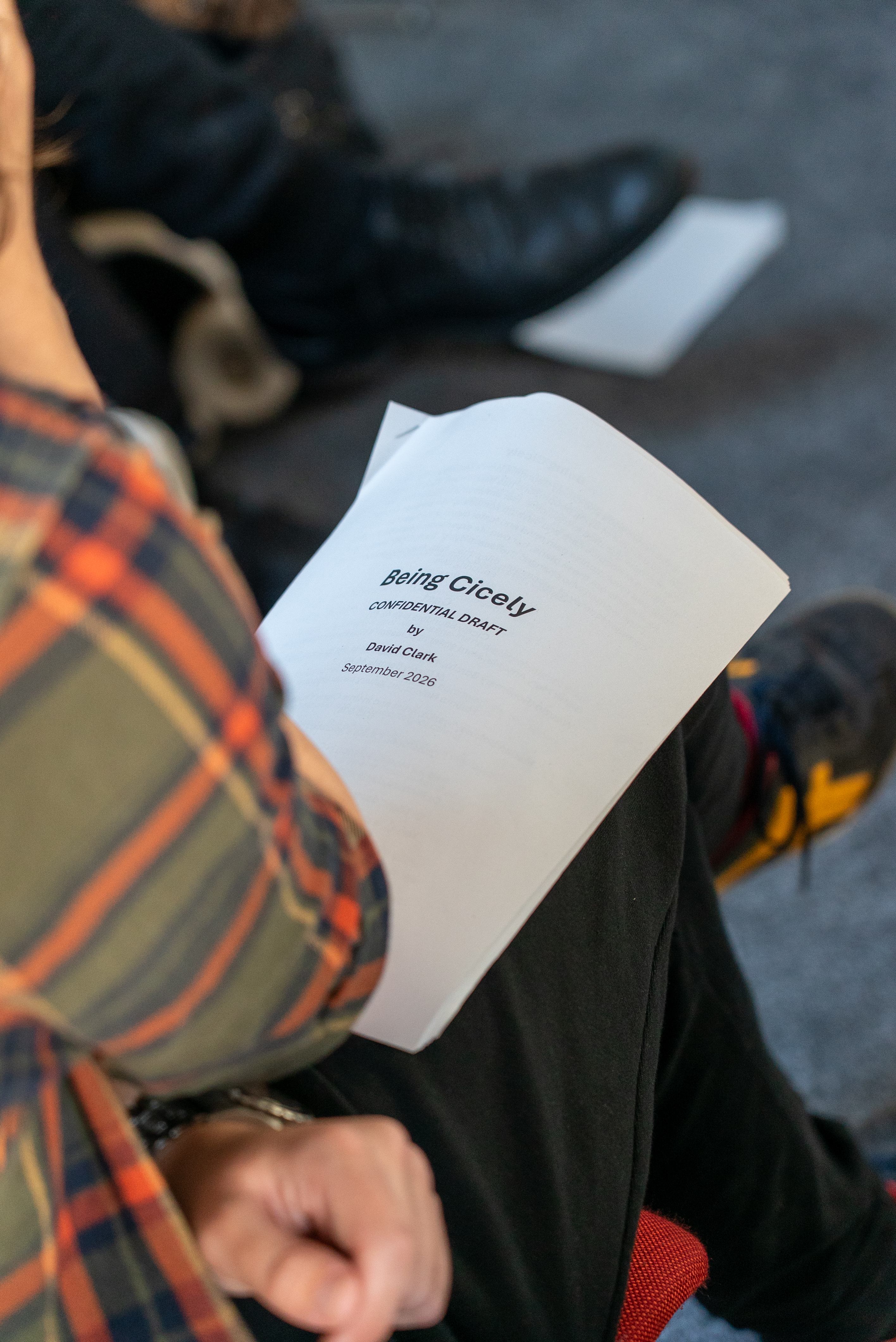
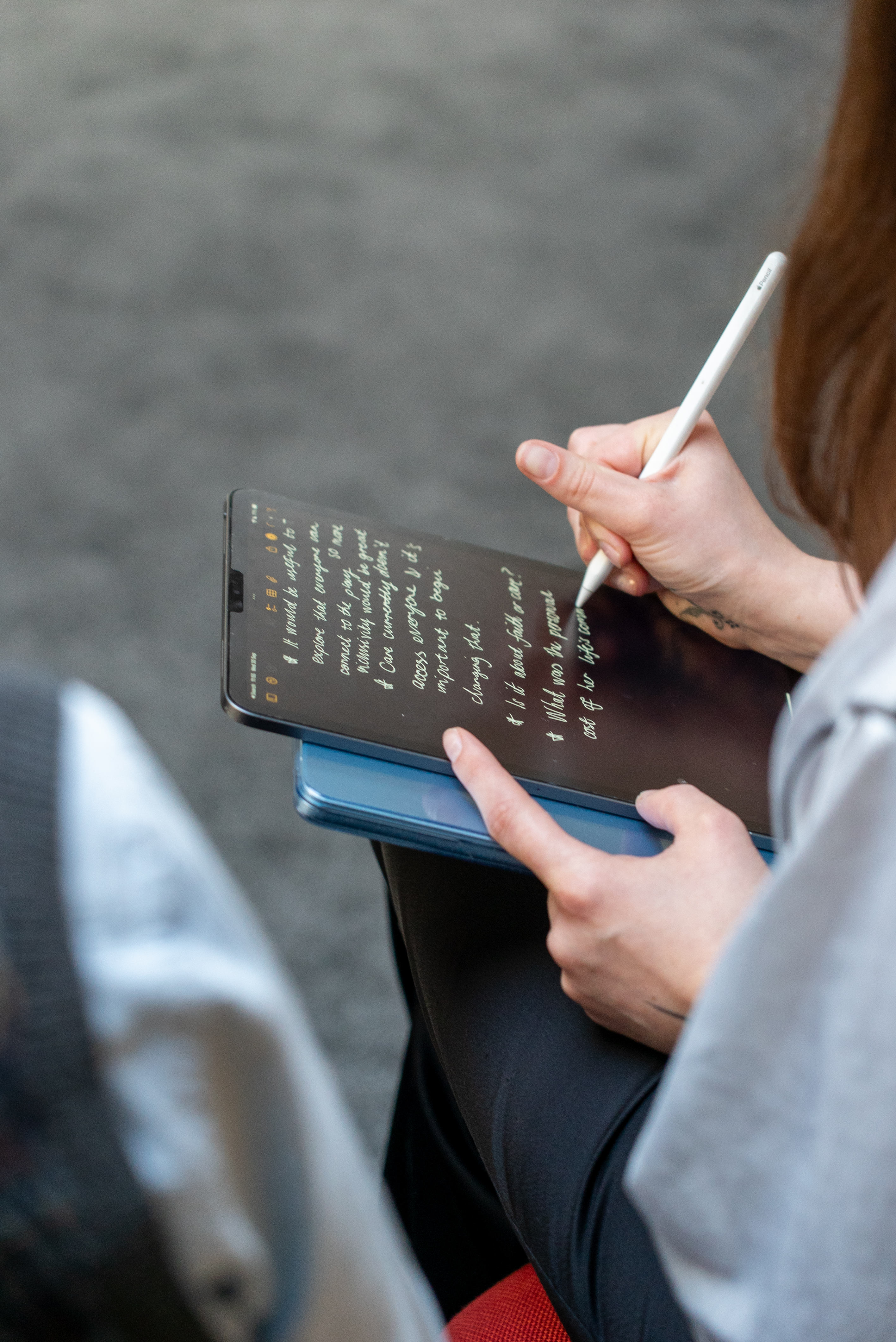
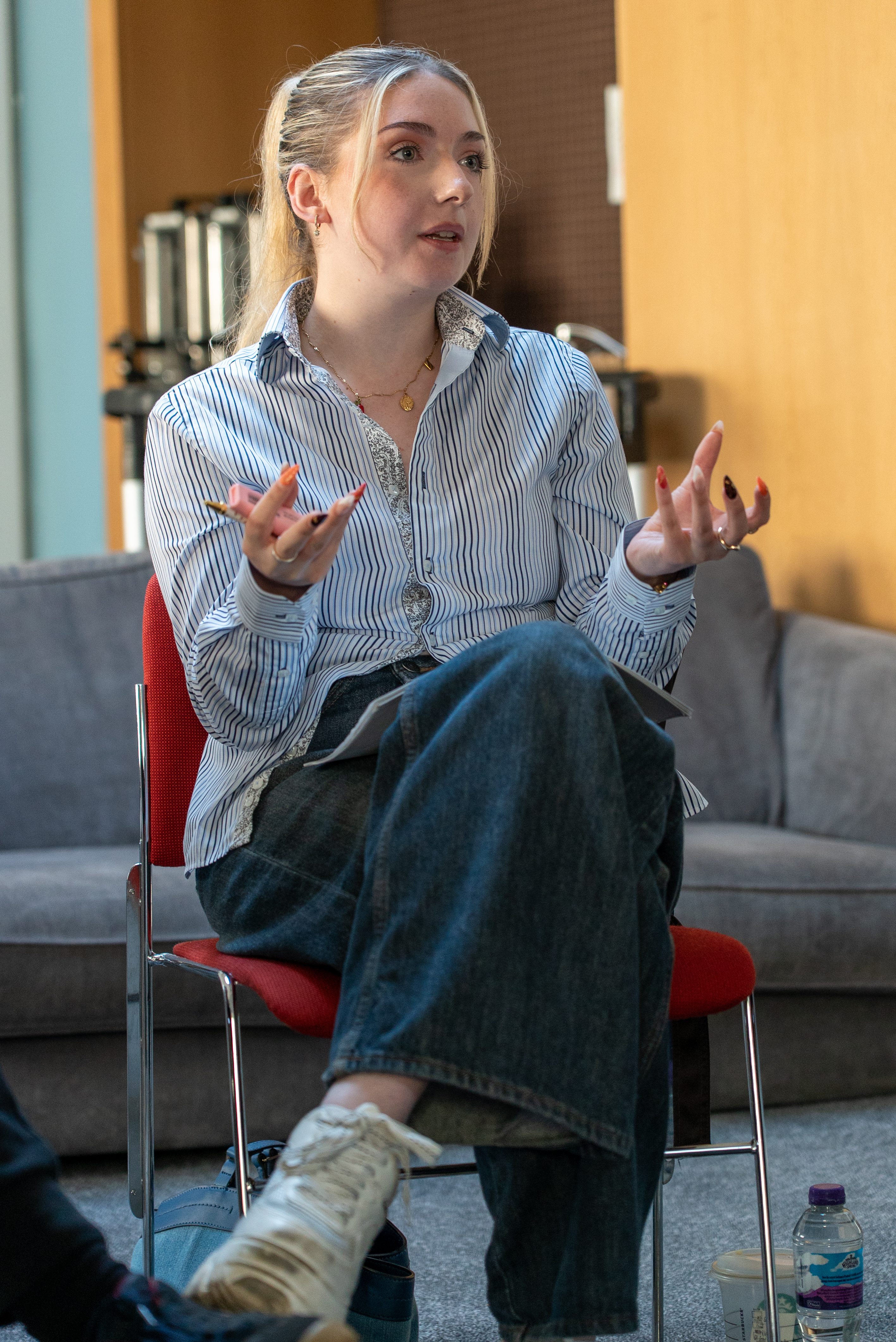
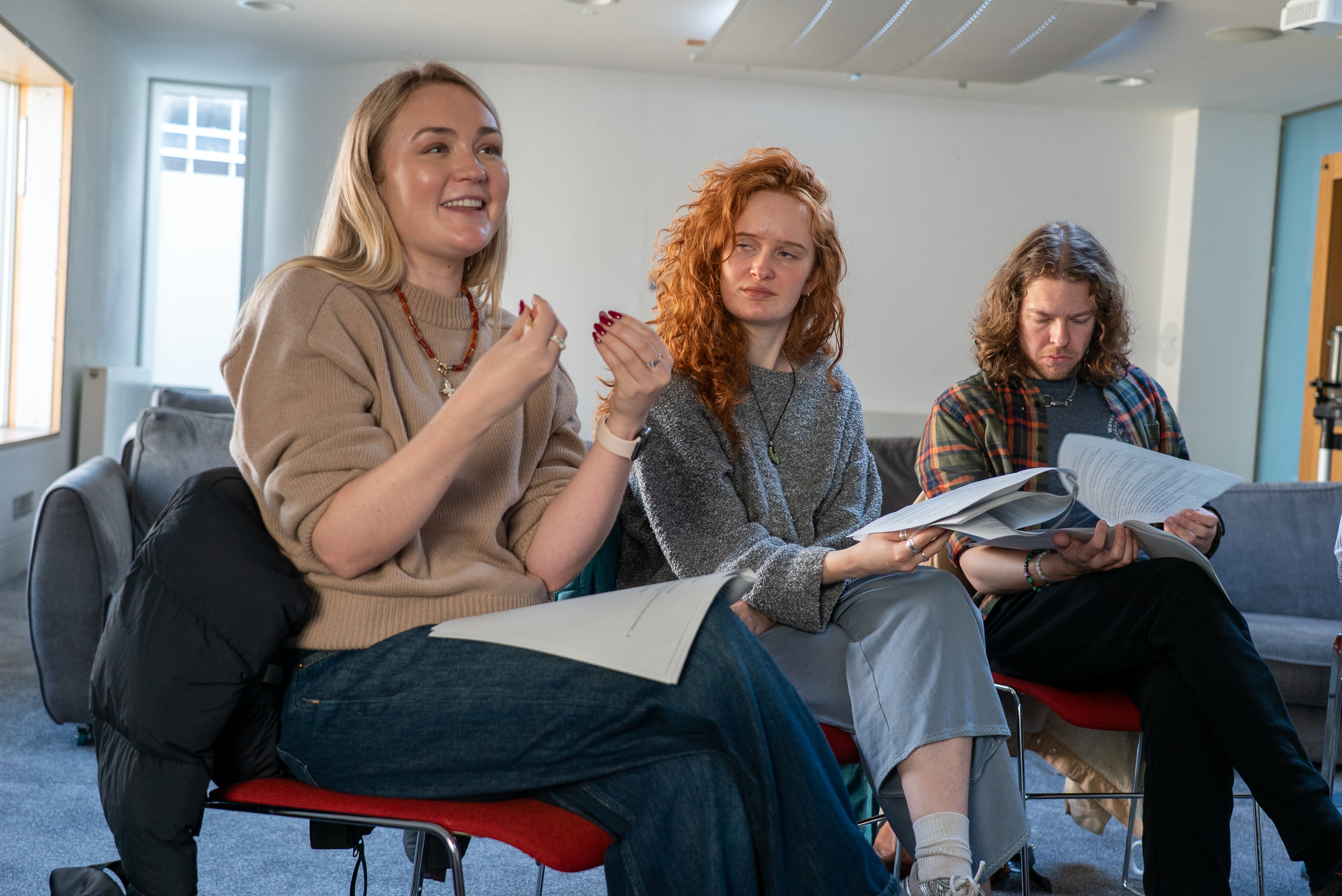
After the farewells, I went for tea and cake with the Director. We had an excellent mop up of the event, and the way was clear for further refinements as we nudge closer and closer to a robust script that can be taken into rehearsals next summer. It had been a fabulous day, with a great spirit among the participants and some telling and insightful commentaries on the script. For now, we can draw breath. My next task will be to make the agreed modifications.
Yet as I settled into my seat on the train and we rumbled along the track through the Scottish borders, my mind came back to what had been the final scene. If it was to go from the play, could it be saved and resurrected elsewhere? If so, in what form? As some kind of micro-drama in its own right or even as a short story? I’ll be cutting those pages from the playscript, but no doubt keeping them to hand, should an opportunity occur to give them new life, in a different format.
For now though, it is the revised structure of Being Cicely that occupies my attention, as the prospect of the Edinburgh Fringe in August 2027 draws closer each day.
Acknowledgements
My thanks to everyone who contributed to the workshop: the actors (Airlie Duff, Jack Elvey, Lara Meek, Rachael Moyle, Erin O’Callaghan, Ben Ramsay) as well as our guests (Craig Duncan, Hospice UK; Giorgos Tsiris, St Columba’s Hospice Care & Queen Margaret University; Yvonne McCahill, All Ireland Institute of Hospice and Palliative Care; Tyrrell Evans, St Christopher’s Hospice) along with the Director (Meghan Wallace), Producer (Jo Hockley), and Photographer (Emma Dove).
All photographs, Emma Dove; except six actors seated, David Clark


How exciting, to see your biographical work carried foreward this way
David! Congratulations to all the efforts and the rewarding reactions of
young actors, taking Cicely’ inspiration to next generations! Last
week, I was able to interest the next director of the German Association
of Palliative Medicine”s Conference (2028) to at least for now show
interest for Cicely and David to be enacted for 2028 (this year the
conference drew some 3000 people, many of them young and in the
beginning of their career, an excellent audience!). Will it work for
2028 and will they commit? I am due to visit the director either end of
this year or beginning next year. Vilma (Pamplone), whom I visited
recently, agreed to support the cultural aspects, if and where
necessary, in order for a German public to understand. I cannot promise,
but I am still at it, in honor of Cicely and also of your incredible
work. Love the story of a follow up! Kindly, Ruthmarijke
LikeLike
Your play sounds fascinating, David. End-of-life issues are a universal worry – filled with hope, sometimes fear, sadness, or peace. As someone who worked in the medical field for over 25 yrs, pain control is at the top of my list for end-of-life quality – to be lucid, alert, and as free of pain as possible.
I hope someday to see your play!
LikeLiked by 1 person
Thank you! I can email you with a private link to watch the film of the first play if you would like to watch it?
LikeLiked by 1 person
Yes please! I’d love that!
LikeLike
Can you send me the best email address please?
LikeLike
Hi Deb
I need your email address to send the link to the film of the play.
LikeLike
Hi David
I hope you are well – great to read about this development.
Happy to republish your blog in ehospice if you like – would need at least one photo to accompany, preferably all.
Let me know.
We are currently on target to get 1M page views this year.
Thanks
David
LikeLiked by 1 person
Thanks David, it’s nice to hear from you. That’s an interesting idea. Do you mean you need the photographs from the post sent to you separately? Please send an email address where I can send them. It would be good if you can give the URL for my blog too.
LikeLike