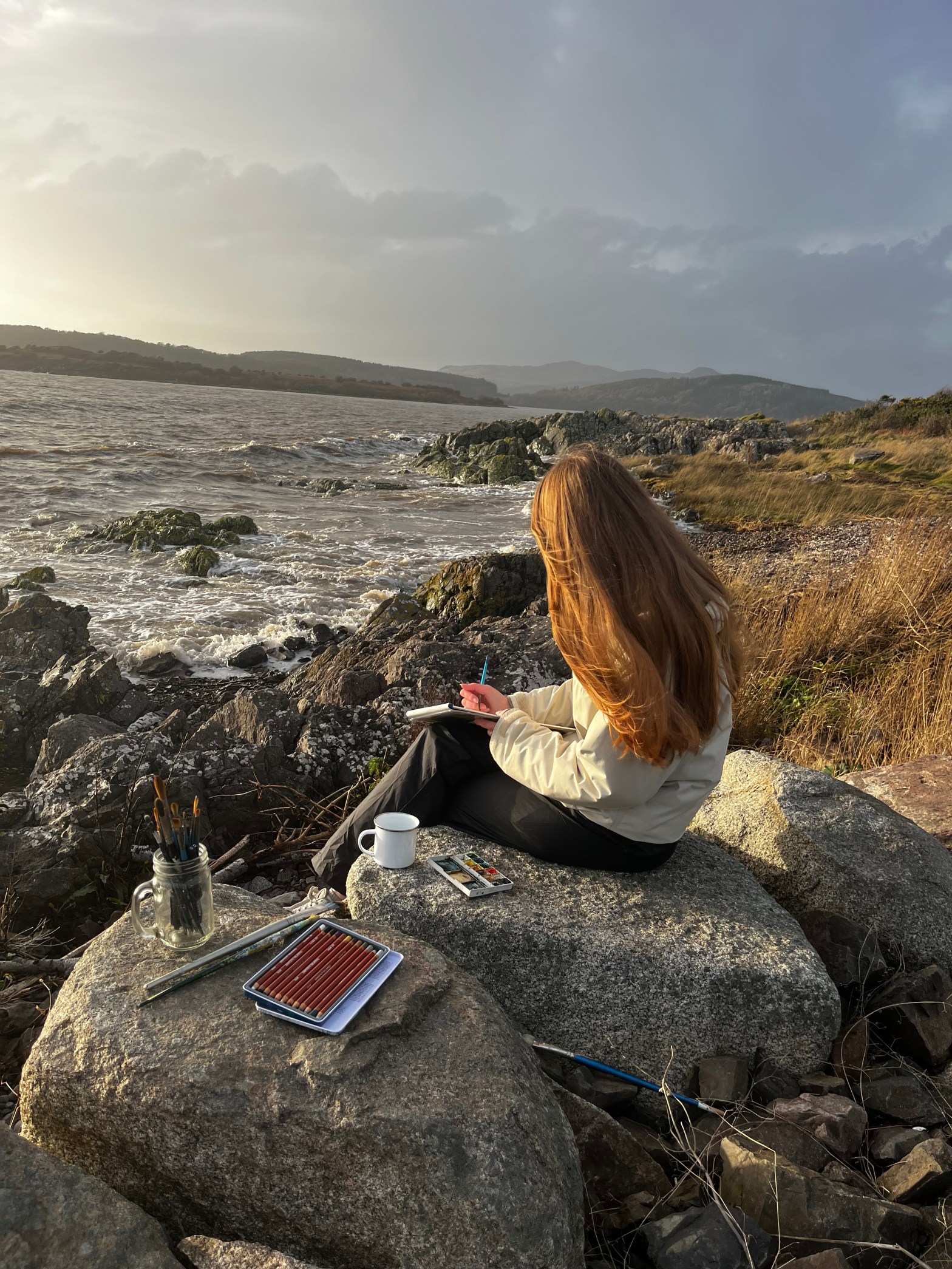
In the early part of 2025 I had completed my first novel and the manuscript was in production with an independent publisher. For a story set in my home region of Dumfries and Galloway, in south west Scotland, I was keen to find a local designer or illustrator to create the cover. In my mind I was thinking about something a little like those evocative railway posters from the 1930s. I began casting around and soon found someone living nearby with a developing interest in book illustration. She immediately understood what I was looking for, but felt she couldn’t provide it. Fortunately she kindly pointed me to someone who could. That person is Louisa Birdsall, whose story is recounted below in her own words.
Continue reading “Louisa Birdsall – illustrator and designer”Hosts of golden daffodils
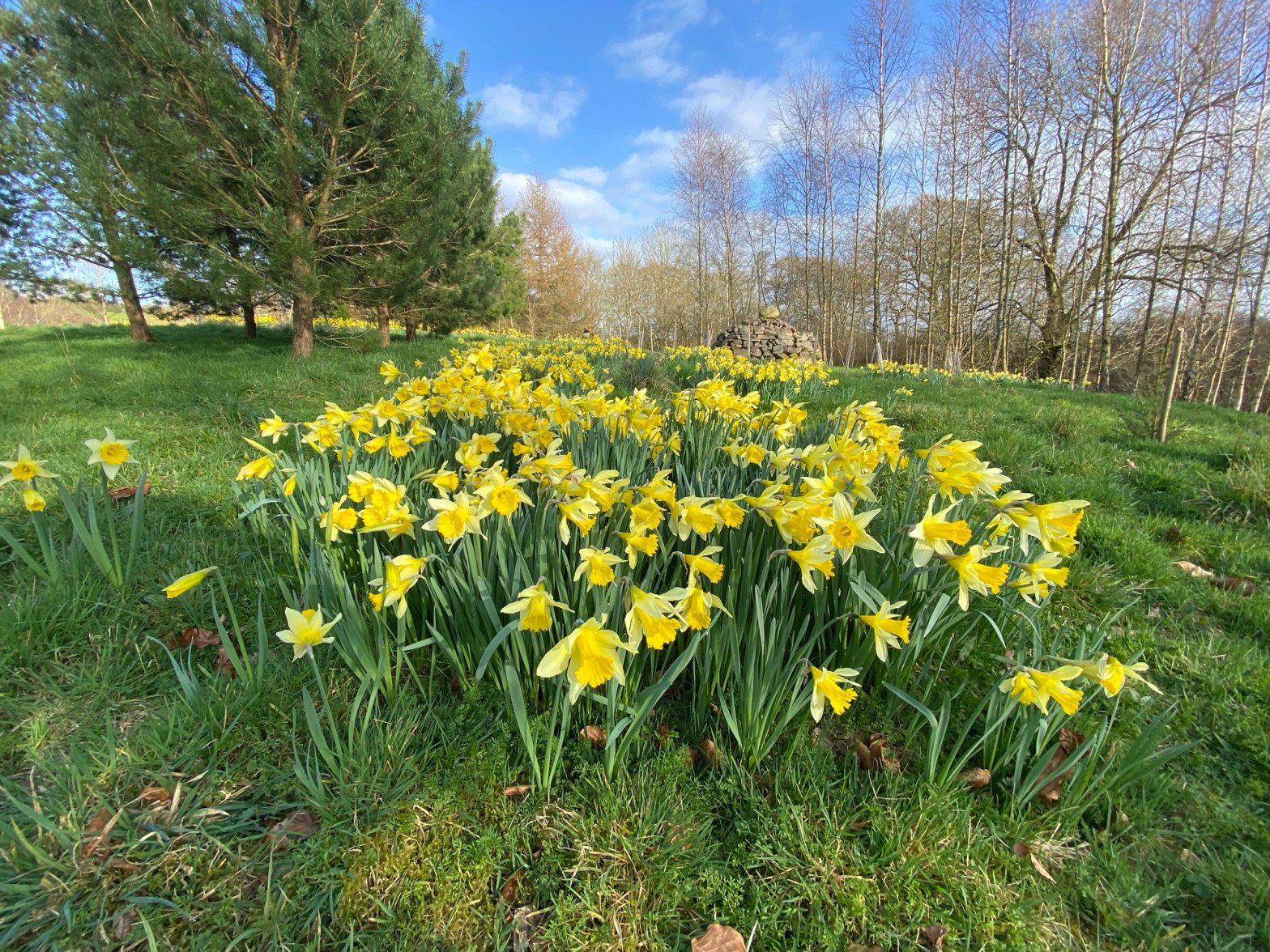
I’ve struggled to put this piece together. Not because it’s in some way complex, demanding to write, or over-long. None of these. My struggle is about whether one should celebrate something so simple and pleasure-giving as my subject here, at a time when the world is being torn apart by conflict and war.
After much wrangling with my conscience, I have decided to go ahead.
Continue reading “Hosts of golden daffodils”Snippets from a novel in progress
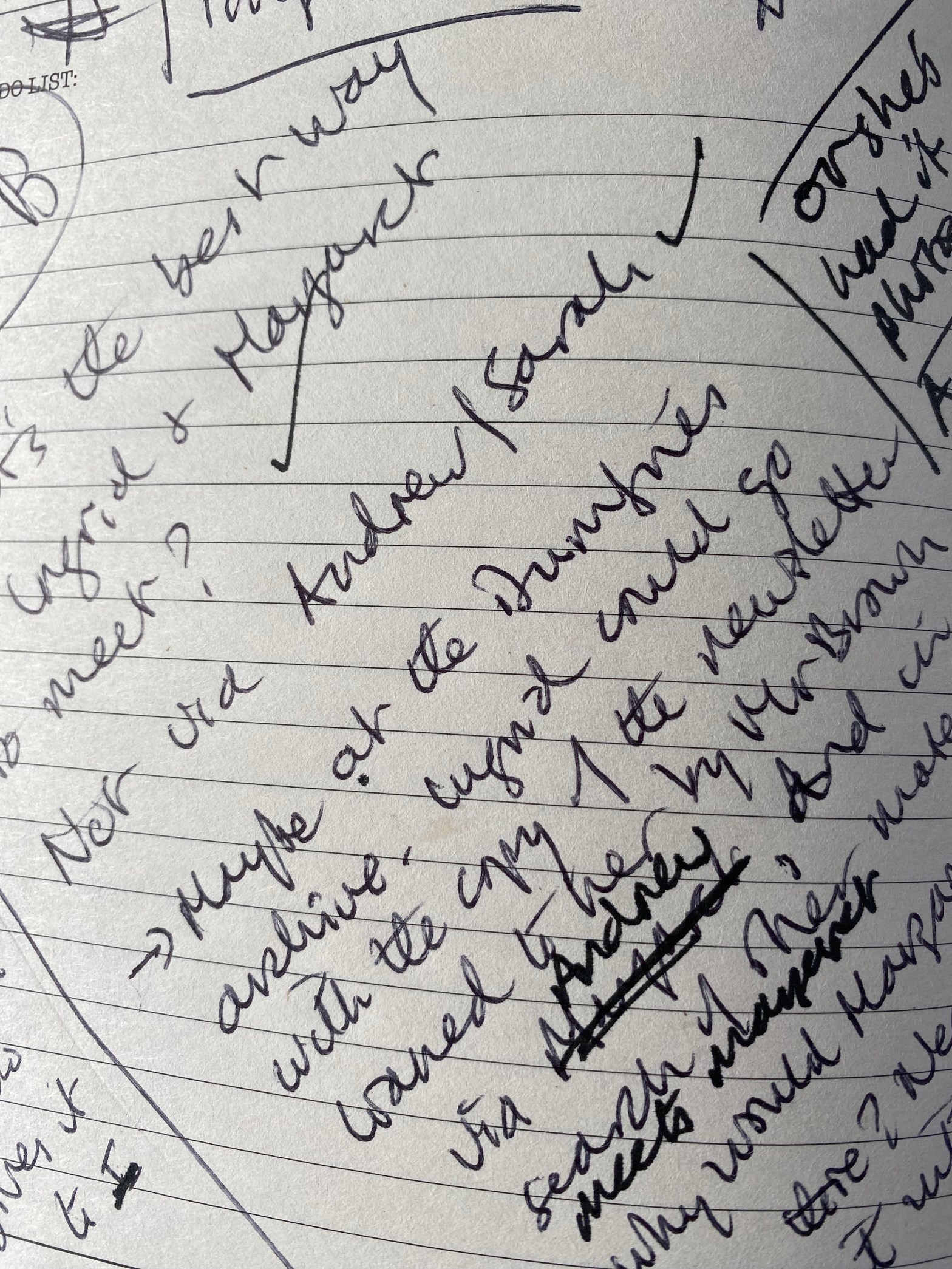
My first novel, Epiphanies and Robberies, came out in summer 2025 and a few months later I made a start on a follow up. The initial idea was a sequel. I’d got very fond of the main characters and wanted to stay with them, checking on what they were up to, and how their life worlds were changing. But then I decided to take the reverse perspective, to look at some of those characters earlier in their lives, exploring the factors that had shaped those people we had met through the pages of the debut novel.
In other words, a ‘prequel’.
I’m now immersed in the writing. Once again, the setting is the imagined village of Kirkgate, in south west Scotland. This time the underlying mystery is historical and relates to events that took place locally during World War Two. The key year in which the story unfolds is 1997.
Continue reading “Snippets from a novel in progress”Five blogs to follow
January 2026 marks five years since I started posting on this site. I began with regular blogs and in due course added various pages. My posts range through short fiction, essay-type reflections, garden musings, updates on current activities, interviews with interesting people, and occasional thoughts on the process of writing. The pages are home to information about specific projects as well as images and videos. In a sense, the site has become somewhat like a garden. It needs tending and curating, a periodic tidy up, and if suitably looked after can give significant pleasure to its creator as well as those who drop by on a visit.
I won’t strain the metaphor too much further, other than to say that like a garden, the blog is also a wonderful way to create communities of people with shared or over-lapping preoccupations, enthusiasms, and passions. Of course the blogosphere is vast and varied. I’m particularly attracted to the parts that offer space for quiet reflection, story telling, chronicling and the respectful sharing of ideas. In this spirit, I offer some thoughts on five specific blogs that I follow with keen interest, and where I enjoy a sense of community with their authors.
While I was Gardening This wonderful site is the work of Deb, (or tagpipspearl to use her soubriquet). She is a horticulturalist, gardener, and much more, based in Washington State, USA. I think it was a shared interest in the wonderful Camassia plant that first connected us. Over the last few years I have followed the writings of Deb as she ranges across a wide variety of topics and experiences. Her in-depth horticultural knowledge never gets in the way of stories about the garden and the natural environment around her. She writes about work on her own patch as well as visits to other botanical gems, trips to the coast and the walking of trails. In the last year she has shared some of the personal pain that comes with the Trump administration, and holds fast to the motto Illegitimi non carborundum. Deb is a prolific blogger, hard to keep up with at times. But I try to read her every post, feeling a sense of connection between her gardening in the Pacific North West and mine in Scotland’s South West. Her posts are redolent with a passion for plants and trees, respect for nature and commitment to protecting it. My connection with this blog came entirely through my own online activity and is all the more cherished by distance and encounters through the written word.
Carruchan (at least one meaning of which seems to be ‘stony ground’) is a blog by Stephen Shellard, which I first encountered after I read his excellent memoir about coming of age in Northern Ireland during the time of The Troubles. Carruchan is a diverse and regular offering of writings that range from careful thinking on matters of political economy, to the specifics of current affairs, accounts of book launches and festivals, reviews of podcasts, poetry readings and concerts attended. Stephen is incredibly adept at producing deep dives into, as he puts it, ‘Whatever’s on my mind …’ As someone, like me, who has lived in Dumfries and Galloway for several years, he presents a fascinating window into the life of the region, expertly weaving his local observations into a wider understanding of the social, historical and geographical context. It’s always a pleasure to see notice of his latest offering as it drops into the email.
Sabr (meaning patience in Urdu, Hindustani, Persian, and Arabic) is a care collaborative which focuses on the question: ‘how can we re-think, politically engage with, and collectively organise care for the people in contemporary societies?’ I was drawn to the site by one of its contributors, a good friend and colleague, Devi Vijay, with whom I have collaborated on numerous palliative care research projects over the years. The collaborative got started in December 2023 and has created a shared platform for academics, practitioners, activists and policy-makers on issues concerning rights and justice in care provision. Devi and her co-workers have put together a rich and varied offering comprising blogs, links to key publications, podcasts and videos. At year end they also added a terrific listing of books read in 2025 along with movies recommended, and a playlist, described as ‘a motley bunch of songs … about the thriving more-than-human world around us, protest, hope, and revolution.’ The regular blog posts present fine-grained accounts of the realties of giving and receiving care in a wide variety of social contexts, especially in India. Somehow, they dig below the conventions of academic writing to present worlds and experiences close up and fine-grained. ‘Care’ is a complex issue and a ‘wicked’ policy problem. Sabr explores it with fresh eyes and new perspectives.
Enjoying Wildlife is a superbly crafted collection of blog posts in which a neighbour of mine, Barbara Mearns, draws on in-depth observations of flora, fauna and weather to evoke the natural history of the Nith valley in Dumfries and Galloway. Barbara’s nature writing draws deeply on her skills as a poet and is often accompanied by stunning images of her subject matter. Her posts take us on walks close to home, share the practice of surveying species of birds and insects, and provide close encounters with the changing dynamics of the natural world. Barbara’s most recent book is a beautiful collection of peatland poems. Her commitment to understanding nature close by combines with Barbara’s writing talents to produce a steady gaze and the facility to share insights with others: in prose, poetry and the spoken word.
Michael Bloor Michael Bloor and I have been friends since the early 1980s, when we worked in adjacent offices in the MRC Medical Sociology Unit, in Aberdeen. I regard him as one of the most talented sociologists of his generation, whose skills and scholarship are beautifully captured in his Selected Writings Just occasional hints of these academic achievements can be found on his blog, which is in effect a repository of short fiction, historical insights, imagined encounters, personal memoir and frequent injections of couthy humour and superb bon mots. Widely published in online magazines, Michael’s writing comes in a steady flow of creativity and imagination that never fails to intrigue, delight and sometimes puzzle the reader (in the best possible way). He has kindly gathered all this together on one single site that is full of literary pleasures.
I thank the writers of these five blogs for sharing so many different perspectives and subjects, from the local to the global, and for the sense of community they create. I am indebted to them for the inspiration they bring to my own efforts. In what Anthony Giddens called a runaway world they provide anchors for good reasoning, compassion, and progressive values. Check them out too for reading delights, irony and humour, and not least, those occasional quirky perspectives that illuminate the day!
My new play about Cicely Saunders: a pivotal moment
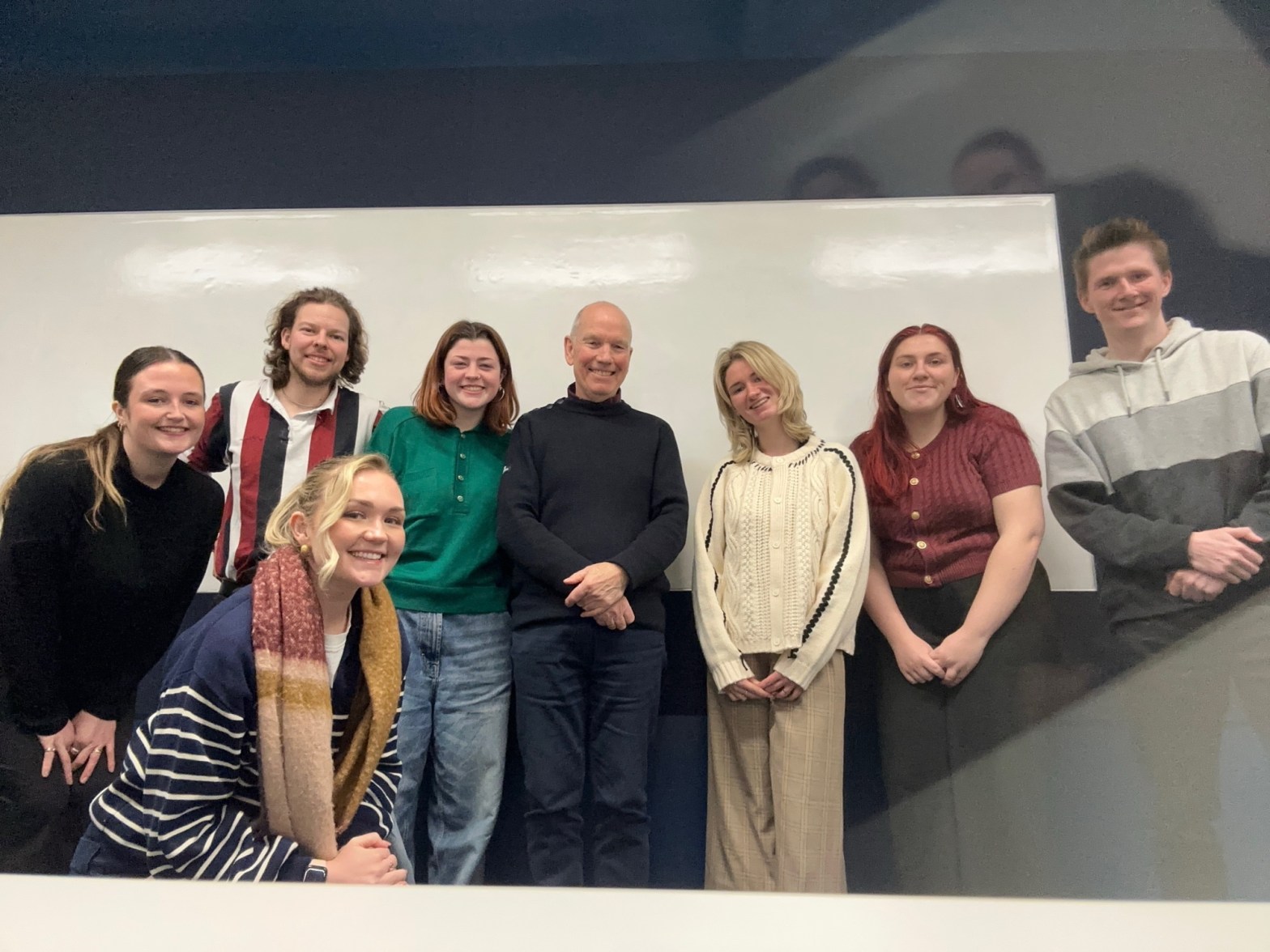
In the last few years, I’ve learned that playwriting is most productive when others join you in the process. On those occasions, huge benefits can result. New voices and perspectives come into effect. Cherished approaches get subtly challenged. Potential lines of new development come into view. Alternative perspectives surface. Perhaps most of all, there is the sense of community that arises when people with shared enthusiasms join together in a diligent and respectful way to take a playscript to a new level. It can be a pivotal moment.
Continue reading “My new play about Cicely Saunders: a pivotal moment”The last word: a curious story for December

Tetchy was his resting disposition. Bitter and cynical when something aroused his contempt. Angry and bigoted when fully ignited. He could threaten, intimidate, and sometimes worse. At odds with the changing times, he looked much older than his 66 years. Even so, it came as a shock when on the 1st of December, 1964, he declared himself unwell, took to his bed, and quickly announced that his family could relax. He’d be gone by Christmas.
As the early days of the month inched by, his condition deteriorated rapidly. The doctor visited more than once, prescribed various medications, yet couldn’t explain the sudden decline and loss of weight. The patient was refusing tests and treatments and had simply ‘turned his face to the wall’. By the middle of December, he looked weak and vulnerable. Then, exactly seven days before Christmas, his eyes slowly closed, never to re-open.
No one could bear the thought of him lying at the undertaker’s until the New Year. The funeral was quickly arranged. It took place on Christmas Eve, and passed off without drama. If he had any friends, they were certainly absent. Fortunately, there were enough pall bearers to carry his rather light coffin into the crematorium.
Afterwards, family members made their way back to the house. A meal of cold ham, cheese, bread, butter and pickle had been set out before their departure. As his wife turned the key to the front door and made her way inside, a familiar smell aroused her senses. Pausing for a moment, she dismissed it. But when she and the others entered the dining room, a troubling scene lay before them.
At the head of the table, the place-setting showed every sign of someone’s recent presence. Scraps of food lay on the plate, a glass containing dregs of beer stood next to an empty bottle. More telling was the day’s local newspaper, neatly folded at the Deaths column. Most unsettling, was the source of the smell. On the table sat a box of matches and his pouch of tobacco. Alongside was a fake-crystal ash tray, where a fine column of smoke rose from a rolled up cigarette.
Alarmed and distressed by turns, the family members searched around the house, but found no one else there. ‘What’s he done now?’ His wife demanded. ‘Well he’s not getting away with it this time. I’m having no more of his nonsense. No more at all. He’s not going to spoil anything, ever again’.
The place at the head of the table was duly cleared. His family settled in for the meal, enjoying the simple fare. It was then that a tide of relief broke over them, as they looked forward to a Christmas Day, the like of which their house had not seen for many a long year.
But as a quiet contentment began to prevail, they were suddenly disturbed. From the front garden gate came a familiar squeak, followed by slow and deliberate footsteps. Then came the key in the lock, the opening of the door, and a lengthening shadow, casting ominously across the hallway floor.
Photograph: with thanks to Stephen Hocking, see: https://unsplash.com/@shocking57
For more of my Christmas mystery stories, please look here – https://davidgrahamclark.net/christmas-mystery-stories/
Thoughts on starting to write a second novel

My first novel was written over the course of one calendar year and serialised online in 12 parts, as I produced them. When it concluded I was struck by the enthusiasm of some readers for a sequel, or even a series, based on the same characters and places. When the book was published this summer, similar comments came up at various launches and literary events.
I was both flattered by and sympathetic to the reasoning. I too had got very interested in my main characters and had enjoyed writing about the setting of Dumfries and Galloway, in south west Scotland, where Iive. Since I had the people and also the rural context, why not keep going?
The answer was simple. I’d learned that people, place and plot are seen nowadays as the three foundations of contemporary novel writing. Yet, try as I might, I couldn’t get the bones of a realistic sequel storyline, still less an overt mystery, to drive the writing forward.
At the same time I was drawn to one character in the debut novel to whom I had not only become attached, but whom I found increasingly intriguing. Perhaps all the more so because she had died some months before the story began. I wanted to imagine her long before COVID took her life. To hear her voice, not through a flashback to someone deceased, but as a person very much full of life. Someone embracing the world and wanting to make it a better place.
I began thinking about how to explore this idea through a ‘prequel’, and began to ponder what some of my debut characters were up to a few decades before the first novel began. By chance, I hit on a mystery theme, relating to my Nithsdale locus, and involving the legacies of World War Two. I worked out some chronologies. For the various elements to fit together, the main action of the prequel would need to be set in 1997.
I began researching the events of that year and also the wartime dimensions that interested me. I started to fill out my main characters, digging back in their lives and making sense of how they had come to be who they were in 2023, the setting of the first story. Over this summer I amassed a huge dossier of material, created a full set of chapter summaries, two (alternative) blurbs, and a working title too.
So why, come the start of autumn, was I not feeling compelled to begin writing? Why was I prevaricating about plot lines, historical details, and the ‘mood’ I wished to convey in the story? It wasn’t writer’s block (I hadn’t even started). In part it was a slightly obsessive notion that I should write the story as I had done before, in the months (if not the actual year this time) in which it was located.
I weighed up these elements, trying to rationalise them, but was unconvinced by my own reasoning. Then as several other writing commitments came to fruition, I realised I was missing something. I spent quite a bit of time reading, pottering in the garden, and following the news. But my days lacked a strong purpose, a desire each morning and sometimes in the evenings, to give unfettered time to an ongoing task.
I’m referring here to the pleasures and pains of an extended piece of writing. Like the athlete laid up by injury, I was missing the adrenalin rush. Not one born of any extreme physical activity, but in my case something that comes from the process of creating a story from my own imagination.
So there I was one morning a couple of weeks ago. I’d done my emails, ordered some new tyres for my car, hoovered the house and planned the week’s menus. It was time to change gear. I opened my laptop, created a new Word document and gave it a title: Chapter One.
By the end of the day I had a humble total of around 250 words. But they were carefully crafted, open to revision, and pointing the way to where I wanted to be. The work had begun and I smiled in the knowledge that a new long distance writing journey lay ahead!
Staying in one place: an interview with the naturalist Barbara Mearns

Having first come to the Nithsdale parish of Kirkmahoe in 1997, it’s a joy to still be getting to know people around here with extraordinary interests, passions and talents. Barbara Mearns is one such person. We live just a couple of miles apart but until this year we had only met a few times, although I did know about her excellent poetry collection, based on encounters with the nearby degraded peatbog, known as the Lochar Moss.
Barbara embodies some of the sentiments of the Quotidian pages. She treads gently on the earth, observes the natural world close up, and records what she sees. Her blog exudes the pleasures of writing and reading the environment. Her poetry distils these into crafted stanzas that sit lightly on the page. Her photographs provide respectful close-ups of local flora and fauna. Her observations provoke new questions, from which her learning continues. Listening to her talk about birds, animals, trees and plants is to be taken into a nearby world that is so easily missed as we bustle about daily tasks.
I was therefore very keen to learn more about her approach to these things, and delighted when she agreed to join the list of interviews with creative people in Dumfries and Galloway, for each of whom I have such admiration.
Can you say a little about where you were born, your upbringing, and schooling? What were your main early interests?
I was born in Greenock and went to Greenock Academy Primary for four years, then St Columba’s in Kilmacolm.
I can’t remember a time when I wasn’t fascinated by wildlife. I enjoyed walking to and from primary school on my own, as I could stop and look at butterflies, or gather conkers, or twirl sycamore seeds. In my earliest outdoor photos, I’m usually clutching a bunch of wilting wild flowers. I collected a lot of seashell species, mostly on wonderful summer holidays on Arran. My father was a teacher, so we took a cottage for a month every summer, and there I was allowed to explore more on my own as I got older, guddling in rock pools, or watching birds with binoculars passed down from my grandfather. At first, I tried to learn about everything, but then decided to concentrate on birds.
I was very fortunate that extra-mural birdwatching classes started at Greenock Arts Guild when I was 13. My mother signed us both up, and though she had no previous interest, she really enjoyed the field trips and the good company. Twice a month the group would go out locally, or in a coach to sites as far away as the Bass Rock, Loch Lomond or the Solway. During those four years I learnt a lot from more experienced birders, but more importantly, discovered I wasn’t as weird and unique as some other girls thought I was!
My brother was seven years older. He gave me my first camera, and (very patiently!) taught me to use it. I’ve always been grateful for that, as I’ve enjoyed taking photos ever since, and it’s been a useful skill in many situations.
I would have liked a career in wildlife and conservation, but although I was good at biology, I was poor at maths and other sciences, and there were few opportunities then, especially for girls. But the door opened later, when I got involved with A Rocha …
After school did you go on to college or university … and to study what?
I studied Occupational Therapy in Edinburgh. I only worked as an O.T. for seven years, but it was good training for life.
At what point did you move to Dumfries and Galloway?
I came to Dumfries for my first job, in the Child Psychiatry Department at the Crichton Royal Hospital. Soon afterwards, I met Richard (Rick) who was then studying Peregrine Falcons across Dumfries & Galloway and we married in 1981. After Rick and I started to write books together, about the early naturalists, I never went back to O.T.
Tell me more about how that unfolded. What were you and Rick focused on at that time, and how did your collaboration progress?
In 1983 we camped on the Alaskan tundra, photographing waders. Many of the birds we watched, such as Steller’s Eider and Wilson’s Warbler, were named after people. We wondered who they were, and on returning home, I found a biography of Wilson, the ‘Father of American Ornithology’ who grew up in Paisley, not so very far from Greenock! After emigrating to the USA, he travelled thousands of miles by walking, riding and rowing, often alone, painting and studying the birds along the way. There was a fascinating human story behind every eponym, so we researched all the people who had European birds named after them, and Academic Press published our first book, Biographies for Birdwatchers. Two more books on the early naturalists followed. Each time we divided the characters between us, doing our own research and writing, after which I was ready for a change!
Can you describe the work of A Rocha International and the part that you have played in it?
A Rocha is an international family of Christian conservation organizations. The work began with a bird observatory in the Algarve, which Rick and I first supported as volunteers, but from 1997 to 2017, from our home in Kirkton, I ran the A Rocha International Office. During that time, projects sprang up in 20 countries, wonderfully varied, but typically with a focus on practical conservation, environmental education and church engagement. I was able to visit some, in various ways, though most of the time I was in the office, busy with admin, editing and emails.
One spring I took a group of supporters to Lebanon, to see the Aammiq Wetland which A Rocha protected by working with the landowner, tenant farmers and nomadic Bedouin grazers. Another time I helped to lead a supporters’ holiday on the Kenyan coast, where A Rocha is studying and helping to protect the local coral reefs, mangroves and dry, coastal forests. I joined our Conservation Science Director on one of his visits to Ghana, which was a great opportunity to meet schoolchildren in A Rocha clubs who were practicing agro-forestry, and to join some of our ecologists as they met with villagers to restore degraded forests, wetlands and grasslands.
Sometimes Rick and I combined our holidays with an A Rocha visit. In 2005, whilst working on a biography of John Kirk Townsend (an American ornithologist who crossed the Rockies in 1834 and provided J.J. Audubon with many new birds and mammals) we followed in Townsend’s footsteps, then popped over the border to visit the A Rocha Canada team, discovering how they care for people and places.
Despite all this travelling and international engagement, Dumfries and Galloway and in particular Nithsdale, seem to occupy a special place in your life. Can you tell me about what the area means to you and the activities you have pursued locally?
I have lived in the Nith Valley for nearly fifty years (Rick for slightly longer) and I don’t think we’ll ever want to move elsewhere. By staying in one place and recording birds, dragonflies, moths and butterflies long-term, we’ve seen remarkable changes in the distribution of some species. Many are moving north because of climate warming: for example, twenty years ago, we never saw Migrant Hawkers or Emperors here, but now these two dragonflies are locally widespread.
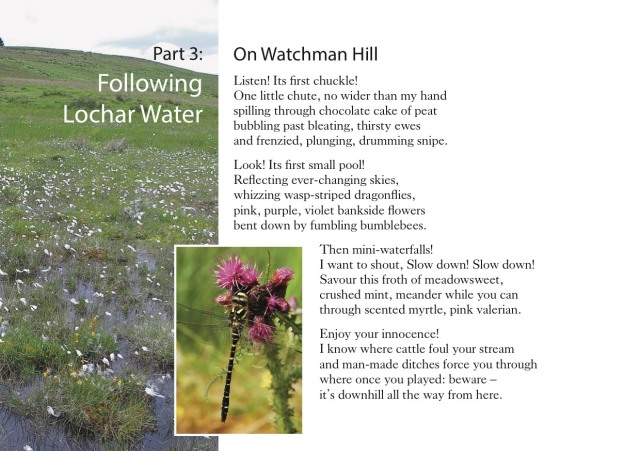
About ten years ago, I decided to focus for a while on writing poetry about the Lochar Moss, which was once one of the largest raised bogs in Europe. At first, what I noticed most was the terrible degradation wrought by nearly three centuries of draining for farming and forestry, but so much peatland wildlife still thrives there that my laments increasingly turned to delight. I followed the Lochar Water from its first hilltop trickle through freezing fog, winter floods and spring sunshine to its final meanders through coastal meadows. I also enjoyed writing imaginatively about human interactions with the local bogs over 6,000 years, inspired by the Bronze Age dug-out canoe and the brass torc from the Lochar, and accounts of local women who, during the Great War, made thousands of sphagnum moss wound dressings for use at the front.
Nowadays what would be the rhythm of your field work and writing, say across a whole year?





From late spring to autumn I do as much dragonfly recording across Dumfries and Galloway as time and weather allow. It’s easiest on sunny days, when adults are mating and egg-laying at ponds or streams, but if I have walked a long way to a new site and then it turns cold and wet (not unusual) I will get out my trusty plastic colander and dip for larvae.
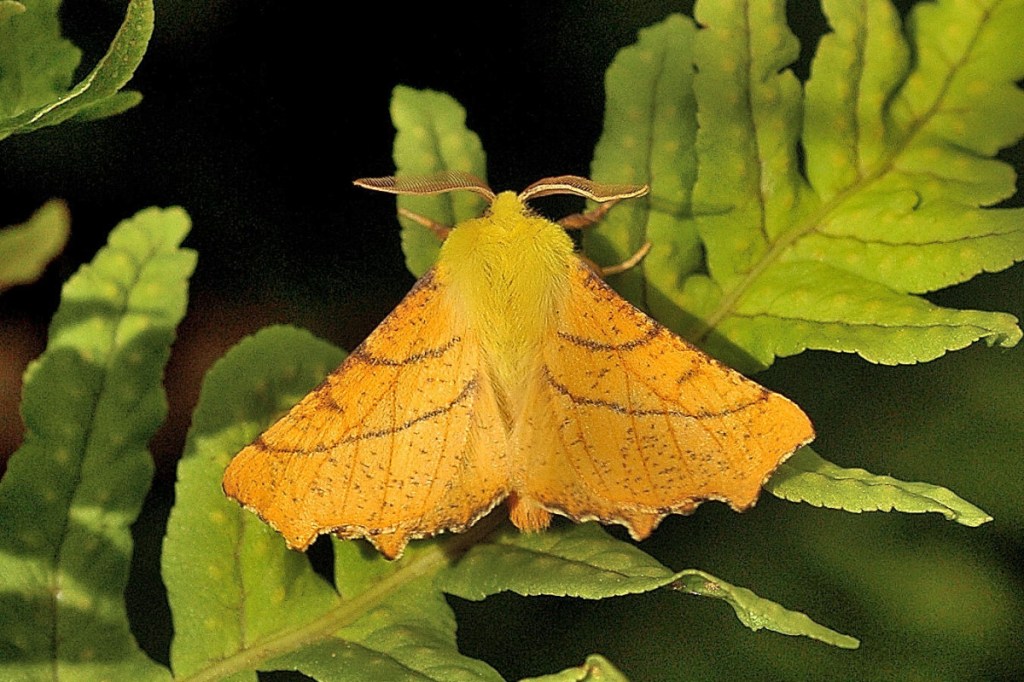
Rick and I run a light trap for catching moths in our garden all year round (sporadically, when the weather is suitable) but when moths are more numerous from May-October, we also trap in poorly recorded areas across D & G. Rick takes the initiative and does the time-consuming work of identifying the more difficult species − and submitting all the data − but I enjoy helping him. We particularly like setting our traps on the Wigtownshire coast (see featured image), as we have often had surprises there, either rare migrants or unexpected resident species. From late May to early July (the flight period of montane micro-moths) we try to get into the hills if there are any calm, sunny days, as the conditions have to be just right for us to find them.
Birding we can enjoy all year round and the weather is much less critical.
In winter we try to catch up with all the friends, family and chores we’ve neglected during the fieldwork season! I also have more time then for writing.
I blog about the wildlife of the Nith: writing helps me to look more carefully and to ask questions to which I often don’t know the answers, so I keep learning.
I also enjoy taking photos and doing press releases for Dumfries Baptist Church, where Rick and I are both involved. There is often a good story to share.
And any further projects you hope to pursue?
I love islands and have been to many around the British coast, but there are still some Hebridean islands which I particularly want to visit.


Further details
All Photographs: R&B Mearns, in order of appearance:
- Emporer egg laying. Caerlaverlock WWT Reserve.
- Heron fishing at the Caul, river Nith.
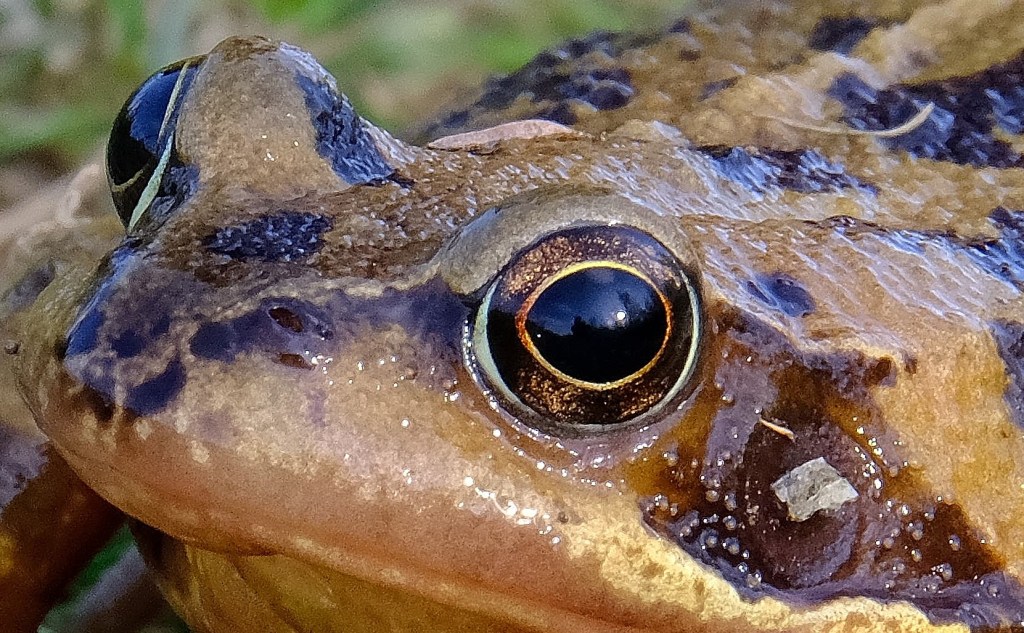
- Frog in Spring.
- Two Commas on Rowan.
- Small Pearl-bordered Fritillary
- Canary-shouldered Thorn Moth.
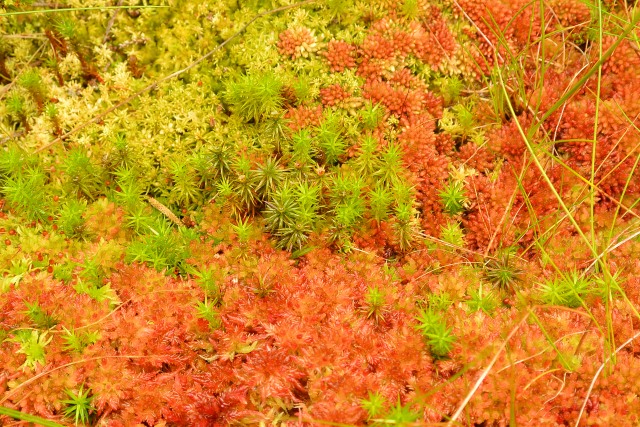
- Sphagnum.
- Sundew with trapped insect.
- Cottongrass.
- Bog Rosemary.
Barbara can be contacted through her Wild Nith Blog and can guide you to her various publications http://www.mearnswildlife.wordpress.com
Books by B & R Mearns www.mearnsbooks.com
Poetry:
Mearns, B. Peatland Poems from the Scottish Solway 2018.
Ewing, L. & Mearns, B. Bairns & Beasts 2012.
Biography:
Mearns, B. and Mearns, R. 2022. Biographies for Birdwatchers, The Lives of Those Commemorated in Western Palearctic Bird Names, Revised and expanded edition Mearnsbooks
Mearns, B. and Mearns, R. 2007. John Kirk Townsend. Collector of Audubon’s Western Birds and Mammals, 389 pp. Mearnsbooks
Mearns, B. and Mearns, R. 1992. Audubon to Xantus. The Lives of Those Commemorated in North American Bird Names, 580 pp. Academic Press, London.
Mearns, B. and Mearns, R. 1988. Biographies for Birdwatchers. The Lives of Those Commemorated in Western Palearctic Bird Names, 490 pp. Academic Press, London.
Wildlife:
Pollitt, M., Conway, L. & Mearns, B. 2019. Dragonflies & Damselflies in South West Scotland, 44 pp SWS Environmental Information Centre.
Encountering ‘The Bookshop Novel’

In the summer of 2018 I bought a copy of Penelope Fitzgerald’s The Bookshop whilst on holiday in Aldborough, on the east coast of England. It was exceptional weather, with huge skies, endless shingle beaches, and great places to swim. The Bookshop, set in this very same landscape in the year 1959, was excellent holiday reading, despite the underlying bitterness of the story. Shortlisted for the Booker Prize 40 years before I encountered it, the novel reveals how a middle-aged widow Florence Green takes on a derelict property in the eponymous town of Hardborough, and sets about making a home and opening a bookshop. Her project is a symbol of independence and determination. Unfortunately, she needs both of these in large amounts to deal in turns with the town’s sceptical banker; a machinating local worthy who plots against her; and the moral outrage of local people offended by the books she sells. Despite finding a wealthy friend who champions her cause, she is broken down by petty jealousy, disapproval and vindictive scheming. Eventually Florence is driven out of her property on a legal technicality. She leaves the town, and in the film of the novel, looks back to see the bookshop, along with her dreams and aspirations, going up in flames.
Continue reading “Encountering ‘The Bookshop Novel’”New textbook on the social aspects of care at the end of life: a surprise project

In the autumn of 2022 I was a couple of years beyond the institutional world of full-time academic employment. I’d been putting my efforts into new forms of writing, such as reflective biographical pieces, garden musings, and short stories. I’d also written a play which had been well received at the Edinburgh Fringe that summer and plotted out a debut novel which I planned to start writing the following year. In general, I was winding down my involvement in academic publications, save for a few legacy works, and at the same time building up my commitment to storytelling, essay writing and larger works of fiction. I was very happy with the trajectory and saw no reason to deviate from it.
Continue reading “New textbook on the social aspects of care at the end of life: a surprise project” Quotidian