For such diminutive plants, it was a Herculean feat. After something like a month of frost, with the ground as hard as bell metal, and then with fresh snow falling, our old friend galanthus nivalis made it through in the nick of time. I find snowdrops always take me by surprise. After days of watchful waiting, you turn your back, and there they are.
We are blessed with many snowdrops around where I live.
On 6th January 2023, in the aftermath of local flooding, three troubled people in the Scottish village of Kirkgate contemplate the year ahead. Obsessive academic, Michael Gilmour has been thrown out by his partner, who is unwilling to live any longer with his constant work obsessions. Newly retired GP, Dr Andrew Carlyle Stuart, has just got through his first Christmas holiday since the death of his wife. Anne-Marie Maxwell, a talented young musician needs to make a breakthrough this year, otherwise she’ll take up school teaching. Their three separate lives are about to connect.
AUTHOR’S NOTE: In this story I mix up and blur chronologies, geographies and biographies. Any resemblance to a person living or dead is purely coincidental. The 12 chapters of the novel Epiphanies and Robberies appeared sequentially throughout 2023. They have now been re-drafted and are in search of a publisher.
As the Christmas guests departed and the old year stumbled into its last few days, I was looking forward to a period of quiet contemplation, one or two pleasant walks, and a chance to check out upcoming tasks in the garden.
It wasn’t to be.
Just as the cheerful farewells were being said and the house was restored to some sort of order, two things struck. More or less simultaneously.
After a day or two of feeling unwell, Dr G and I tested positive for COVID-19. We’d had a good run. This was our first time, despite significant exposure to the virus. Over the next week we experienced a shifting array of unpleasant (sometimes puzzling) symptoms, brief remissions, and headache filled days
I’m home for Christmas, with a whole week to go before the celebrations begin. My end of term marking is complete and the research paper I’m writing can easily be progressed here in Dumfriesshire, away from the distractions of London and the university world.
I tell myself all this, but my deeper reasoning says otherwise. This early arrival for the holidays is really about avoiding a repeat of last year.
I’ve written before on that particular episode. I’d reached home late on Christmas Eve to find an empty house. Within a few minutes the dinner table somehow became a meeting place for three long-dead Nobel Laureates, who proceeded to unveil a plan for global peace and harmony. A plan which was then summarily thwarted in disastrous circumstances. I still haven’t been able to take it all in and I am hoping beyond hope, that elements of those inexplicable events from a year ago won’t resurface this festive season.
I first encountered Tony Bonning early one Saturday morning, years back, at the Moniave Folk Festival. He had a children’s session coming up and meanwhile was in the middle of the village entertaining the slowly surfacing festival goers with his own lovely mixture of songs, wry remarks and curious diversions. Over the years he has been compere at open mics I’ve organised, a resounding success at my daughter’s fourth birthday party and an informed adviser to my University colleagues involved in teacher education. I think the last time I saw him face to face was at Loch Arthur, where he was enjoying a cup of tea after a foraging session in the nearby hedgerows. When the lockdowns came he fell off my radar, until summer 2022, when suddenly he was across the social media as he trekked with his horse Chief, from Scotland’s deep south west to the far north east. When he returned to an admiring reception in Kirkudbright, I simply had to invite him to take part in my series of interviews with inspiring people in Dumfries and Galloway. He’s packed a lot in here. I’m grateful to him for taking part and hope that you enjoy his story as much as I have, and will follow that story further, as it unfolds.
Now and again I have a sad reminder of a specific time when I upset my mother rather badly. There may well have been other occasions when I did something unkind or ill judged, but this one has stayed in my memory. Mostly dormant, it re-emerges at intervals, to provoke and disrupt. Just as it has done today.
For nearly all of my 77 years on this earth, I have lived in the Dumfriesshire parish of Kirkmahoe. Not easy to find on a map, it’s a delightful place of rolling green pastures that slope down to the banks of the River Nith, just as it nears the end of its watery journey and debouches into the Solway Firth. I grew up here and with the exception of a few brief sojurns elsewhere, Kirkmahoe and its wider environs are where I have made my life.
Late one Spring evening, with the sun’s rays slanting low in the sky, the Professor took a walk around his garden. Pausing for a moment to admire the view to the hills beyond, something in the grass caught his eye.
Lying next to a stone that had been warmed in the sunshine was a small brown, furry creature. It was keeping very still. At first he thought it was a rabbit. Perhaps a sick rabbit, as it showed no sign of movement.
The Professor decided it was better to leave the little creature in peace for a while. Maybe it would feel better after a good sleep. He’d come back to check later.
Then, as he slowly set off with his walking stick, there was a sudden movement to his left. Gathering all its strength, that small animal was now dashing off and heading for some oak trees across the garden.
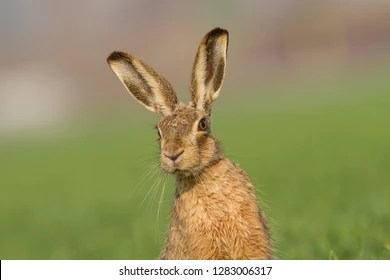
As he watched, the Professor realized this was no poorly rabbit. Quite the opposite. In fact it was a very healthy young hare! Its long legs, tipped with white, were covering the ground at great speed and its beautiful red-brown soft ears were standing up straight and catching every sound.
The Professor was delighted. Such a lovely animal to have in the garden he thought, even if it might nibble at some of my vegetables!
Here’s my journal of 16-20th August 2022 at the Edinburgh festivals. The shows are back with ‘in person’ audiences and the place is buzzing. Meanwhile, I’m in a dual state of excitement and trepidation.
The reason? 16th August will see the premiere of my first play: Cicely and David. It tells the story of a Polish migrant, David Tasma, who is dying from cancer in post-war London, estranged from home and family. A brief, intense relationship with his social worker, Cicely Saunders, helps him to find some resolution to what he feels has been a worthless life. In the process, an idea is born that later changes the face of modern end of life care.
The year was 1947. David Tasma was just 40 years old. A Polish migrant who had fled his homeland weeks before the Nazis invaded, he’d spent the war years living on the margins of London life, eventually finding employment in a Kosher restaurant in the West End. When peace came he hoped for better things. Then came his diagnosis of inoperable bowel cancer. As his illness advanced his biographical pain increased. He was estranged from his family, fearing most of them had perished in the death camps. He had lost connection with the Jewish faith of his forefathers. He felt he had achieved nothing in life. He longed for love and for reconciliation. Then into his world came a newly qualified social worker, Cicely Saunders. She first met David in the outpatients department of St Thomas’s Hospital and later found time to visit him when he was admitted to the Archway Hospital. Over a few months, an intense and elusive relationship developed between them in which Cicely sought to help David find closure before he died. Their encounter had a remarkable legacy. It inspired her to learn more about the care of dying people and eventually to conceptualise a new model of hospice care that would develop into a global social movement. Remarkably, David’s fear that his life would leave nothing behind was to prove groundless.





 Quotidian