Weeds, humans and virtue

‘A plant in the wrong place’. I have long been aware of this rather cryptic definition of a weed. A few years ago I mentioned it to my friend Devi Vijay, whilst strolling around the Brooklyn Botanical Garden and puzzling over a few patches of vegetation here and there that seemed out of harmony with the overall presentation of the place. When Devi got in touch with me recently about the work of a cultural anthropologist who has written in detail about the subject, I realised that there is a great deal more to the casual question, ‘what is a weed?’

Continue reading “Weeds, humans and virtue”

The eel

I was walking round the garden just before dusk on All Souls Day, when something at the edge of the pond caught my eye. I immediately thought the predatory heron had been in action and perhaps left behind some part of its prey. A closer inspection showed that the eel which lay there, for such it was, appeared unharmed and with no sign of damage from that stabbing beak.

It was a beautiful elver, maybe ten inches long. Pigmented in colours of grey and brown from its elegant dark head to its finely tipped tail, it was also mottled with greens and blues, that seemed to refract in the low light. A yellowish-brown belly, looked soft and vunerable.

Continue reading “The eel”

The value of letter writing

I’ve read many more letters than I’ve written. I can say this with absolute certainty. Some years ago I took on the fascinating task of editing the correspondence of Cicely Saunders, founder of the hospice movement. After sifting through an estimated 7,000 items, I put together a book of letters in which I had selected about one tenth of the total and arranged them to tell the story of her life and work.

Cicely Saunders (1918-2005) wrote letters on a phenomenal scale. With more than half an eye to posterity, she kept copies of them too. Neither of these is true for most of us today.

Yet the letter can be a joy to receive: ‘Too much! I’ve got a letter …’ sang Mike Heron of the Incredible String Band on taking delivery of a billet doux from the USA one day in the 1960s. The writing of a letter also brings its pleasures, as authors from Austen to Hemingway to Orwell have acknowledged. Lewis Carrol enjoyed letter writing so much that he wrote a nine point guide to doing it well, But the pleasure of letter writing is not restricted to the literati.

Continue reading “The value of letter writing”

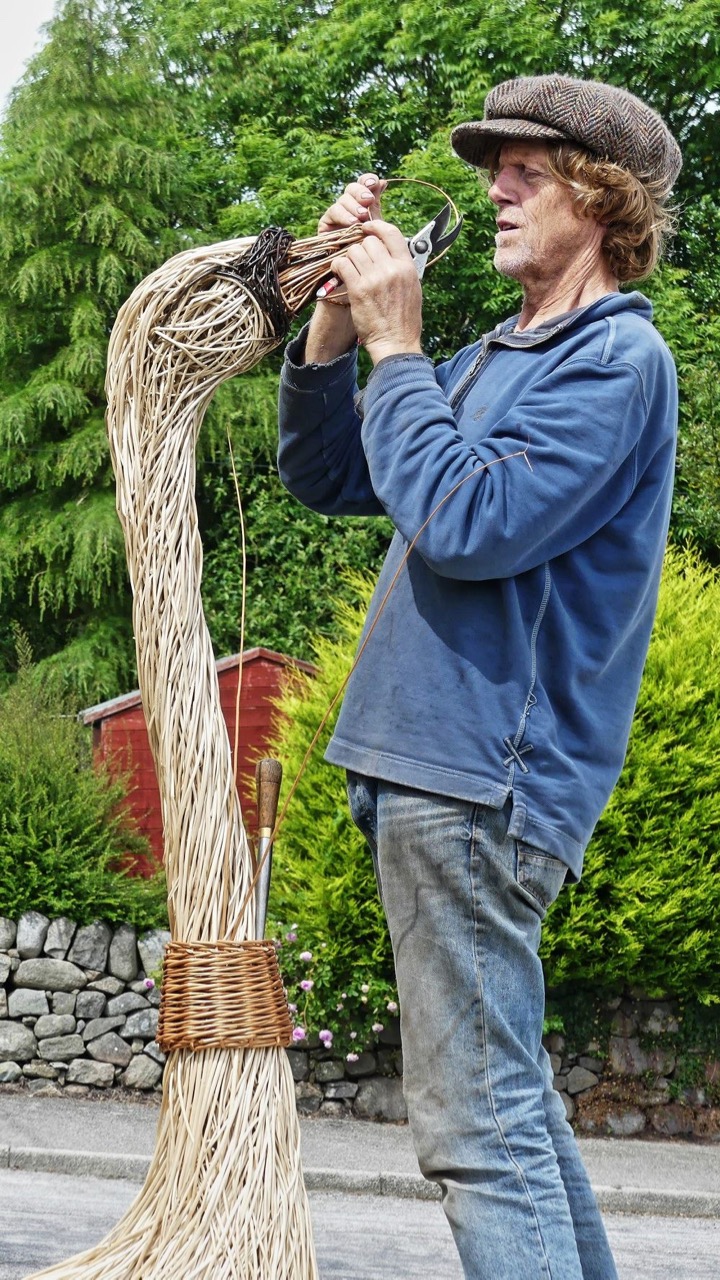
Trevor Leat – a weaver of dreams

I first met Trevor Leat in his studio-workshop, on a Spring Fling event, several years ago. He was sharing the space with Natalie Vardey at the time and the contrast between his willow work and her jewellery showed off the remarkable skill and invention of both. Over the years I have made a collection of Trevor’s smaller works and also given away some pieces as gifts. There have been trugs and baskets of various kinds, most recently a beautiful apple picker, elegantly shaped and providing the perfect blend of beauty and practicality. We also have a decorative swirling circular piece that sits above a doorway in the house and which I look at every morning as the day begins.

I don’t know Trevor very well but always enjoy my conversations with him when we bump into one another at some event, in a gallery, or most likely at a concert. He and I share an enthusiasm for the Incredible String Band and the subsequent work of Robin Williamson. I see Trevor at my Kirkmahoe Concerts, where, until the pandemic, Robin performed annually from 2010. When we meet between times Trevor and I always seem to fall into some arcane conversation about our shared love of that strange and eclectic music.

Trevor epitomises aspects of the artistic and artisanal work that flourishes in Dumfries and Galloway. He always seems to be busy, whether near or far. He values a sense of place. His work is a paradigm of sustainability. He is unfailingly unflustered, with time to talk and to share his thoughts. His work has a seasonal rhythmn that is reflected in the things he creates.

Continue reading “Trevor Leat – a weaver of dreams”

Spring Fling

Adrian was standing at the back of a metal-worker’s forge. A demonstration of decorative ironmongery skills had just ended and as the heat of the fire died down, the large crowd was still murmuring its admiration. Suddenly, a voice tinged with irony filled the space. ‘We are soon going to take some photographs for publicity use by Visit Scotland. So if by chance you are with someone you perhaps shouldn’t be, then you might want to leave now’.

Continue reading “Spring Fling”

Science and sustainability: Dr Emily Taylor

In the early Summer of 2009 I was preparing a move from Lancaster University to take up the position of Head of Campus for the University of Glasgow in Dumfries. I was fulfilling a long held ambition to make Dumfries and Galloway my home, after years of spending time here in the holidays and at weekends. On a bright June morning I couldn’t believe my luck that I was driving west towards the Galloway Hills to attend an ‘away day’ with a group of people involved in the Crichton Carbon Centre, one of our partner organisations on Campus.

It was billed as a ‘green skies’ meeting and these enthusiastic folk welcomed me into a territory that was relatively outside my comfort zone for a specialist in medical sociology and end of life care: climate change, carbon capture, and the vast range of mitigations that might be adopted to influence global warming. In the years that followed I worked closely with the ‘CCC’ team, as I came to know them. From my point of view the jewel in the crown was a ground breaking Master’s degree in Carbon Management, which we ran jointly and which paved the way later for a much bigger environmental studies development at the Dumfries Campus.

So it was with great pleasure last summer when, newly freed from full time academic duties, I received an invitation to join the three-person board of this dynamic and innovative local charity. I took up my Trustee duties in November 2020 and my first meeting was with Dr Emily Taylor, the CCC General Manager and a graduate of that self-same Carbon Management degree. Our paths had briefly crossed in my first year at the University of Glasgow.

Continue reading “Science and sustainability: Dr Emily Taylor”

Responding to loss in the time of COVID: the Shoreline to Shoreline project

A few months after my father died in the spring of 1993, I was in north east Scotland, visiting friends. One afternoon, some of us took a walk along the banks of the River Deveron. Lingering with my younger son, we stood just where the waters become tidal, fossicking among beautiful pebbles and bits and pieces on the river bank. Then wordlessly, and in a moment of ‘timeless now’, we chose a couple of boat-like pieces of driftwood and pushed them onto the water. Slowly they left us in the shallows, were picked up by the current and drawn out into the waters of the cold North Sea, gradually disappearing from our view. I remember well that strange moment when they could no longer be seen.

It was a small and spontaneous ritual that came back to me when I encountered a project called Shoreline to Shoreline, the creation of artists, Jo Hodges and Robbie Coleman. Working as part of a team in the Dumfries and Galloway based Atlas Pandemica initiative, they have been exploring experiences of loss in the early phases of the pandemic. Along with others in the team, they want to understand some of the manifold ways in which COVID-19 has been shaping social experience and to look for creative responses that might be supportive, and perhaps point to a kinder world as a result.

Continue reading “Responding to loss in the time of COVID: the Shoreline to Shoreline project”

Emma Dove: through the lens and beyond

A person in the American palliative world that I much admire, once told me she never ignored an enquiry from someone who wanted to make a connection with her work. For who knows what may come of it? The approach is one I have tried to emulate over the years, though it seems somewhat at odds with the instrumental ‘work smart’ ethos that pervades so many organisations today and is unsympathetic to serendipity. So when out of the blue I received an email in autumn 2018 from a person interested in a new project I was developing with colleagues in Japan, we arranged to meet at short notice, just before she was due to fly out to Tokyo. The person was Emma Dove. The meeting place was Thomas Tosh, already featured in these interviews.

Over coffee and scones and with my nine year old daughter listening-in attentively, I learned something of Emma’s background, skills and interests. Trained in film and with a strong interest in photography, she had been drawn to a concern with end of life issues as a result of her personal experience. Working on an arts project with collaborators in Scotland and Japan, she was interested in death cafes, cultural representations of dying and death and the ways in which art might contribute to debate and understanding.

Continue reading “Emma Dove: through the lens and beyond”

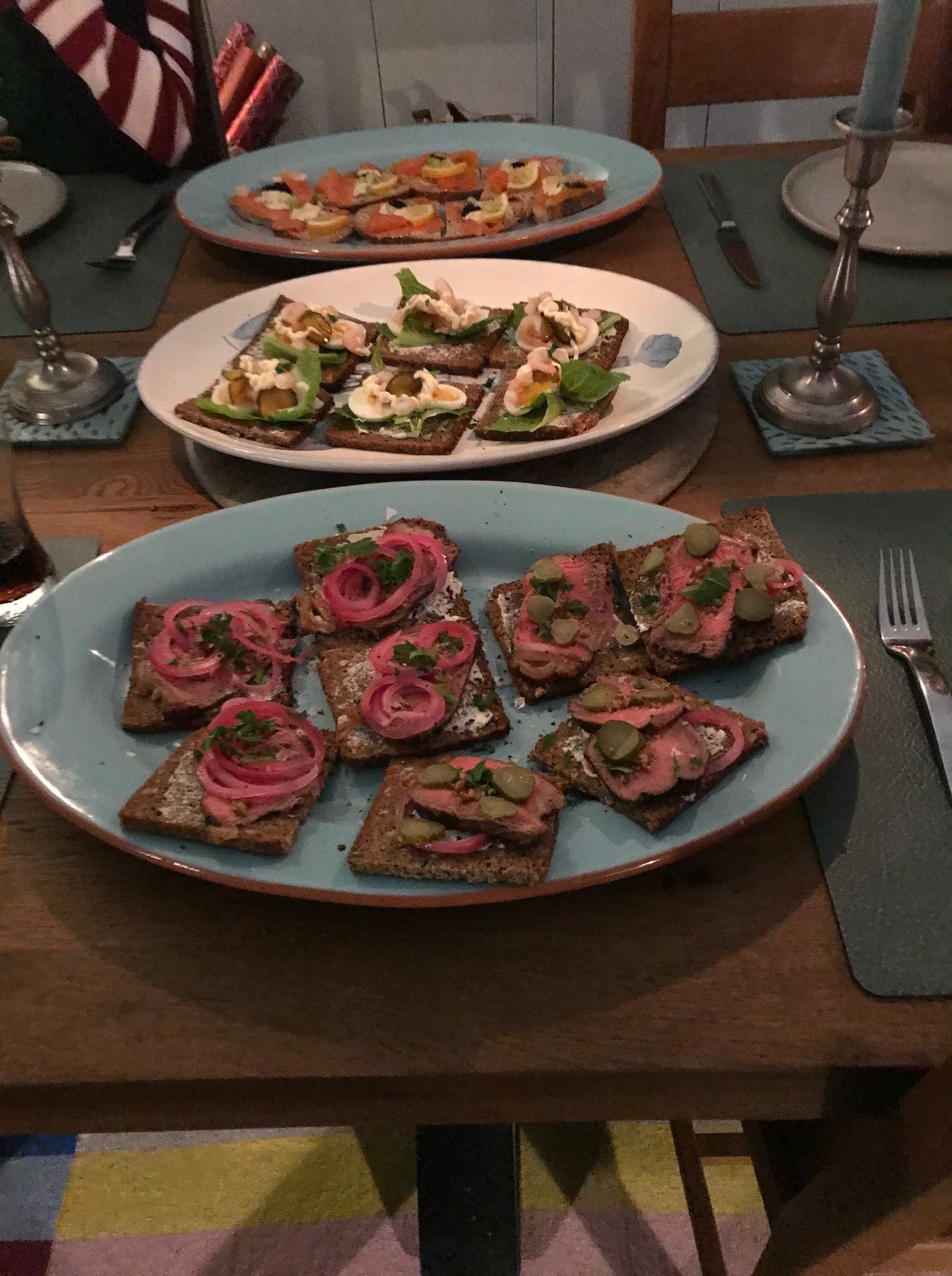
A good lunch

The meal had undoubtedly been a pleasure. Five friends gathered together in late Winter for a traditional Sunday meal, accompanied by a first rate Rioja and rounded out by dessert and good coffee. Emerging from the hotel, and with the exception of the driver, they each had the recognizable glow that results when wine and hot food come together in the middle of a cold day.

They were an unlikely quintet, the physician, sociologist, philosopher, anthropologist and surgeon who were now strolling from the hostelry and into the nearby side-streets of a picturesque Scottish fishing town.

Continue reading “A good lunch”