The Camassia: from Pacific North West to Scottish South West

As a student of anthropology in the early 1970s, I still remember some classes we had on the phenomenon known as Potlatch. Part of the culture of the indigenous peoples of the Pacific North West, it relates to large gatherings in which alongside story telling and feasting, a special emphasis is placed on the conspicuous display of wealth and largesse, in some cases even the destruction of valuable possessions in order to demonstrate one’s high status in the community.

I have often thought of the parallels between these practices and the ‘conspicuous consumption’ so prevalent in Western culture. But until now I had no idea there was a link between the Potlatch and the world of horticulture, and in particular my own Dumfriesshire garden.

Continue reading “The Camassia: from Pacific North West to Scottish South West”

What’s in a place-name? An interview with Colin Mackenzie

This latest interview in my series about creative and inspiring people living in Dumfries and Galloway, is someone I have never met. Indeed, when I contacted him earlier this year, he informed me that he was about to leave his home region and relocate to Orkney. So I’m looking forward to meeting with him in person some day – in one or other of those places.

Colin is a primary school teacher, a linguist and an expert on place-names, a field of study known as toponymy. Using a variety of methods and new programs for studying maps he has built up a remarkable knowledge of the place-names and associated stories of Dumfries and Galloway.

He is highly trained in his area of study and holds a PhD, but his research is a labour of love that he works on alongside his ‘day job’ and he has eschewed any thought of a university career. He is the kind of person who makes the world a richer place, but seeks no particular reward or recognition in doing so. He has harnessed modern social media for the best of reasons – to share in detail what he has learned about the names of places that are all around us.

Continue reading “What’s in a place-name? An interview with Colin Mackenzie”

Epiphanies and Robberies Chapter 4: The Devil’s Stone

Andrew is drawn further into the mystery of the art robbery. He receives a visit from Detective Constable Logan Harris of CID, warning him of the dangers of amateur sleuthing, but undeterred, continues with his enquiries. Meanwhile Anne-Marie, busy with her new composition and a prestigious upcoming concert, thinks she has spotted the perps and has an idea of where they will strike next. For Michael, his personal problems are spiralling downwards, as it appears that his estranged wife Esme, has found a new partner.

************

Copyright © David Graham Clark 2023

AUTHOR’S NOTE: In this story I mix up and blur chronologies, geographies and biographies. Any resemblance to a person living or dead is purely coincidental. The 12 chapters of the novel Epiphanies and Robberies appeared sequentially throughout 2023. They have now been re-drafted and are in search of a publisher.

The novel also has a playlist to enjoy, you can find it here: http://open.spotify.com/playlist/0XSzB1w8hfrRPUBzs4KFNF?si=JkkDbGmRQM2WeHjcOrFO

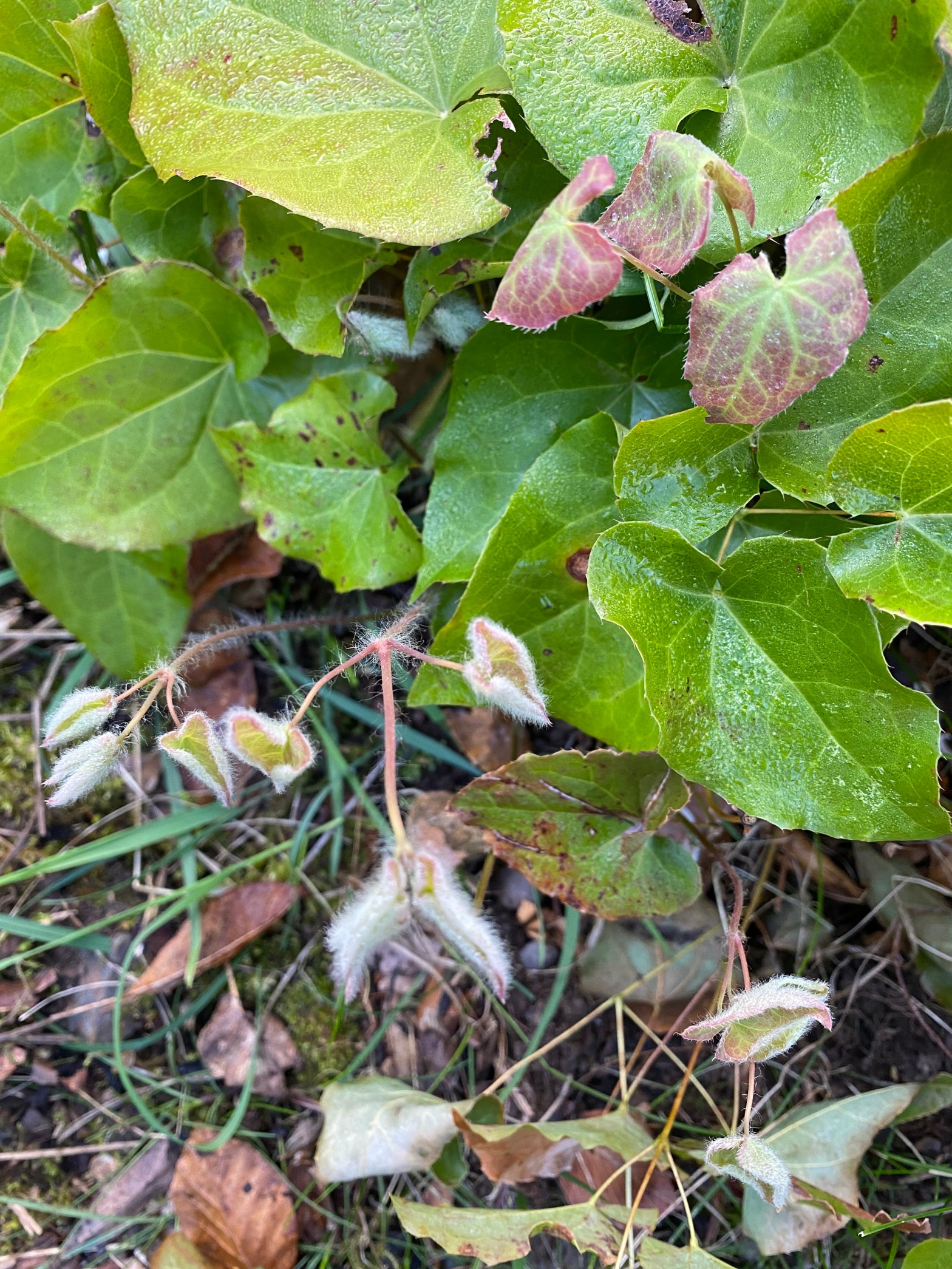
The epimedium – understated elegance for all seasons

One of the hallmarks of my plant choosing habits is an attraction to anything that has what I consider to be an ‘old fashioned’ look about it. I shy away from sappy, gaudy overly hybridized and commercially tampered with plants of all kinds. By contrast I am drawn to things that look like they have always been there, plants with a quiet appeal, an element of toughness, and in particular those which will give interest over the longue durée.

About 10 years ago whilst browsing in the plant section of Chatsworth House in Derbyshire, I came across something that met my criteria exactly. Glossy, spear-shaped leaves on thin, wiry stems, with what looked like a spreading habit and just a hint that rich green might turn a warmer colour come the autumn. As I waited to pay, my friend and I looked at the label and immediately lapsed into schoolboy humour. The lovely horticultural specimen I was just about to buy was called an epimedium, something we found inexplicably funny, and still recall with some affection to this day.

More important though, was the ‘discovery’ of a new plant, which would come to be much enjoyed and in time have a more prominent place in the Dumfriesshire garden.

Continue reading “The epimedium – understated elegance for all seasons”

Epiphanies and Robberies Chapter 3: Tracks and Trains

Michael introduces Andrew to some of the environmental issues affecting the local area. Out on the nearby hill tops, Michael also shares some of his personal problems. Anne-Marie presses on with her special new composition, to be called Calendarium, and the long awaited re-opening of Kirkgate railway station takes place on the 15th of March. But that same day thieves strike at the Nithsdale home of a wealthy rock musician. Valuable art works have been stolen! Andrew is quickly drawn to the case and spots a tell tale photograph in the local paper, that might just hold a clue to what has happened.

************

Copyright © David Graham Clark 2023

AUTHOR’S NOTE: In this story I mix up and blur chronologies, geographies and biographies. Any resemblance to a person living or dead is purely coincidental. The 12 chapters of the novel Epiphanies and Robberies appeared sequentially throughout 2023. They have now been re-drafted and are in search of a publisher.

The novel also has a playlist to enjoy, you can find it here: http://open.spotify.com/playlist/0XSzB1w8hfrRPUBzs4KFNF?si=JkkDbGmRQM2WeHjcOrFO

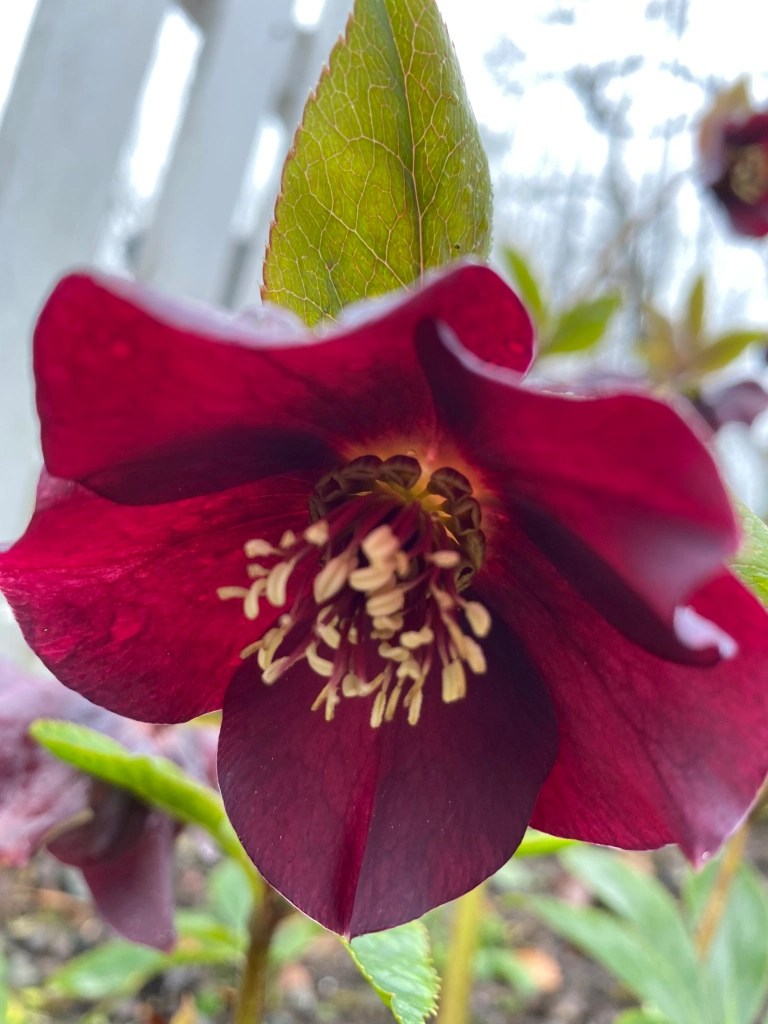
The hellebores keep on giving

I first came across the allure of the hellebore nearly 20 years ago when watching the BBC programme Gardener’s World.  Inspired, I went off in search but found them scarce in mainstream garden centres, where they were rarely sold to advantage or at their best.

In those days I was naïve to specialist nurseries and mail order services. Nor had online shopping become a commonplace. But one weekend, I think in 2006, I was visiting a small plant centre near Great Ayton in North Yorkshire with my elderly mother, when I came across a beautiful hellebore plant with fresh green yet leathery leaves and a flower of five white petals flecked with a paint splash of purple surrounding a heart of creamy coloured nectaries. It was pricey and I bought it with some trepidation, wondering if it would survive long in the Dumfriesshire garden.

For a few years it lived on a sloping bank with a path running below it. The position made it possible to look up from the path and gaze into its mass of elegantly drooping blooms. The idea was good, but the path in question was one rarely taken, and so I moved it to a spot I pass at least once every day. There it has stayed and seems content, though it has bulked up very slowly and I have not had the courage to spilt and divide it to create more plants.  

Continue reading “The hellebores keep on giving”

Frog seasons

The tell tale signs began to emerge a few weeks ago. Shifting a pile of newly delivered logs, a couple of semi-comatose puddocks required relocation to a safe damp spot. Then one wet late evening as I left the house for a dog walk, an inquisitive member of the family Ranidae, hopped straight towards me in the porch before making an abrupt right turn and then dissolving quickly behind a green Wellington boot. Next day the builder rescued a couple of Rana Temporaria from a watering can. 

The accumulating evidence was clear. Frog season was upon us. 

Continue reading “Frog seasons”

Heading Home: a miscellany of writings

In late 2020, on saying goodbye to four decades of work in academia, I resolved to devote time to something that had been bubbling up in my thinking for quite a while: the desire to continue writing, but to do so in a more creative and inventive manner. True, I’d recently written a biography which allowed some scope for imaginative interpretation, and in my academic blogging I was finding the confidence tentatively to break out of social science conventions. But now I wanted to bring about a more visible shift, from the data-driven and rational orientation of the scholar, to an approach to writing organised around personal reflection, imagination and careful observation of things around me.

Continue reading “Heading Home: a miscellany of writings”

Epiphanies and Robberies Chapter 2: Candlemas

Andrew, Michael and Anne-Marie meet up by chance after attending an event in the village Hub. They go on to share an impromptu meal in Kirkgate’s Lowther Arms and start to learn about each other’s circumstances, passions and struggles. The meal is a success and at the end of the evening, Andrew tells them about two art robberies that took place in the region in 2003 and 2013.He wonders if a pattern might be emerging, here in Nithsdale. Could 2023 see history repeating itself?

************

Copyright © David Graham Clark 2023

AUTHOR’S NOTE: In this story I mix up and blur chronologies, geographies and biographies. Any resemblance to a person living or dead is purely coincidental. The 12 chapters of the novel Epiphanies and Robberies appeared sequentially throughout 2023. They have now been re-drafted and are in search of a publisher.

The novel also has a playlist to enjoy, you can find it here: http://open.spotify.com/playlist/0XSzB1w8hfrRPUBzs4KFNF?si=JkkDbGmRQM2WeHjcOrFOLg

Dogwood delights

A nurseryman once told me, with casual dismissiveness, that dogwoods belong only in carparks and on roundabouts. Like most gardeners I too have my botanical aversions, but I do object to this wanton demonisation of the dogwood.

I say this with particular force just now, as the Winter is coming to its end. For without doubt during these past months in the arboretum field adjacent to the main Dumfriesshire garden, it is dogwoods that have been the star performers, whatever the weather conditions.

Continue reading “Dogwood delights”