The exam before Christmas: a sociological mystery story

Sally had worked hard for the end of term exam. The lecturer had been wonderful, taking the class of 1974 through an insightful exploration of the lives and writings of four enormously influential people, often called the ‘founding fathers’ of sociology. Of course, Sally objected to the terminology, and felt sure that the story of sociology’s origins could not be confined to men alone. She hoped things might change in the future. What if the foundations of sociology could be re-imagined in some way, taking a wider view, and in particular acknowledging the contribution of women? Wasn’t it reductionist to see the origins of the subject through the contributions of four men alone: Auguste Comte, Karl Marx, Emile Durkheim and Max Weber?

With these questions in mind, Sally had gone off-piste with the course syllabus, and done some digging on her own account. In particular, she’d found her way to one Harriet Martineau (1802-76), who clearly, in Sally’s view, deserved a place in the history of sociology. Martineau was born into a family of free thinkers in eastern England. Defying the norms of her time, she wrote extensively, as a novelist, journalist and, indeed, sociologist. Her first commissioned book was Illustrations of Political Economy, an exploration of the ideas of Adam Smith, written for a general audience. Another classic work was her illness narrative, Life in the Sickroom. She was a feminist and a critic of religion. Her book Society in America, based on an extended visit, was full of concerns about democracy, slavery, and civil war, mingled with the everyday lives of ordinary people. It was undoubtedly an impressive sociological  work, and its critical tone was unpopular with many Americans.

Most important of all, Sally had discovered, that Harriet’s work of 1853,  entitled The Positive Philosophy of Auguste Comte, was an influential popular translation and condensation of Comte’s six volume work, that had originally been published in French. Apparently much admired by the author himself, it did a great deal to widen the audience for new sociological thinking. All of this came before the works of Durkheim and Weber, and in parallel to those of Marx. Oh yes, Harriet Martineau had been quite a find, and Sally was very excited about her.

***

But now the social theory exam was about to begin and somehow Sally had to pull all this together. She sat in the middle of the back row. From here, she could see all of her classmates, listening carefully as the lecturer set out the rules of the examination. Then, with the second hand of the clock ticking towards 9.30, the students were told to turn over their examination papers, and begin. They had three hours in which to answer three questions from a list of nine in total.

Running fingers through her crop of blond hair, Sally read through the list carefully, made here selections and set to work. 

Elsewhere in the room a number of students gazed thoughtfully into the middle distance of the wood panelled examination hall. Some were still contemplating their preferred choices. Others seemed troubled about whether they had the wherewithal for three good answers.  A few were in a blue funk, considering leaving the exam room there and then, and starting the Christmas holiday early.

Sally scribbled on, occasionally stopping to load another cartridge into her Parker pen and confident that she was making a flying start with a question about the functions of religion in society. After that would come an answer on the origins of capitalism, and then one about theory and method in social science.  She was having an adrenalin rush and hoping for a firm writing hand and good time management to see her through.

But despite her own positive drive, Sally could feel a sense of doubt beginning to pervade the room. The smiling invigilator, scanning the rows, sought to give non-verbal reassurance and encouragement, but it didn’t seem to be working. There was an edginess, hard to pinpoint; an unsettled air, gaining strength.

Five minutes later something odd happened. A feeling of movement somewhere. Not the early departure of a forlorn student, but a sense of people entering the hall and generating a rather special aura around themselves.

As she reached the end of her first answer, Sally took a moment to look up. It was then she saw them. No less than four men in dark frock coats, heavy trousers and upturned collars. Three heavily bearded, one moustached. One carried a cane, another sported an elegant watch chain, a third wore a richly patterned silk scarf, the fourth, a pince nez.

The men proceeded to spread out and walk through the aisles of the examination room. It was like a piece of new wave, immersive theatre. Soon they were stopping, leaning in and whispering to individual students. It wasn’t hard to make out that they were speaking in either French or German. What is more, the students they approached seemed to have no difficulty understanding them, some even nodding, smiling, and showing appreciation.

Sally looked on, mesmerized.  The invigilator appeared to see nothing. The visitors moved quietly through the rows. Yet no one called out, raised the alarm or drew attention to what was happening. Time was passing, Sally had to drag herself back to her questions, but it was very clear to her just who had arrived in the examination hall. She kept her head down and finished the second answer with a shaking hand. When she next looked up, the visitors had gone.

One hour later, and one more answer complete, the examination was over. The papers were gathered in, and the students left the room in silence. Unusually, there was no re-cap, post mortem, or even the usual chit chat about who had answered what. Sally said nothing, and headed straight back to her bedsit, dazed and somewhat confused.

***

On the morning of the last day of term, and just before catching the afternoon train home, Sally, looking au courant in frayed jeans and a crushed velvet jacket, knocked on the lecturer’s office door. Hearing a voice within, she entered a book-lined study. It had a faint whiff of tobacco, a desk piled high with papers, a couple of ancient standard lamps, and two equally battered armchairs. Teacher and student exchanged greetings and small talk. Then, gesturing that they sit down, the lecturer asked:

‘So how did you feel the exam went?

‘Well I was pleased with the questions, and did my best, made sure I finished the last one properly and then read through all three’.

The lecturer nodded with a knowing air, corduroyed legs crossed, arms folded across a Shetland slipover.

‘But there was something  …’  She continued and then paused.

‘Yes?’

‘Well something very odd’.

‘Go on’.

‘I know this sounds crazy. Maybe I’d stayed up too late the night before drinking coffee … but really I had a pretty strong feeling that they were in the room …’

‘Who were …?’

‘Well … our subjects of study, that is: Comte, Marx, Durkheim and Weber …’

‘What?’ came the sceptical reply. ‘Whatever do you mean?’

‘… and they were actually speaking with some of the students in front of me … as if they were explaining things and helping them’.

‘That is most odd Sally. Very odd indeed. Certainly I saw nothing of that kind myself. Maybe it was just a dose of examination fever. But curious, nonetheless’.

Preoccupied with it all since the exam, now she wished she’d said nothing. She spluttered: ‘Maybe just too much going on … such a great course  … it got to me … sort of … thing!’

The lecturer looked at her sympathetically, then continued.

‘On the other hand, some students in particular did seem to perform rather better than I had expected – albeit without exception adopting a rather apologist stance towards each of the founding works they addressed. Not a trap that you fell into I may say!’

‘They did?’  

‘Yes, the average mark for the class as a whole was really rather pleasing, and definitely up on previous years’.

‘But you see, the odd thing is that those hairy men in their frock coats and fancy shirts, none of them approached me, not one of them stopped by my desk and whispered in my ear!’

‘And you’re quite sure of that?’

‘Yes, I am indeed!’  Sally was becoming agitated, struggling to contain her feelings. Her pitch and volume rose several notches, her sense of injustice palpable.

‘I don’t want to make a fuss, but where does that leave me and my exam result?’

 ‘Oh that’s simple’, the lecturer replied, smiling warmly and handing over her exam scripts. ‘It leaves you with three straight A stars as a matter of fact. The best marks in the entire class, by a long, long way. Three provocative answers offering new insights and indeed challenging the whole canon of the ‘founding fathers’. You’re well on the way to a first class degree Sally and maybe doctoral study as well. That’s where it leaves you, I’m delighted to say. So with your hard academic work done for the term, I hope you’ll enjoy your time on the Christmas post, then have a well-earned rest and a good holiday. See you in January and let’s talk about that PhD!’

***

On the packed train, she sat back in her window seat, running over the lecturer’s words, simultaneously stunned and delighted. Then the whistle blew, the doors closed, and slowly they began to move out of the station. Through the window, she could see other holiday travellers, awaiting the next arrival or checking the notice board. Then as the train reached the full extent of the platform and was about to disappear into a tunnel, Sally spotted a female figure, standing alone and gazing intently at the passing carriages. Victorian in appearance, the woman had luxuriant, shiny black hair, parted in the centre and brushed back in waves at the side. She wore a long, elegant winter coat with a neat fur collar and short leather boots, each with a bright silver buckle. Smiling and stepping forward as the young student came into view, the woman on the platform made a greeting with open arms and blew a kiss. Sally sat bolt upright. Did her eyes deceive her or was that Harriet Martineau out there, clearly very happy, seeing her off on the train journey and wishing Sally a happy Christmas?

You can find more of my Christmas mystery stories here: https://davidgrahamclark.net/christmas-mystery-stories/

Featured image: Published by Encyclopædia Britannica https://www.britannica.com/biography/Harriet-Martineau#/media/1/367020/38996, accessed December 10, 2024

Contextual note: With the exception of a biography published in 1960, it was not until the mid-1970s, around the time of Sally’s exam, that scholarly interest in Harriet Martineau began to develop.  A Martineau Society was established in the mid-1990s and in the next decade we see chapters devoted to Harriet in major textbooks on social theory and the origins of sociology. Many of Harriet’s own works are now easily available, including her autobiography, originally published in 1877. Sally, for her part, went on to a highly distinguished academic career and was among the foremost sociologists of her generation. On retirement she moved to a house in Ambleside in the English Lake District, very close to where Harriet herself had lived in later life. Here Sally continued to be inspired by her sociological mentor, and like Harriet, wrote a series of thoughtful reflections about her garden and the wider natural world.

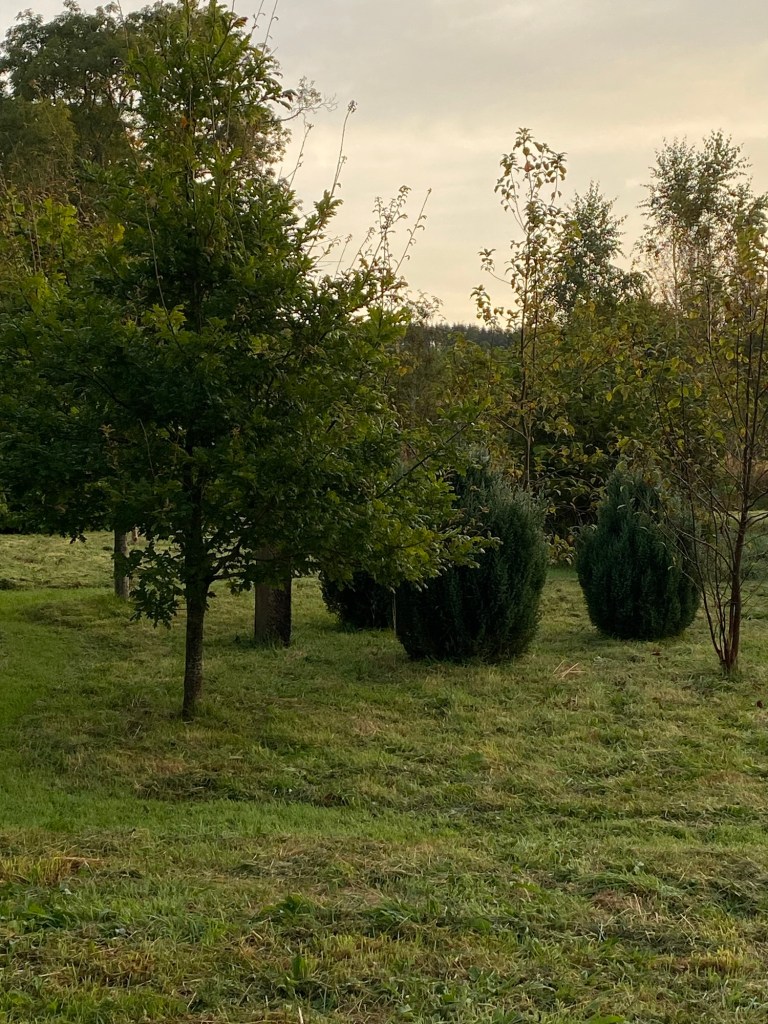
An A-Z of 2024 in the garden: Orchard

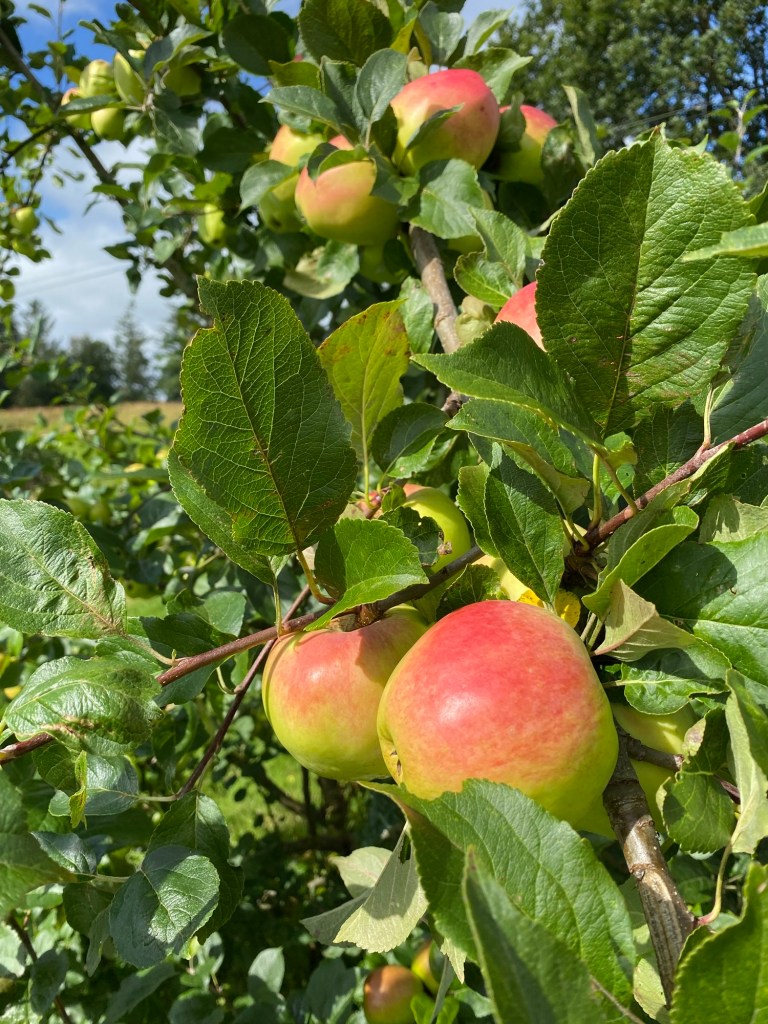
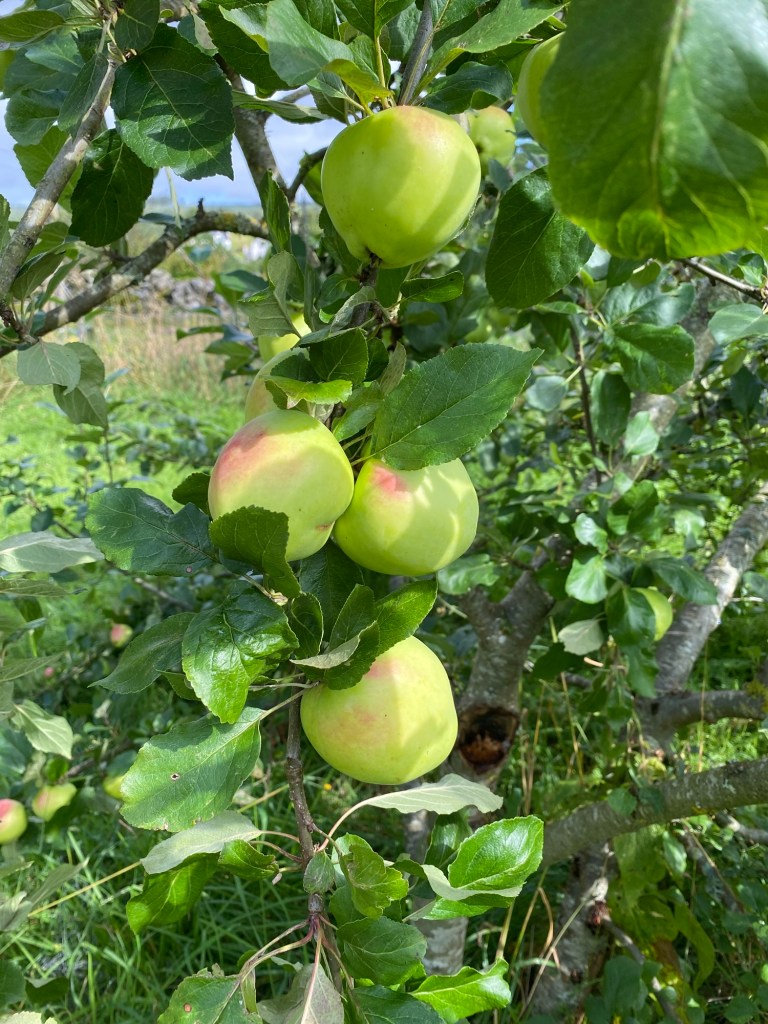
A rather mixed year in the orchard began with unwelcome visitors on the 10th of February. I’ll deal with that in a separate entry to the A-Z. An uncertain flowering with late frosts increased the sense of an unsatisfactory season to come. One promising plum tree, though ignored by the visitors, didn’t make it at all and was pronounced dead during May. The other plum tree survived but produced no plums. Likewise there were no pears. Then came a wet summer, and too little sunshine. During one August rainy spell some large branches, laced with apples, cracked and fell to the ground. And so it went on.

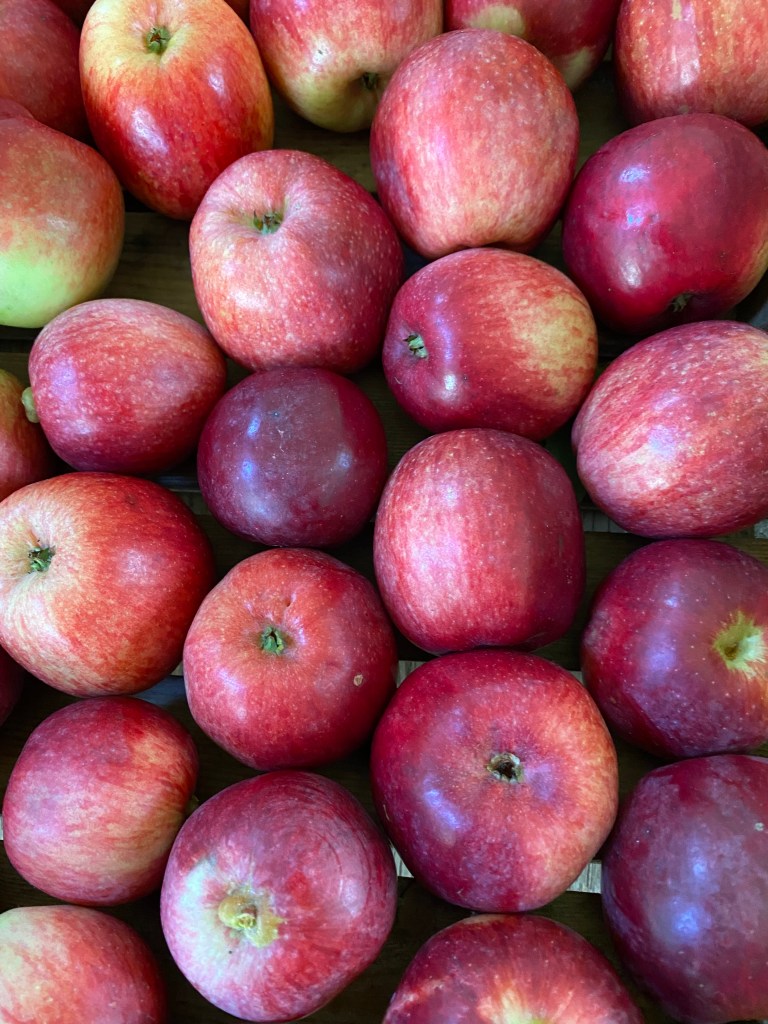
There were some compensations. The Pippins were good to eat in the early autumn. The red Fiestas, disappointing at first, eventually came round after picking and gradually became more and more sweet. I was sorry to eat the last of them just a few days ago.

The Bramley cookers really got into their stride this year and are still keeping well. The Melrose Whites were very good in early October but haven’t lasted long, some turning a rather dramatic purple-black in store.

Out of 10? I’d probably rate 2024 as a 4 in the orchard. In the new year I need to do some careful pruning and be sure to protect the trunks of the trees. As with all things in the Dumfriesshire Garden, whatever this year produced, there is always the promise of next season!

The full list of pieces that make up my A-Z in the Dumfriesshire Garden in 2024 can be found here: https://davidgrahamclark.net/a-z-of-the-dumfriesshire-garden-in-2024/

An A-Z of 2024 in the garden: Northern Lights

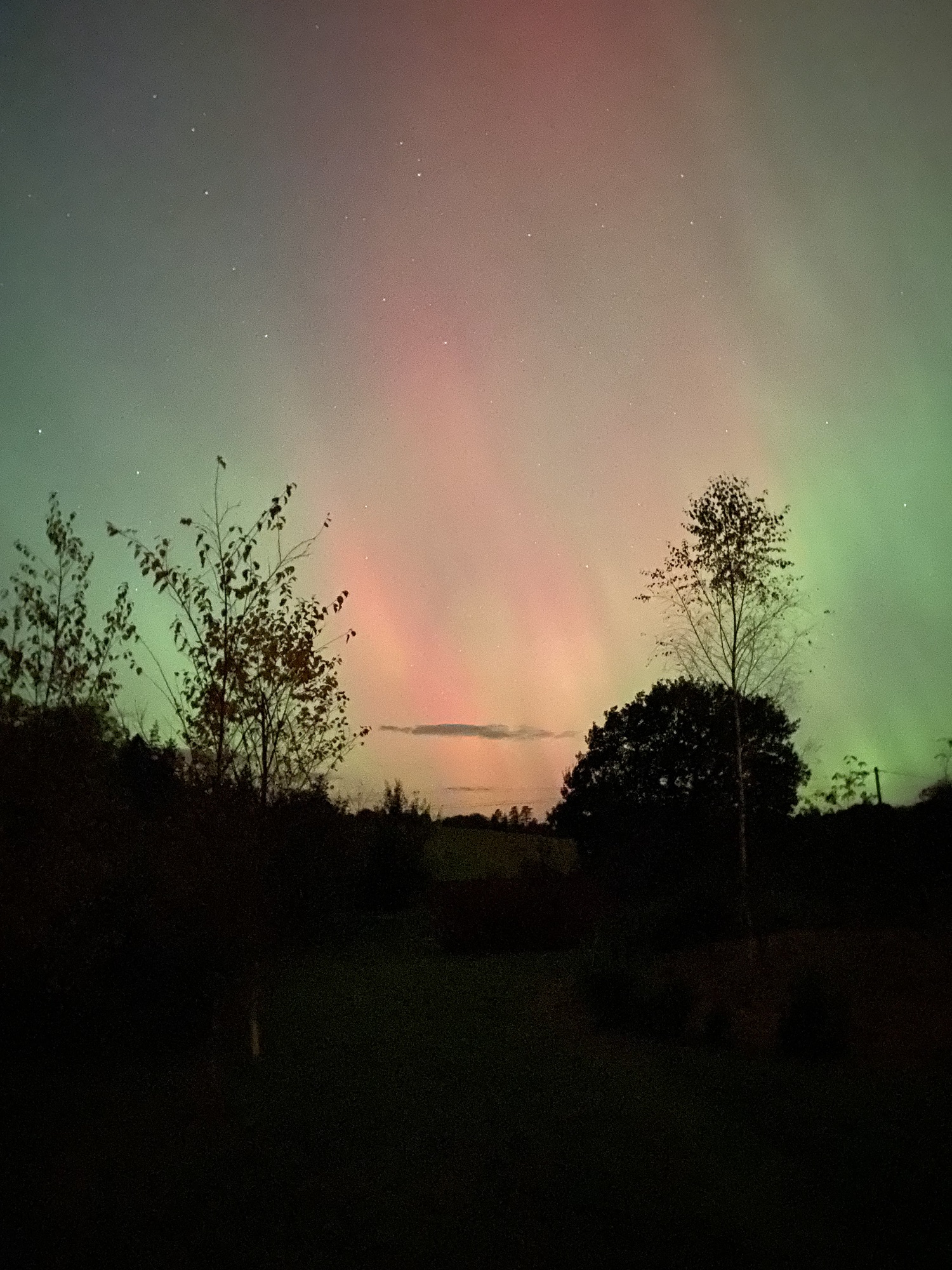
This entry in my A-Z series is really here under false pretences. There is nothing even remotely horticultural about it. The reason for its inclusion is simply this. On the night of 10th October 2024, we got wind that the aurora borealis might be visible in our part of the world. A quick look out of the window was enough. Pulling on hats and coats we rushed out of the house and up to the highest point in the Dumfriesshire Garden, among the trees and rocks of the arboretum. It was the perfect vantage point, as you can see here!

The full list of pieces that make up my A-Z in the Dumfriesshire Garden in 2024 can be found here: https://davidgrahamclark.net/a-z-of-the-dumfriesshire-garden-in-2024/

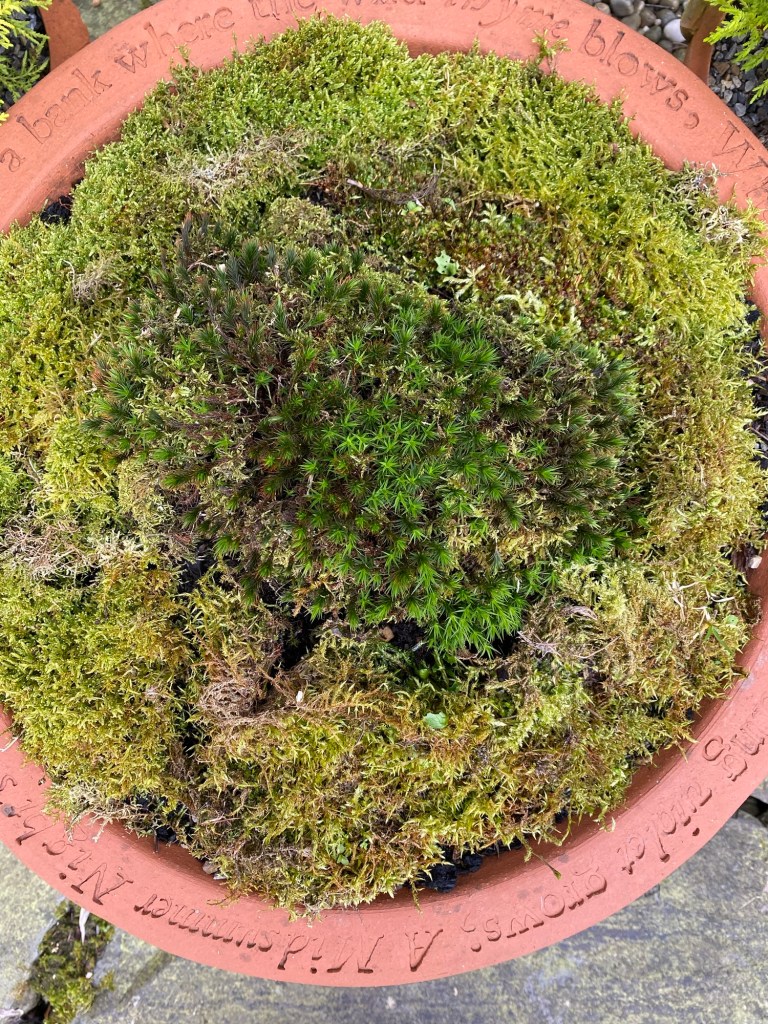
An A-Z of 2024 in the garden: Moss

In the Dumfriesshire Garden I am surrounded by something special and important, but until recently I paid it little attention.

Moss.

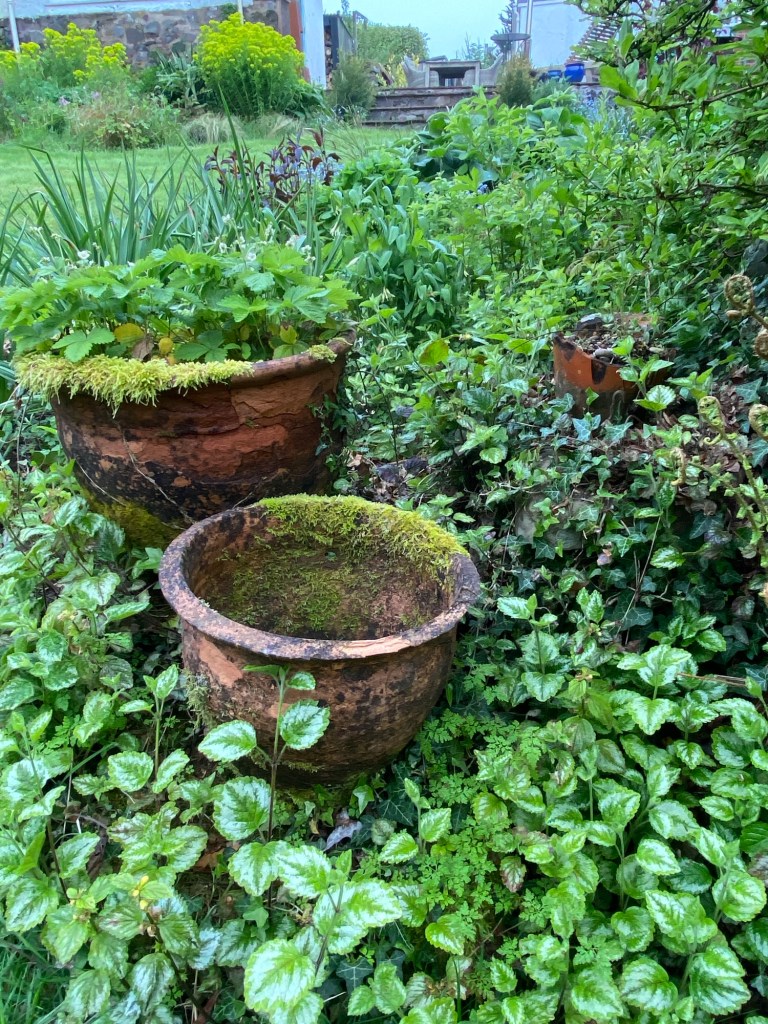
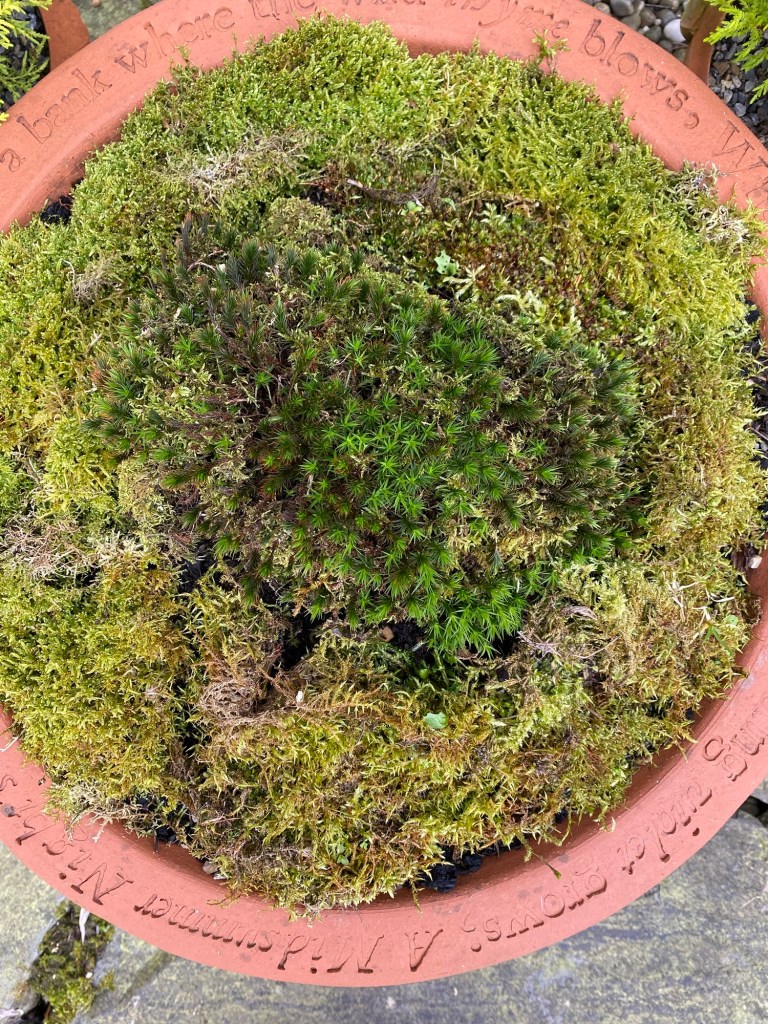
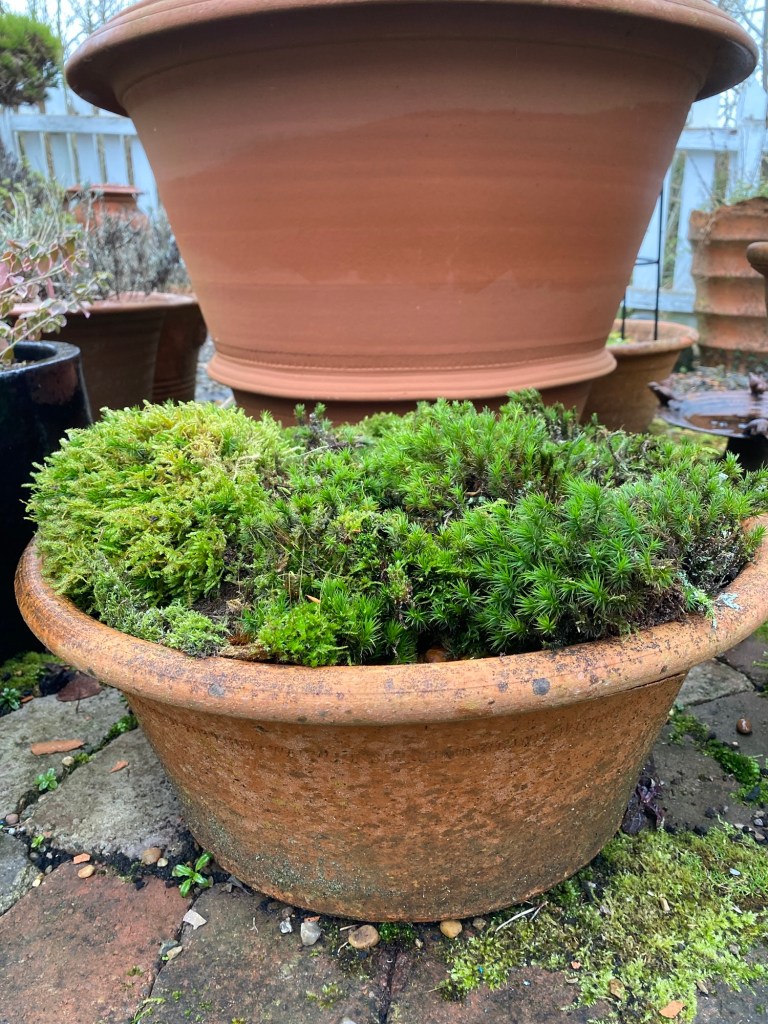
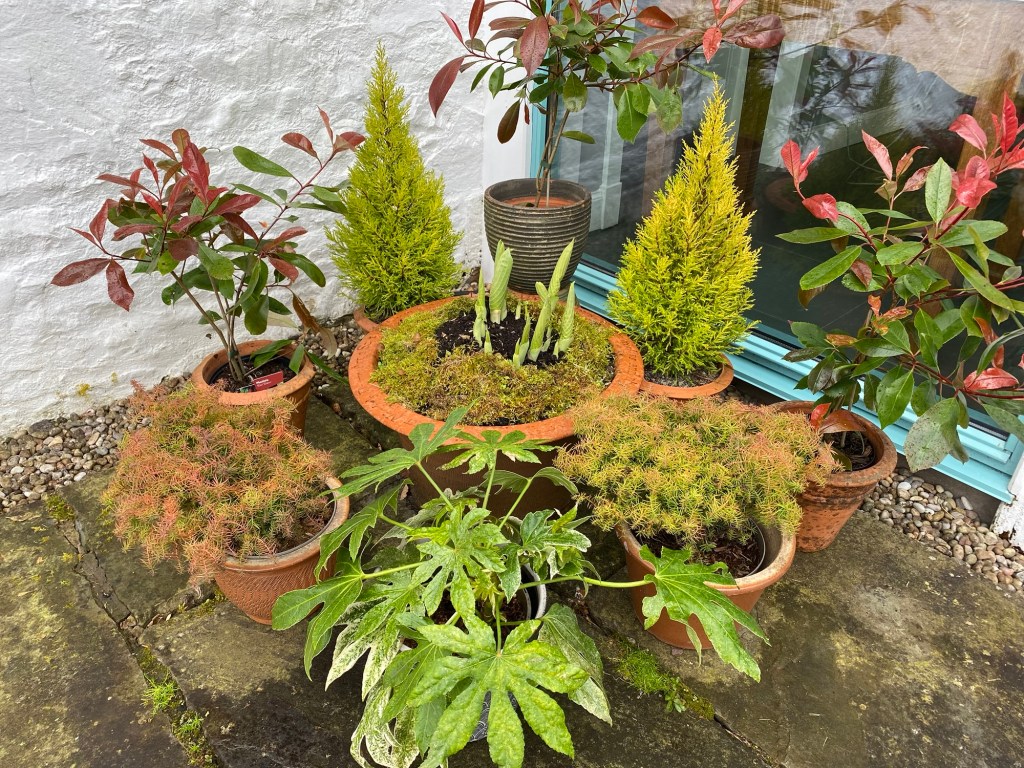
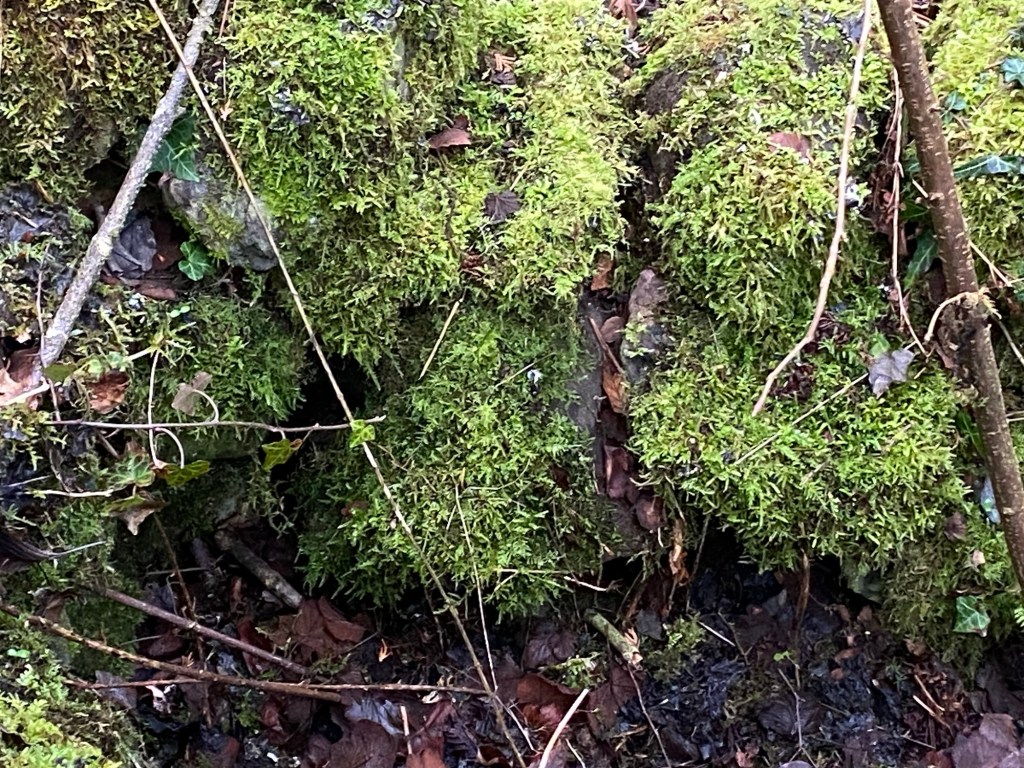
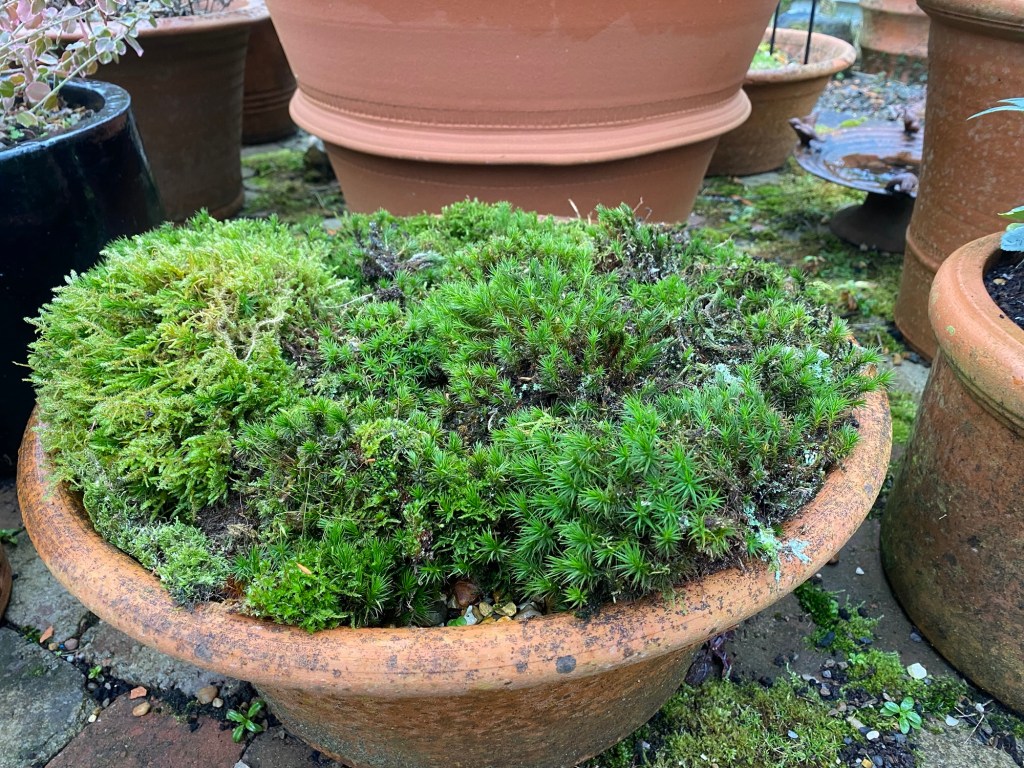
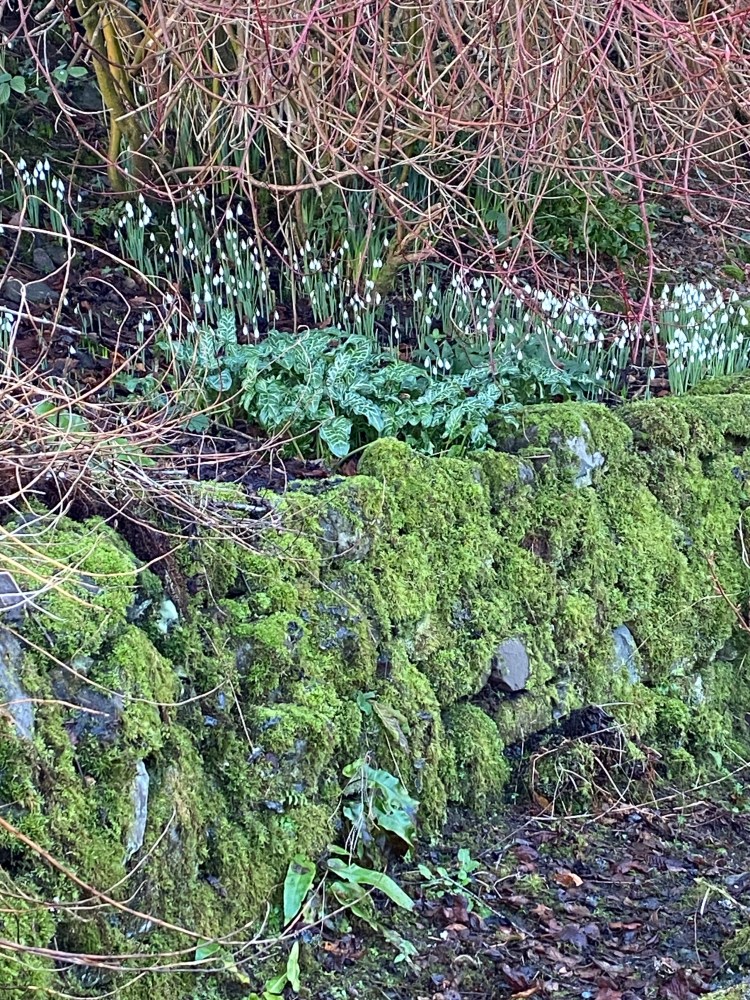
Ubiquitous in a damp climate like ours. Taking many forms from close clinging to pin cushion plump. From slatey grey to deep forest green. Ubiquitous. Largely ignored. Settled and colonising the tops of stone walls. Creeping between the cracks of flagstones. Greening the outside of plant pots.

This year I’ve taken more notice of moss than ever before. I’ve come to understand better its place in the garden, for example in Japan where it has a long tradition, and how in that country, plant centres may stock and sell as many as 20 varieties of named mosses.

Yet in Britain many gardeners see moss as the enemy. ‘For a good lawn, hit the moss hard in the spring’, an ex-military gardener once told me. In our plant centres you might find up to 20 varieties of moss killer.

So what are mosses and why do they produce such conflicting reactions? Mostly they’re defined as non-vascular plants, devoid of roots or vascular tissue, that absorb water and nutrients from the air. More and more it is being understood that these fascinating and varied plants are playing an enormously important role in carbon capture. In the Scottish context most of the action in that space relates to peatland restoration and the fostering of sphagnum moss as a key agent in carbon sequestration. This is an area where my good friends at the Crichton Carbon Centre are extremely active and knowledgeable.

But what about in our own gardens. Can moss serve the same purpose, even on a micro scale? Just as we plant trees in our gardens for environmental reasons, should we be protecting and encouraging our garden mosses? I don’t know the answer to this. But for the last three years there has been no use of moss killer in the Dumfriesshire Garden. One result I noticed immediately in the first year was just how the moss shone bright and green in the winter months, even as the grass it is pushing out looked dull and listless.

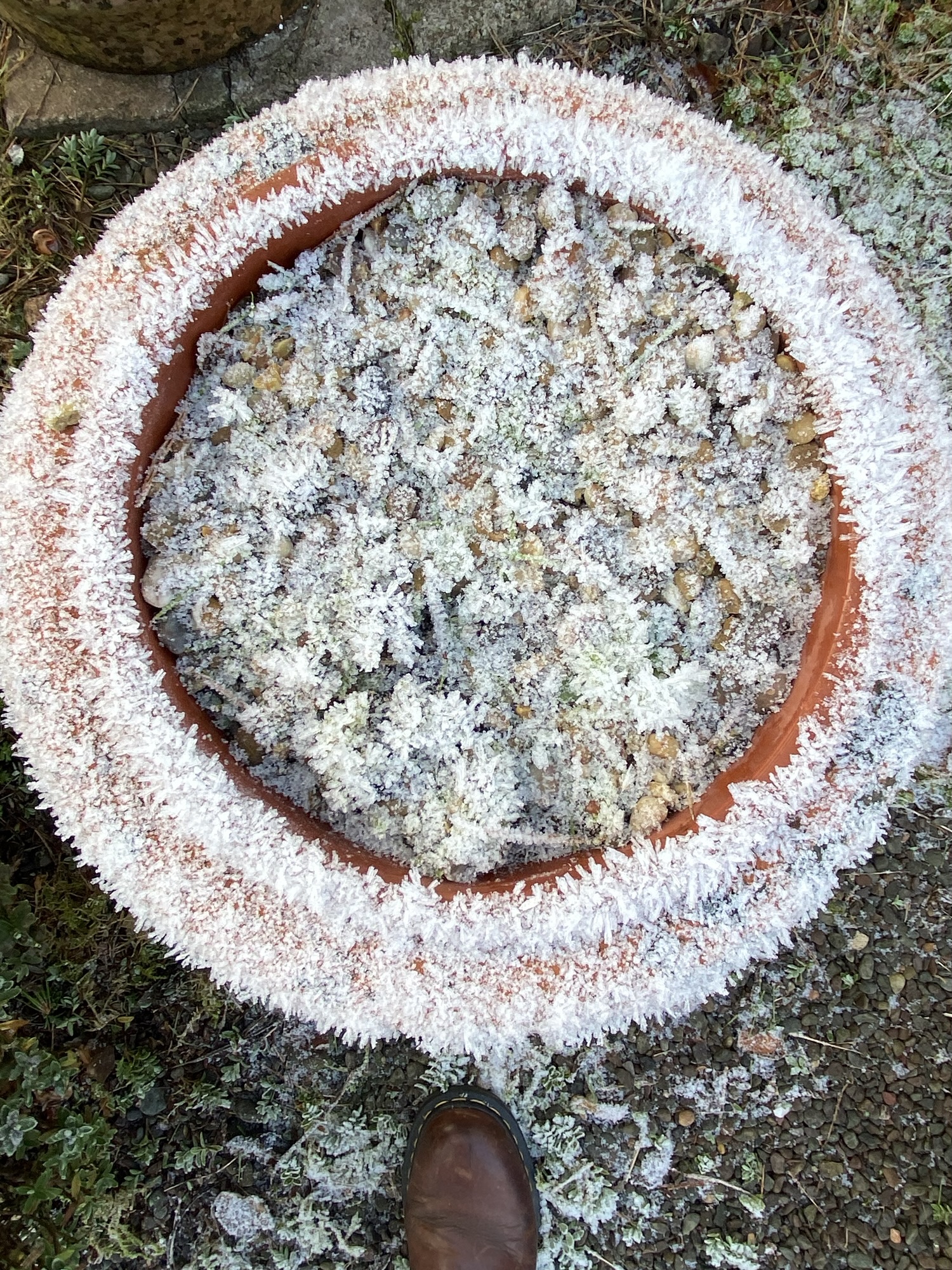
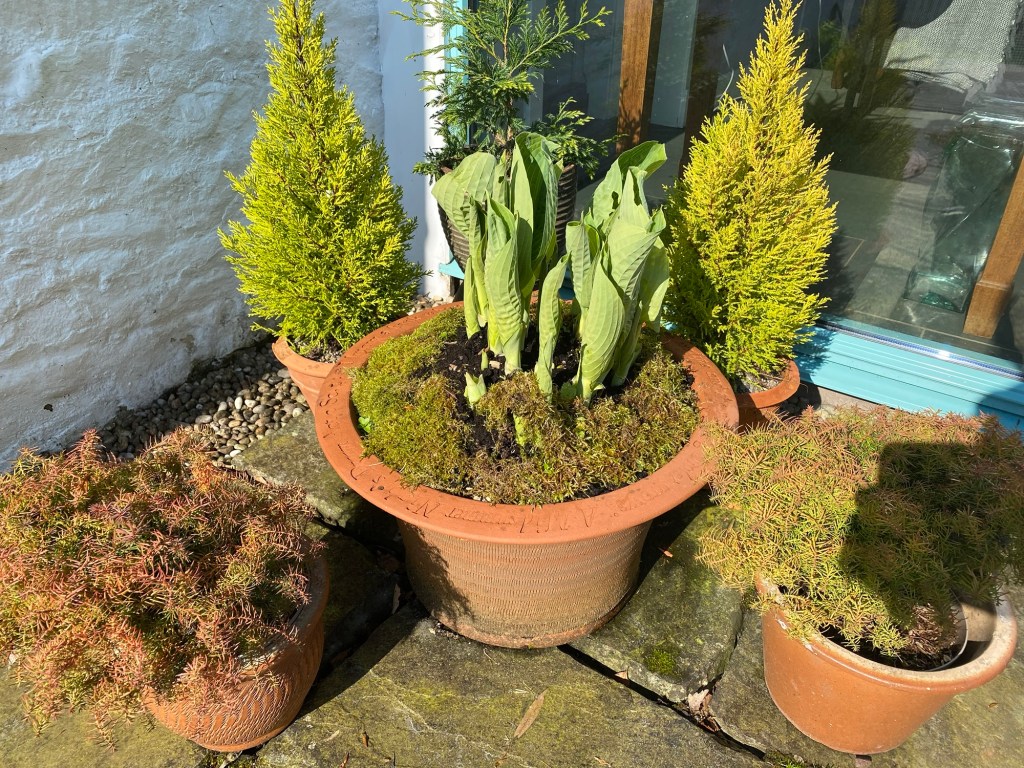
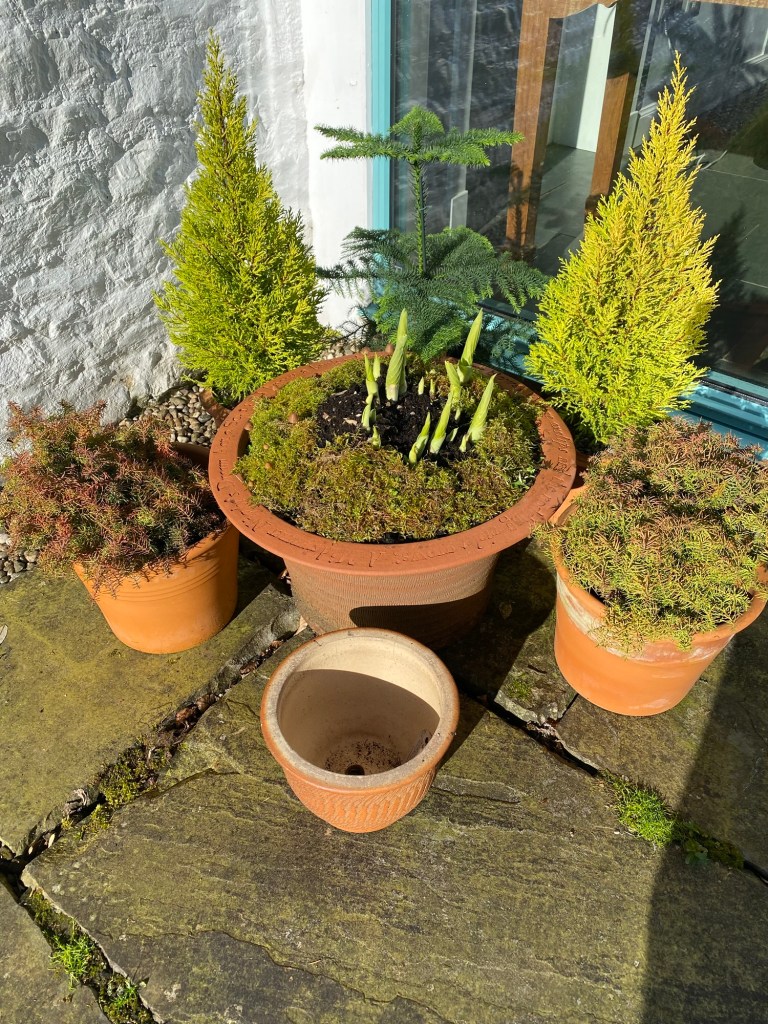
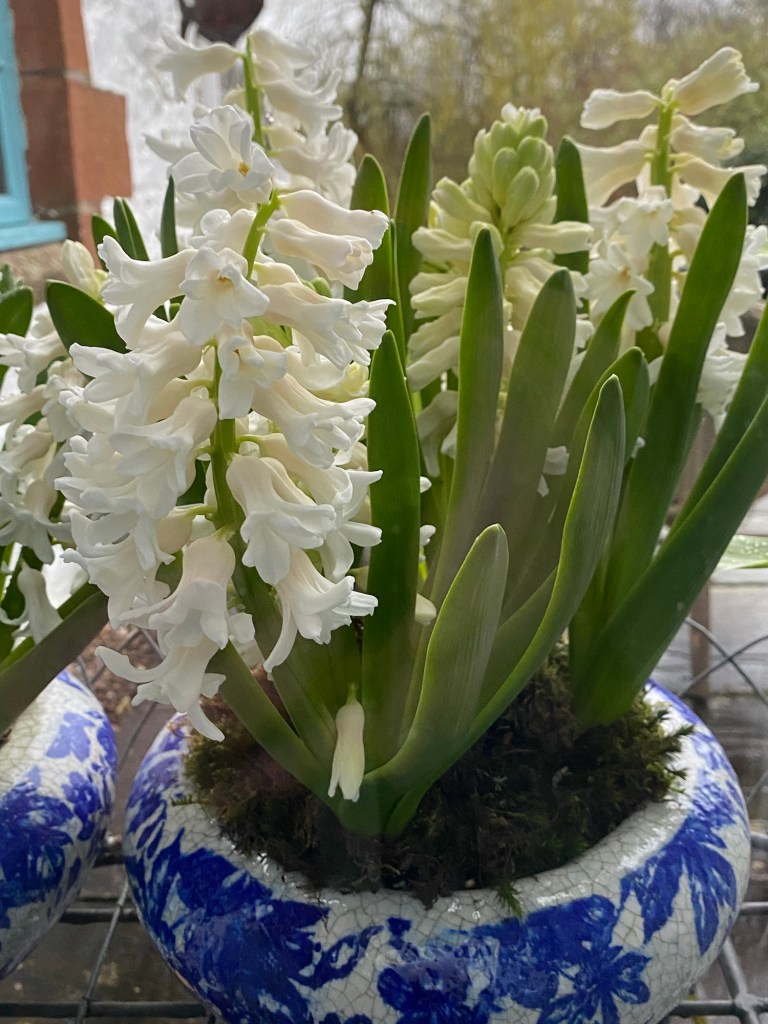
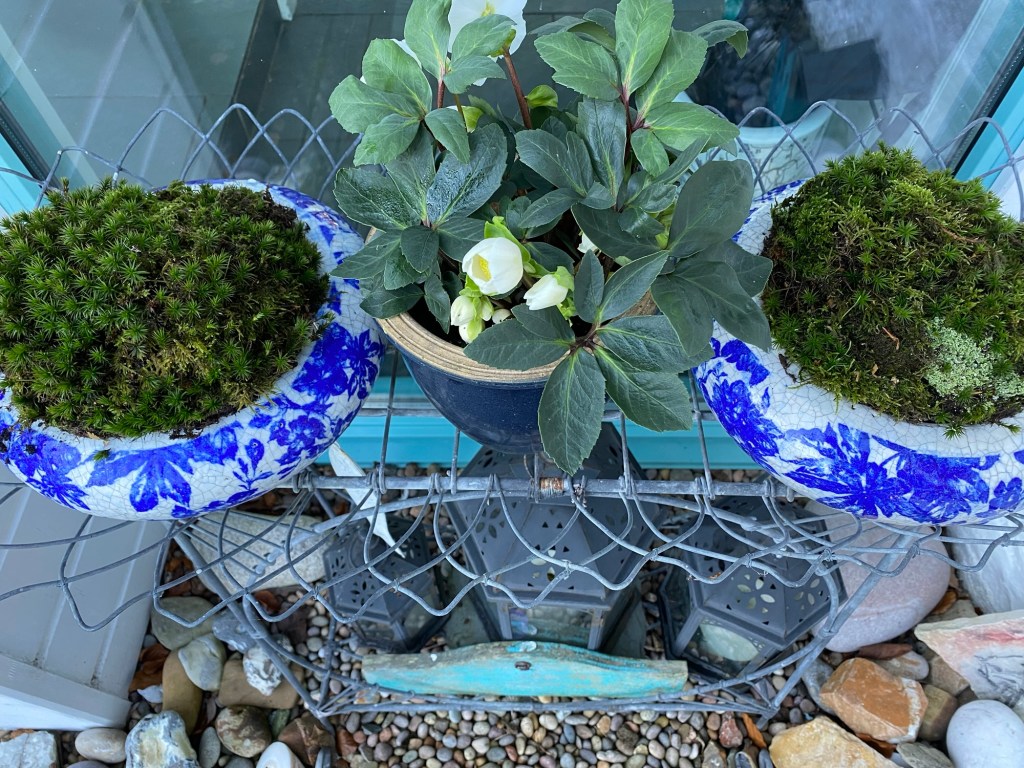
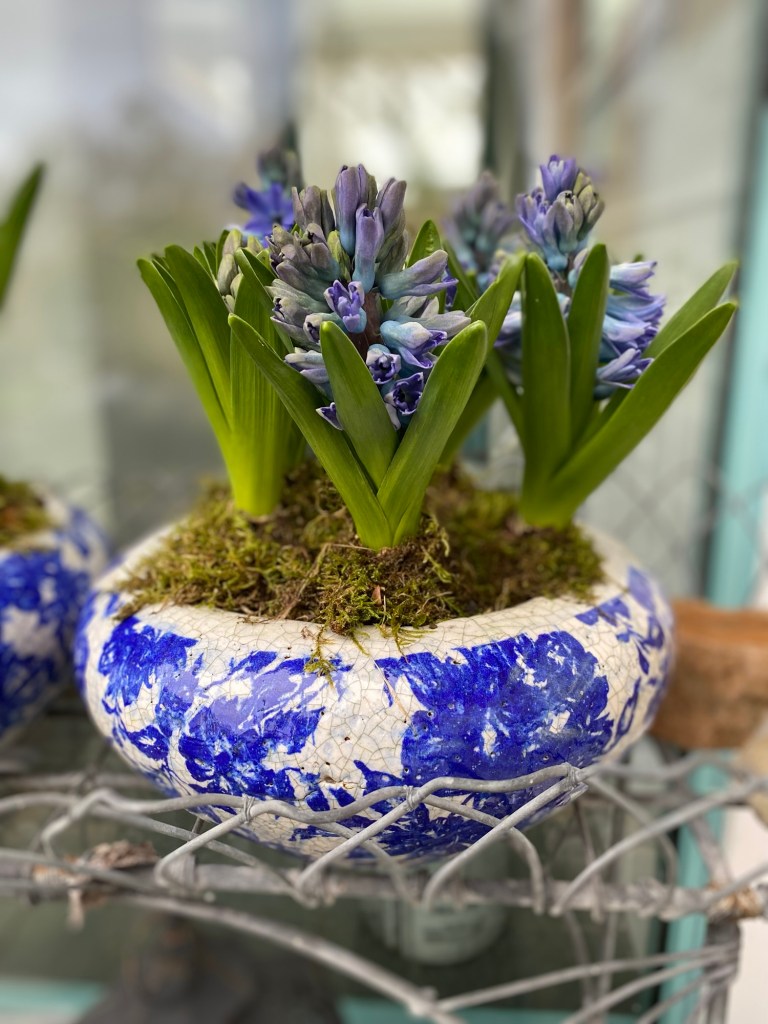
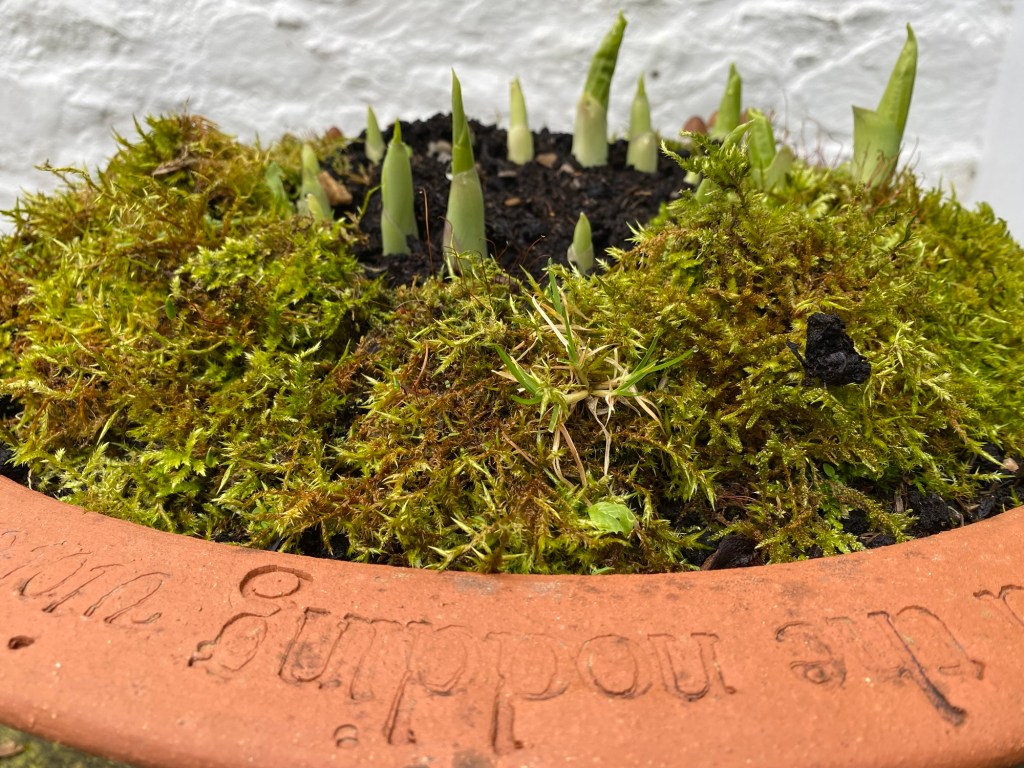
I’m now resolved to learn more about the mosses that live in the garden. I’ve also taken to using them on pots of spring bulbs, where they provide a bit of frost protection and a beautiful backdrop to the emerging plants.

I am very taken by Julian Cotton‘s poetic celebration of moss. We need more of this. Alongside the scientists, conservationists, activists and poets, gardeners too can play their part. It’s quite clear: a moss movement is underway!

The full list of pieces that make up my A-Z in the Dumfriesshire Garden in 2024 can be found here: https://davidgrahamclark.net/a-z-of-the-dumfriesshire-garden-in-2024/

An A-Z of 2024 in the garden: Labyrinth

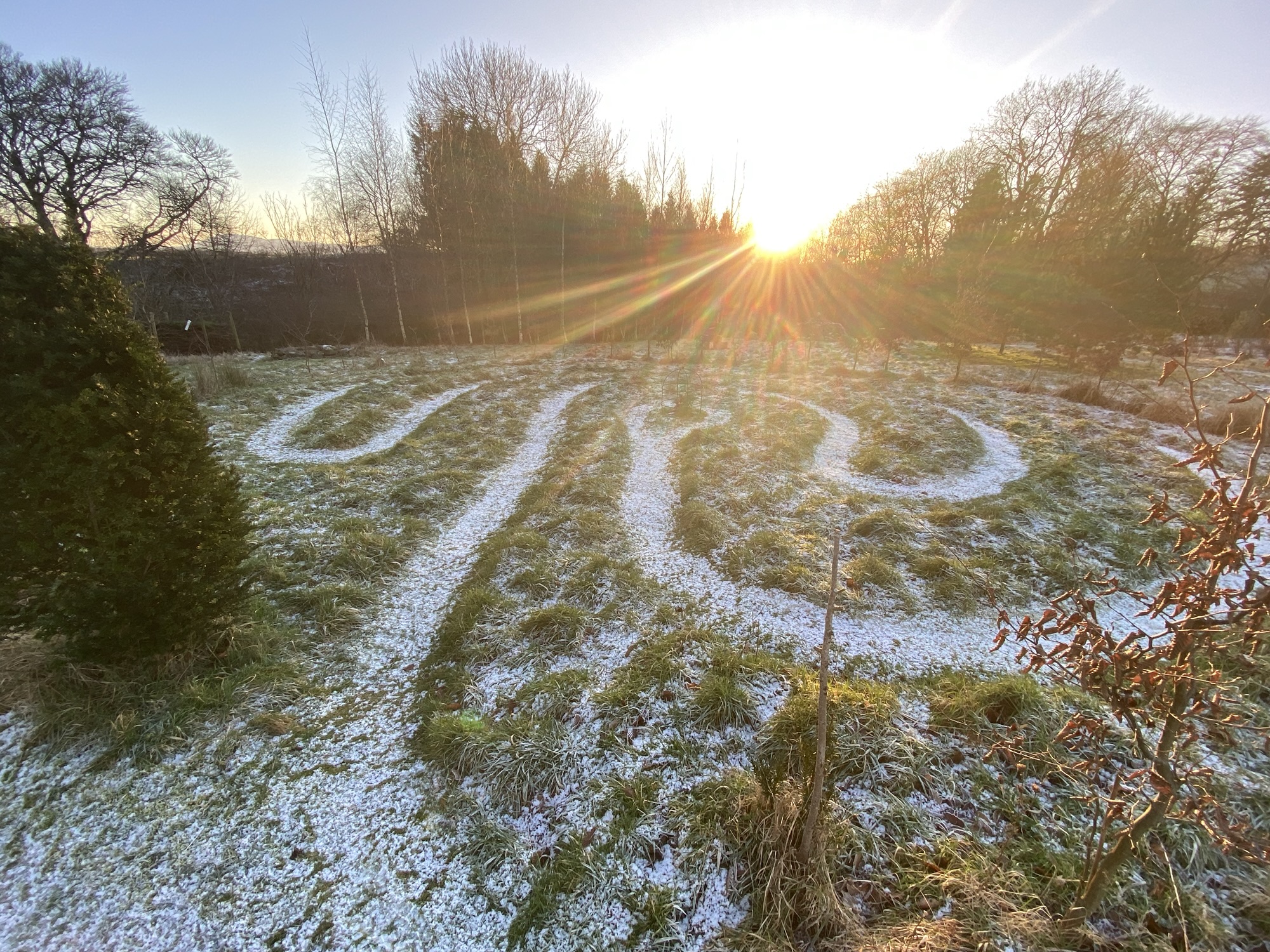
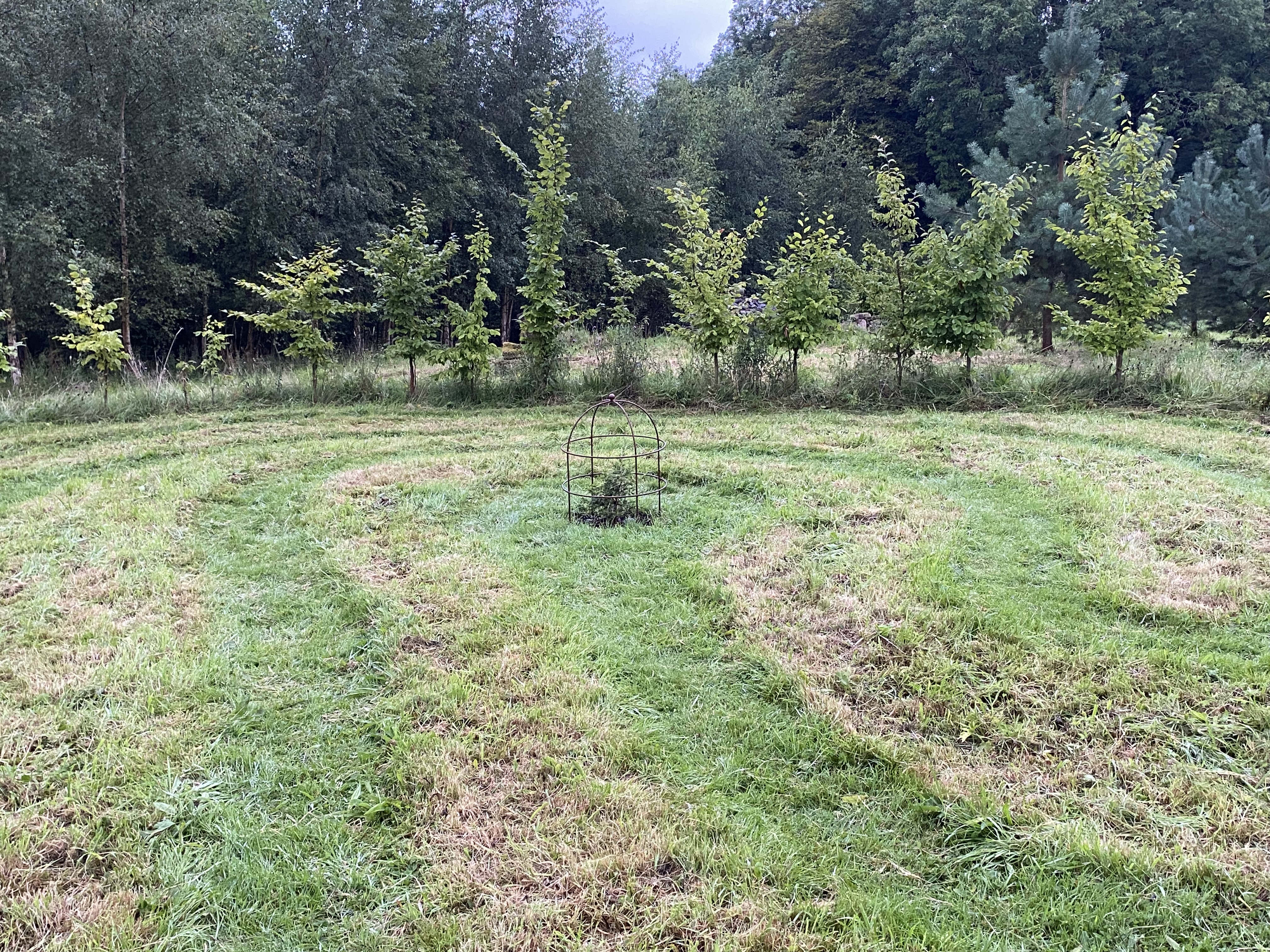
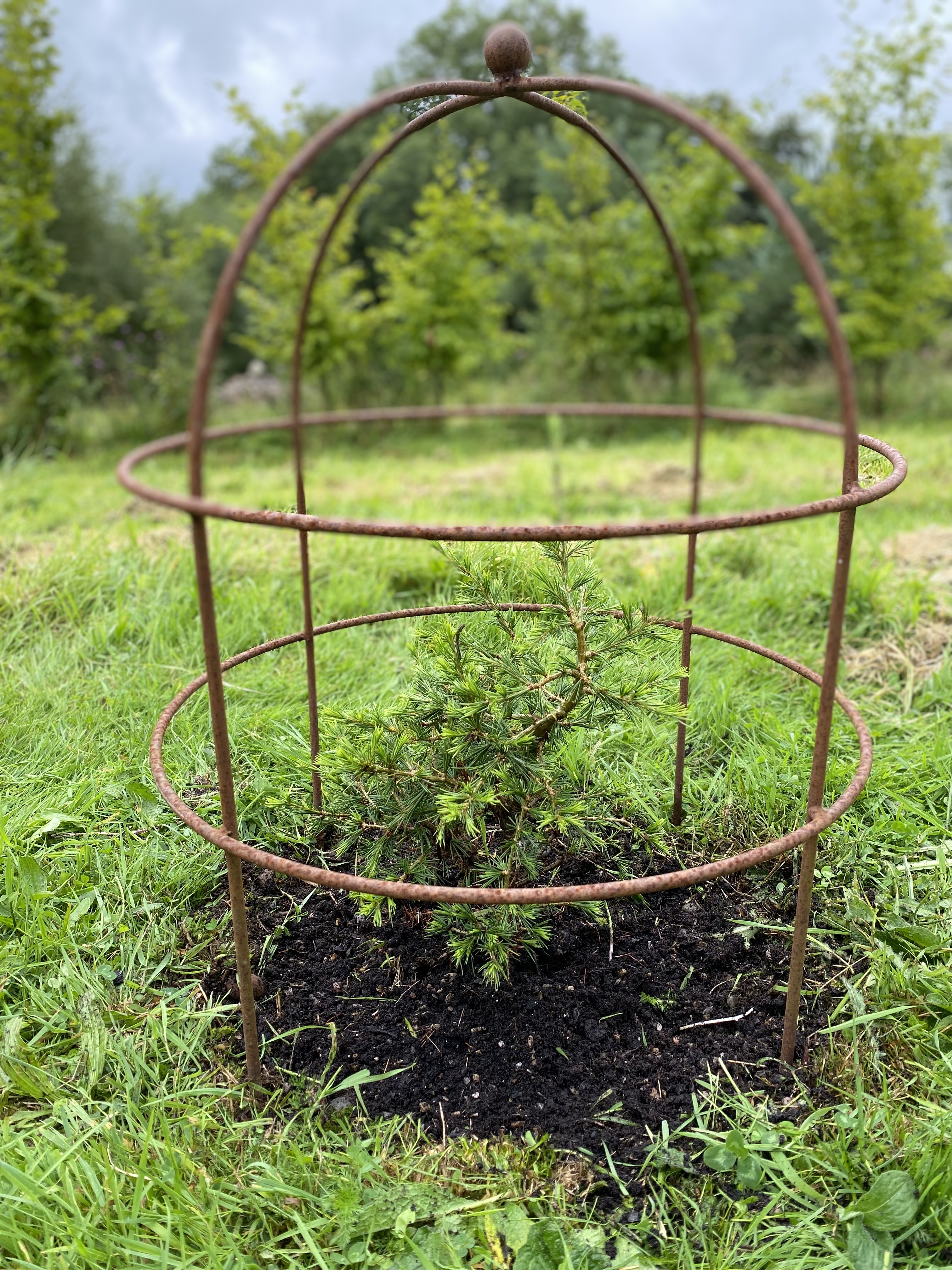
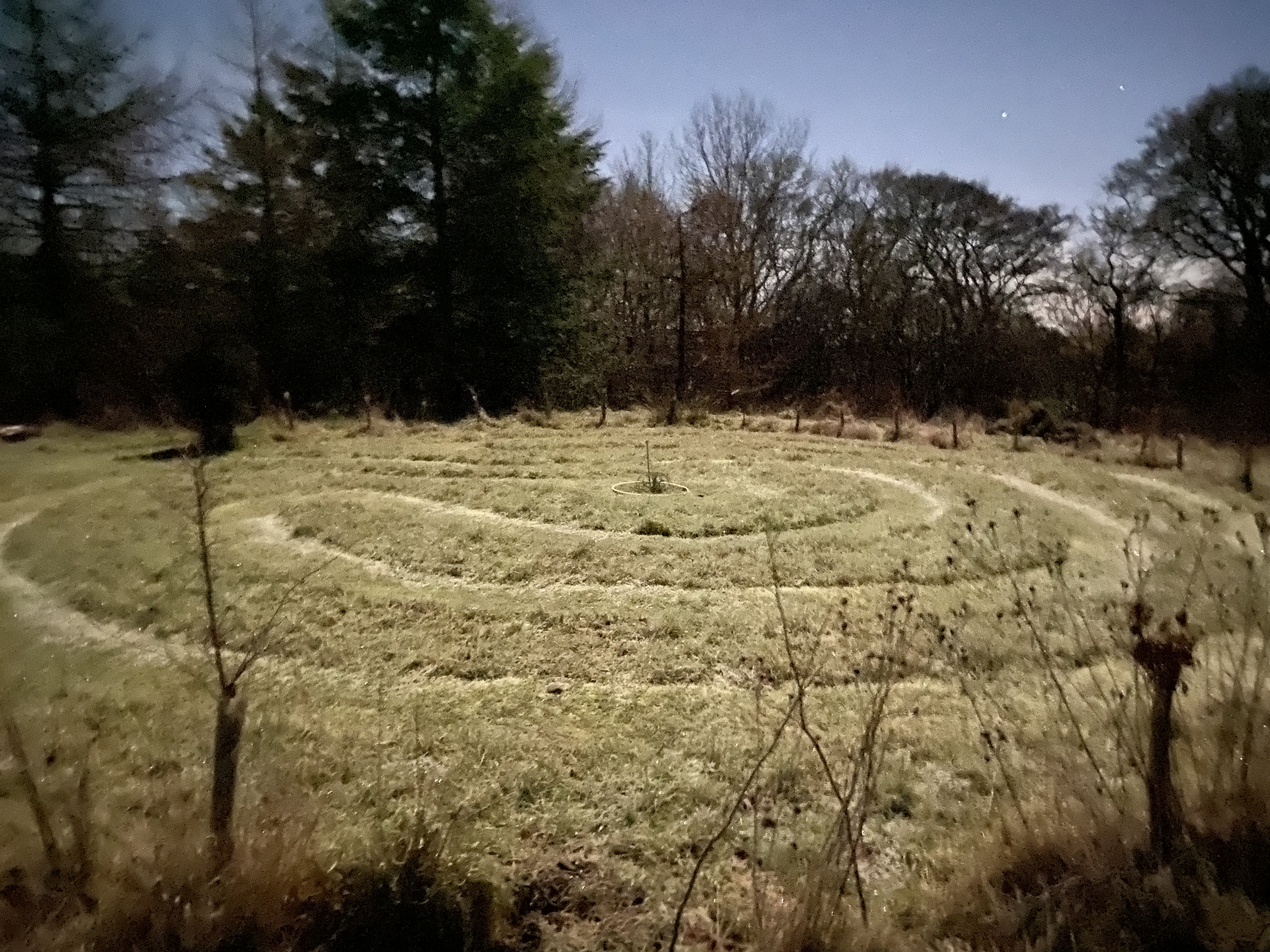
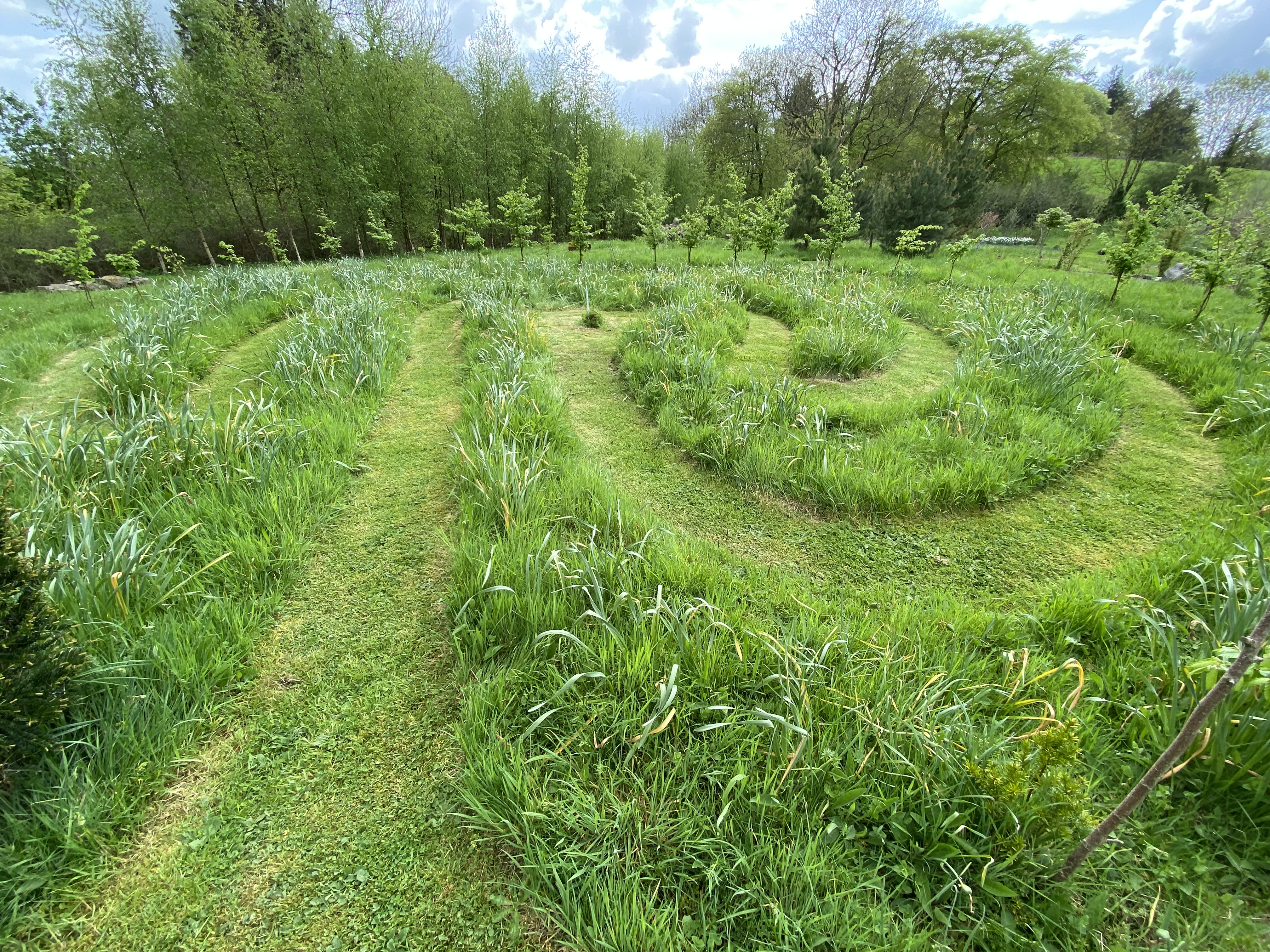
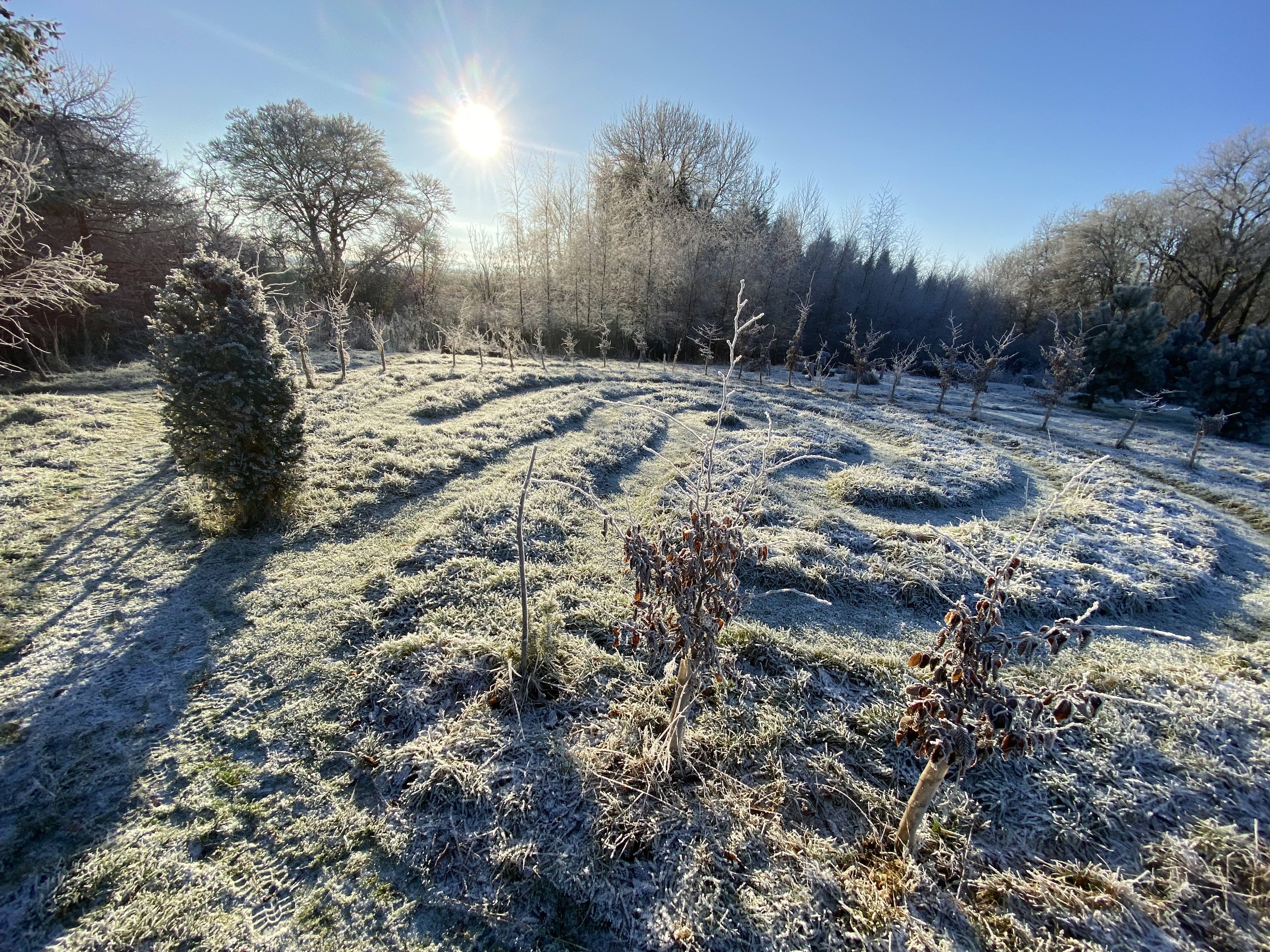
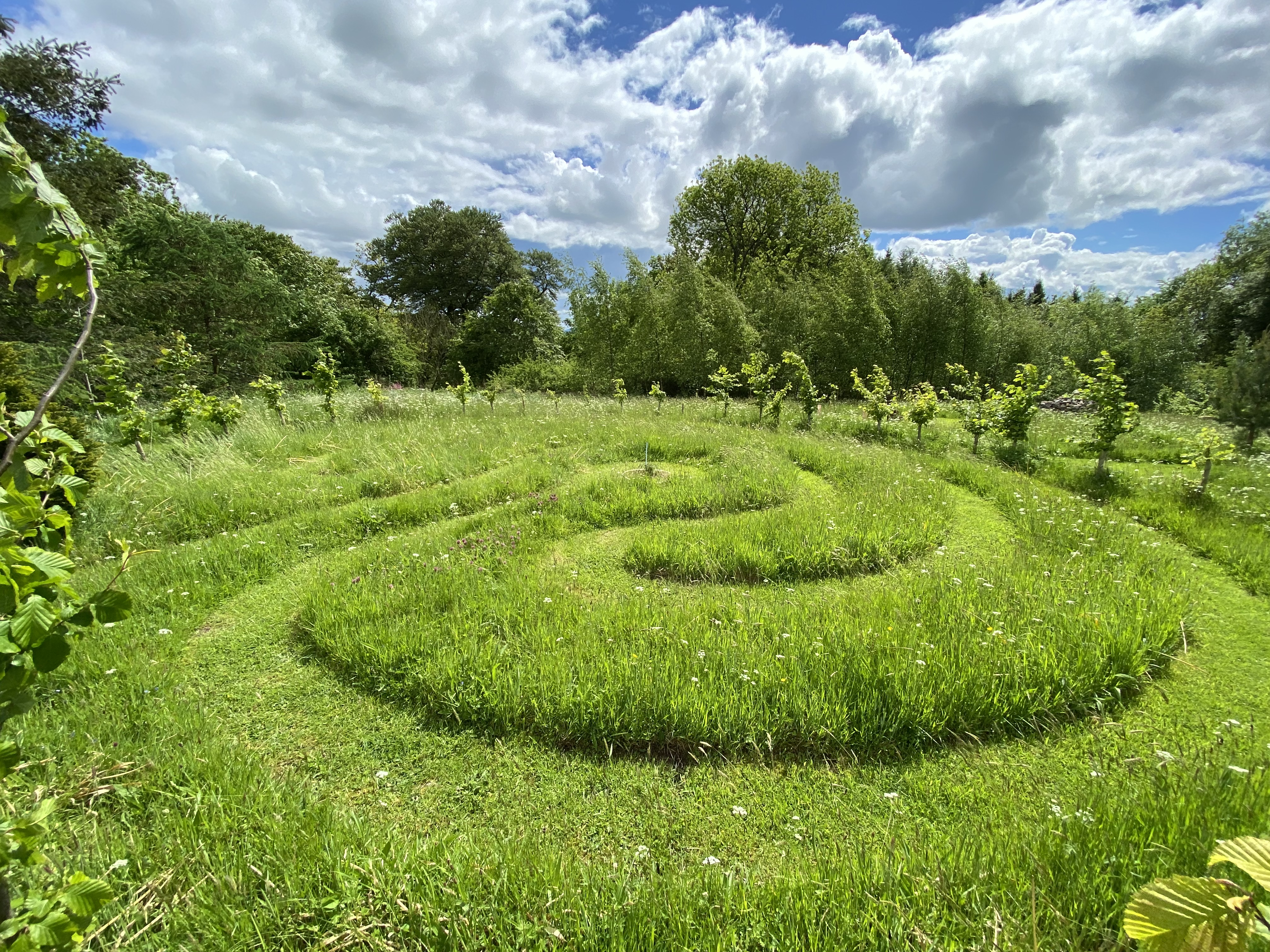
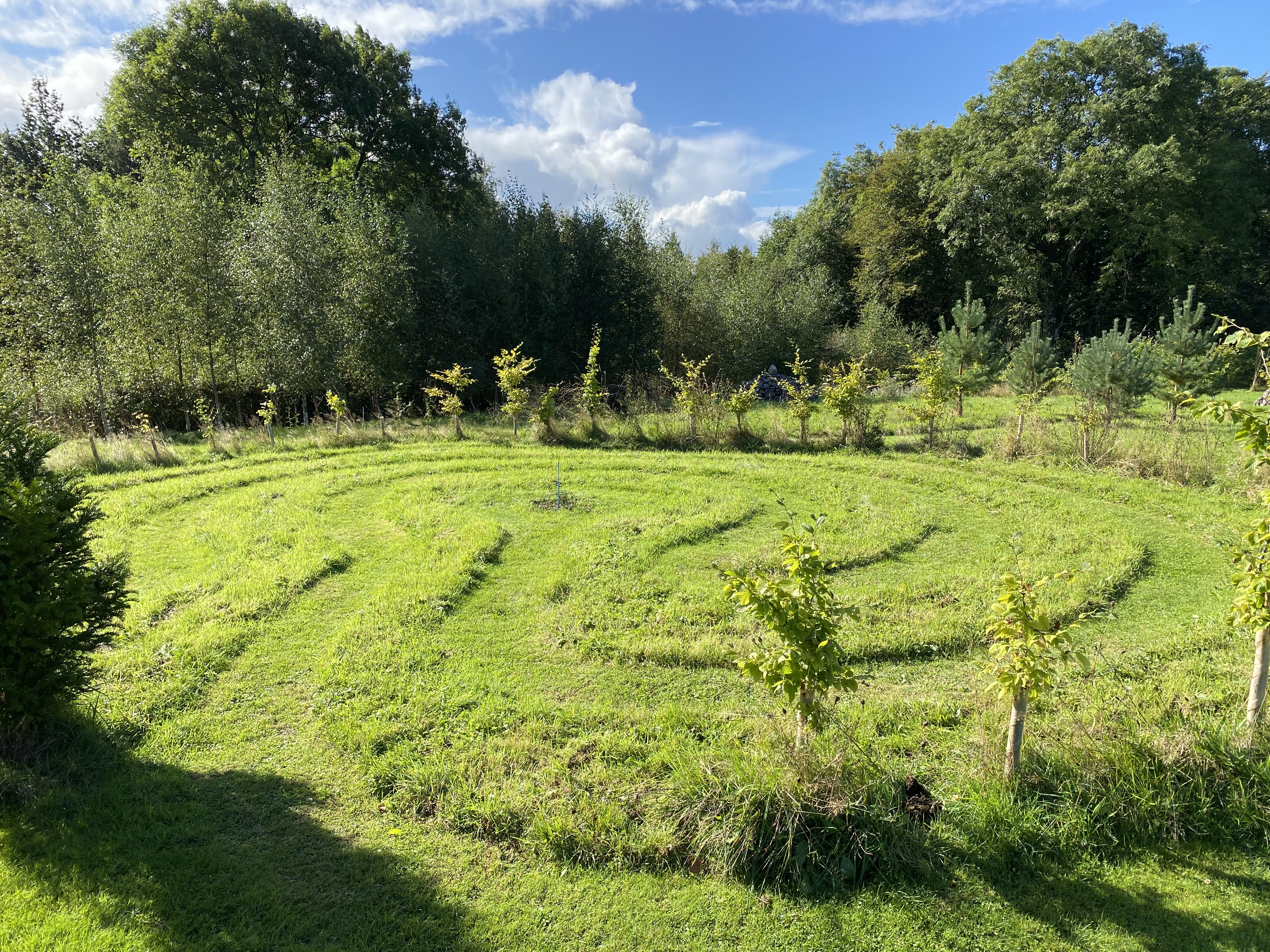
The Dumfriesshire Garden turf labyrinth was first laid out in summer 2020. To commemorate the suffering of those caught up in the Beirut fire that August, I planted a tiny Cedar of Lebanon at its centre. Since then, the simple three circle labyrinth has brought much reward in good times, and consolation in darker moments.

As a living thing, it changes over time and across the seasons. The screen of hornbeams that surrounds it is thickening, albeit mysteriously patchy in a couple of places. The daffodils in the ‘wall’ (the area between the paths) were not so strong in 2024, but still provided a most welcome dash of colour, around late January. This year they were followed by a single cammasia, blown in at some stage from across the arboretum. Suitably encouraged, I scattered more cammasia seed in the wall at the end of the season.

The labyrinth alters in aspect with the light, the weather conditions, and the seasons. Snow and frost only serve to enhance its appeal. Walking the labyrinth can be carried out in daylight and darkness. The depths of winter or high summer are equally suitable. It’s a fitting place to walk, and to stand in its centre, at solstices or days of national and international commemoration. Sceptical at first about the attraction of walking a labyrinth, I have become intrigued by my relationship to it. Some days (not many) I walk past it, not wishing to engage. Most days and nights I leave the dog to his perambulations. Just a few minutes in the labyrinth then ensue, during which, and most of the time, something has fallen into place among the thoughts in my mind.

The Cedar of Lebanon had a growth spurt in 2024. It has emerged from its supporting framework and is ready to reach up and spread out. The tree stands as a lasting reminder of the suffering of others.

The full list of pieces that make up my A-Z in the Dumfriesshire Garden in 2024 can be found here: https://davidgrahamclark.net/a-z-of-the-dumfriesshire-garden-in-2024/

An A-Z of 2024 in the garden: Keeping on top of things

The Dumfriesshire Garden in south west Scotland started as a modest border at the back of a farm building that was under renovation as a home. Paradoxically, it began in the poorest piece of ground imaginable, where a thin layer of soil sat on top of bedrock. Gradually the scope of the garden extended, contained within a lovely bend of the Pennyland Burn. Boggy in one large area, a pond was introduced. Elsewhere, it is post glacially stony, but in some parts, particularly near the burn, a good depth of rich, loamy soil can be found. After nearly 20 years it was radically extended to include an adjacent field of tough pasture, now developing as an arboretum. The whole extent is around three acres, maybe a little more. In recent years on this blog I have written about the garden extensively, and also produced an open access book describing its annual cycle. The whole Dumfriesshire Garden project is an endeavour of amateurish enthusiasm, laced with a good measure of insights from horticulturalists, as well as the benefits of reading and of gardening programmes on TV and radio.

I have already confessed that the garden has seven distinct borders that somehow crept up on me. It also contains a fair amount of hedging and clipped evergreens, a greenhouse, an allotment of raised beds, a labyrinth and an orchard. Over time I have reduced the amount of grass that needs assiduous mowing in summer, and modified our path and grass management in the arboretum. I’ve added two dead hedges – excellent for woody prunings – and hope to create more: they are much loved by wrens as a nesting site. We also have three hefty compost bins, worked in rotation for the vegetable patch. Dogwoods, willows and hazel all get cut back or thinned on an annual basis.

The garden has evolved over almost three decades, incrementally and empirically. There is no blueprint or design. But as I get older I feel conflicted. The garden gives profound daily pleasure and opportunities for deep reflection, as well as for new ideas to emerge. If I try to curb my enthusiasm for further developments, I am usually unsuccessful. At the same time I worry that it has become a rather weighty responsibility, especially around late June and early July when everything seems to be growing apace, including the grass and the weeds. Then I fret that the garden is getting away from me. If it has evolved out of hubris, perhaps it now threatens to become a liability. Then as summer growth slows, I breathe a sigh of relief and tell myself that we can keep going for a while yet.

In between these extremes I think of mitigations. If the grass management in the arboretum becomes a chore, it can be left to nature. The trees are now well established, the paths between them can be maintained by walking rather than mowing. In the big border (my biggest worry) where this year bindweed and sticky willy have been getting a serious hold and where some herbaceous plants have been knocked back from their peak of a few years ago by winter frosts, another mitigation is under consideration. Here I might plant more trees and evergreen shrubs. If some of the latter could be clipped into shapes, so much the better.

The Dumfriesshire Garden as we now see it has only been made possible by three people who over the years have helped make it what it is .

The late DP laboured valiantly to landscape the pond, wrestle the field grass near the house into shining lawns and to build stone walls and terraces. From him, the baton went to AN: he built raised beds and compost bins, ploughed and fenced the big border into existence, took pride in his striped mowing and when the arboretum began, found and relocated huge rocks to go amidst some of the tree circles. Then came JG, she works in the garden every Tuesday morning, all year round, manages all the mowing, does all the arboreal pruning, fills dead hedges, weeds and tidies the winter borders, and strims once a year through the silver birches and pines, preparing the ground for the return of the spring bulbs. To these three amazing people I owe huge thanks and gratitude for their individual and collective contributions to the Dumfriesshire Garden. It has been, and continues to be, a shared endeavour.

So there we have it. Keeping on top of things is important in the garden, but equally the garden needs to find its own way, and as gardeners, we are guided by that as much as our hand guides the garden.

The full list of pieces that make up my A-Z in the Dumfriesshire Garden in 2024 can be found here: https://davidgrahamclark.net/a-z-of-the-dumfriesshire-garden-in-2024/

An A-Z of 2024 in the garden: Jack in the Pulpit

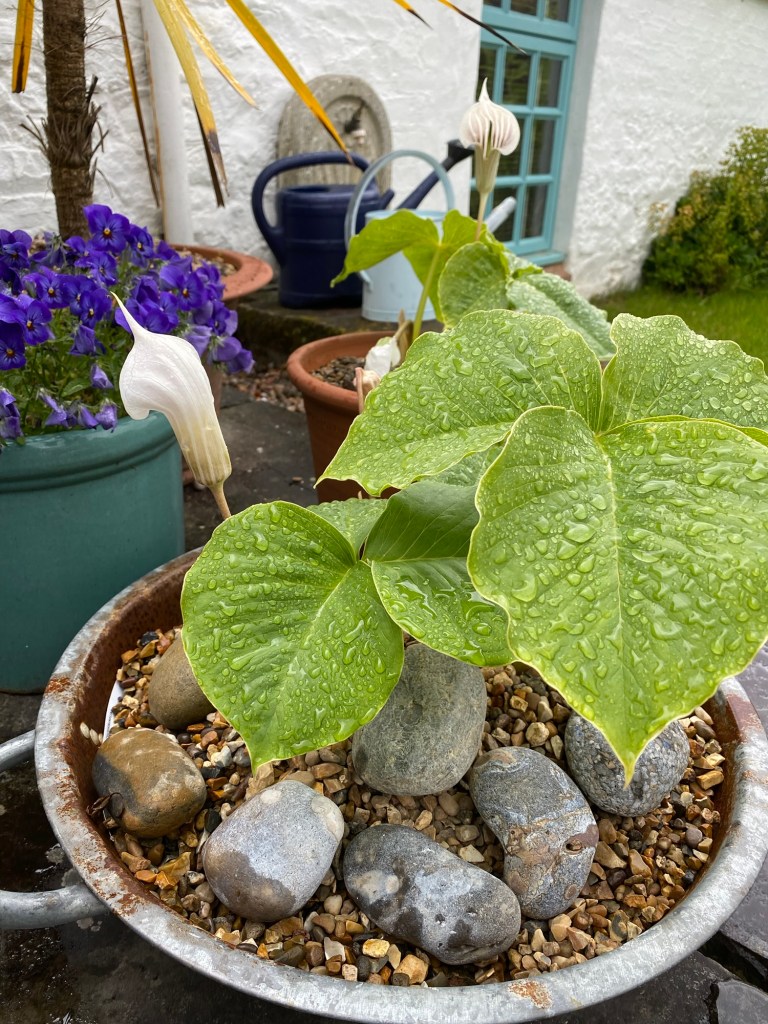
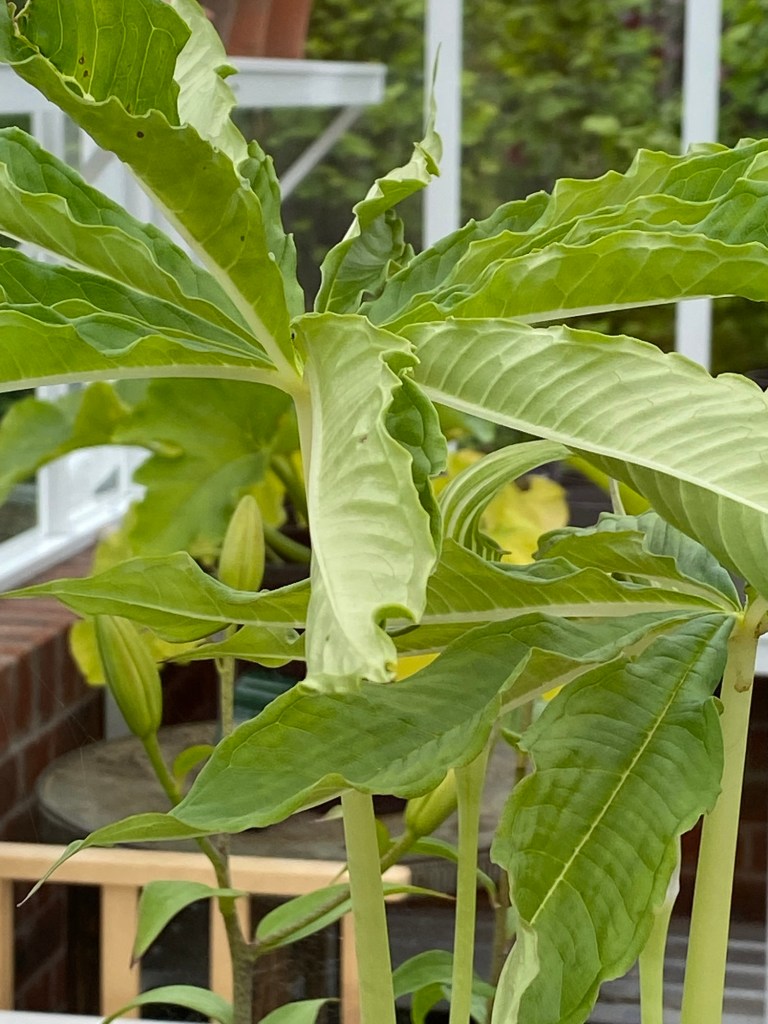
When I first acquired my greenhouse a few years ago, I was soon drawn into the pleasure of growing what I considered to be more exotic plants, under glass. The first of these was Arisaema Candidissimum, with which I had considerable success, as can be seen here in the top image.

I came across a knowledgeable blog post about Arisaema Candidissimum – in which it’s explained that the plant was first introduced into Britain from Yunnan (the most south-western province in China) by George Forrest, in 1914. Well done him, I thought as I set out to cultivate it in the most south-western region of Scotland, Dumfries and Galloway – though we are not so close as Yunnan to the Tropic of Cancer.

I also discovered that this form of Arisaema has a variety of everyday names including Chinese Cobra Lily and Striped Cobra Lily. But my favourite variant is the jaunty and faintly irreverent, Jack in the Pulpit.

Growing in confidence, after flowering I decided to move my three plants from the greenhouse to an old salt glazed agricultural trough, fairly close to the house. I reasoned, correctly, that they may not get through the winter in an unheated greenhouse. With hindsight, I should have planted out my specimens in a damp and dappled-shade border, where, covered with leaf mould they might better escape the depredations of frost.

The following spring (2023) no plants appeared in the trough and I assumed they were a lost cause. In the months that followed, I failed to get round to clearing out and re-planting. Just as well. This year (2024) on the 29th of June, I was completely taken by surprise one morning to see that Jack had reappeared, his lovely waxen flower-bearing spadix surrounded by a delicately patterned spathe. As you can see from the picture below, he was growing among another delightfully named wild plant – Herb Robert.

I think next year I will start some Arisaema bulbs in the greenhouse and when they have flowered, introduce them to that leafy border, among the meconopsis and primulas. Who knows, those late spring favourites might prove a welcoming congregation to the exotic Jack in the Pulpit!

The full list of pieces that make up my A-Z in the Dumfriesshire Garden in 2024 can be found here: https://davidgrahamclark.net/a-z-of-the-dumfriesshire-garden-in-2024/

An A-Z of 2024 in the garden: Irises

‘Beware of gardeners bearing plants!’ I was once told. Yet that experience more or less accounts for the largest group of irises in the Dumfriesshire Garden, and none the worse for that in my view.
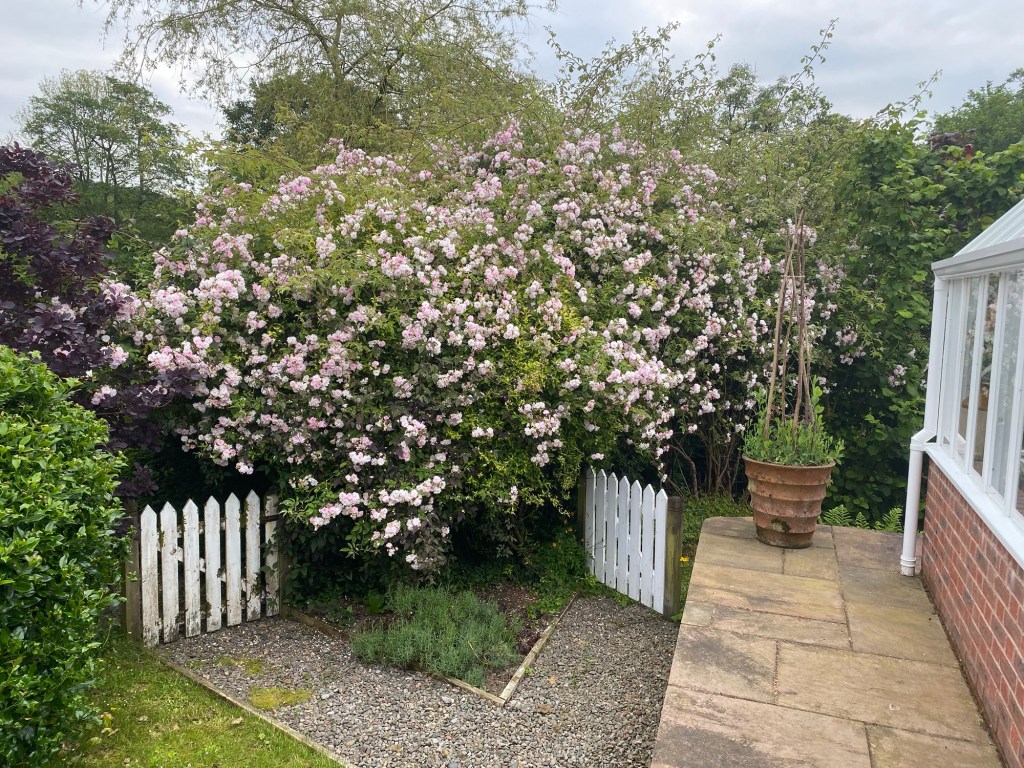
The source of the Iris Siberica seen here was the contents of a couple of carrier bags, plants just past flowering and looking for a home. I took them in, found they did well in our conditions, and then gradually spread them out into what is now a dozen or so clumps around the garden. These groups flower in sequence, depending on their aspect and how much sun they get, and to me the irises are clear evidence that Spring is in high gear. Their grassy foliage and branched stems make them situate well in semi-naturalised settings, where the borders are mature and things are flowing freely. A low-budget give away they may have been, but that doesn’t diminish the pleasure they bring.

The beautiful Japanese water iris, seen below, is a different story. It was spotted in the ‘damp loving’ section of one of my favourite plant nurseries. I bought three and 2024 has been their first year in flower. Shorter stemmed, longer flowering and altogether more exotic than Siberica, they certainly looks good beside a chocolatey ligularia.

The plants in our gardens come to us by various routes. My third iris example is the humble, native flag. This one came of its own volition. I created a pond, it soon appeared and took up residence, spreading its rhizomes in the watery shallows.

Whichever way these storied irises were acquired, they are all extremely welcome aspects of the spring garden.

The full list of pieces that make up my A-Z in the Dumfriesshire Garden in 2024 can be found here: https://davidgrahamclark.net/a-z-of-the-dumfriesshire-garden-in-2024/

An A-Z of 2024 in the garden: Hydrangeas

In contrast to other aspects of the Dumfriesshire Garden in 2024, it’s been really a good year for hydrangeas.

I particularly like the hydrangea flowers when they are first appearing, especially the green-white paniculatas. And the lace-caps. But incredibly long-flowering plants that they are, hydrangeas can also a delight as they subtly gain or lose colour, or even fade to papery elegance.

Early in the season this year I bought some young specimens in pots and had them near the house. A bit unseasonal maybe, but a cheery splash of interest just outside the window. Later I planted them in the garden and they seemed to settle and put on growth. The question is whether they will flower. Over the years I’ve had quite a few vigorous and healthy hydrangeas that have yet to produce blooms. I’m not sure if an old gardener’s remedy is efficacious: a rice pudding spread round the roots like a mulch! It could be tried I suppose.

The rather gaudy specimen shown here below was a single flower this year on a plant that had not bloomed for years, and had otherwise been admired for its foliage alone. Overly bright perhaps, it was still very welcome in 2024 – all in all, quite a good year for these stalwart plants.

The full list of pieces that make up my A-Z in the Dumfriesshire Garden in 2024 can be found here: https://davidgrahamclark.net/a-z-of-the-dumfriesshire-garden-in-2024/

An A-Z of 2024 in the garden: Greenhouse

It was almost a second hand camper van, back in 2020. I was very tempted. Then reason kicked in. In all my years of gardening enjoyment, in various locations, I had never had my own greenhouse. Rationality prevailed and I chose daily enjoyment and utility over occasional camping breaks. It was undoubtedly the right decision. I have been totally amazed at the pleasure and productivity that has ensued in the intervening years: from a greenhouse.
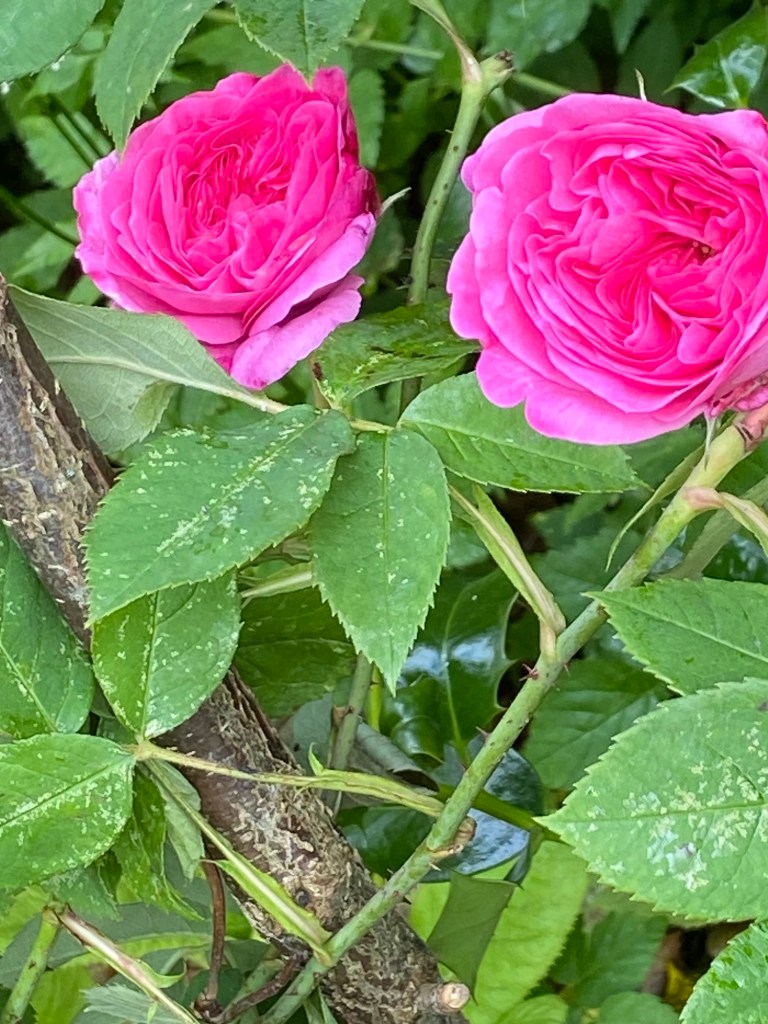
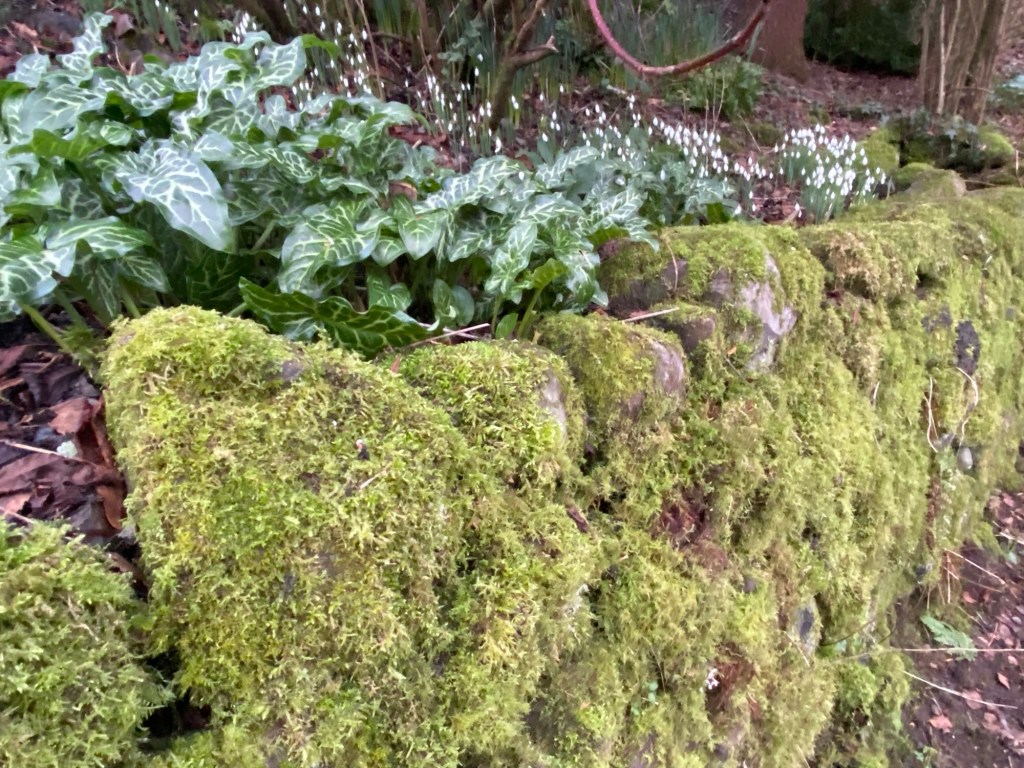
True, there was some labour and expense in preparing the ground works, and building the brick base (we chose a pattern called Flemish bond). When the folks arrived for the installation there was also the anxiety (completely needless as it turned out) about whether the structure would fit on the base. Since then it has been plain sailing, and lots of fun.

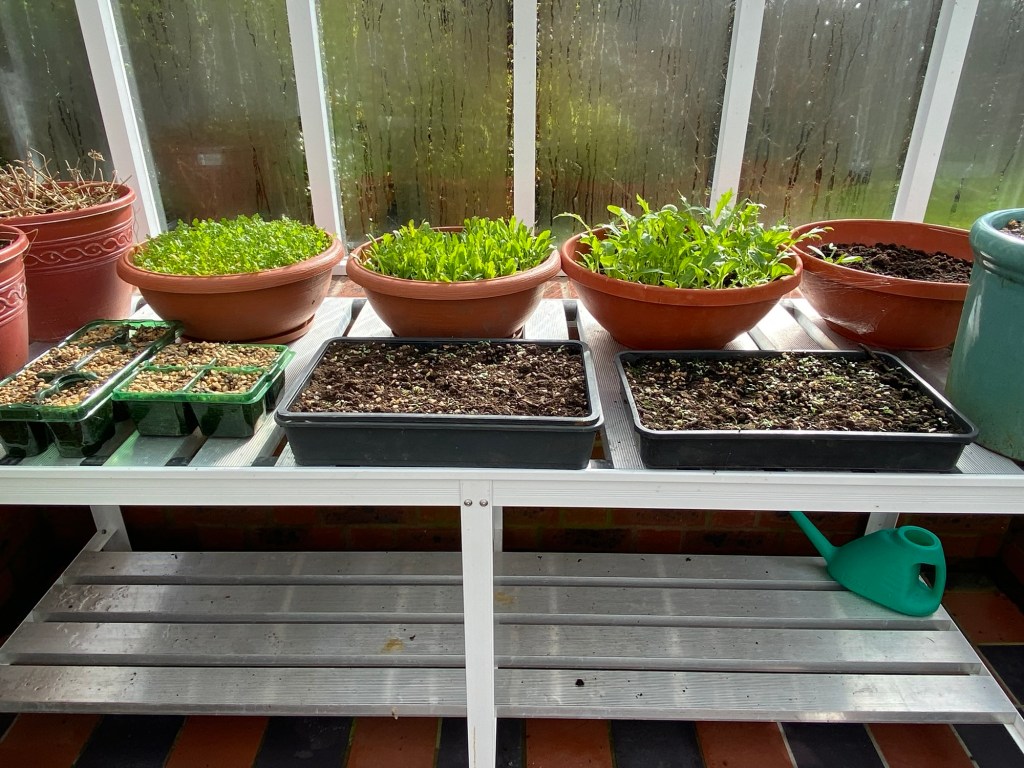
The greenhouse has many functions and is hugely effective in extending the growing season. Depending on conditions, I start in early March sowing small batches of mixed salads, radishes and ‘micro veg’. I also try some early herbs, especially parsley. I’ve found the round pots made for hanging baskets are good for all of this. Then I move on to wooden boxes for spinach, ‘pick and come again’ salads and a few courgettes. As the salads fade by late spring I make sowings of hearting lettuces that will be planted out in the vegetable garden from late July. I’ve also found that the pick and come again plant out well in the early summer. As the weather warms up I make regular sowing under glass of my two favourite herbs: dill and coriander. In the autumn I repeat the practice for early spring. This year was such a success that I had bowls of lovely ‘bistro’ salads right through to November.

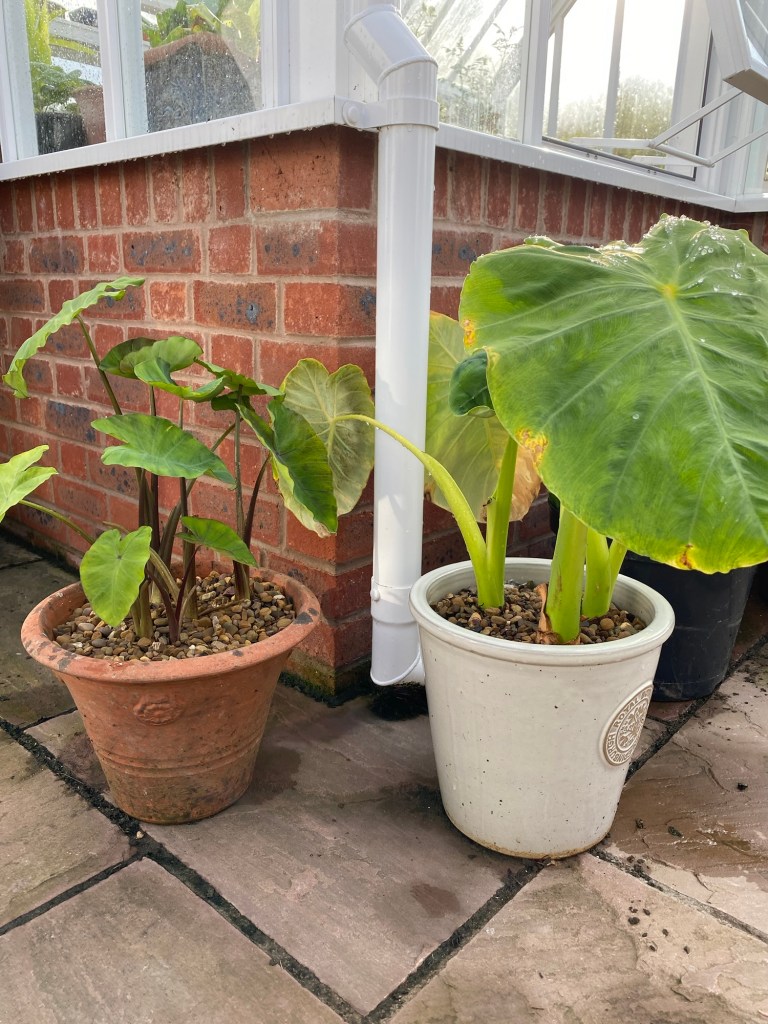
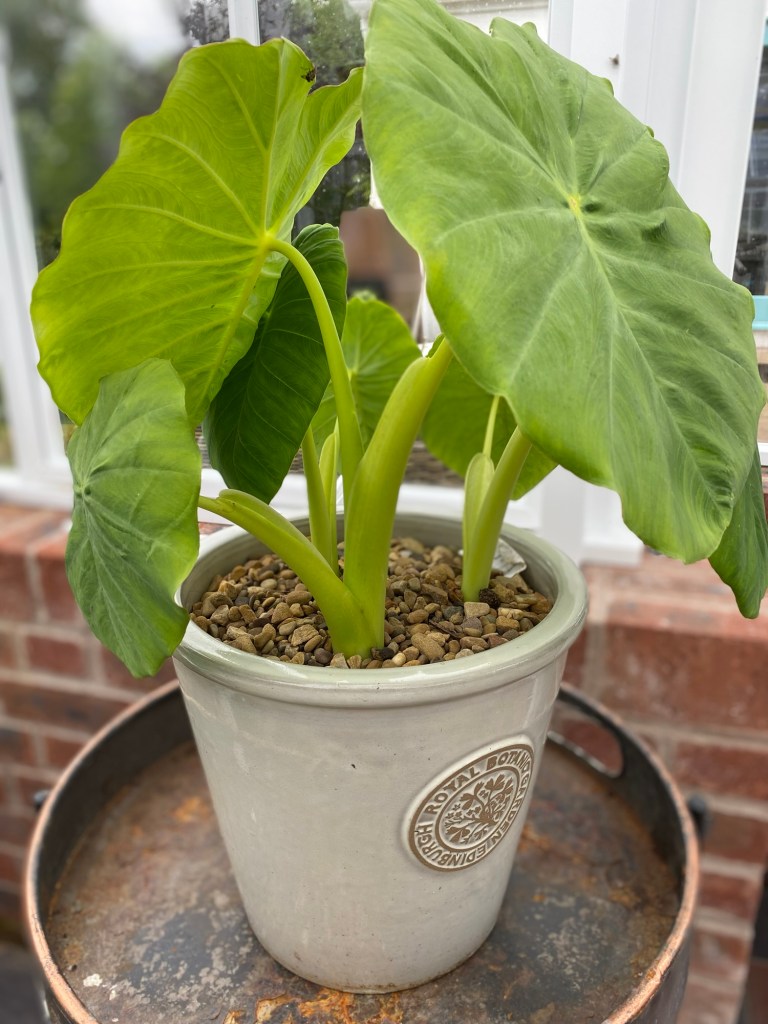
The greenhouse is also the place for bringing on spring bulbs in pots, as well as some of the larger and more exotic decorative plants that can be quite tender, such as colocasia and pineapple lilies. Likewise small bare rooted herbaceous plants and flowering shrubs. It’s also the place for sowings of cosmos, lupin and nasturtium.

Of course there can be issues. Greenhouse grown tomatoes are tasty but need a lot of space and bother. Largely unheated, sudden frosts can flatten tender new produce in the greenhouse. If subject to frost, over-wintered exotic bulbs can fail to re-appear and are revealed as a sludgy mess when the pots are emptied out (I now prefer the risk of planting out in the borders). There is also the fact that in summer the greenhouse is home to a lot of buzzing biodiversity.

The hidden bonus of the greenhouse however, and one I hadn’t much considered in advance, is that when the months of peak production are over and the place has had a thoroughly good clean out, then it becomes a perfect winter garden. Out go the seed trays, the wooden boxes and the salad bowls. In come a wicker sofa, side tables, and a few decorative lights. We now have a freestanding conservatory , decorated with things like Norfolk Island Pine, Fatsias, and Cordyline. With a cup of coffee and a notebook, it’s the perfect place to contemplate next year in the garden. Whatever the details of the plan, I’m pretty sure the greenhouse will figure all year in the daily routine. Oh and by the way – I’ve never missed the camper van.

The full list of pieces that make up my A-Z in the Dumfriesshire Garden in 2024 can be found here: https://davidgrahamclark.net/a-z-of-the-dumfriesshire-garden-in-2024/