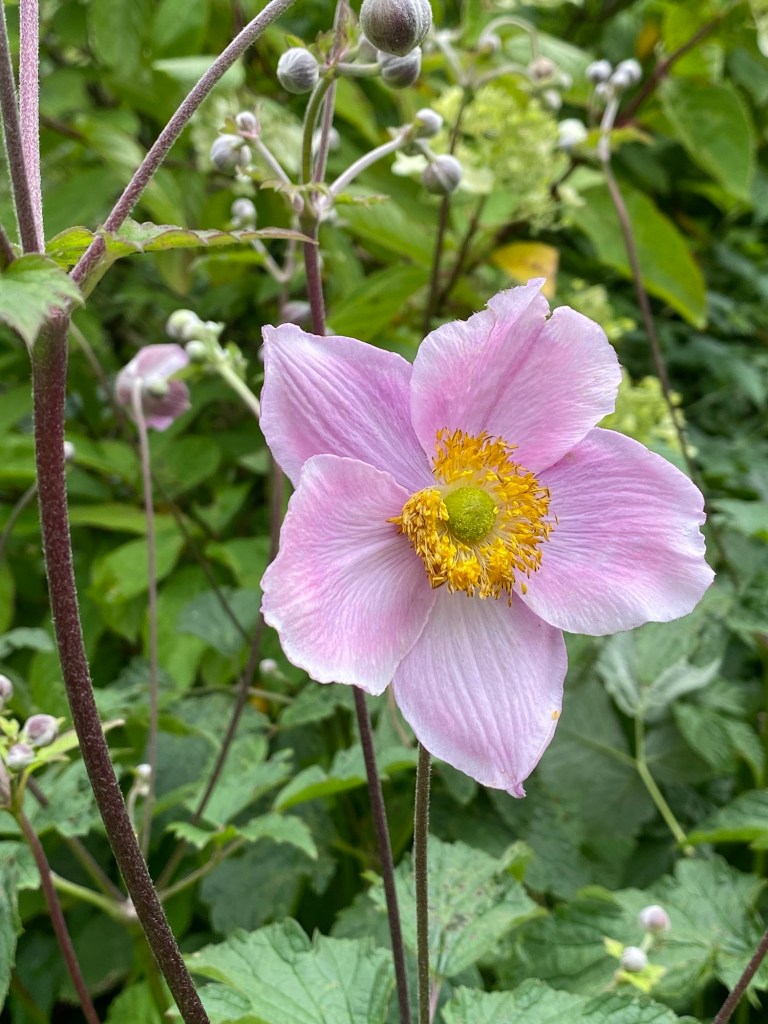
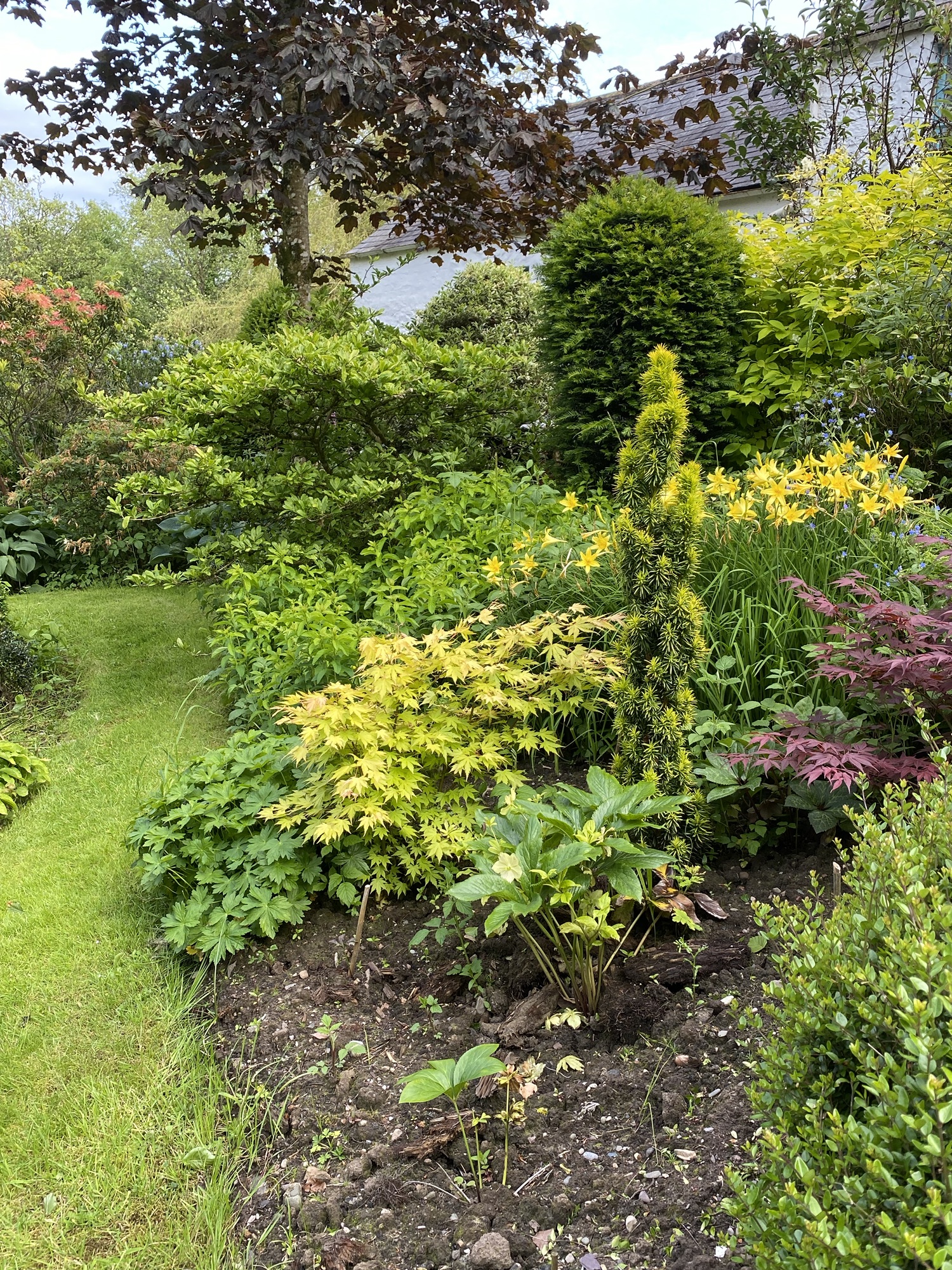
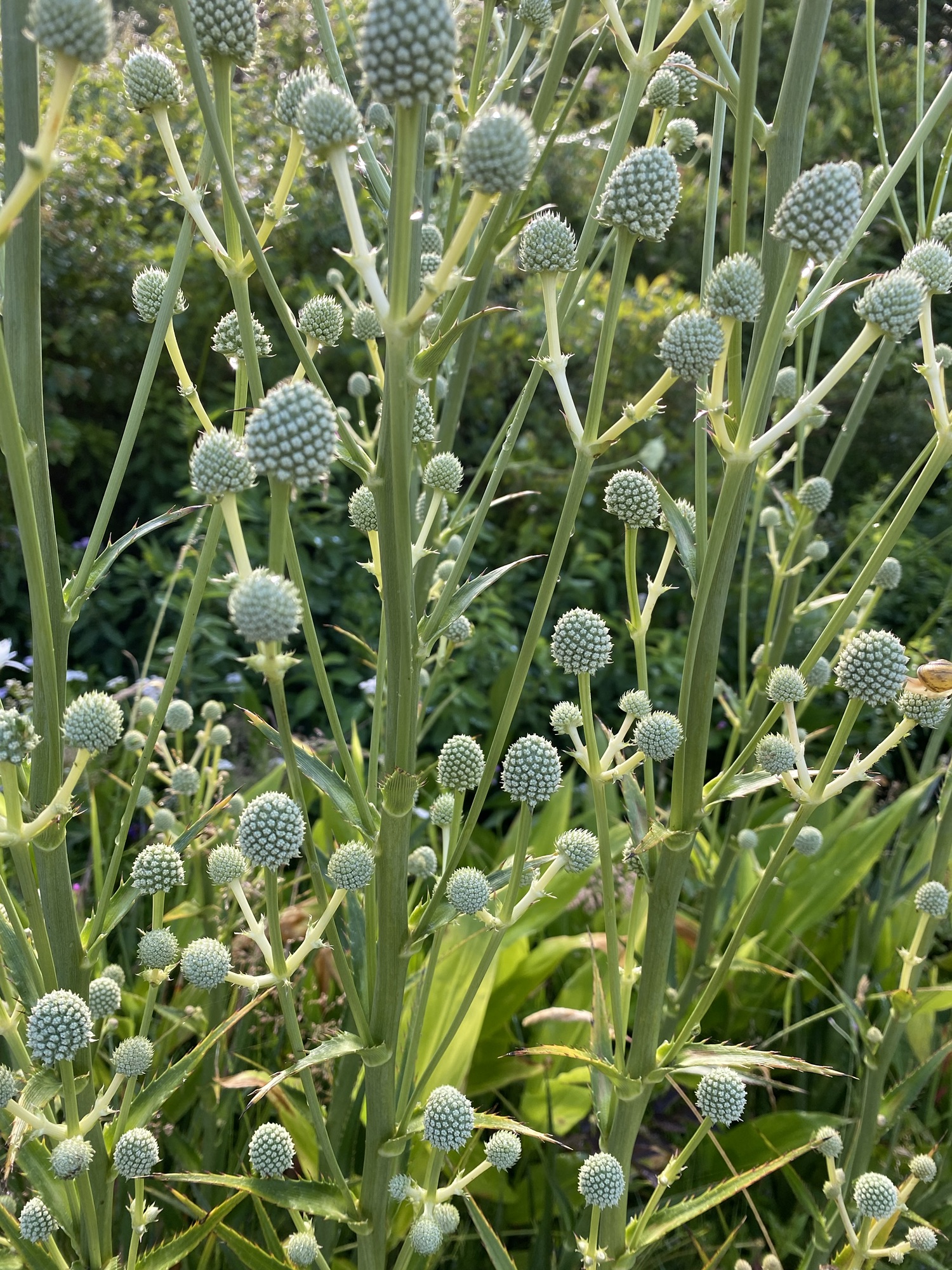
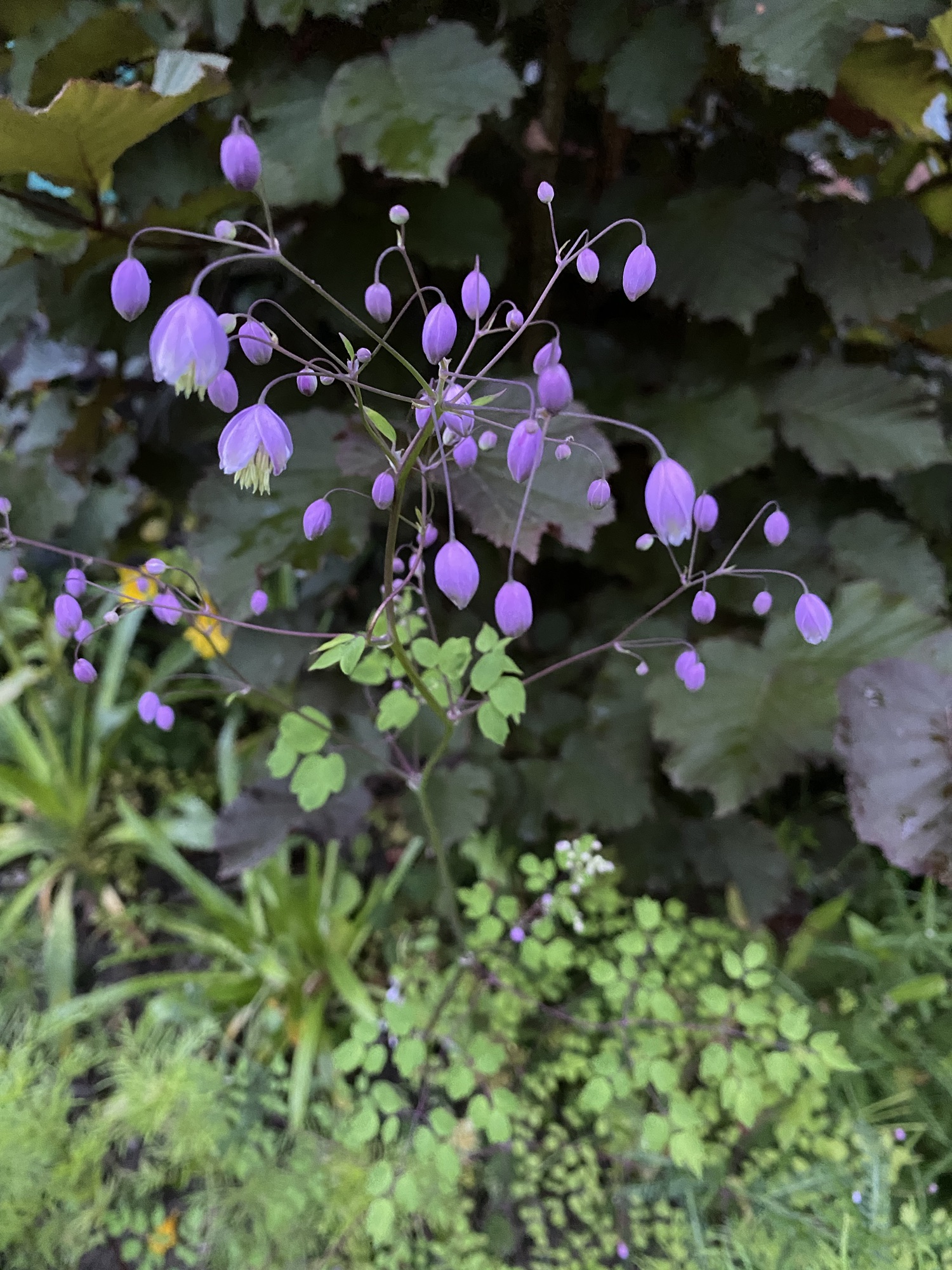
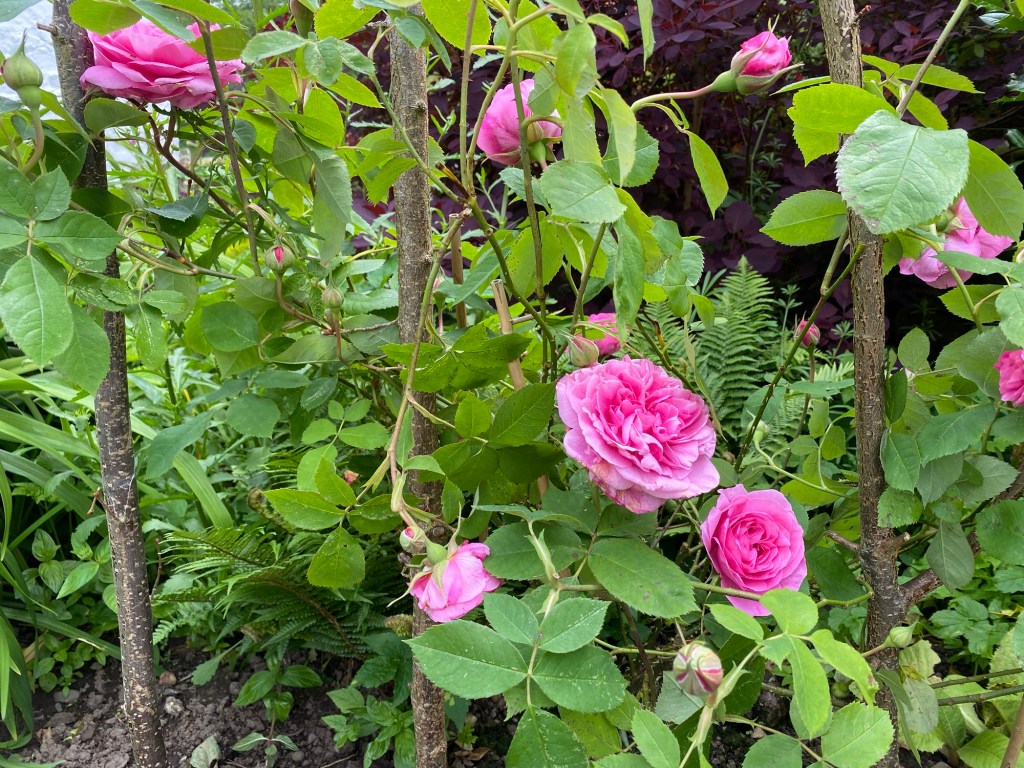
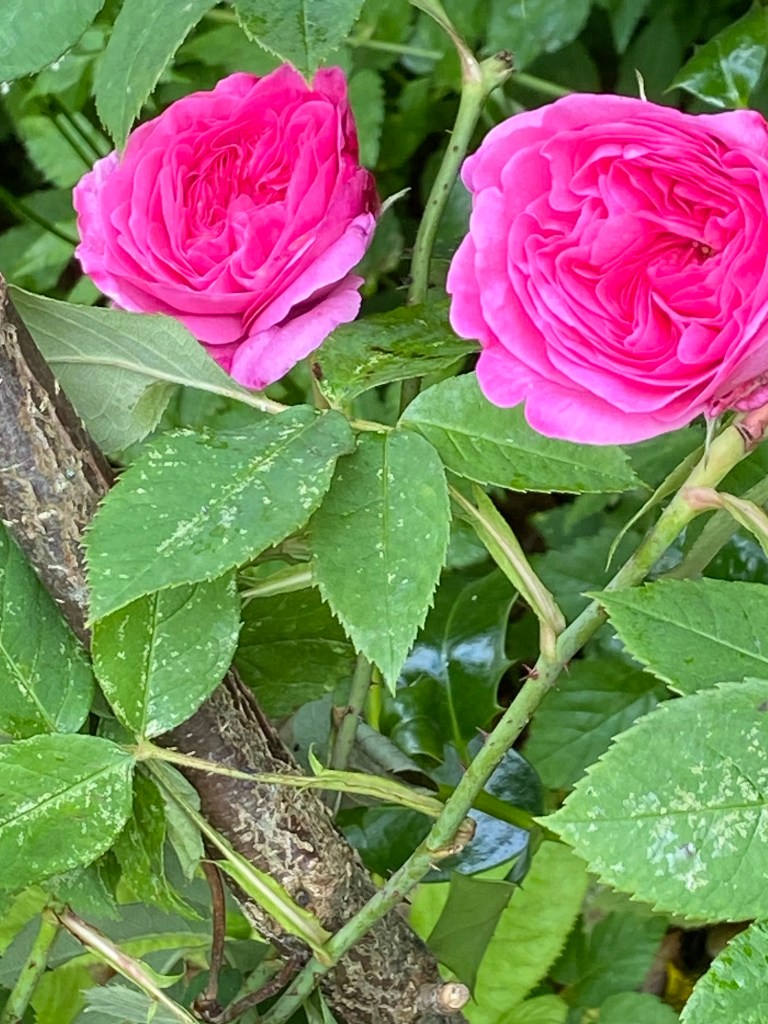
An A-Z of 2024 in the garden: Irises

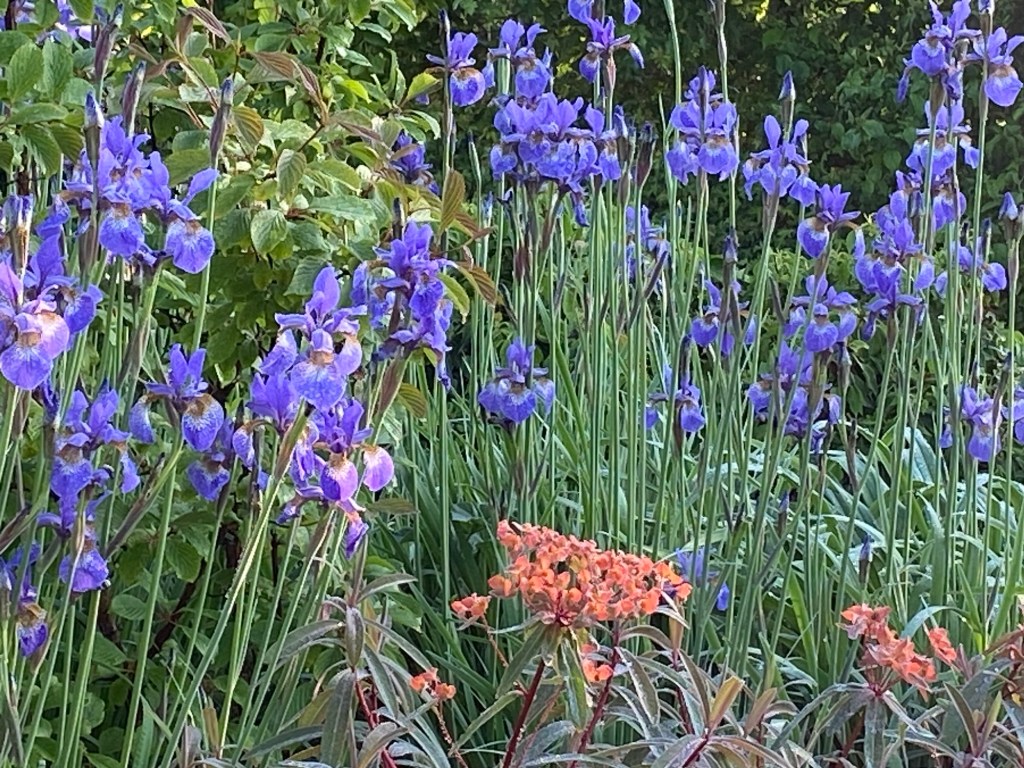
‘Beware of gardeners bearing plants!’ I was once told. Yet that experience more or less accounts for the largest group of irises in the Dumfriesshire Garden, and none the worse for that in my view.

The source of the Iris Siberica seen here was the contents of a couple of carrier bags, plants just past flowering and looking for a home. I took them in, found they did well in our conditions, and then gradually spread them out into what is now a dozen or so clumps around the garden. These groups flower in sequence, depending on their aspect and how much sun they get, and to me the irises are clear evidence that Spring is in high gear. Their grassy foliage and branched stems make them situate well in semi-naturalised settings, where the borders are mature and things are flowing freely. A low-budget give away they may have been, but that doesn’t diminish the pleasure they bring.

The beautiful Japanese water iris, seen below, is a different story. It was spotted in the ‘damp loving’ section of one of my favourite plant nurseries. I bought three and 2024 has been their first year in flower. Shorter stemmed, longer flowering and altogether more exotic than Siberica, they certainly looks good beside a chocolatey ligularia.

The plants in our gardens come to us by various routes. My third iris example is the humble, native flag. This one came of its own volition. I created a pond, it soon appeared and took up residence, spreading its rhizomes in the watery shallows.

Whichever way these storied irises were acquired, they are all extremely welcome aspects of the spring garden.

The full list of pieces that make up my A-Z in the Dumfriesshire Garden in 2024 can be found here: https://davidgrahamclark.net/a-z-of-the-dumfriesshire-garden-in-2024/

An A-Z of 2024 in the garden: Hydrangeas

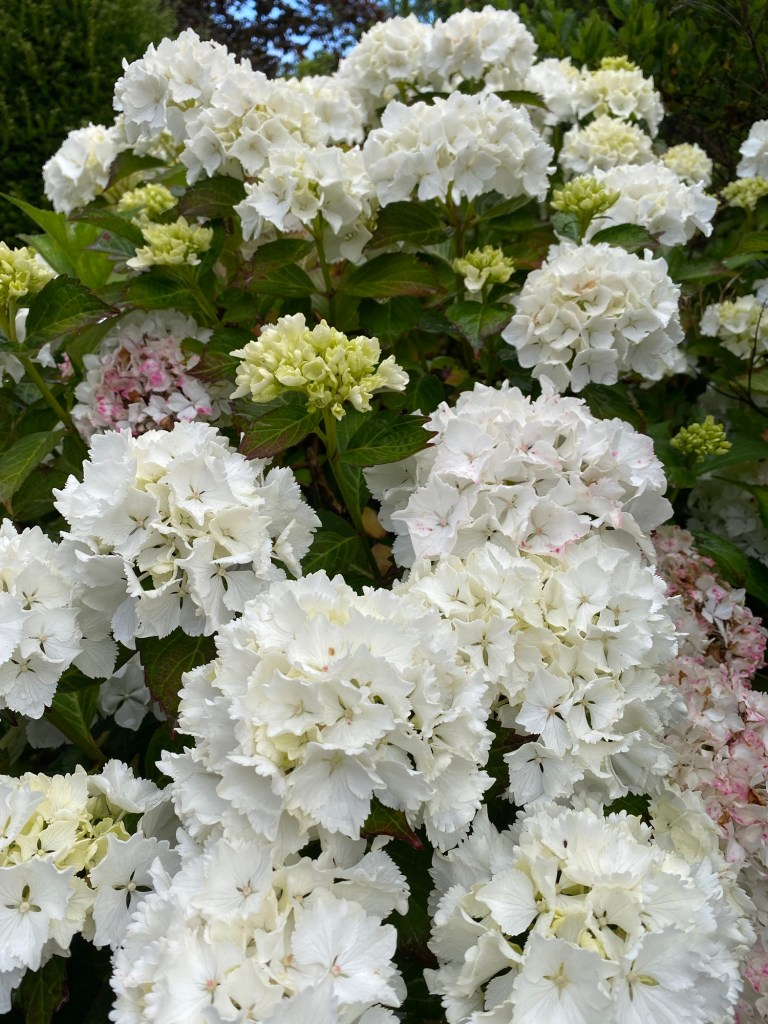
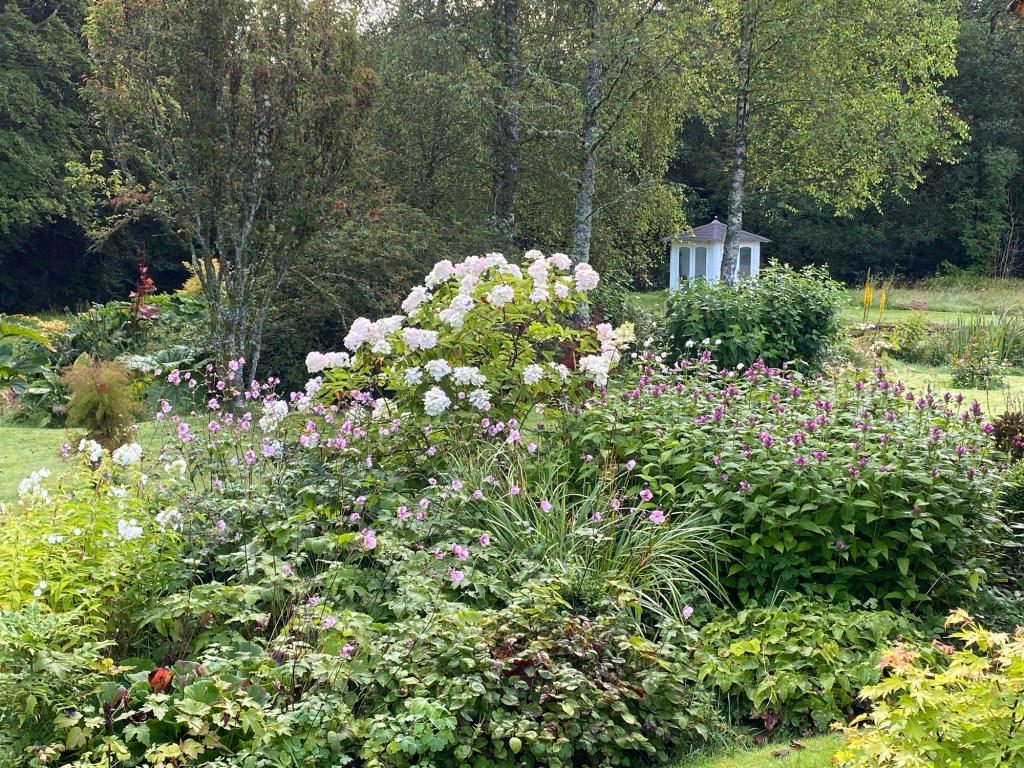
In contrast to other aspects of the Dumfriesshire Garden in 2024, it’s been really a good year for hydrangeas.

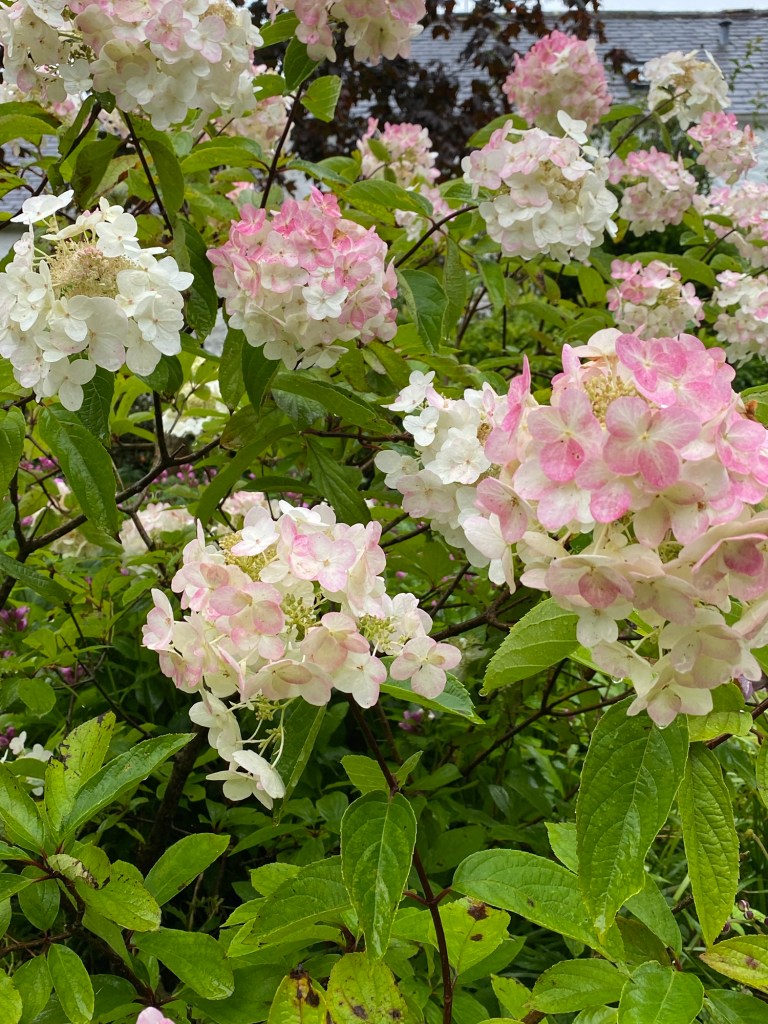
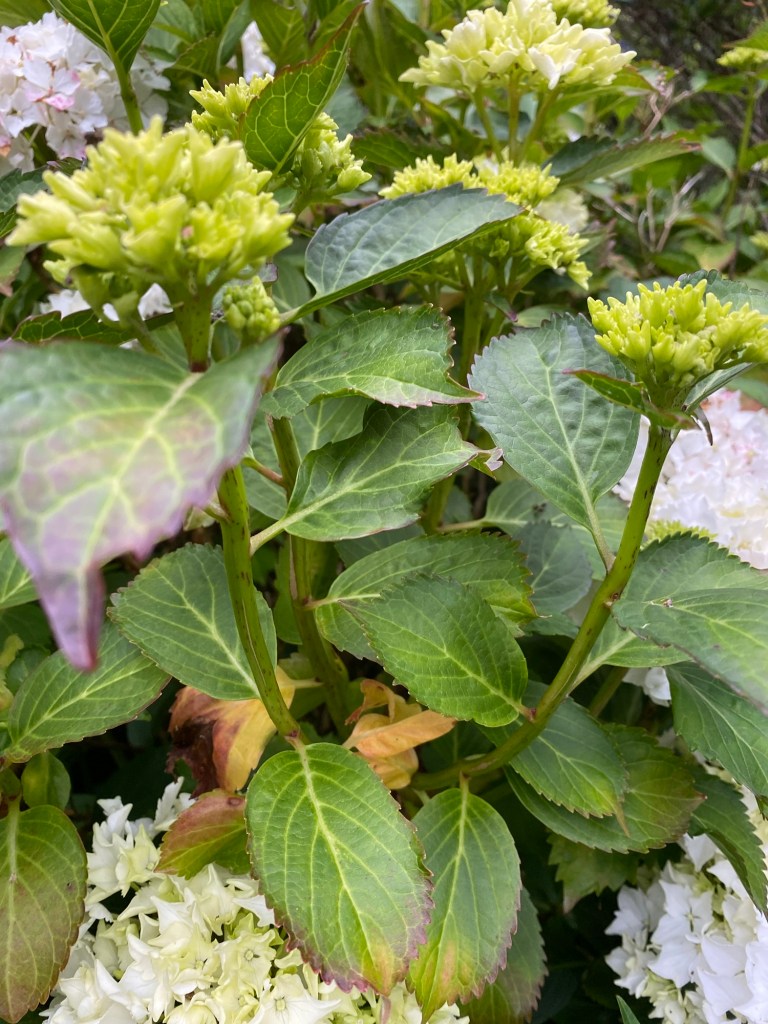
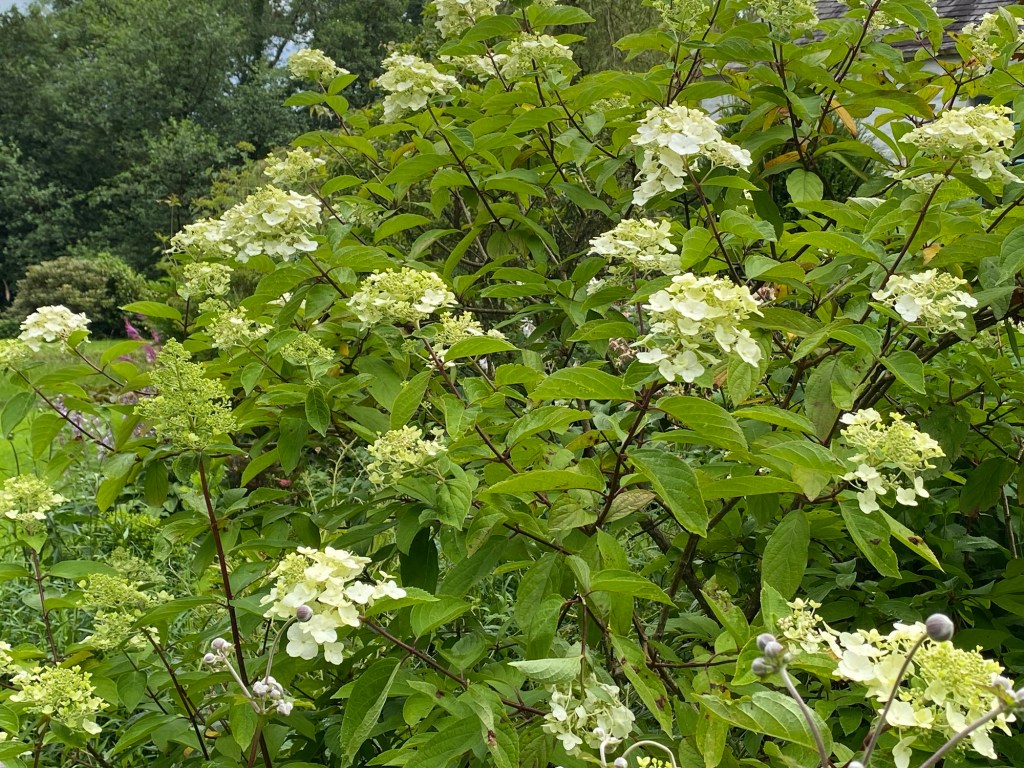
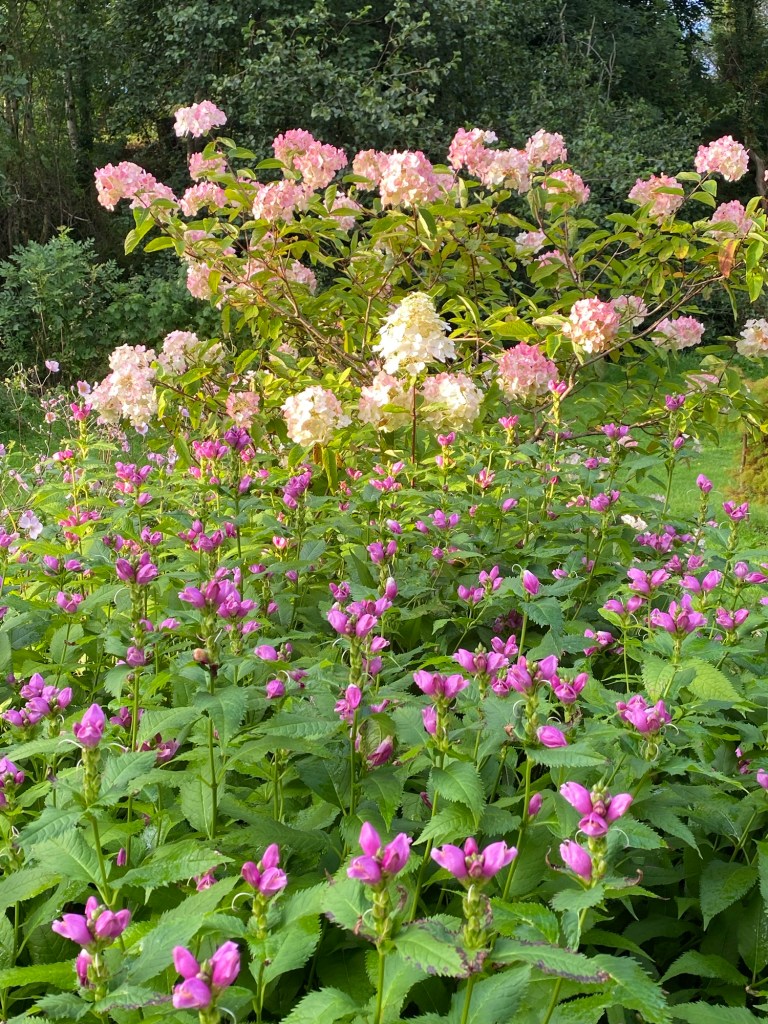
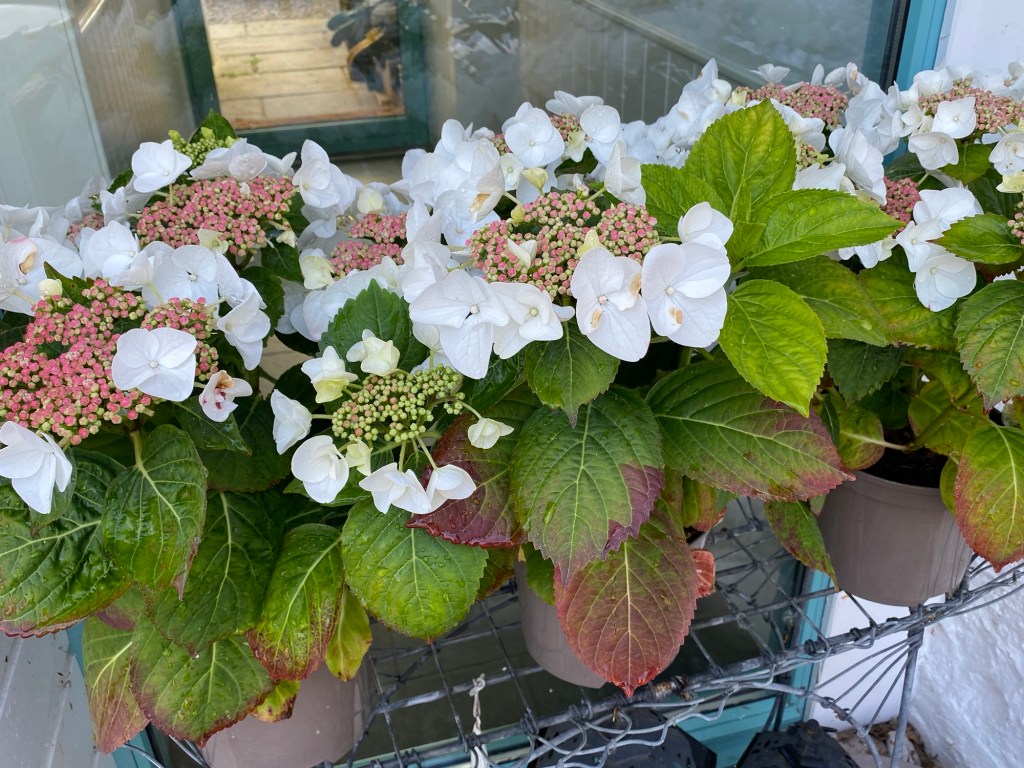
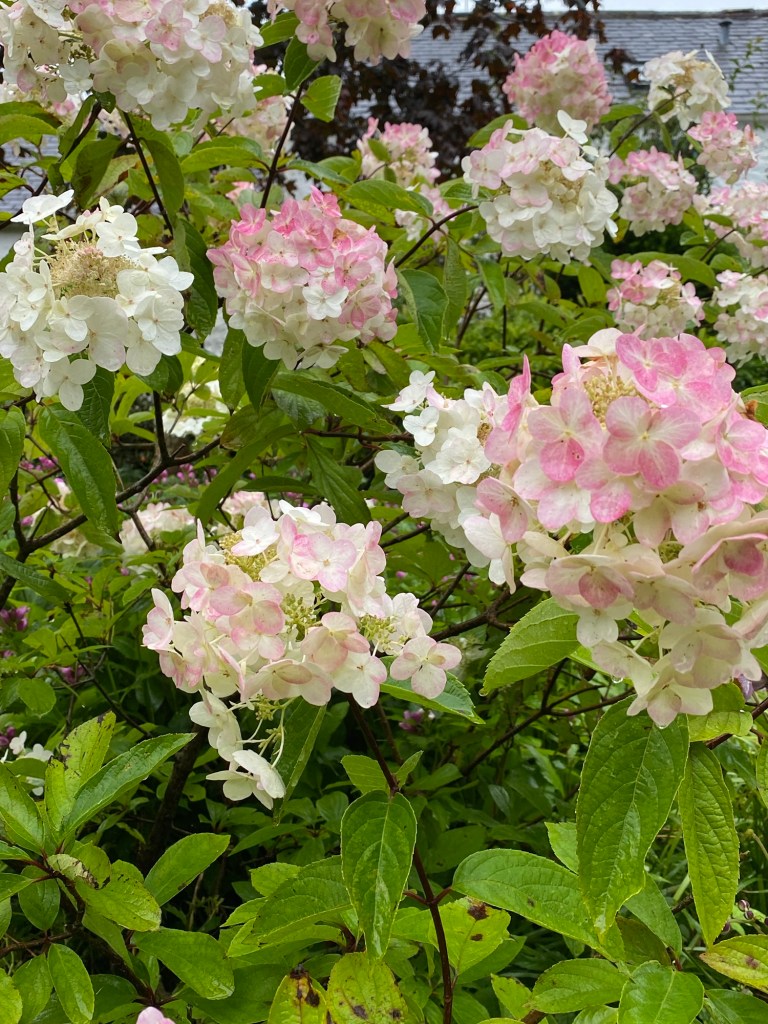
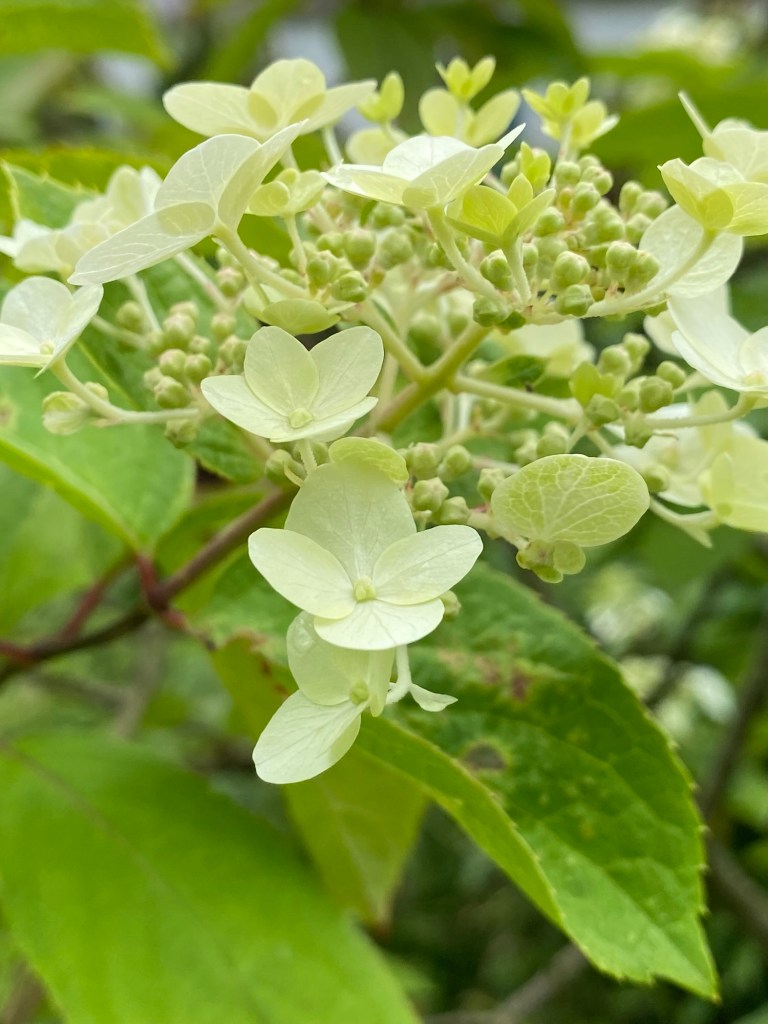
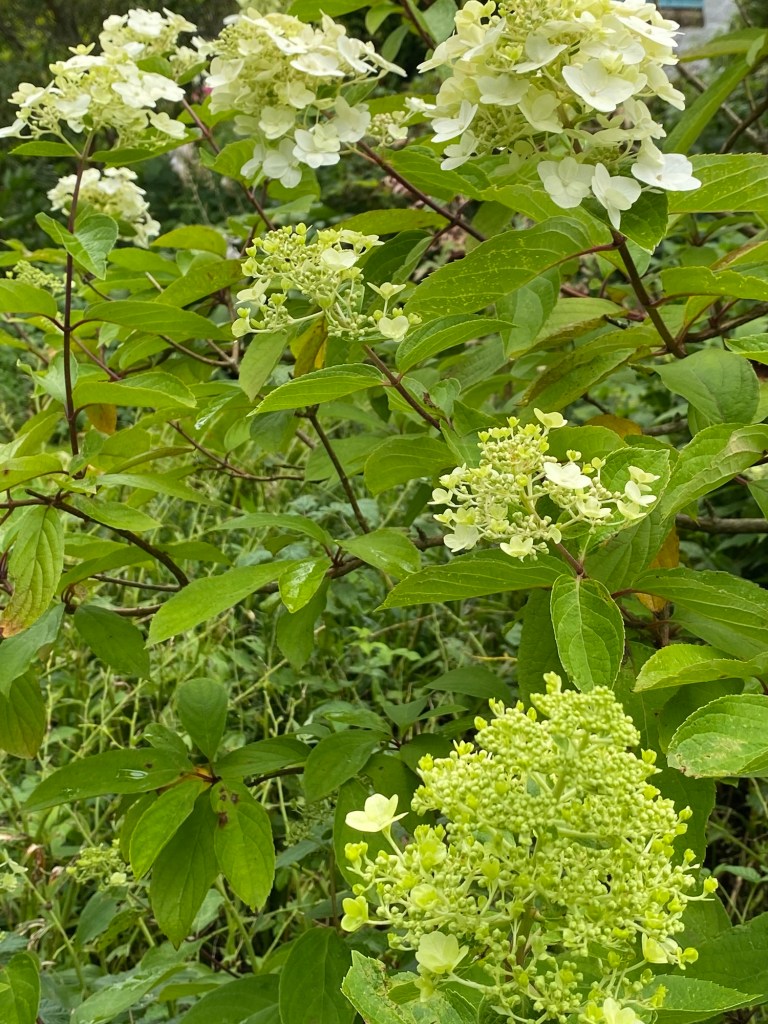
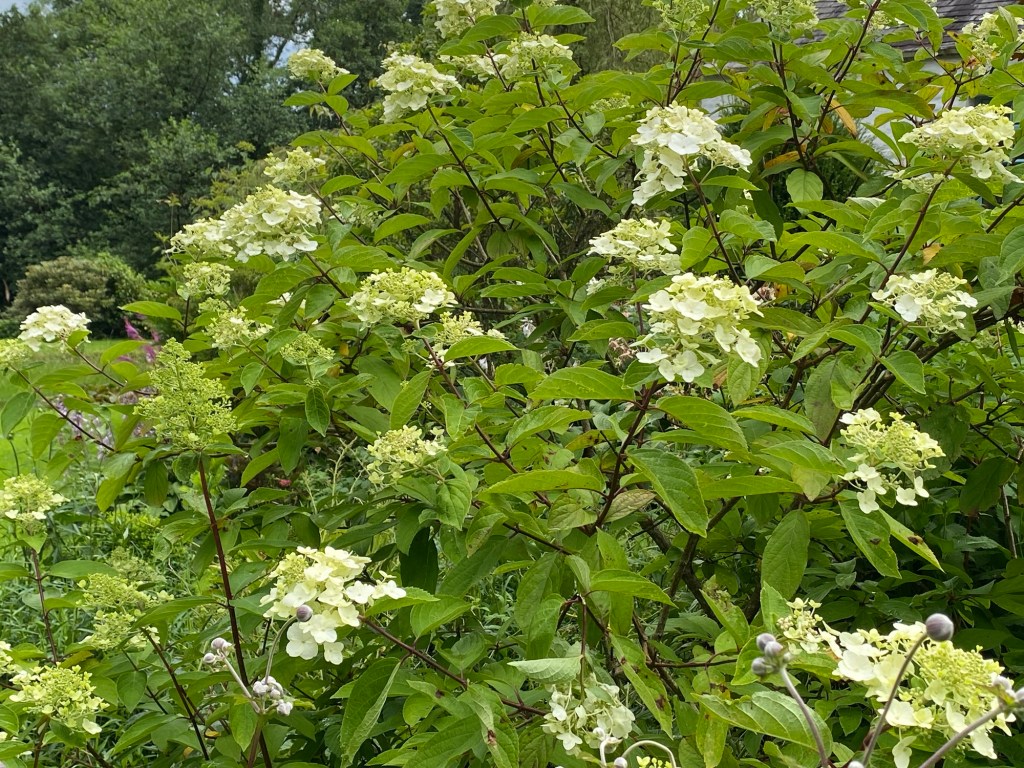
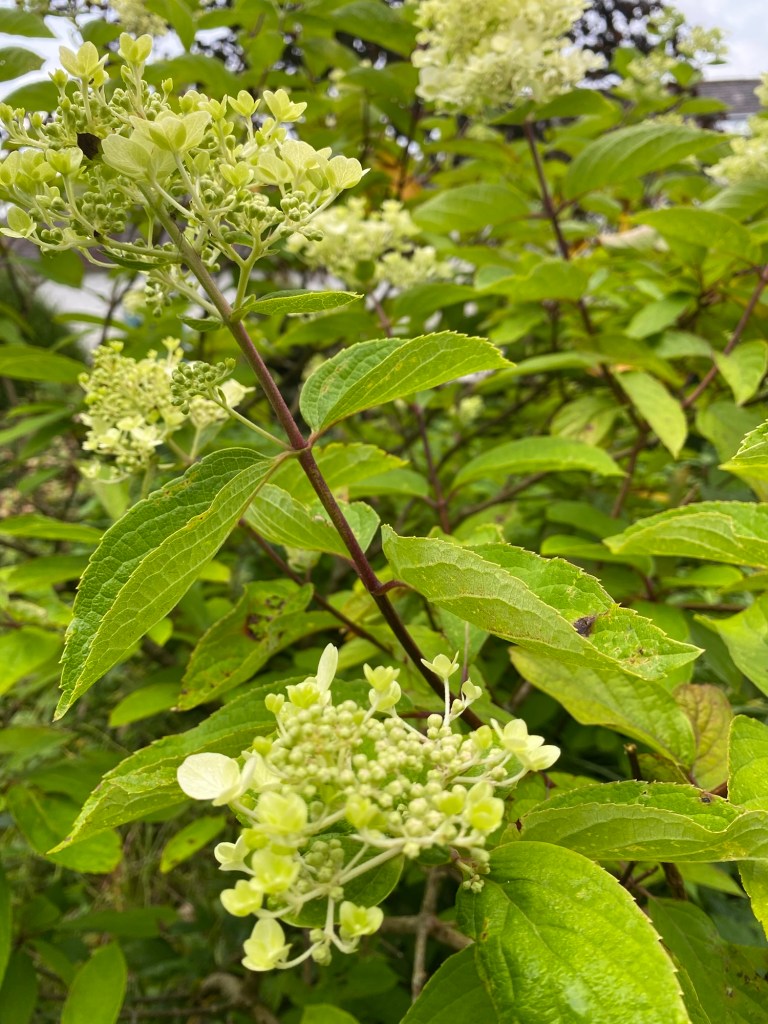
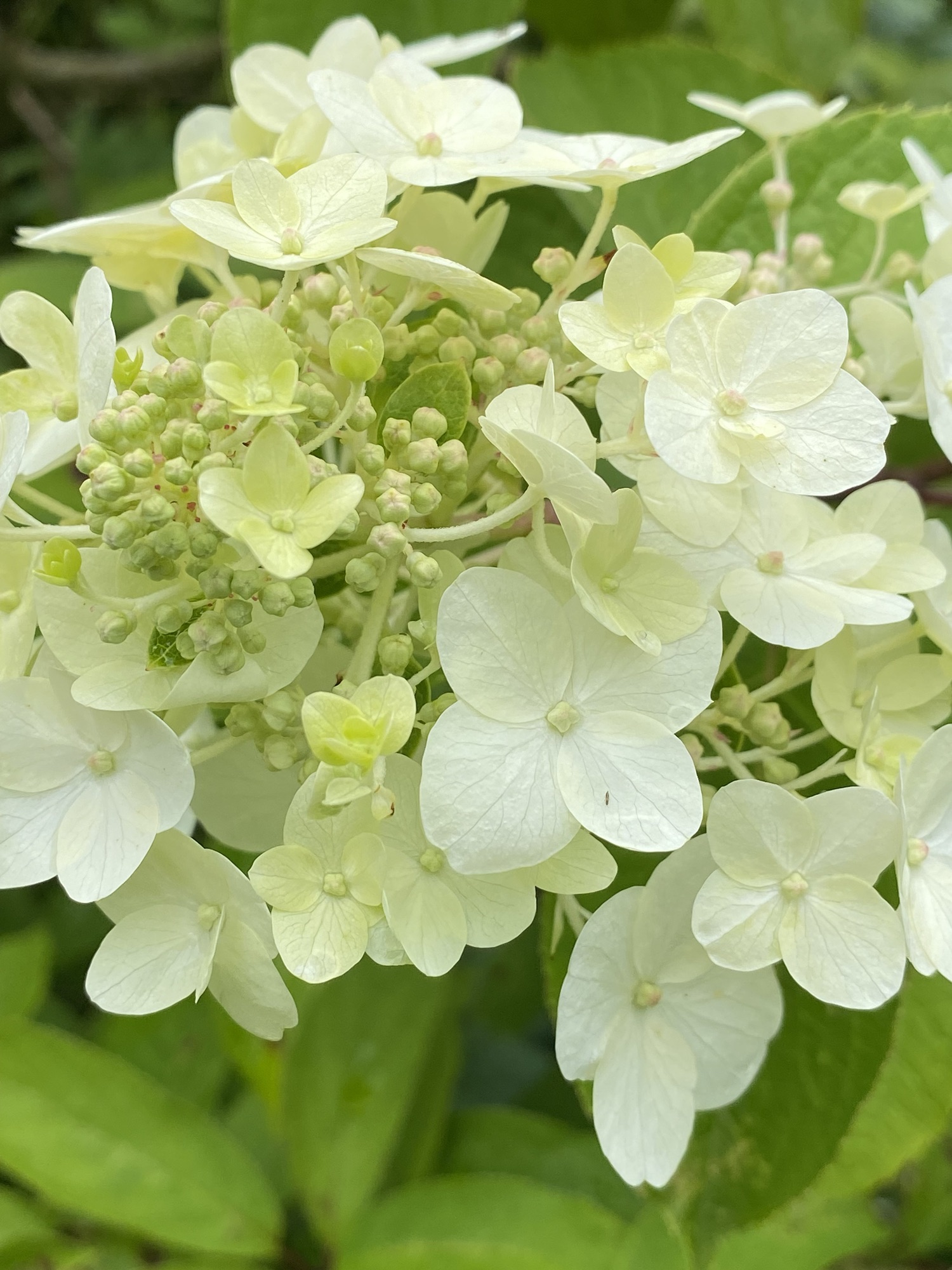
I particularly like the hydrangea flowers when they are first appearing, especially the green-white paniculatas. And the lace-caps. But incredibly long-flowering plants that they are, hydrangeas can also a delight as they subtly gain or lose colour, or even fade to papery elegance.

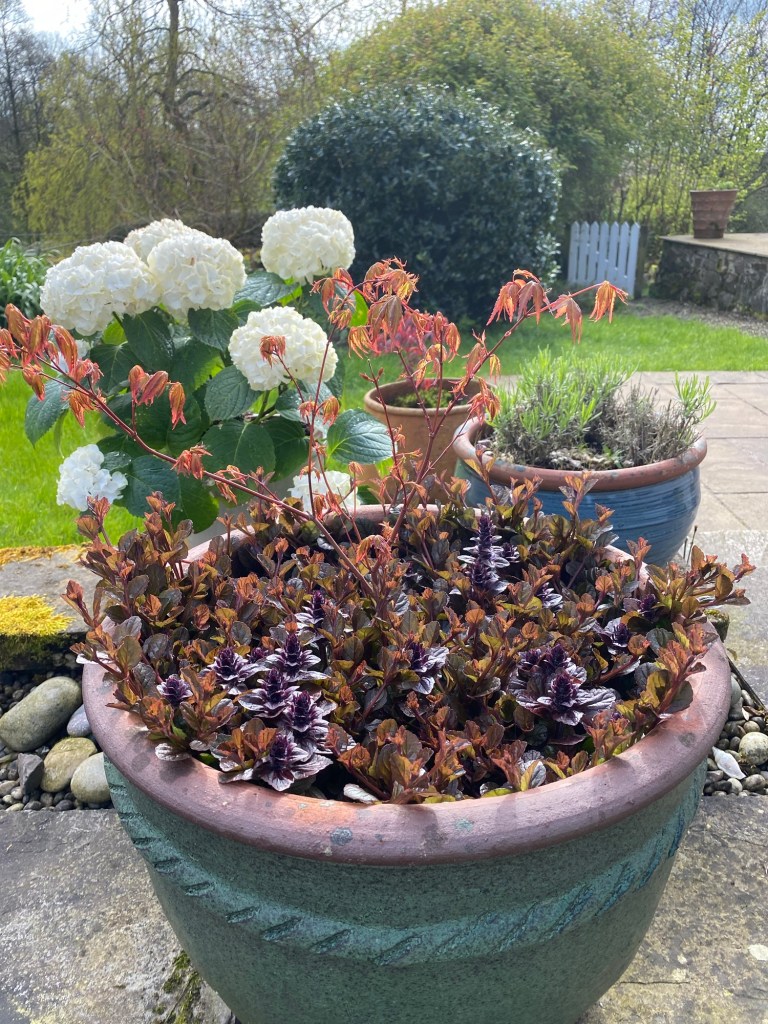
Early in the season this year I bought some young specimens in pots and had them near the house. A bit unseasonal maybe, but a cheery splash of interest just outside the window. Later I planted them in the garden and they seemed to settle and put on growth. The question is whether they will flower. Over the years I’ve had quite a few vigorous and healthy hydrangeas that have yet to produce blooms. I’m not sure if an old gardener’s remedy is efficacious: a rice pudding spread round the roots like a mulch! It could be tried I suppose.

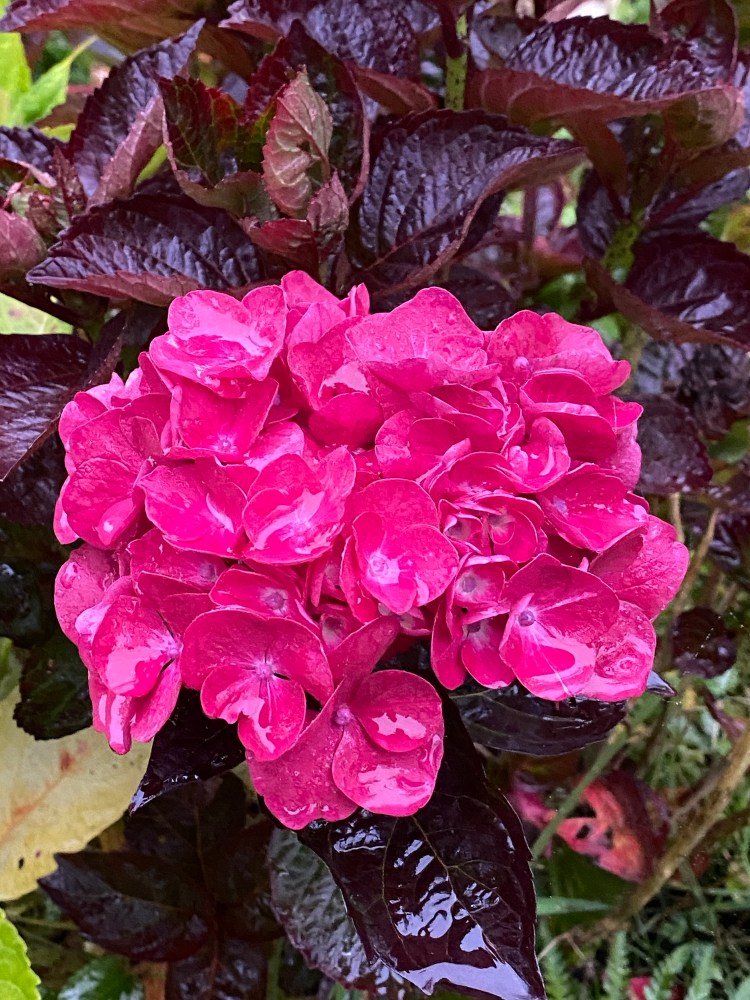
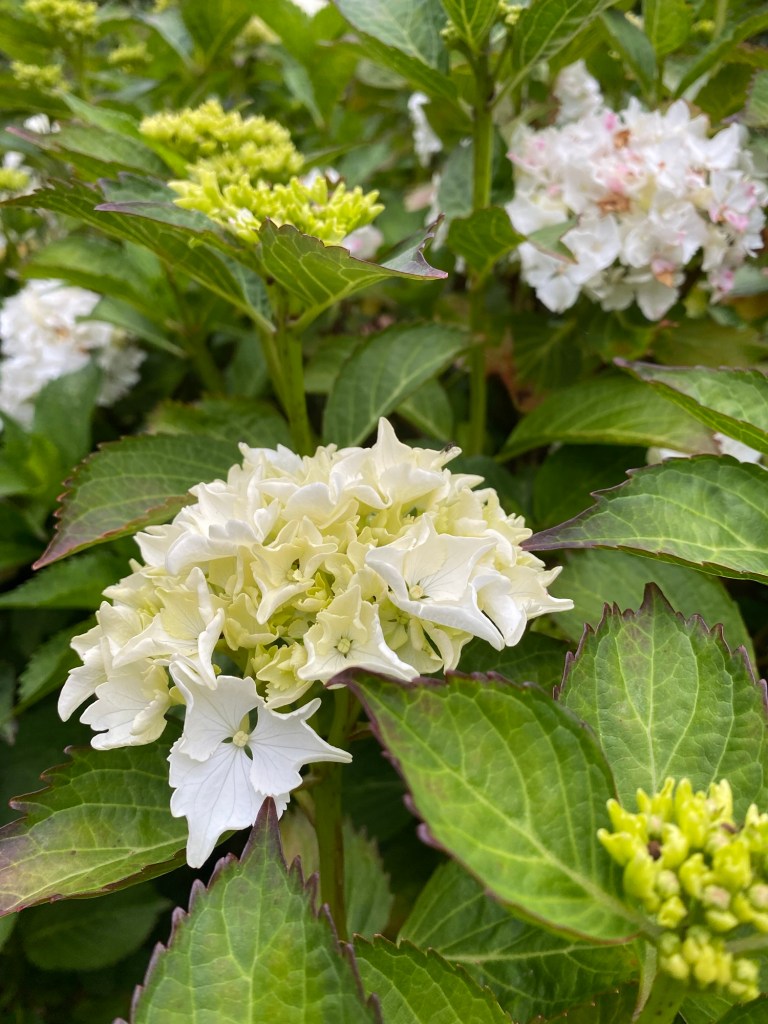
The rather gaudy specimen shown here below was a single flower this year on a plant that had not bloomed for years, and had otherwise been admired for its foliage alone. Overly bright perhaps, it was still very welcome in 2024 – all in all, quite a good year for these stalwart plants.

The full list of pieces that make up my A-Z in the Dumfriesshire Garden in 2024 can be found here: https://davidgrahamclark.net/a-z-of-the-dumfriesshire-garden-in-2024/

An A-Z of 2024 in the garden: Greenhouse

It was almost a second hand camper van, back in 2020. I was very tempted. Then reason kicked in. In all my years of gardening enjoyment, in various locations, I had never had my own greenhouse. Rationality prevailed and I chose daily enjoyment and utility over occasional camping breaks. It was undoubtedly the right decision. I have been totally amazed at the pleasure and productivity that has ensued in the intervening years: from a greenhouse.

True, there was some labour and expense in preparing the ground works, and building the brick base (we chose a pattern called Flemish bond). When the folks arrived for the installation there was also the anxiety (completely needless as it turned out) about whether the structure would fit on the base. Since then it has been plain sailing, and lots of fun.

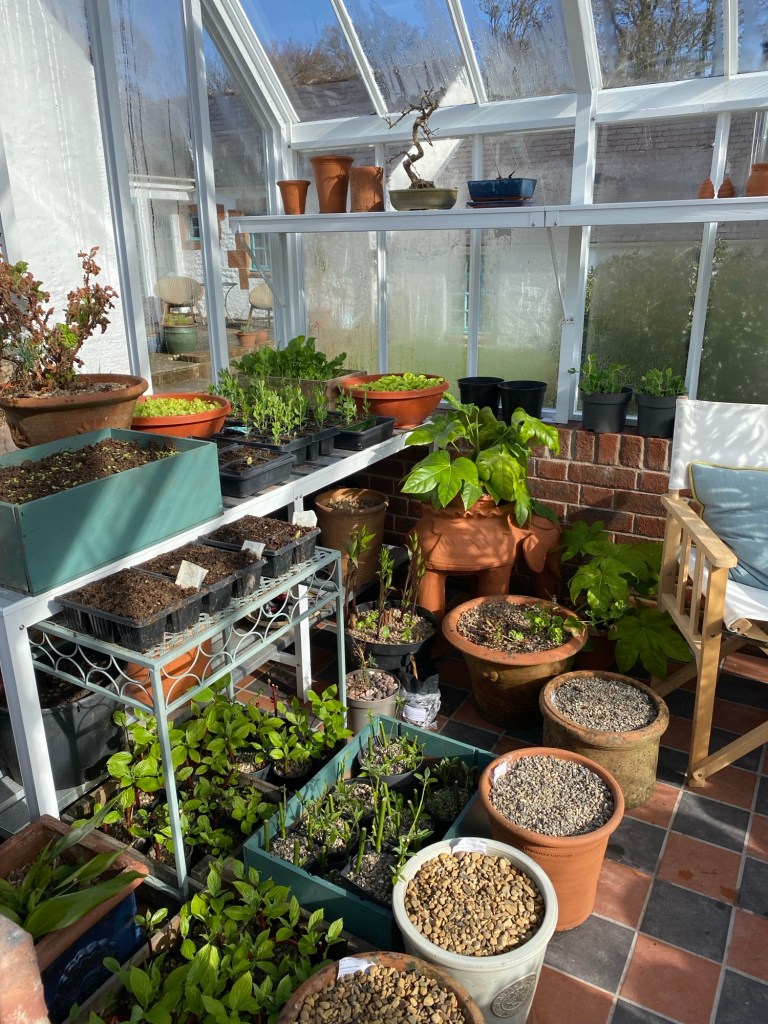
The greenhouse has many functions and is hugely effective in extending the growing season. Depending on conditions, I start in early March sowing small batches of mixed salads, radishes and ‘micro veg’. I also try some early herbs, especially parsley. I’ve found the round pots made for hanging baskets are good for all of this. Then I move on to wooden boxes for spinach, ‘pick and come again’ salads and a few courgettes. As the salads fade by late spring I make sowings of hearting lettuces that will be planted out in the vegetable garden from late July. I’ve also found that the pick and come again plant out well in the early summer. As the weather warms up I make regular sowing under glass of my two favourite herbs: dill and coriander. In the autumn I repeat the practice for early spring. This year was such a success that I had bowls of lovely ‘bistro’ salads right through to November.

The greenhouse is also the place for bringing on spring bulbs in pots, as well as some of the larger and more exotic decorative plants that can be quite tender, such as colocasia and pineapple lilies. Likewise small bare rooted herbaceous plants and flowering shrubs. It’s also the place for sowings of cosmos, lupin and nasturtium.

Of course there can be issues. Greenhouse grown tomatoes are tasty but need a lot of space and bother. Largely unheated, sudden frosts can flatten tender new produce in the greenhouse. If subject to frost, over-wintered exotic bulbs can fail to re-appear and are revealed as a sludgy mess when the pots are emptied out (I now prefer the risk of planting out in the borders). There is also the fact that in summer the greenhouse is home to a lot of buzzing biodiversity.

The hidden bonus of the greenhouse however, and one I hadn’t much considered in advance, is that when the months of peak production are over and the place has had a thoroughly good clean out, then it becomes a perfect winter garden. Out go the seed trays, the wooden boxes and the salad bowls. In come a wicker sofa, side tables, and a few decorative lights. We now have a freestanding conservatory , decorated with things like Norfolk Island Pine, Fatsias, and Cordyline. With a cup of coffee and a notebook, it’s the perfect place to contemplate next year in the garden. Whatever the details of the plan, I’m pretty sure the greenhouse will figure all year in the daily routine. Oh and by the way – I’ve never missed the camper van.

The full list of pieces that make up my A-Z in the Dumfriesshire Garden in 2024 can be found here: https://davidgrahamclark.net/a-z-of-the-dumfriesshire-garden-in-2024/

An A-Z of 2024 in the garden: Ferns

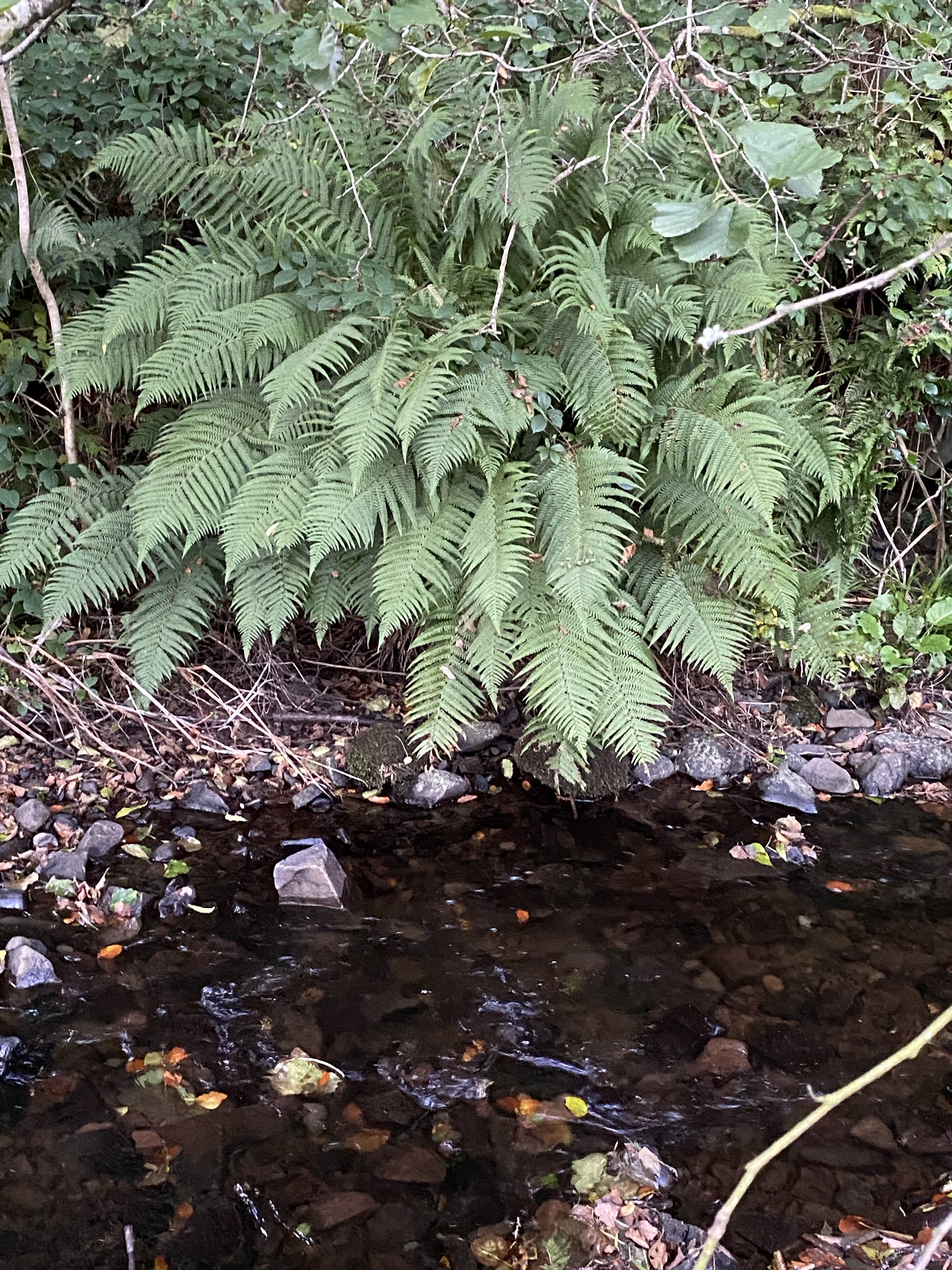
The fern by the water in the featured image here comes from the edge of the Dumfriesshire Garden. This large plant with its gorgeous fronds spreading gently down to the water of the Pennyland Burn is growing wild. I’m fortunate to have such beauty in the ‘borrowed landscape’.

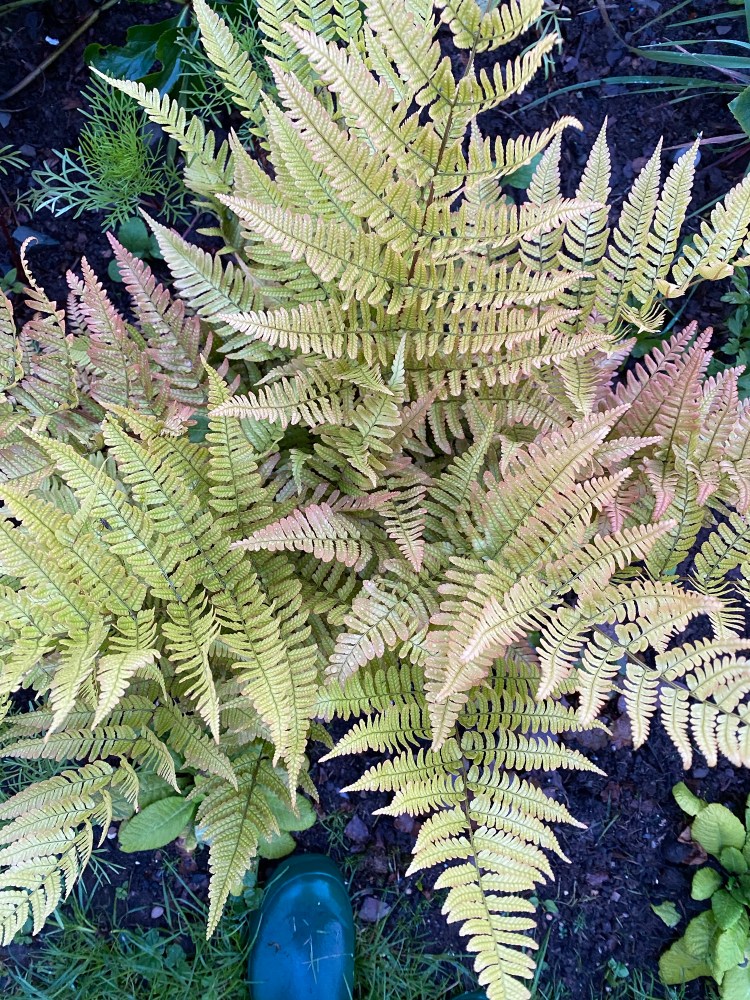
There are indeed many native ferns in and around the garden: from the ubiquitous bracken, to harts tongue, to spleenwort, to several more I can’t name. This hasn’t deterred me in recent years from acquiring decorative ferns of various names, forms and colours, which I have added to newly created borders in particular. We can see here some newcomers for 2024 that have really taken a hold. When seen on social media earlier in the year they prompted some approval, and with it, an invitation to a nearby castle, where the fernery holds over 100 different specimens!

It’s been a pretty good year for ferns!

The full list of pieces that make up my A-Z in the Dumfriesshire Garden in 2024 can be found here: https://davidgrahamclark.net/a-z-of-the-dumfriesshire-garden-in-2024/

An A-Z of 2024 in the garden: Early arrivals

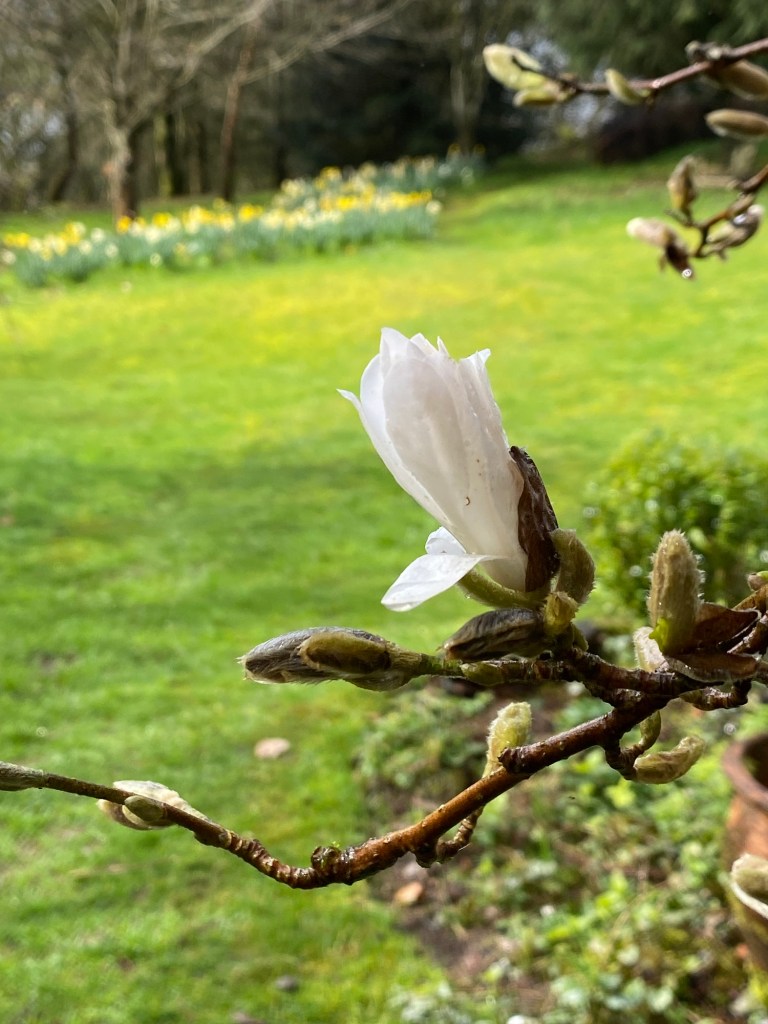
Once things begin to move in the early season garden, every day can bring the pleasure of a new arrival. After a chilly spell, or perhaps at the end of days of false hopes, suddenly something is poking up through the leaf mould in the borders, with a clear message: Spring is round the corner. But March and April 2024 weren’t so simple. Spring came in fits and starts to the Dumfriesshire Garden and set the tone for a mixed season in the garden, when the notes rarely came together in a harmonious whole.

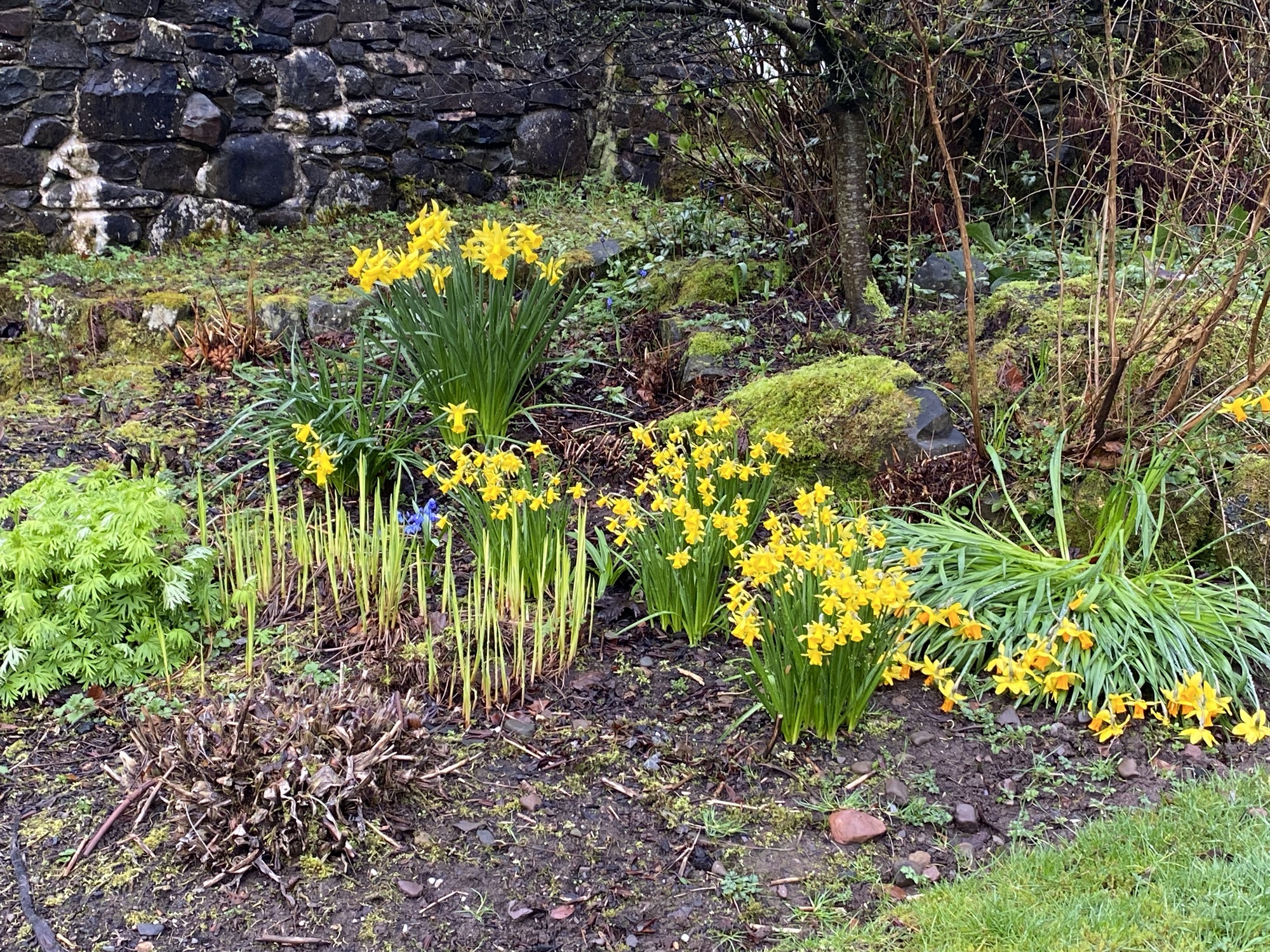
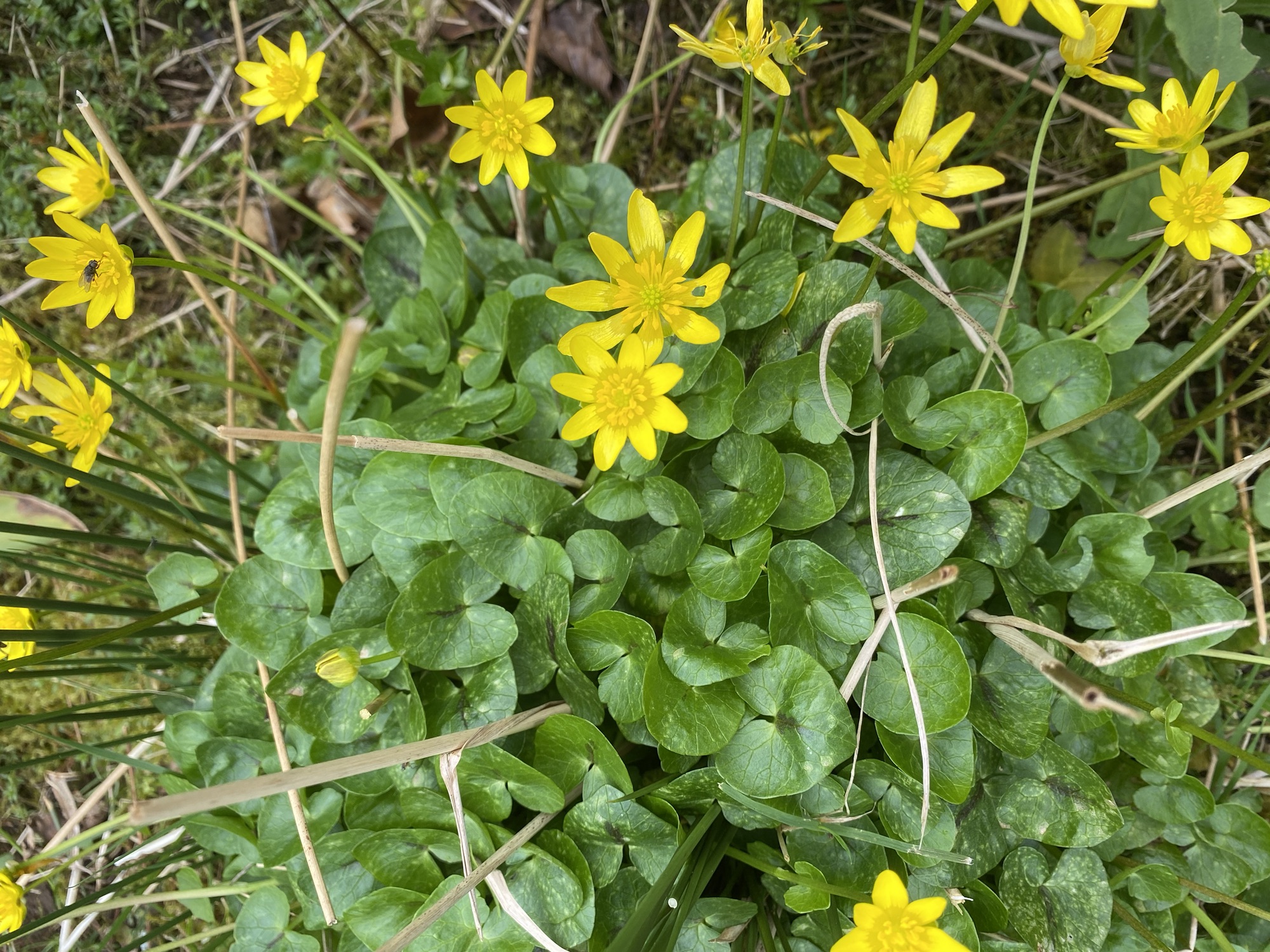
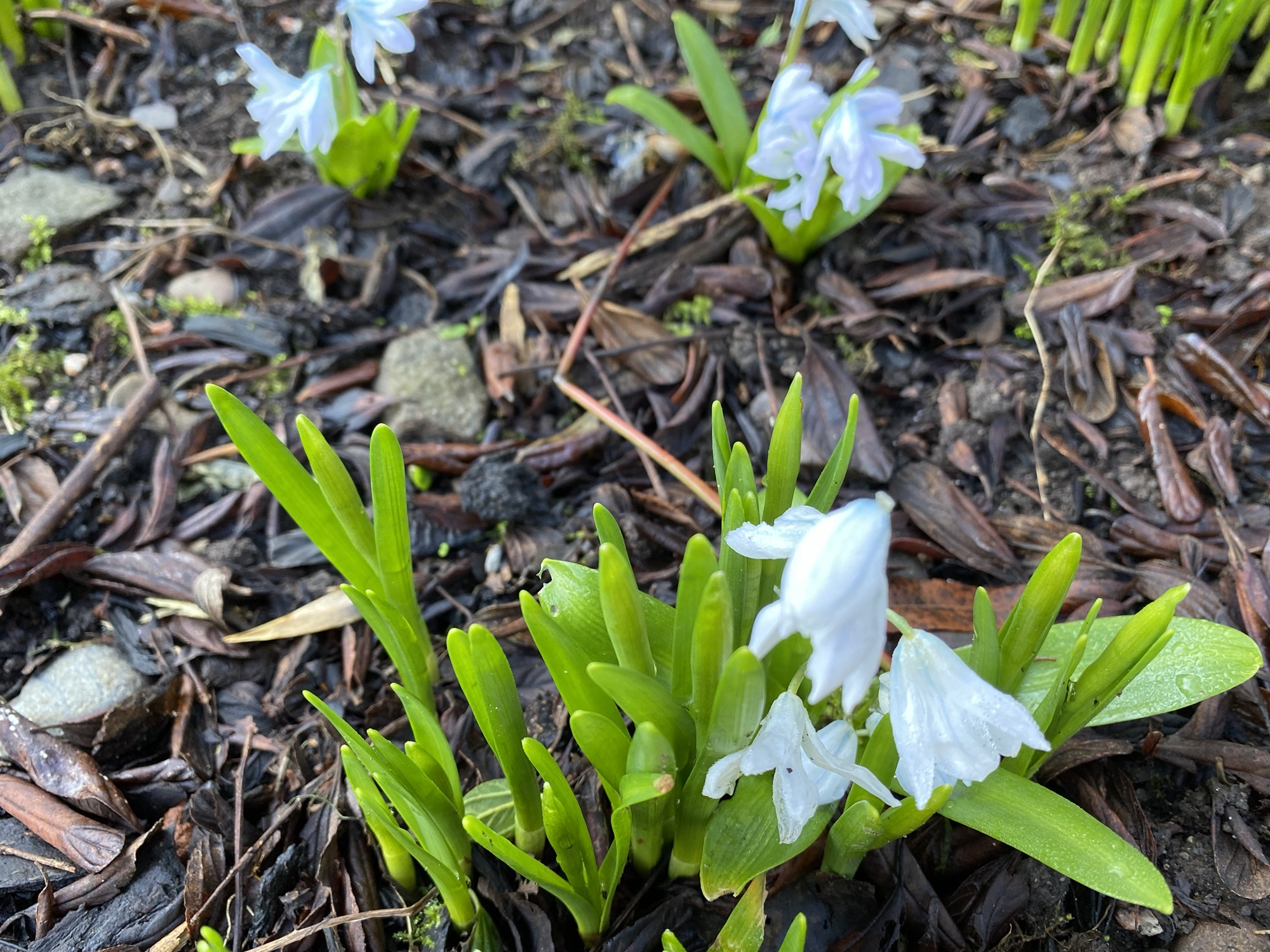
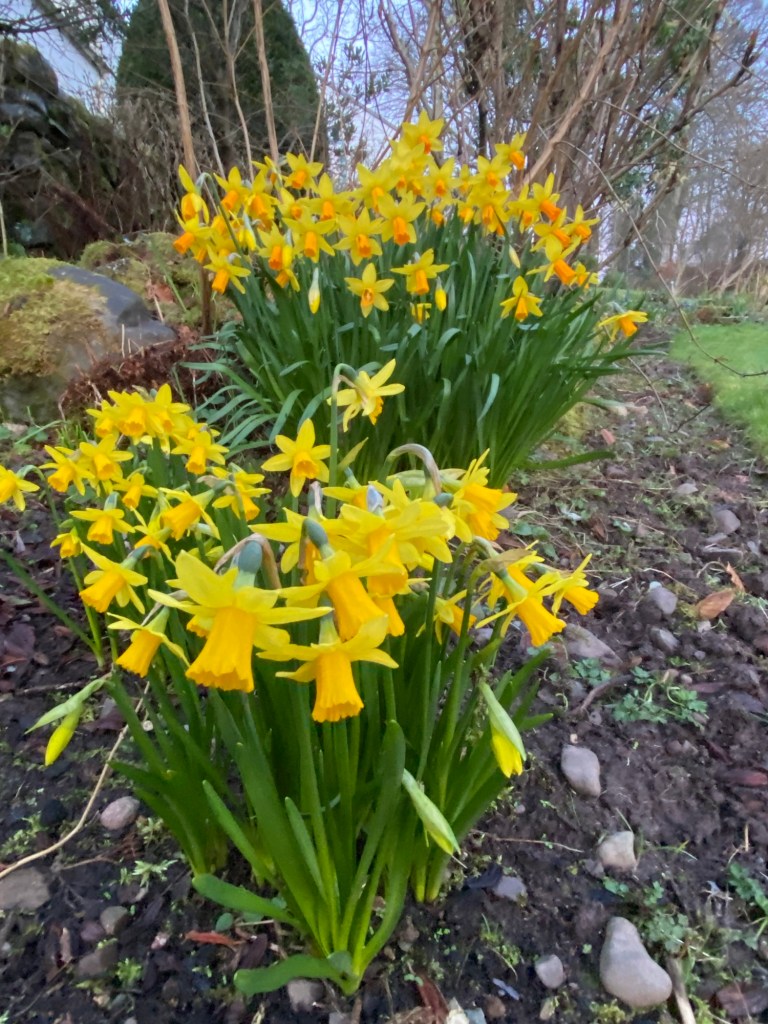
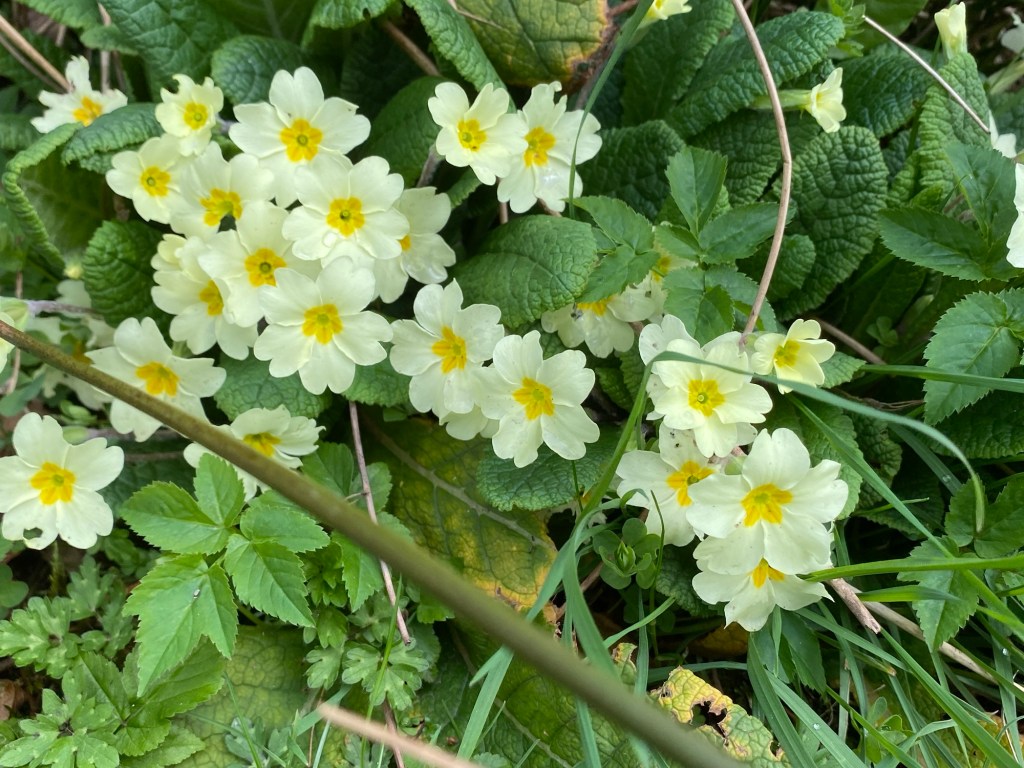
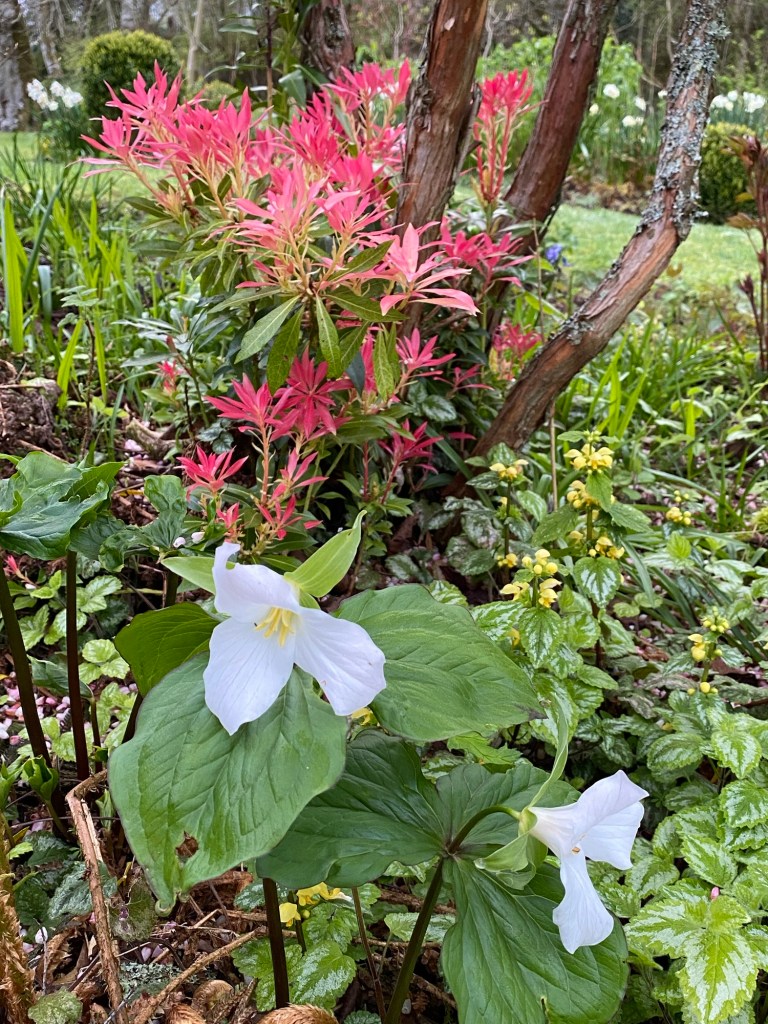
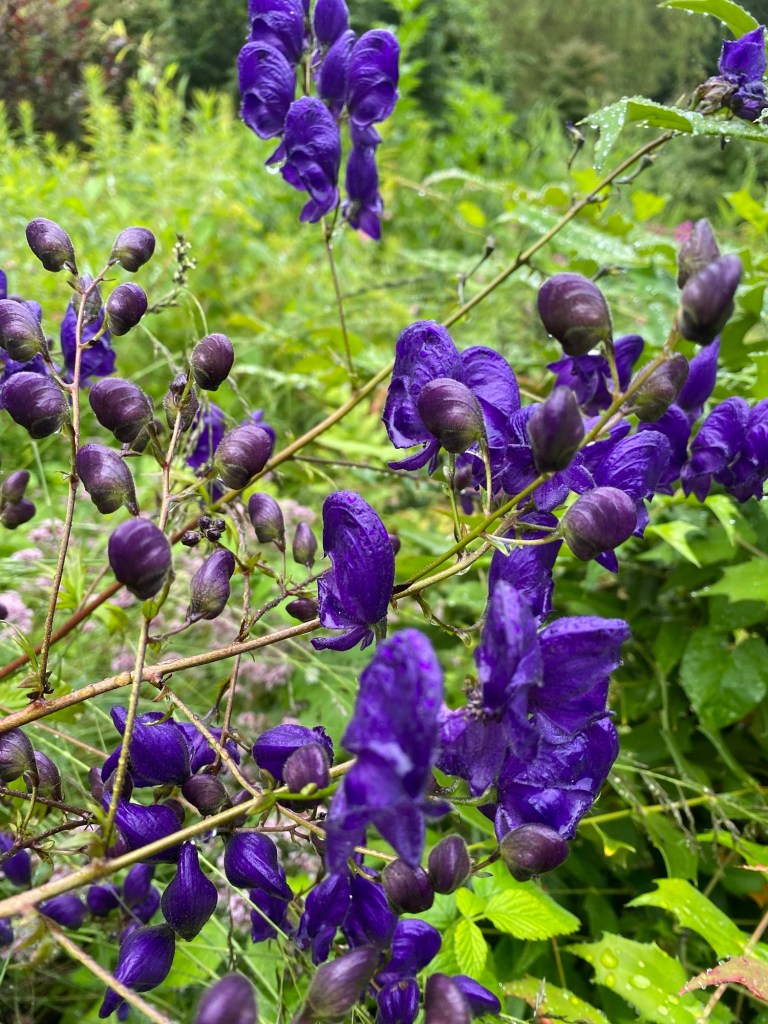
Nevertheless, here’s a selection of just a few of the plants that marked the intermittent Spring at various points, and gave a lot of pleasure in the process: narcissi, celandine, hyacinth and squill in yellow, blue and white, along with the bright stems of monk’s hood and iris.

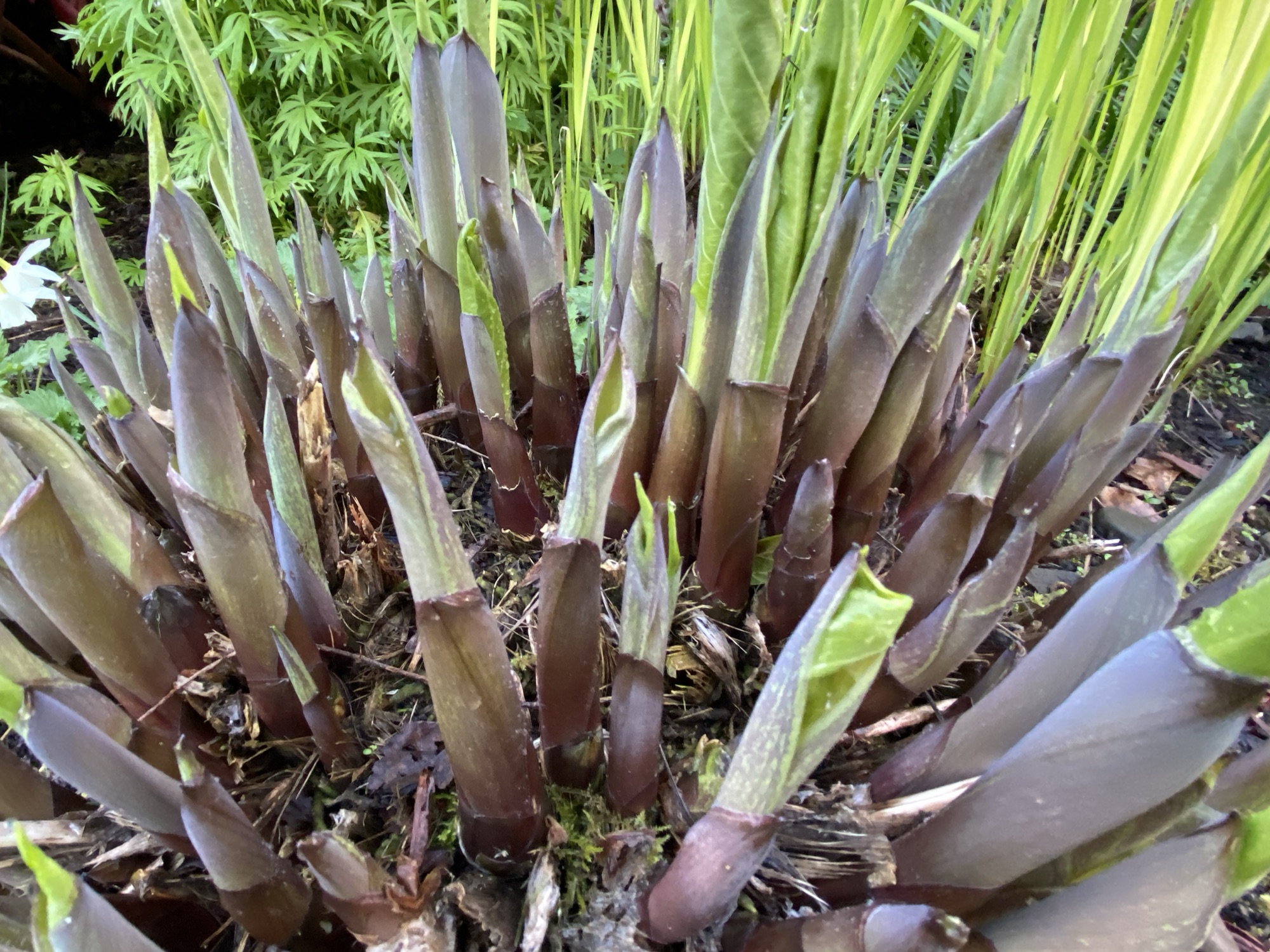
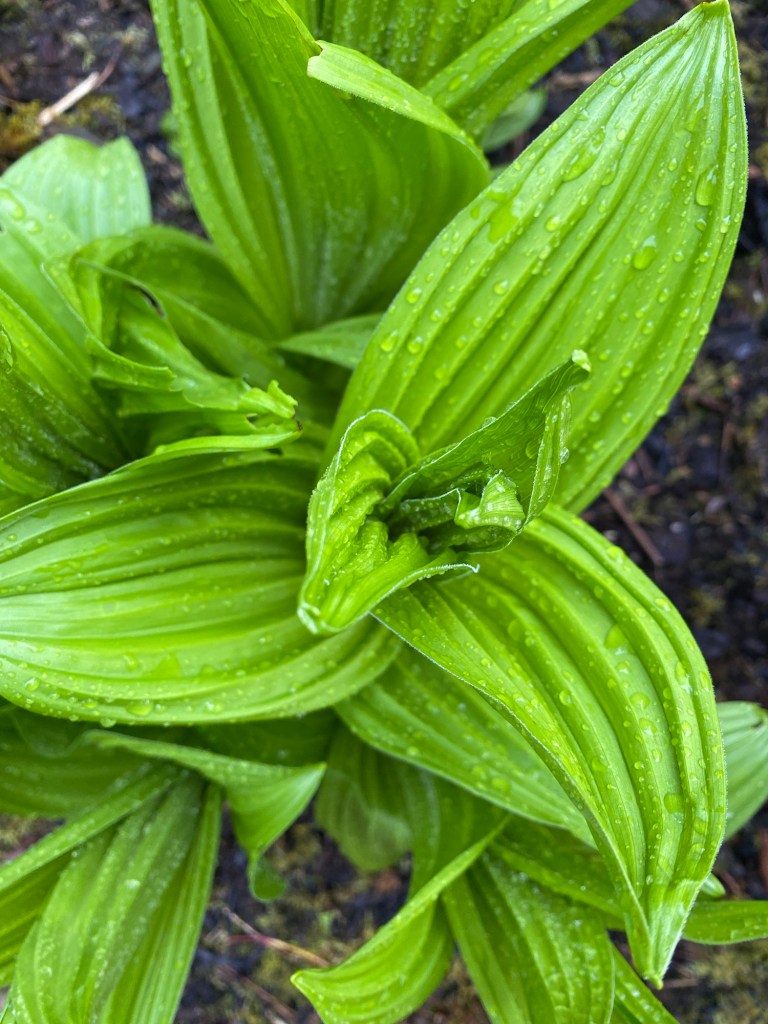
My particular early favourites though have just one colour at their disposal and always feels particularly special. I’m thinking of the several hostas that are scattered round the garden. First the spike of green that appears when you least expect it. Then after a day or so, the tightly rolled, unfurling leaves and the promise of luxuriant growth. To me they capture everything that is fresh and anticipatory about spring.

This year I bought three of the hosta variety named Tyrannousaurus Rex. It’s said to be the biggest hosta of them all. Two I gave away to friends, and the third I’m looking out for next spring, as I wander round the garden ‘by the light of the magical moon’.

The full list of pieces that make up my A-Z in the Dumfriesshire Garden in 2024 can be found here: https://davidgrahamclark.net/a-z-of-the-dumfriesshire-garden-in-2024/

An A-Z of 2024 in the garden: Dogwoods

Oh yes, I know that the cornus is a plant much maligned – especially the ones with variegated leaves. I’ve addressed this before and remain resolutely a dogwood devotee, a cornus connoisseur, albeit an amateur one. Even if they are often seen in car parks and on roundabouts, they continue to get my vote.

First, let me list this plant’s virtues. It’s tough and hardy, and seems to be disease resistant. If neglected it will grow from shrub to straggly tree, which can still look well in ‘shaggy’ areas. If tended it brings stunning interest all year round. It comes in a range of stem and leaf colours. It produces drifts of delicate creamy/white flower heads, followed by berries in late summer. It’s easy to grow from cuttings. If some of the plants in the Dumfriesshire Garden didn’t do too well in 2024, the dogwoods were as reliable as ever.

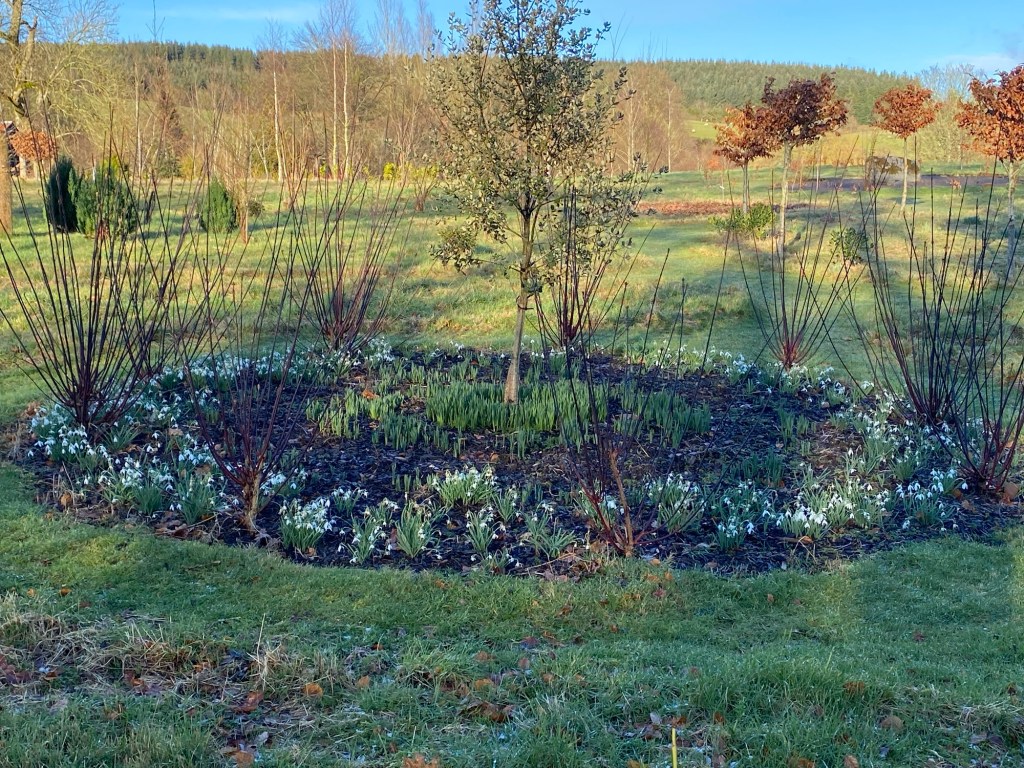
Here’s a short video of my favourite group of dogwoods, cornus alba, swaying gently in the breeze. Planted about seven years ago, they comprise an outer circle of the red, sanguinous form with a clump of green stems in the middle. For me, it’s one of the top garden treats of autumn.

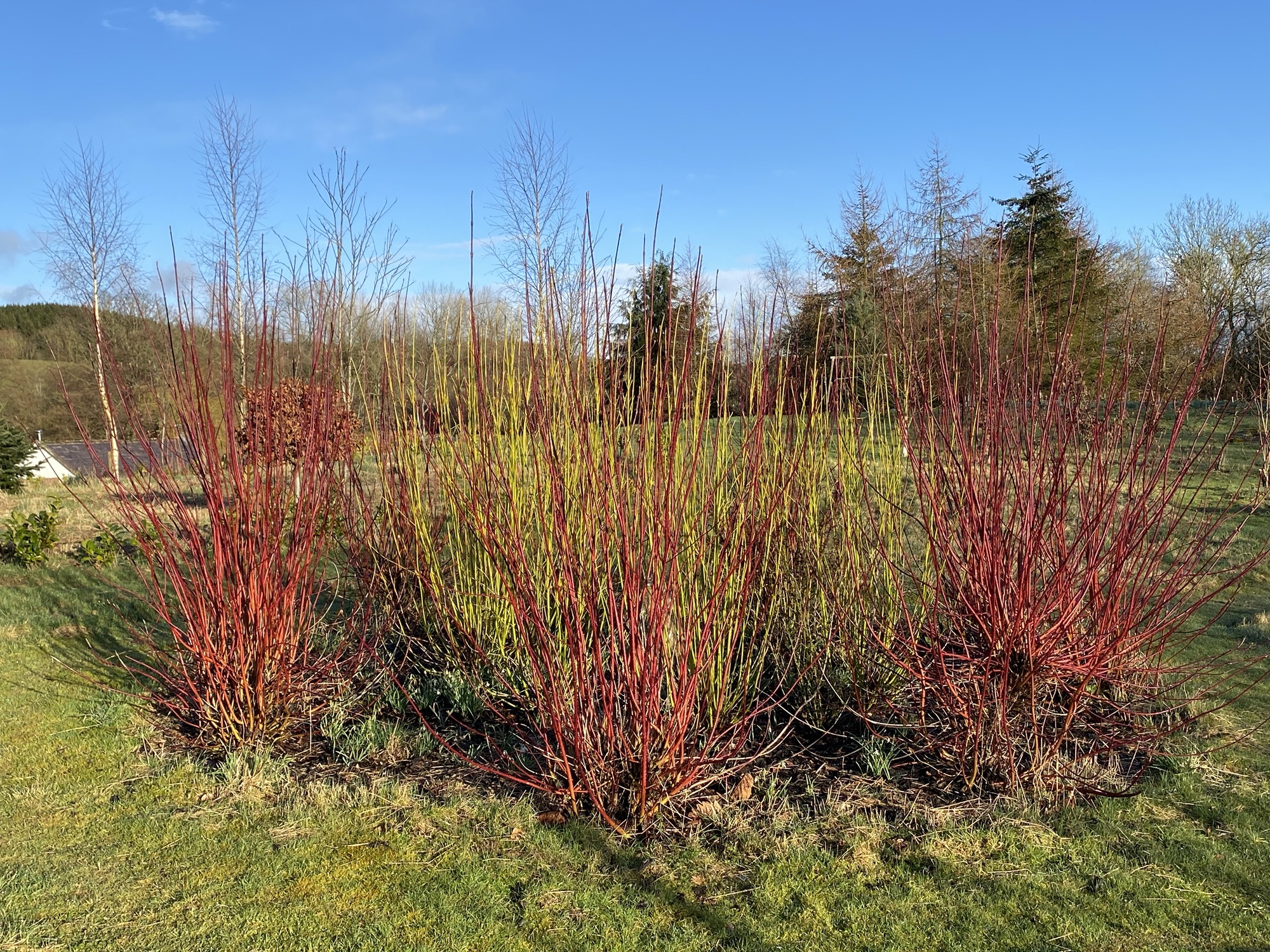
Leafless, in winter and spring it also looks beautiful. The key is assiduous pruning before the new growth gets started each year. Here the contrasting green and red stems in the group look fabulous on a bright winter day.

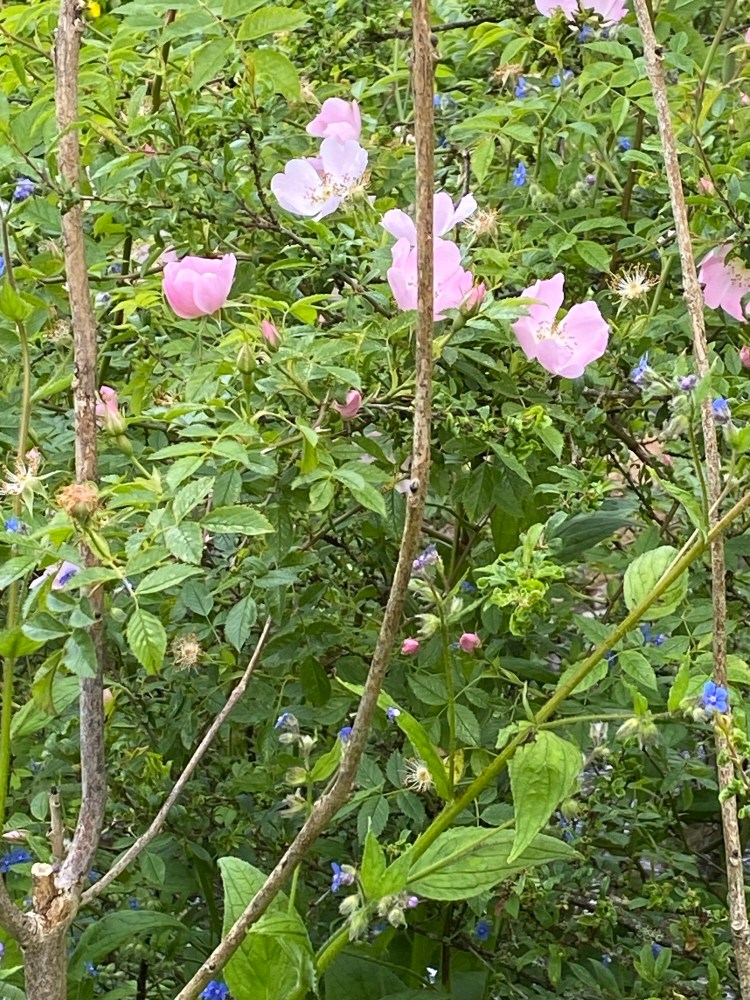
This year, in this same circle, a lovely blow-in raised its head: a dog rose, in amongst the dogwoods.

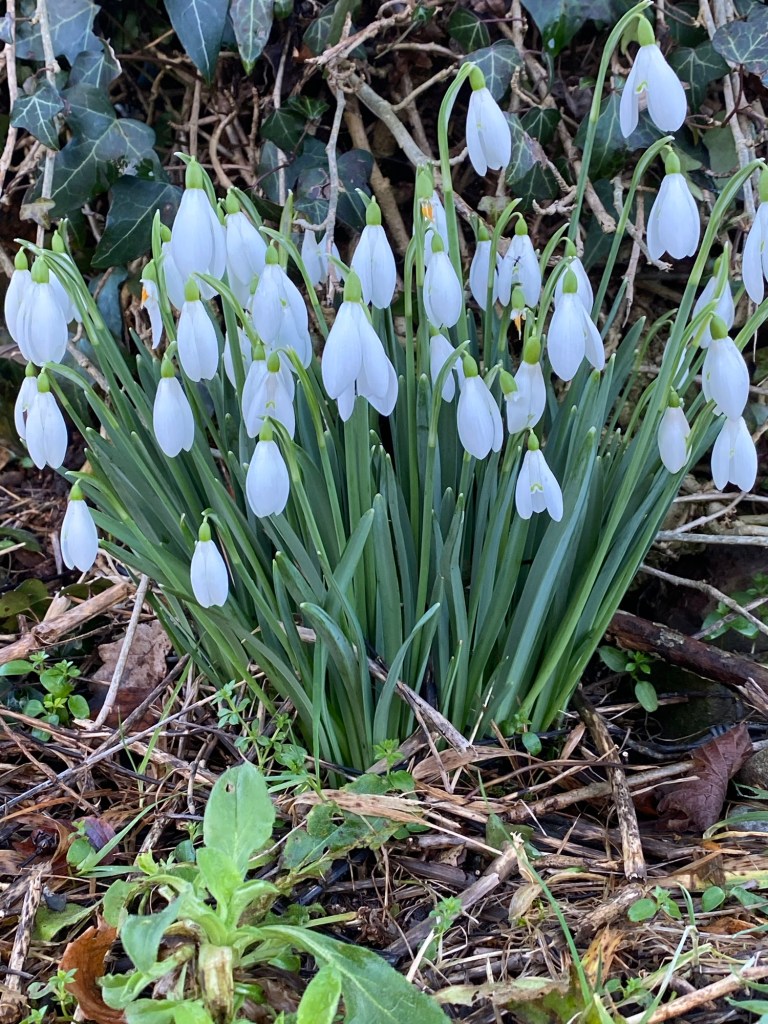
Elsewhere in the arboretum field, I have a couple more dogwood circles. One, recently planted and grown from cuttings, has green on the outside and red on the inside. Planted by my grandchildren, it should look good in a few years from now. Another is a set of purple-black stemmed plants that circles round a holly oak. Underplanted with snow drops, it looks lovely in February.

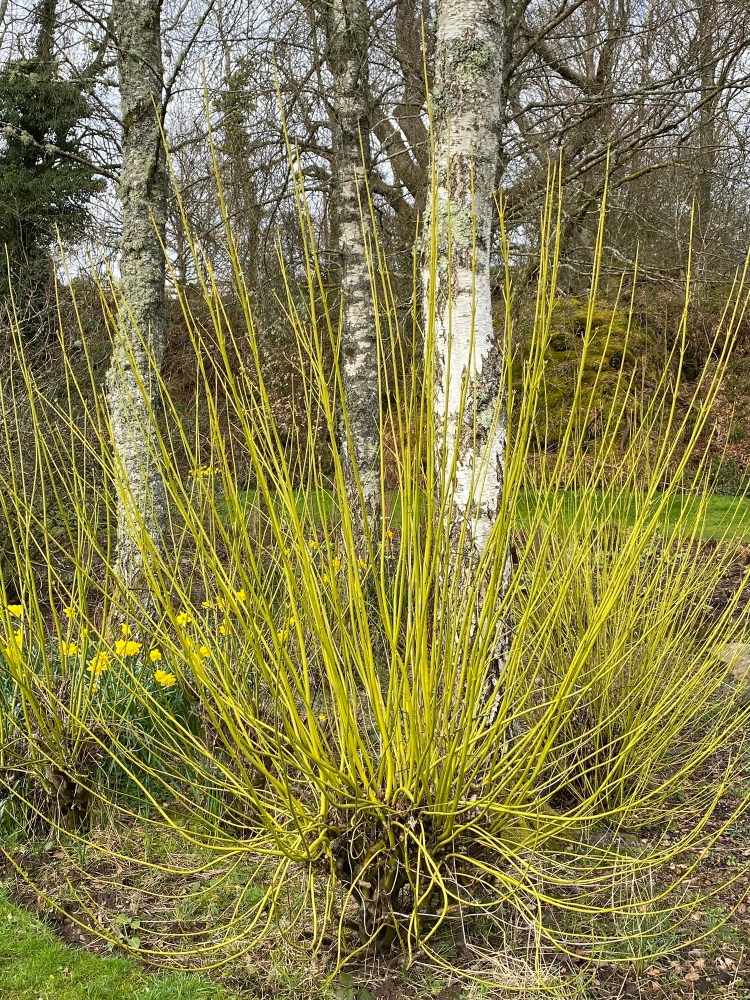
Several years back I saw an episode of Gardener’s World in which the idea of juxtaposing green stemmed dogwoods with silver birch was suggested. I decided to have a go, and was not disappointed, as we see here. Note also how the stumps have become substantial masses as they bulk up in response to the yearly pruning.

To conclude this hymn of praise to the dogwood: they also look brilliant in a dead hedge, as you can see here.

The full list of pieces that make up my A-Z in the Dumfriesshire Garden in 2024 can be found here; https://davidgrahamclark.net/a-z-of-the-dumfriesshire-garden-in-2024/

An A-Z of 2024 in the garden: Cammasias and Cosmos

These two favourites in the Dumfriesshire Garden couldn’t be more contrasting. One perennial, one annual. One lover of the semi-damp of the arboretum. The other more at home in a sunny, drier border. One first planted as bulbs that gradually bulk up. The other beginning life each year in a seed tray, before potting on and planting out.

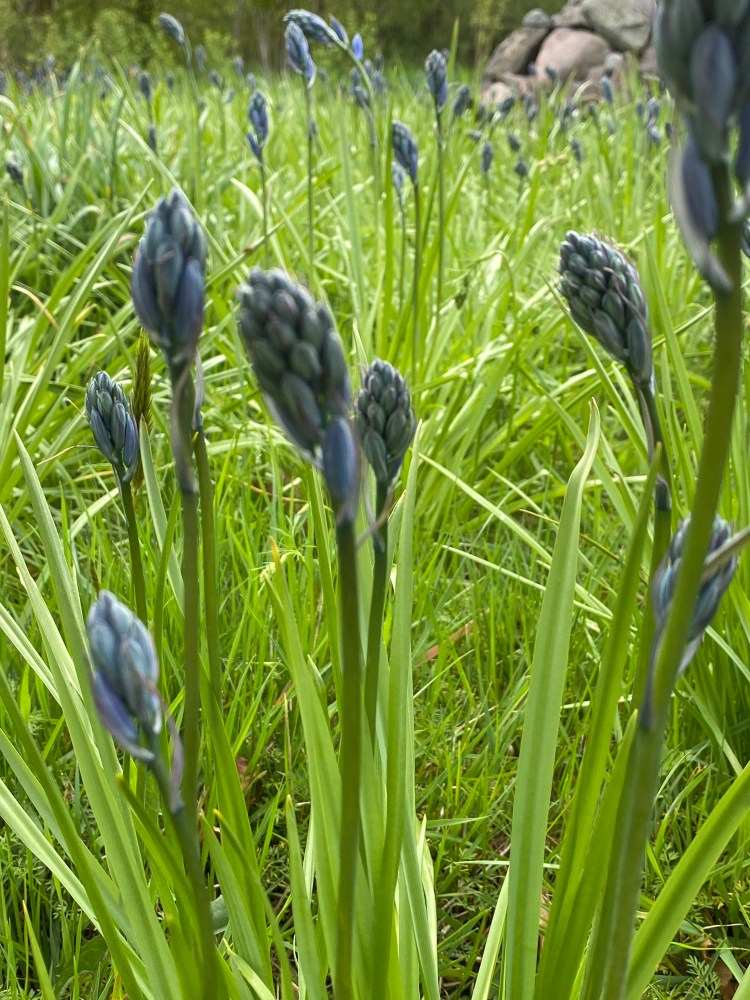
I’ve written quite a bit about cammasias. They originate in the Pacific North West and have a central place in the lives of the Indigenous peoples of that region, particularly the Quamash, from whom their name derives and who cultivated them as a food source and a ritual object.

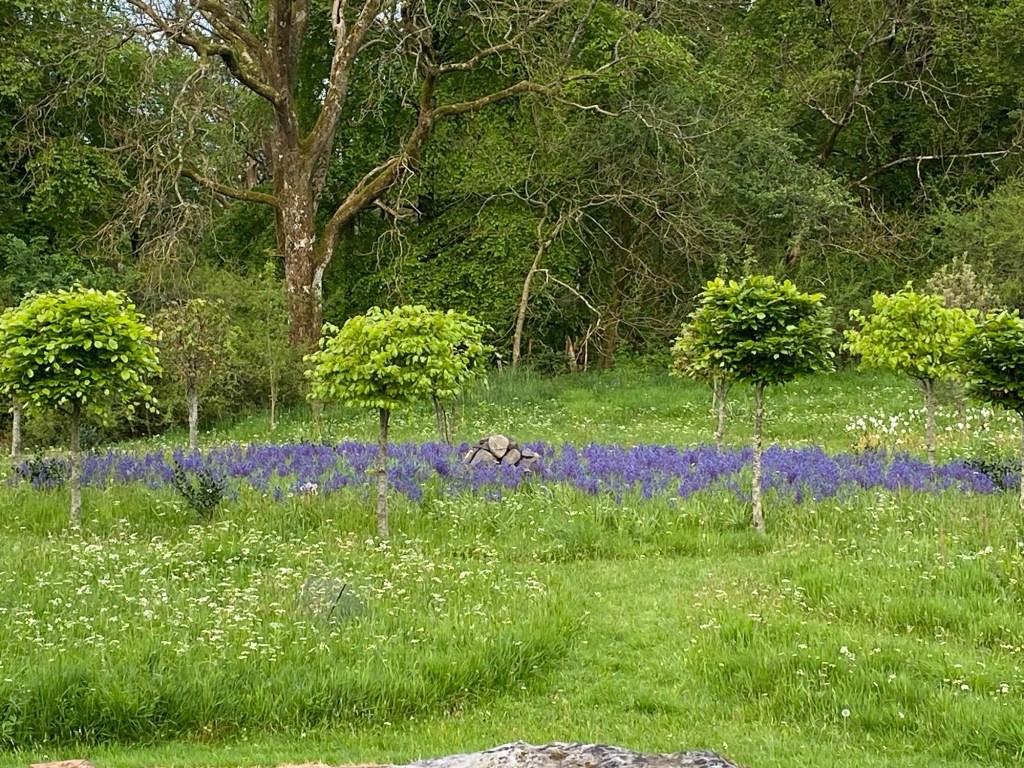
The cammasias in the Dumfrieshire Garden are growing in a circle of meadow grass surrounded by nine mop top beech trees, and seem at home there. Their shoots start appearing in late April and are usually in flower around the second week of May. They make a thrilling sight, though perhaps a little less so this year for some reason – possibly the nibbling of night time visitors. I have started gathering cammasia seed recently and scattering it in other parts of the garden, but I’m told it can take five or more years from germination to flowering – so nothing to report just yet.

By contrast, cosmos is an annual that needs to be grown from scratch each year. I sow in seed trays in April, germination is swift and I pot on as soon as a few proper leaves appear, then plant out in June-July when the weather warms up. Sowing to flowering is just a few months.

The name, Cosmos, is of course wonderfully symbolic and speaks of order, balance and harmony. Or it may derive from the Greek kósmima, referring to its jewel like qualities. In recent years I’ve had a lot of success with white varieties of cosmos, especially if I remember to keep dead-heading, but this year I tried one called ‘coral’ and as the pictures show, it proved very attractive, if perhaps not so heavy on flowers. I’ll maybe try both next year. A few packets of seed will go a long way with this excellent annual.

The full list of pieces that make up my A-Z in the Dumfriesshire Garden in 2024 can be found here: https://davidgrahamclark.net/a-z-of-the-dumfriesshire-garden-in-2024/

An A-Z of 2024 in the garden: Borders

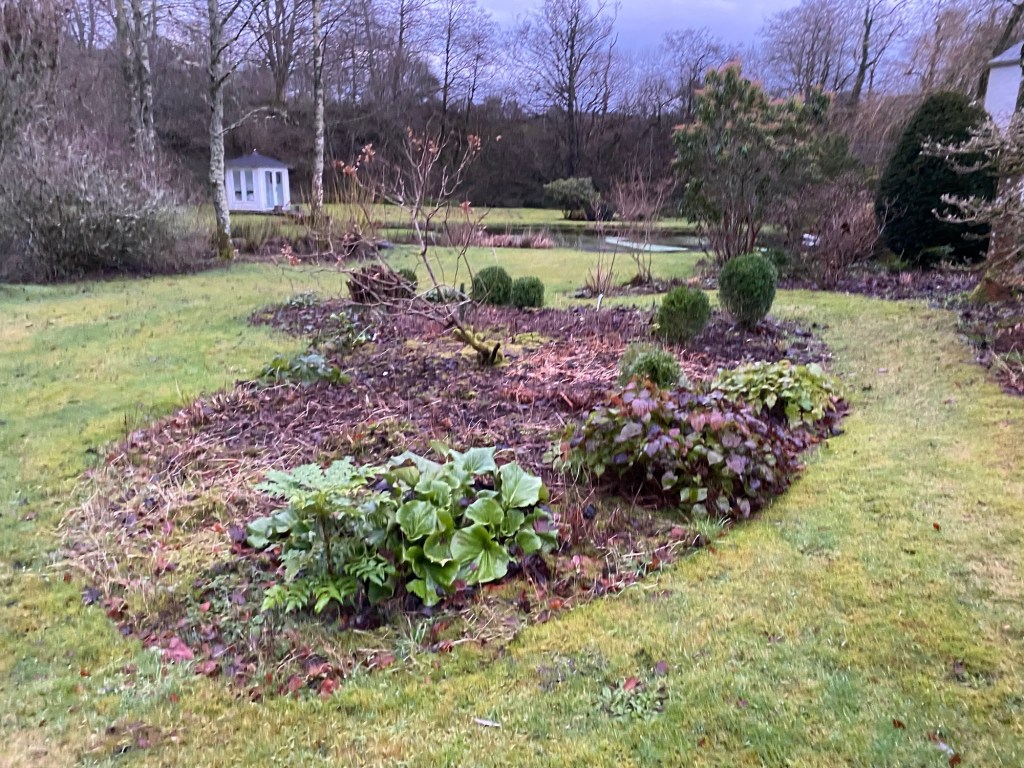
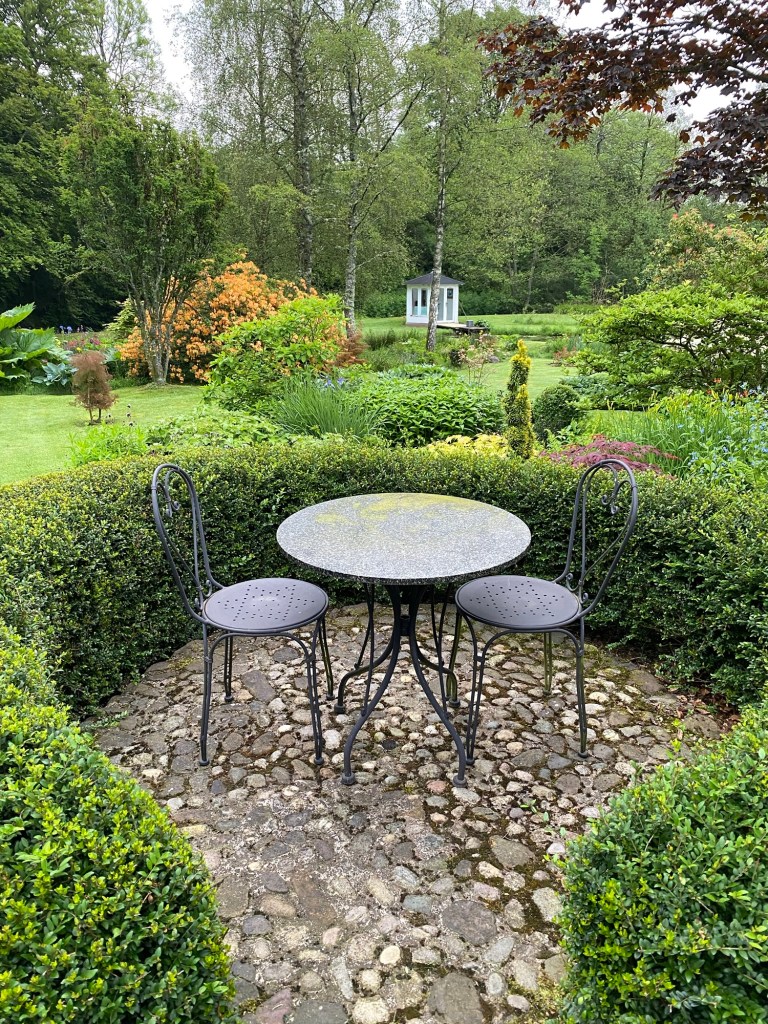
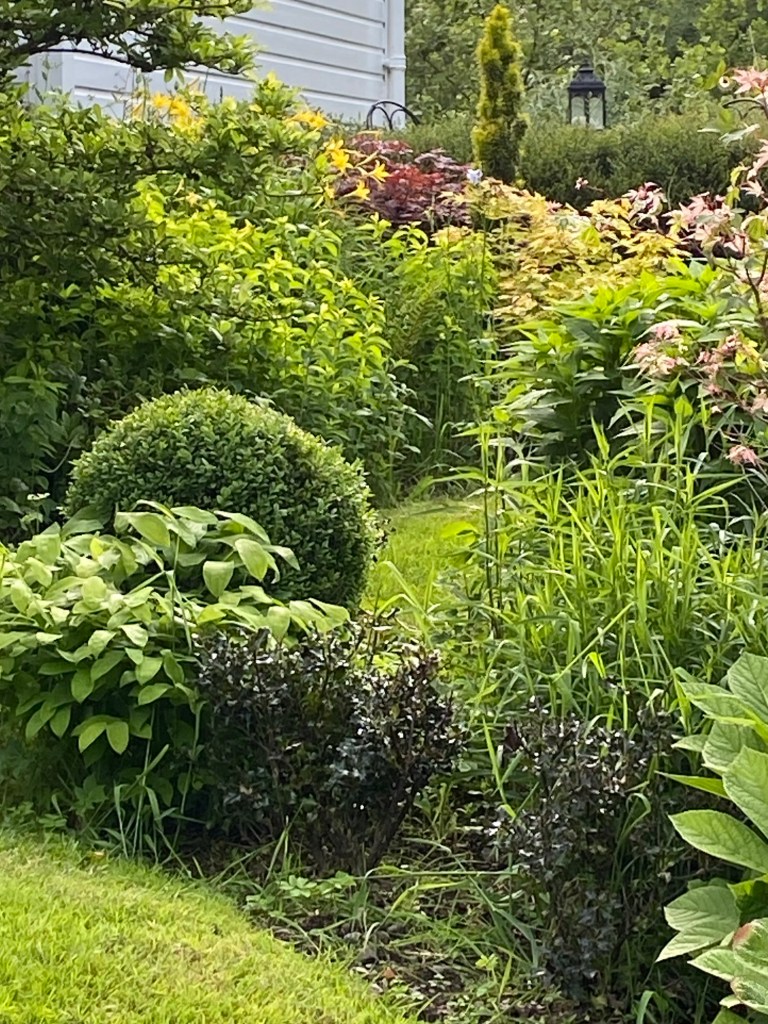
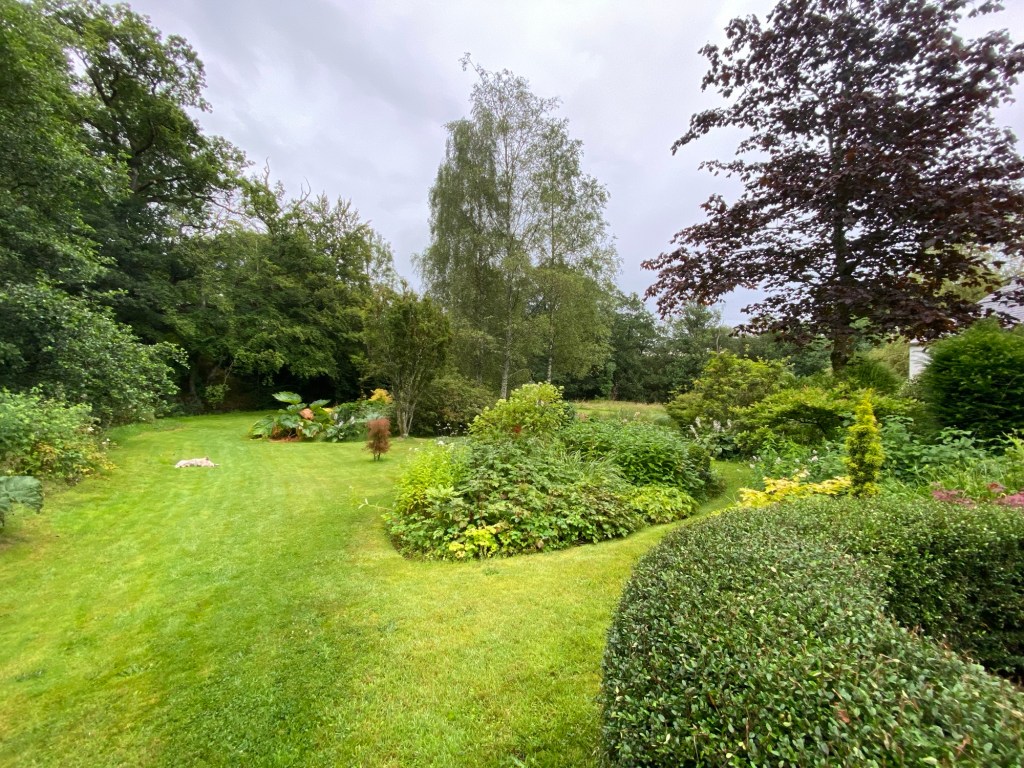
There are seven distinct borders in my Dumfriesshire Garden. How I allowed this to happen, I do not know. When all is going well in ‘borderland’, there is always the temptation, if you have the space, to add something more. So here’s a brief tour of the borders, in what I mostly consider a below par kind of year, 2024.

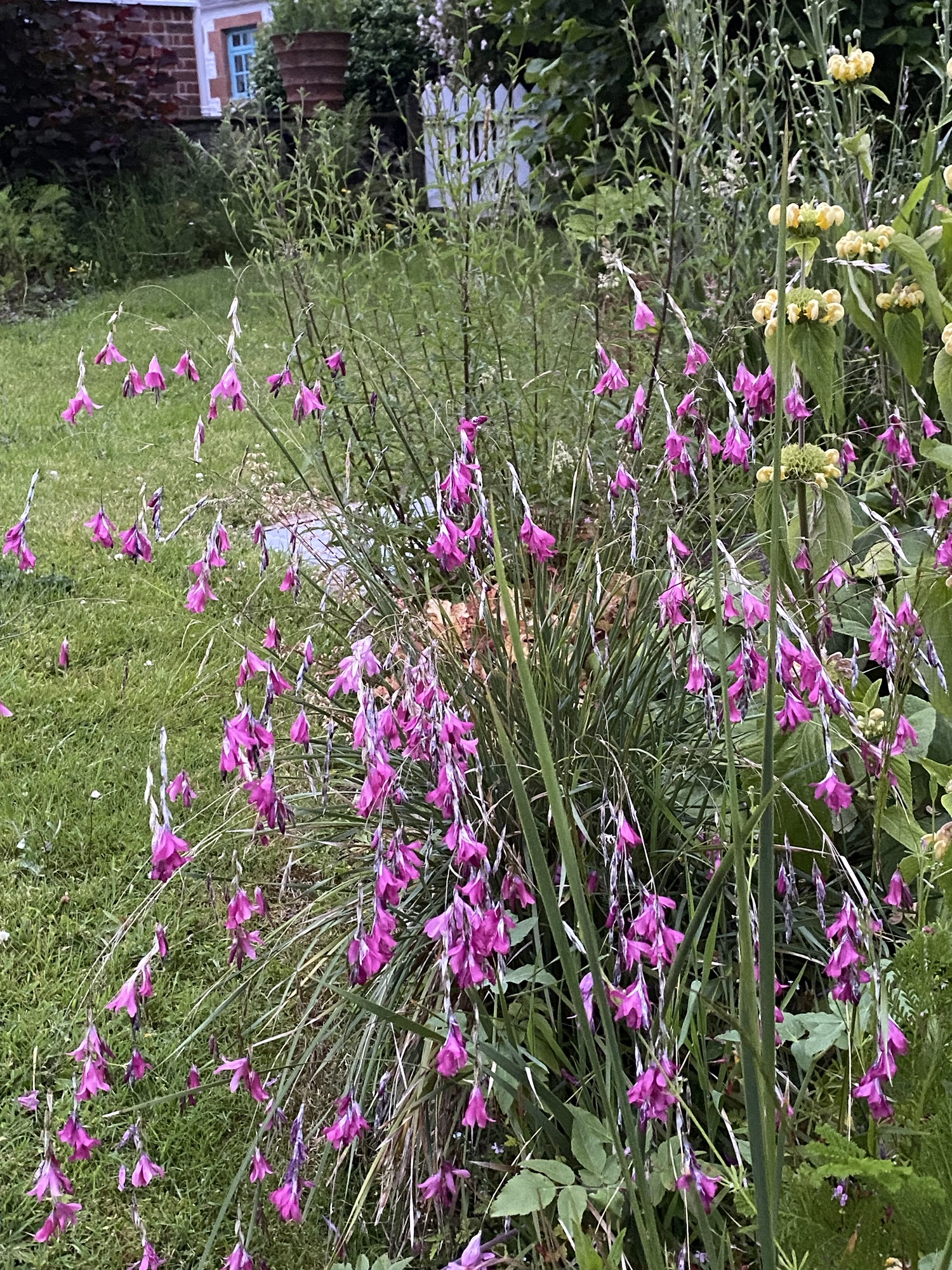
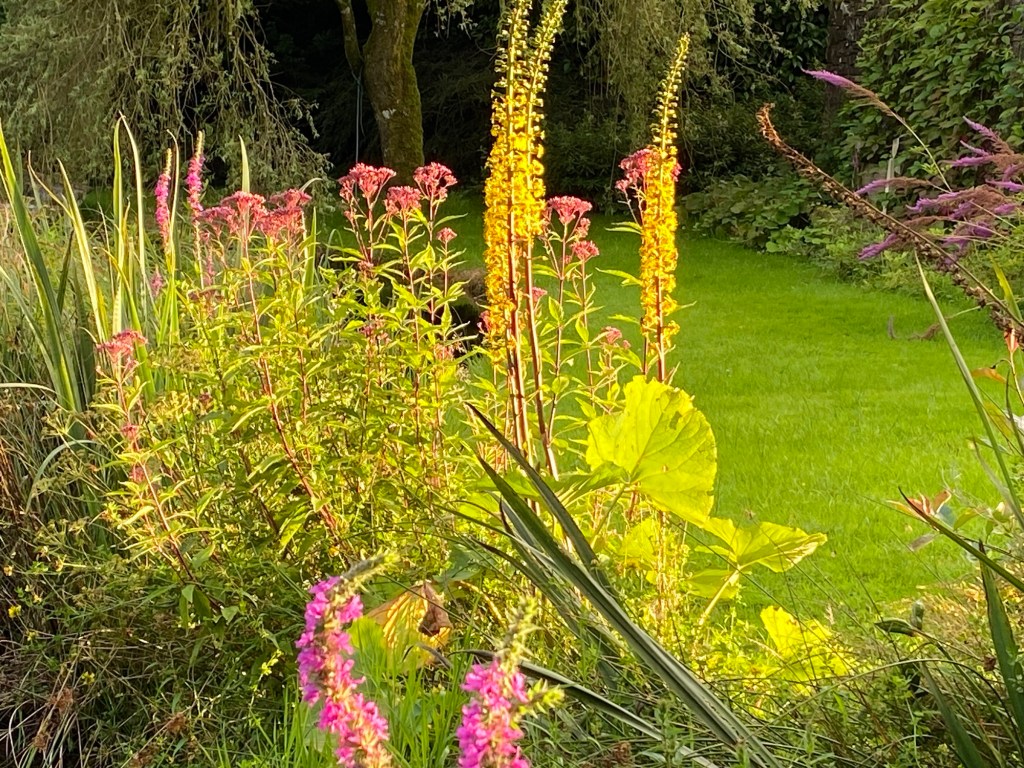
In the sunniest part of the garden diarama (angel’s fishing rod) and some succulents did well, likewise thalictrum. The diarama has excellent provenance, bought at Kiftsgate in the Cotswolds a few years back. The Cotswold-style garden remains a big inspiration for me, albeit without the accompanying weather conditions.

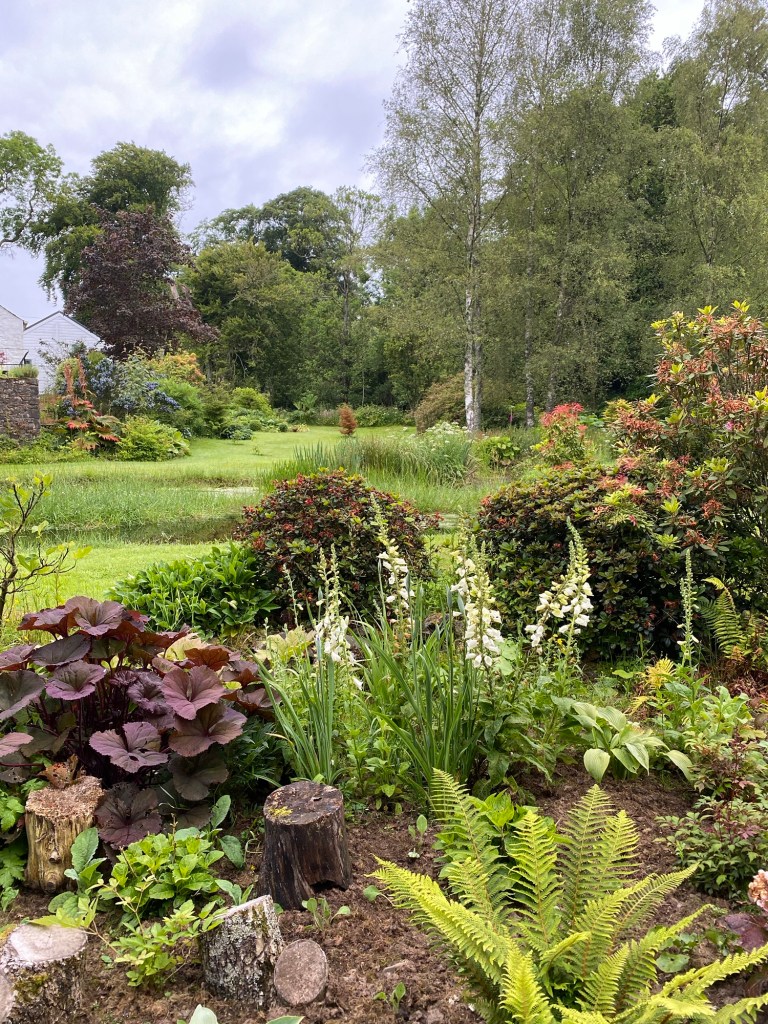
In a work-in-progress new border, the white foxgloves, grown from seed last year, were very striking and shone out in the evening light. Their backdrop here is a scene of quiet symmetry, creating the calming mood of the garden that is so rewarding.

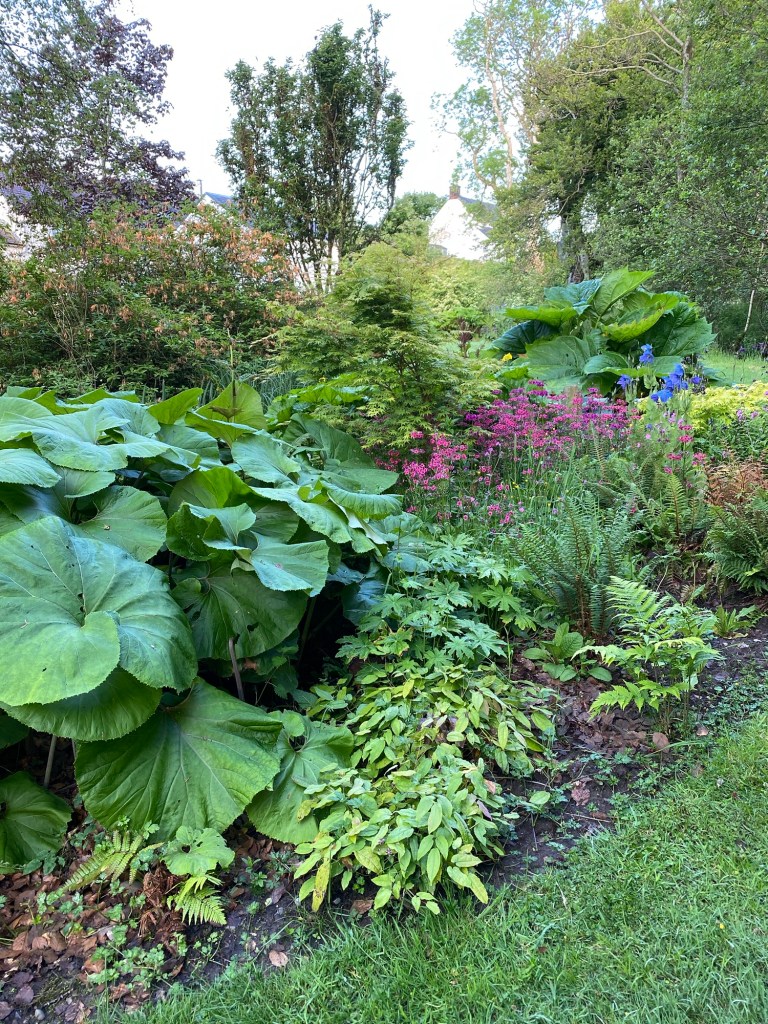
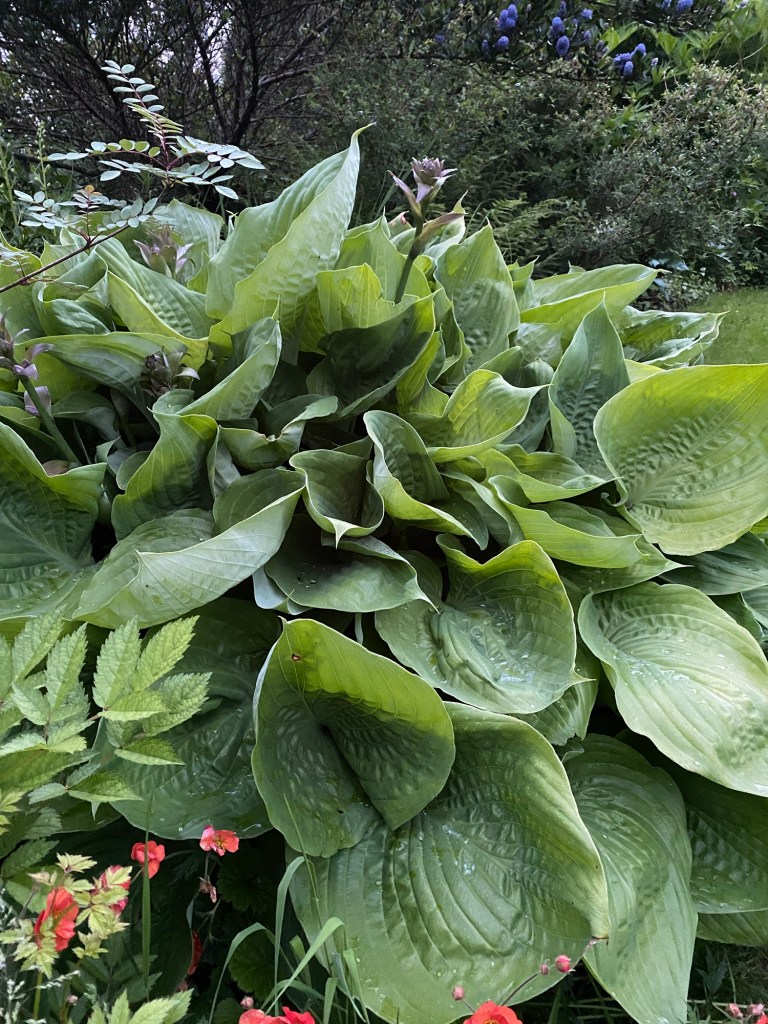
The damp summer undoubtedly favoured big leafy plants.

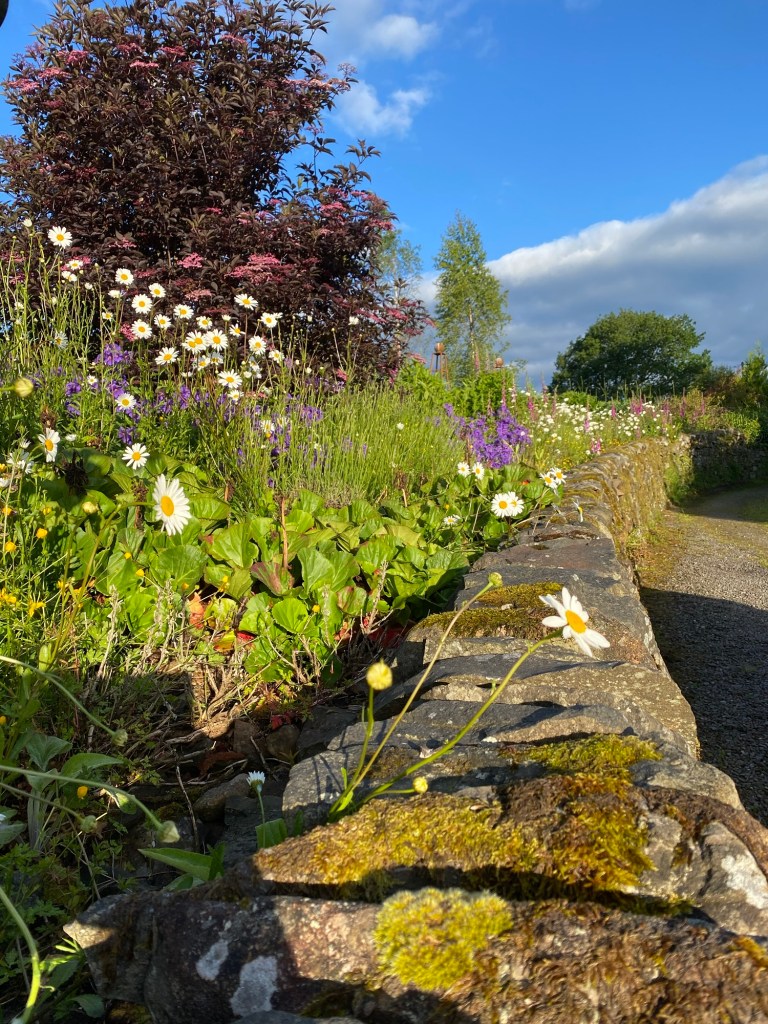
The big border that runs along the track leading to the house, catches a lot of sun. I was delighted this year to see how the oxeye daisies had spread, nicely setting off the chocolaty colour of the sambucus. Such a lovely sight when arriving home.

Throughout 2024 there were many individual plants to enjoy in the various borders, but the overall impact that results from a spectacular combination of flowers and shrubs at their best together didn’t seem to happen. I should probably have written these ABC pieces in 2023!

Nevertheless, here are some of the plants that did catch the eye in the 12 months from January, and for which I am grateful. The final one – the dancing pixie – was photographed in November. As I write, hints of long yellow flowers are appearing on the mahonias …

The full list pieces that make up my A-Z in the Dumfriesshire Garden in 2024 can be found here; https://davidgrahamclark.net/a-z-of-the-dumfriesshire-garden-in-2024/

An A-Z of 2024 in the garden: Arboretum

Welcome to the start of 26 reflections on my garden in south west Scotland during 2024: one for each letter of the alphabet and all of which will appear as the year closes during the month of December.

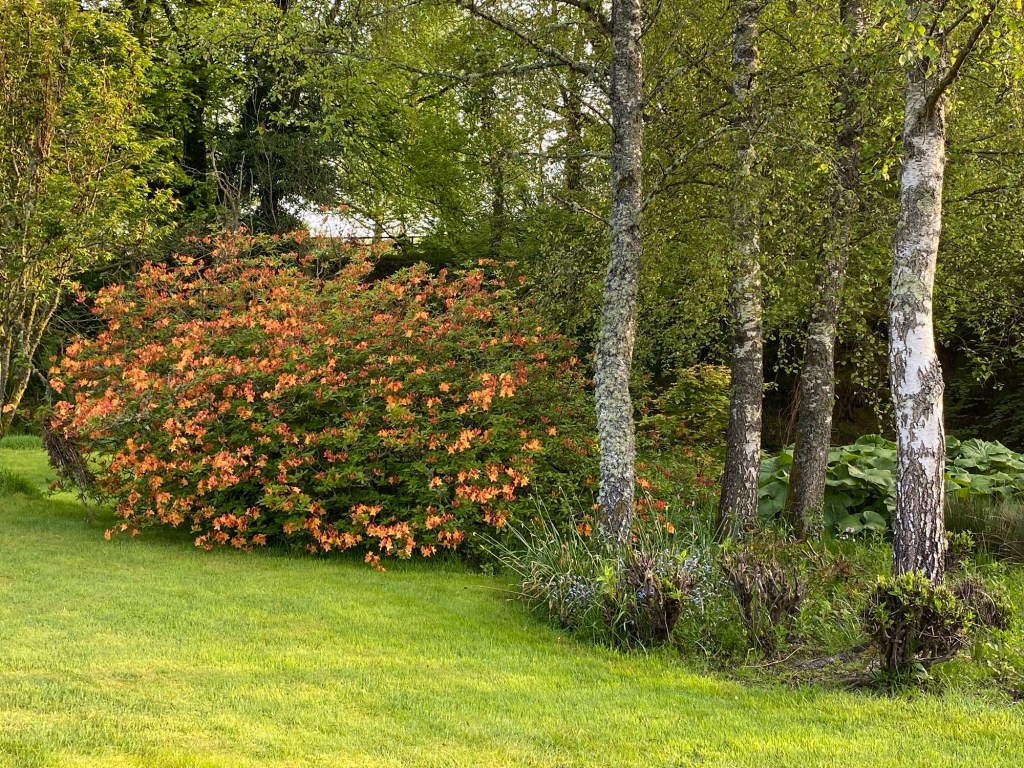
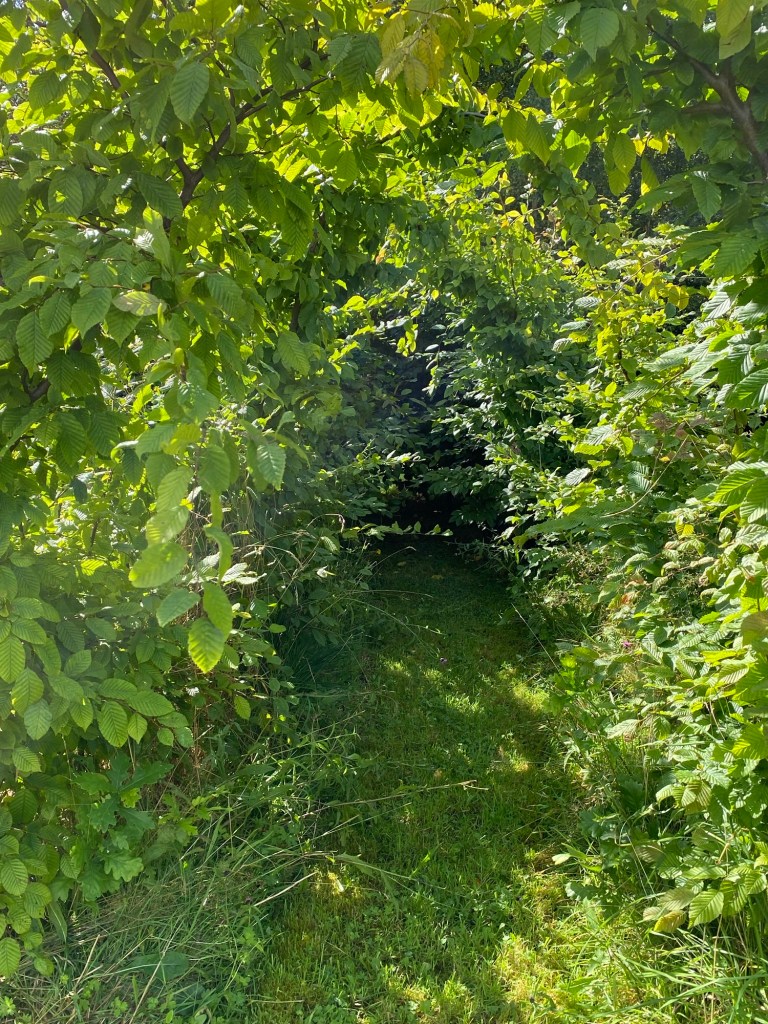
I’ve written before about planting trees in the rented field next to my home. It all began in the winter holidays of 2015-16 when I started with oak, holly, dogwood, hazel and beech in circles of varying sizes, plus 100 birches in a ‘Norwegian Wood’ along the field boundary. Later came archways of hornbeam, and a double row of Scots pines. Subsequently I’ve added single specimens of Californian Pine, Ocean Redwood, Quercus Ilex, and Cedar of Lebanon. Plus Juniper, Betula Jacquemontii, Betula Hergest, flowering silver pear and slow growing conifers – all of these in groups of three. Various attempts to establish groups of Yew, Lonicera and Fatsia have been largely unsuccessful.

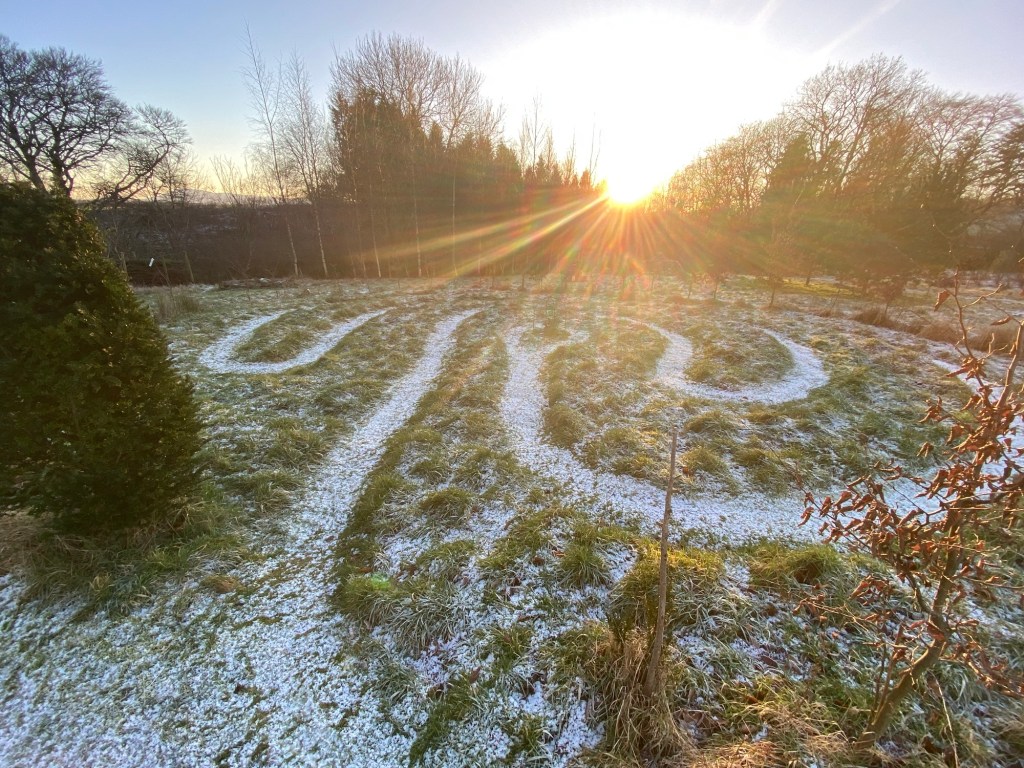
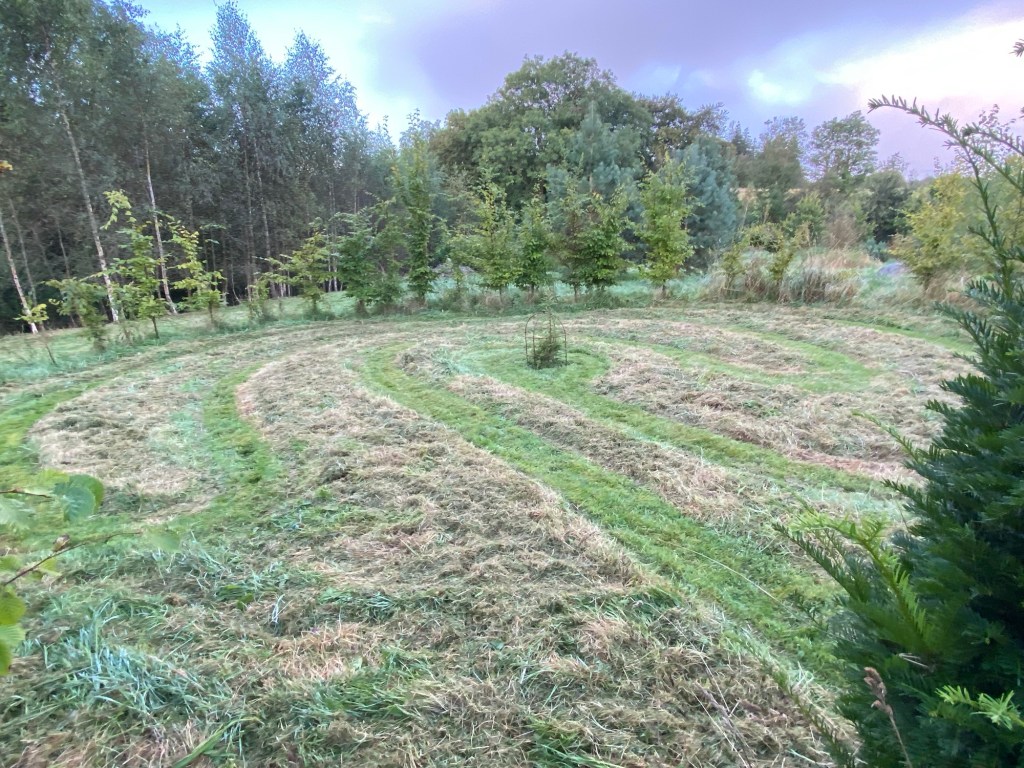
In nine years however, the growth of most things has been extraordinary. Visitors are bewildered when I reveal the young age of the oaks and pines. Most are delighted with how the circles and archways are linked together by mown paths, leaving the remaining areas, cut just once or twice in the year, to produce a profusion of wildflowers and grasses. The arboretum, with its gravelled areas, cairns and rocks provides interest throughout the year and is a fun playground for young children. I walk its paths and its turf labyrinth morning and night in all weathers, and in contemplation. It has spring bulbs, autumn colour, and beech trees pruned into cheerful mop tops. Every day it seems to offer up some new point of interest.

2024 was a year in which the oaks and hornbeams put on spectacular ‘Lammas growth’ during August. In May the meadow grass was set off handsomely by the tightly mown paths. As the grass got longer it was a welcome hiding place for a mother pheasant with its brood of around eight energetic chicks.

As well as visual and aesthetic pleasures, the arboretum has its productive aspects. Oak leaves, raked up in November, make for excellent piles of leaf mould. Grass cuttings from the paths go into the compost. Hazel stems, removed in January to encourage new growth, provide quality material for sweet pea wigwams and the odd walking stick. Red and green cornus stems are always the preferred choice for an ‘Easter tree’ in the house. Loppings of low branches to keep the paths clear provide excellent hardwood kindling.

When I took on the rental of the field in August 2015, it had been fallow for many years. Now it seems immensely productive. I had little notion that my plan to plant trees would yield such rapid results and completely under-estimated the pleasures it would bring forth in less than a decade. Excuse the pun, but I feel sure that my rental agreement has given this field a new lease of life. I am looking forward to further planting and new growth in the arboretum’s 10th anniversary year, 2025.

The full list of pieces that make up my A-Z in the Dumfriesshire Garden in 2024 can be found here: https://davidgrahamclark.net/a-z-of-the-dumfriesshire-garden-in-2024/
A great week for Cicely and David – the play

Since it was first released upon the world at the Edinburgh Fringe Festival in 2022, members of the ATLANTES palliative care group at the University of Navarra in northern Spain have been enthusiastic supporters of my play, Cicely and David. In one week this autumn however, their commitment went beyond anything I could have expected, when in two separate performances, three days apart, they performed the play to a total of almost 1200 people.

How did this come about?

In late 2022 Carlos Centeno, the leader of ATLANTES, took steps to have the play translated into Spanish. The following Spring, members of the team carried out a rehearsed reading of the script at a staff away day. The reaction was so positive that they decided to take the play to the stage, never mind that no one involved had any theatre training.

After months of dedicated preparation, and with support from drama specialists at the University, the result was a barn-storming and exuberantly received debut at the annual conference of the Latin American Palliative Care Association, in Colombia, in March of this year. A few days later, and back in their home city of Pamplona, they performed the play in a local civic theatre and received a standing ovation from the capacity audience. I was lucky enough to be there that night.

On Monday 14th October, the players were back on stage in the theatre of the Museum of the University of Navarra. The performance was filmed for future screenings.

Three nights later the team was at the Conference of the Spanish Society of Palliative Care, in Malaga, where they performed the play, once again. This time for some 800 people, of which I was one.


The play tells the story of a Polish migrant, David Tasma, who is dying from cancer in post-world war II London, estranged from home and family. A brief, intense relationship with his social worker, Cicely Saunders, helps him to find some resolution to what he feels has been a worthless life. In the process, an idea is born that later becomes the world’s first modern hospice, founded by Cicely Saunders in 1967 and thereafter to become a beacon for end of life care improvement around the world.


The play has just five characters and proceeds seamlessly through 12 scenes in the course of one hour. For their performances in Malaga, I want to salute each of the five ATLANTES actors, none of whom had performed onstage before this year.

Ana Larumbe, a senior nurse in the palliative care service at the Clinica di Navarra, brings strength and compassion to her role as the older Cicely Saunders. In a chance meeting with a recently bereaved husband, Paul, in the garden of St Christopher’s Hospice and just months before her own death in 2005, she responds to his questions concerning how the hospice idea first came about. Ana superbly demonstrates the communication skills of Cicely Saunders, as she encourages Paul to tell his story, whilst she in turn responds to his flood of questions.

Paul is played by Álvaro Montero Calero, during the day an early career research technician, who expertly shifts the emotional register back and forth between his own grief, and the excitement of meeting the famous hospice founder.

We then pan back to the young Cicely, who we meet as a novice social worker in summer 1947. She is played with compassion and insight by Alicia Hernando-Garreta, an ATLANTES PhD student, who is working on the analysis of public writings about palliative care in Spain.

In the central part of the play the young Cicely oscillates between scenes with David Tasma, and with her friend and experienced social worker, Woozle.

David is played with gravitas and dignity by palliative medicine fellow Diego Candelmi, moving from confused resistance to his illness, through guilt and shame about past actions, to a measure of acceptance of his imminent death. He is supported on this journey in a series of visits from his social worker, in which Alicia demonstrates the subtle skills of listening, probing, and meeting David on the shared ground of love and loss.

In sharp contrast, Woozle, played by Ana Paula Salas, an ATLANTES PhD student in medical education, heightens tension in the story with a feisty combination of humour, provocation and caring insight, challenging Cicely, the novice social worker as she befriends David, and runs the risk of over-stepping her professional role.

The play ends, front of stage, with all the cast present. Ana Larumbe, with great dignity, beautifully gathers up the story of David Tasma, a man who thought his life had been a failure, but whose legacy lives on in the compassionate approach of ‘mind and heart’ that is so central to modern hospice and palliative care.

These superb performances are wonderfully supported by the directing skills of Vilma Tripodoro, working with Alicia Hernando-Garreta. The set design is imaginative and creates the different contexts of the action wonderfully well – the St Christopher’s Garden, two post-war London hospitals, the home environments of Cicely and Woozle, as well as Simpsons’ restaurant in the Strand. This is further enhanced by striking back projections of each place and also examples of popular music from the period, selected by Albert Recasens, and co-ordinated with the lighting by Fernanda Bastos.


It was an honour for me to be at the Malaga performance, to feel the energy of the cast and the emotional response of the audience. When copies of the playscript in Spanish were given out afterwards, I was surprised to find myself being asked to sign them. It was at that moment that I had the particular pleasure of meeting board members from the Pia Aguirecche Foundation, which has done so much to support the production of the play and can see its value in sharing the ‘message’ of palliative care.

I have previously observed that writing Cicely and David was a team effort in itself. To then have it produced, directed and performed has also involved team work of the highest order. The ATLANTES group members and their colleagues at the University of Navarra absolutely embody these collaborative values. Together they are taking a play about palliative care on a fascinating and still unfolding journey: and for that I am deeply grateful.

Acknowledgements: Photographs courtesy of SECPAL and Vilma Tripodoro.